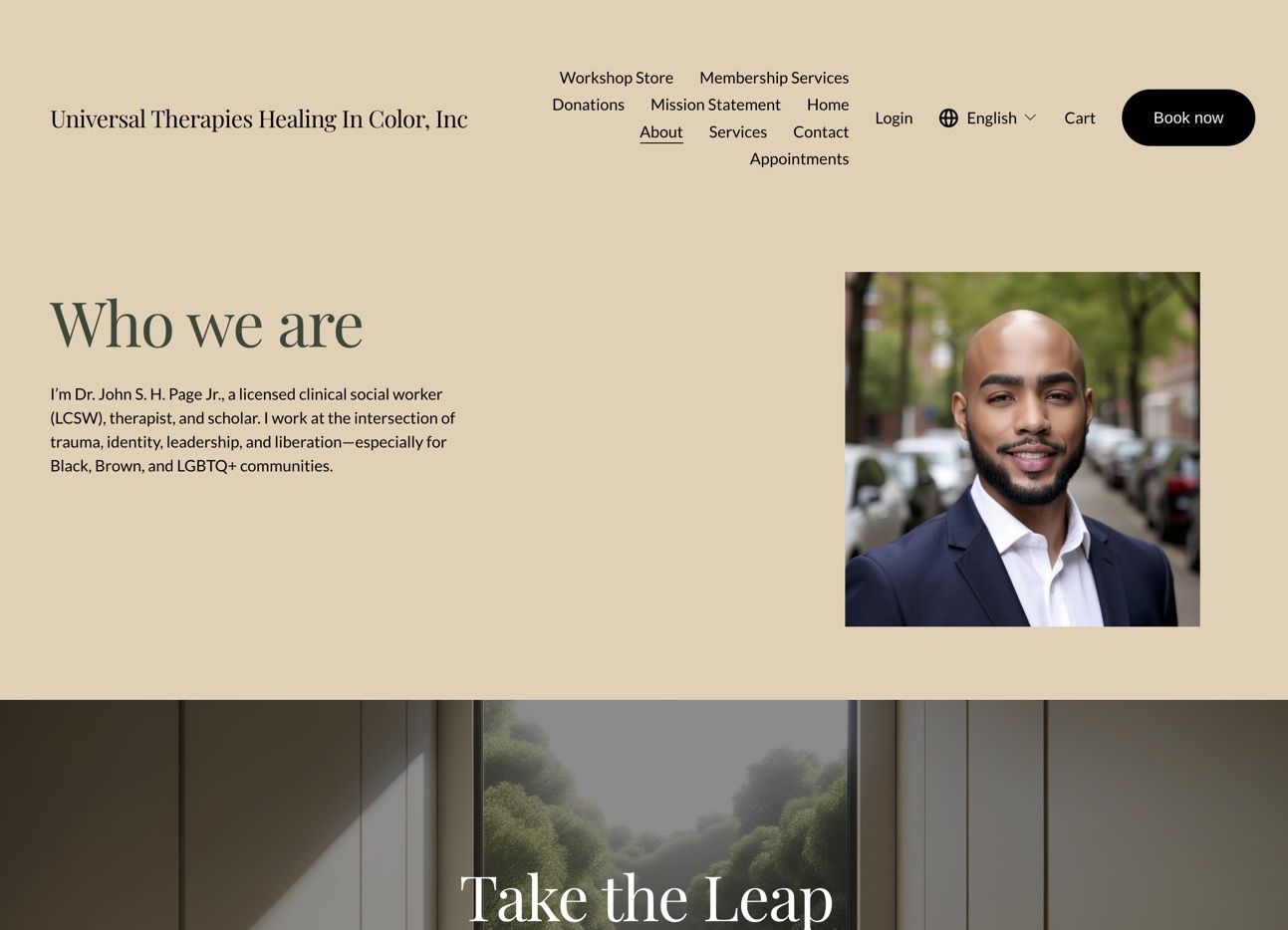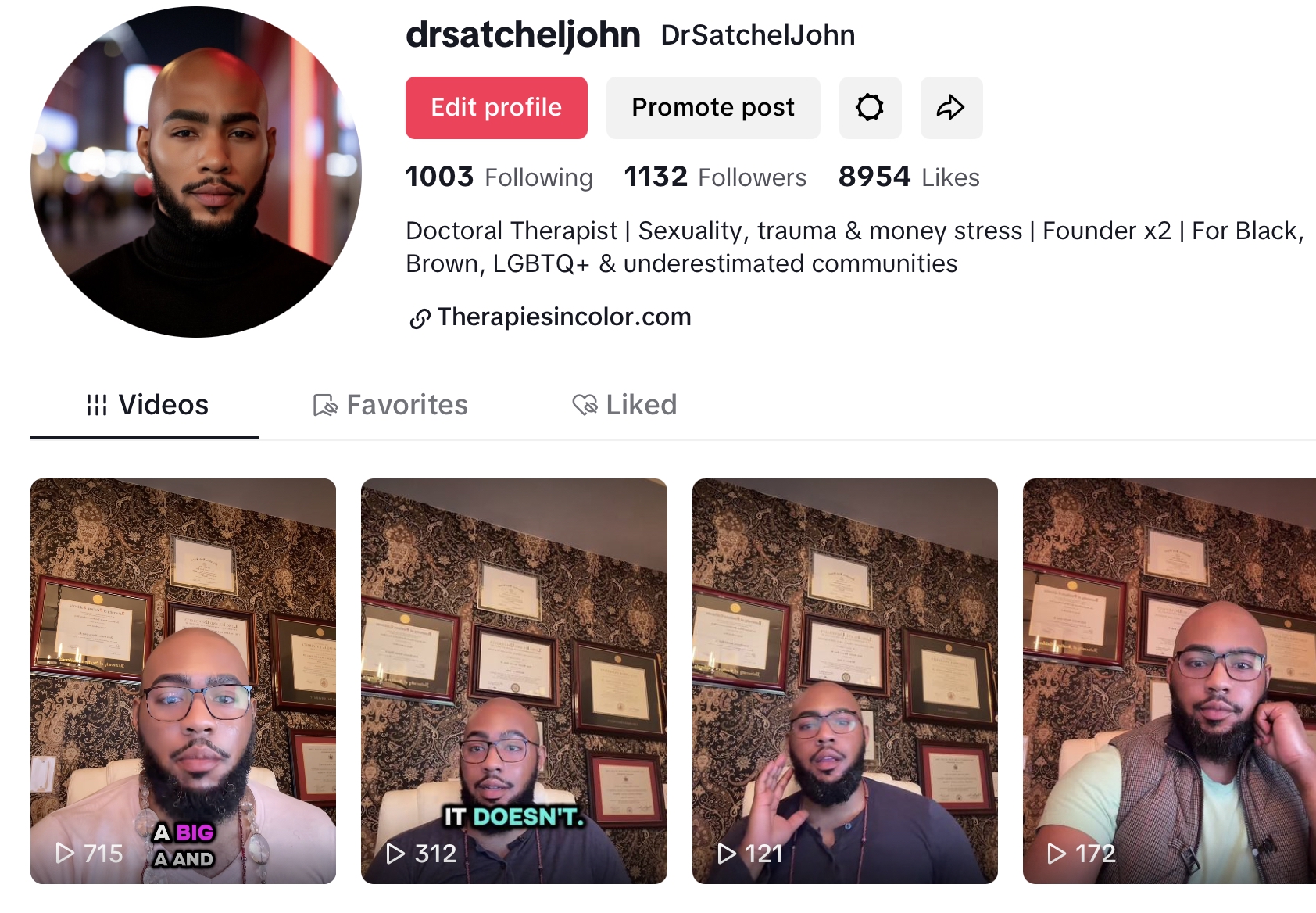





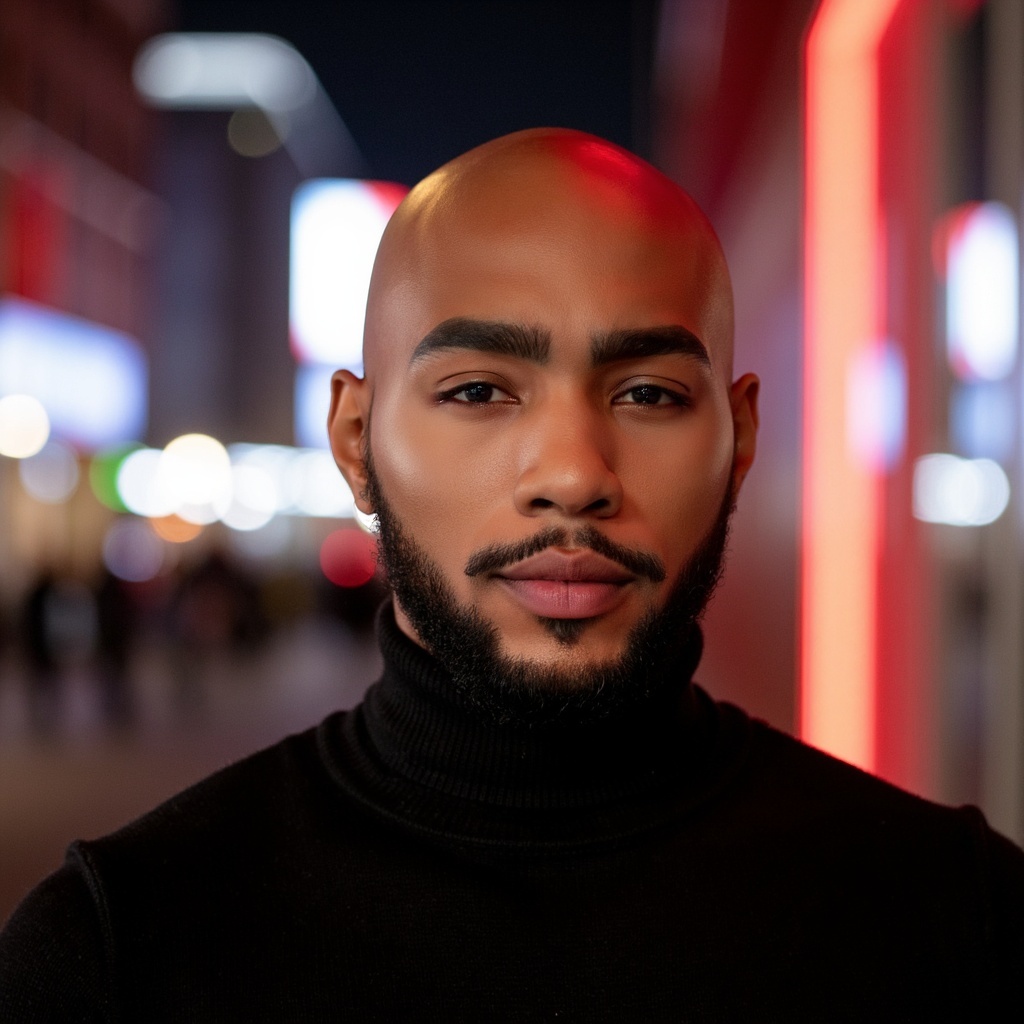
Today we’d like to introduce you to Dr. John S. H. Page Jr..
Hi Dr. John S. H. , can you start by introducing yourself? We’d love to learn more about how you got to where you are today?
I didn’t arrive here in a straight line.
I’ve always been someone who thinks deeply about systems — power, identity, money, faith, belonging — long before I had language for any of it. I grew up navigating spaces that were structured, hierarchical, and often rigid. I learned early how institutions shape people — and how people either shrink inside of them or learn how to move strategically within them.
My path into mental health wasn’t accidental. It was personal. I was always paying attention to the emotional undercurrents in rooms. The unspoken dynamics. Who had power. Who didn’t. Who felt safe. Who was surviving.
Academically, I moved through Long Island University, Columbia University, NYU, and ultimately completed my Doctor of Social Work at USC. Along the way, I experienced both affirmation and exclusion — moments of deep validation and moments that made me question whether I belonged in the very spaces I had earned my way into. That tension shaped me. It sharpened my thinking. It forced me to confront what survival actually costs.
When I became a licensed clinical social worker, I knew I didn’t just want to provide therapy — I wanted to build ecosystems.
That’s how Universal Therapies Healing in Color was born. It’s a nonprofit organization focused on expanding access to culturally responsive mental health support, particularly for communities that are often over-surveilled and under-supported. We don’t approach healing as a luxury. We approach it as infrastructure.
Out of that work came Hush Health — a digital mental wellness platform I created to serve Black men and other marginalized communities who often navigate stigma around therapy. Hush Health is designed to be discreet, affirming, and culturally grounded. It’s not just about coping skills. It’s about identity, worth, and leadership after survival.
My work now sits at the intersection of mental health, financial trauma, identity formation, and post-survival leadership. I’m deeply interested in how people move from surviving systems to designing new ones. How they reclaim their worth after being underestimated. How they redefine leadership after instability.
Houston has become an important chapter in that journey. Building here — outside the noise of coastal echo chambers — has required grit and vision. But I’ve found something powerful in that. There’s a hunger here for authenticity. For depth. For something beyond polish.
I don’t see myself as just a therapist. I see myself as someone building containers where people can tell the truth about their lives — without shame — and then reconstruct them with intention.
If there’s a throughline in my story, it’s this: I refused to let survival be the final chapter.
And now, I help other people write something beyond it.
I’m sure it wasn’t obstacle-free, but would you say the journey has been fairly smooth so far?
It hasn’t been a smooth road. And I don’t say that for effect — I say it because I think we do people a disservice when we pretend growth is linear.
Some of my biggest challenges weren’t about talent or credentials. They were about systems.
I’ve navigated academic environments that were intellectually rigorous but culturally isolating. I’ve experienced moments where my ideas were respected but my presence was questioned. I’ve had to reconcile being highly capable with still being underestimated. That tension does something to you. It either shrinks you or sharpens you.
There were seasons where I had to step away from spaces that were harming me, even when walking away looked like “failure” on paper. Withdrawing from a doctoral path at one point in my life was not a lack of ability — it was self-preservation. Returning years later to complete my Doctor of Social Work was not about proving anything to anyone. It was about finishing something on my own terms.
Entrepreneurship has brought its own set of challenges. Building Universal Therapies Healing in Color meant stepping into nonprofit leadership without a safety net. Creating Hush Health meant entering the tech space as a clinician — which is not the most traditional pipeline. There’s a constant negotiation between vision and resources. Between what you know is needed and what funding structures are ready to support.
And then there are the personal layers. Being a Black queer man in leadership. Carrying visibility. Carrying projection. Carrying responsibility for communities that often don’t get to make mistakes publicly.
What I’ve learned is that the real obstacle wasn’t difficulty. It was internalizing narratives that weren’t mine. Once I stopped accepting other people’s limitations as instructions, things shifted.
The road hasn’t been smooth. But it has been clarifying.
Every challenge forced me to define who I am outside of applause, outside of institutions, outside of titles.
And that clarity — more than anything — is what allows me to build now without apology.
Appreciate you sharing that. What should we know about Universal Therapies Healing in Color (UTHC), Inc.?
Universal Therapies Healing in Color (UTHC), Inc. was built from a very simple observation: access to quality mental health care is not evenly distributed, and culturally responsive care is still treated like a specialty instead of a standard.
I founded UTHC as a nonprofit organization designed to expand access to thoughtful, identity-affirming mental health services and education. At its core, UTHC exists to create infrastructure — not just sessions. We provide psychotherapy, psychoeducational programming, and community-centered mental wellness initiatives that center populations who are often overexposed to stress but underexposed to support.
What sets us apart is that we don’t treat healing as isolated from identity, economics, or power. My work sits at the intersection of mental health, financial trauma, identity development, and post-survival leadership. Many of the individuals I work with are high-functioning, accomplished, and outwardly “successful,” yet internally navigating complex histories of survival, instability, or systemic marginalization. We don’t pathologize that. We contextualize it.
Out of that vision came Hush Health — a digital mental wellness platform created to provide discreet, culturally grounded mental health tools and resources, particularly for Black men and other communities who may experience stigma around seeking therapy. Hush Health is designed to lower barriers without lowering standards. It bridges clinical insight with accessibility.
In my private clinical practice, I specialize in trauma-informed psychotherapy, relational dynamics, identity work, and executive-level emotional development. I am especially known for helping individuals move beyond survival-based patterns into leadership rooted in clarity and self-worth.
Brand-wise, what I am most proud of is that UTHC does not perform healing — we operationalize it. Our aesthetic is intentional. Our language is intentional. Our programming is intentional. Everything is designed to communicate dignity.
I want readers to understand that mental wellness is not about being broken and getting fixed. It’s about understanding the systems you’ve navigated, reclaiming your agency within them, and building something more aligned moving forward.
UTHC is not just a practice. It’s an evolving ecosystem for people who are ready to live beyond survival.
Are there any apps, books, podcasts, blogs or other resources you think our readers should check out?
I read widely — across psychology, sociology, economics, and cultural studies — because I don’t believe human behavior exists in a vacuum.
A few books that have shaped my thinking include The Body Keeps the Score by Bessel van der Kolk, which deepened my understanding of how trauma lives in the body, and Post Traumatic Slave Syndrome by Dr. Joy DeGruy, which reframed generational trauma in a way that is culturally grounded and historically contextual. I’m also drawn to writers like bell hooks, James Baldwin, and Ta-Nehisi Coates — thinkers who refuse to separate identity from power.
Academically, I’m interested in work around post-traumatic growth, leadership theory, and financial trauma — the ways economic instability shapes identity and decision-making. Those intersections influence both my clinical work and my entrepreneurial vision.
In terms of podcasts, I appreciate conversations that are nuanced rather than reactive. I gravitate toward platforms that explore psychology, culture, and leadership without oversimplifying them.
App-wise, I’m fairly minimal. I use tools that help me think clearly and build — Notion for structuring ideas, and platforms that allow me to organize research and long-term visioning. I try not to overconsume. I value depth over volume.
But honestly, some of my most formative “resources” haven’t been apps or books — they’ve been lived experience. Navigating systems. Observing institutions. Sitting with clients’ stories. Those lessons are often more instructive than anything I could download.
I’m always learning — but I’m intentional about what I allow to shape my thinking.
Pricing:
- • Doctoral-Level Individual Psychotherapy – $260 per session
- • Signature Identity & Leadership Programs – $1,200–$1,350
- • Trauma Intensives – $400
- • Clinical Evaluations & Documentation – $175–$300
- • Sliding scale availability through nonprofit initiatives
Contact Info:
- Website: https://www.therapiesincolor.com/services
- Instagram: https://www.instagram.com/drsatcheljohnjr/
- Facebook: https://www.facebook.com/UniversalTherapiesHealinginColor
- LinkedIn: https://www.linkedin.com/in/dr-john-s-h-page-jr-dsw-lcsw-92b87118
- Other: https://www.tiktok.com/@drsatcheljohn?is_from_webapp=1&sender_device=pc