
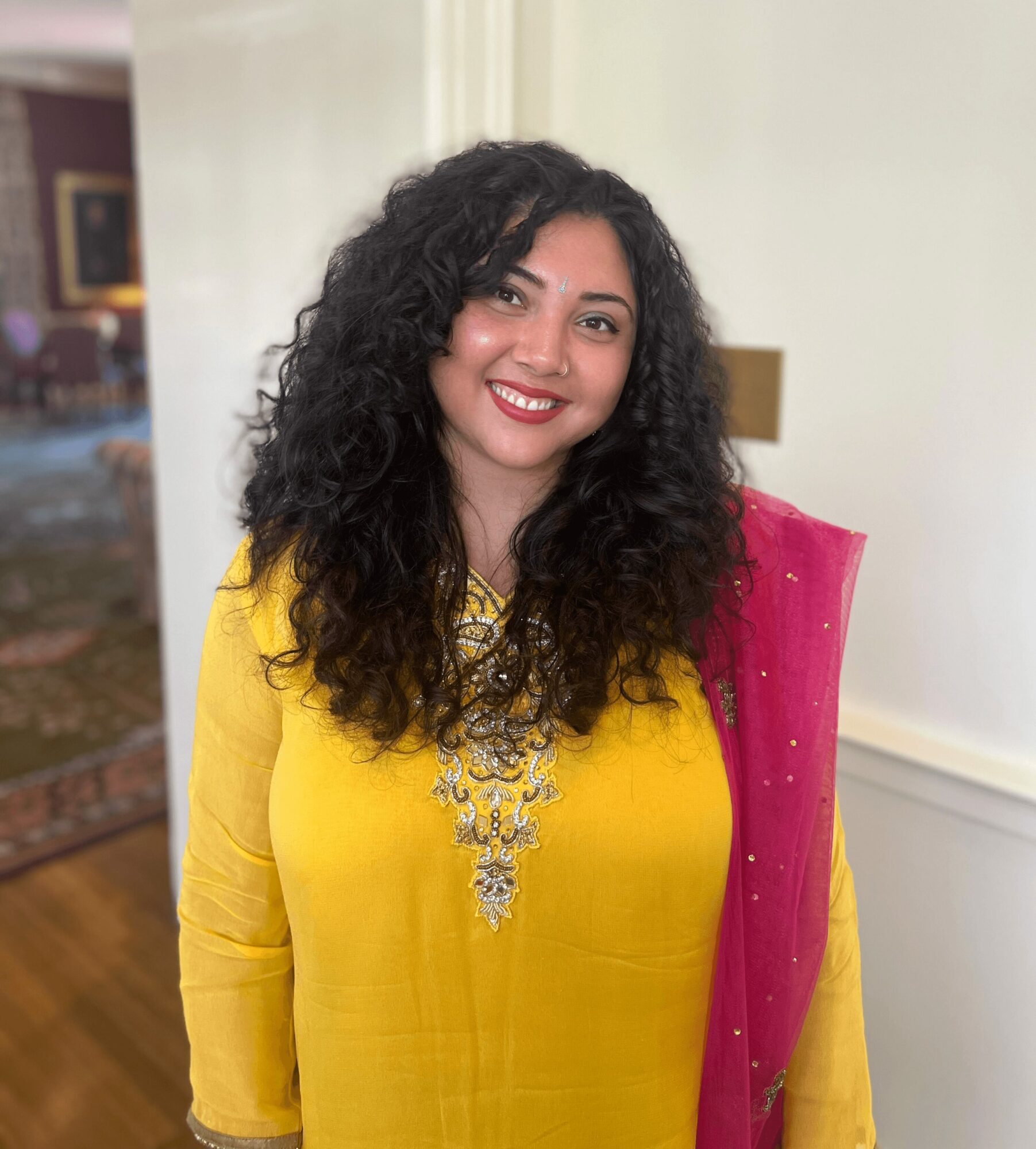
Today we’d like to introduce you to Alisha Kendrick-Pradhan.
Hi Alisha, so excited to have you with us today. What can you tell us about your story?
My work has always lived at the threshold. Between fear and power.
Between silence and voice.
Between survival and sovereignty.
I am a birth worker deeply passionate about creating and holding sacred space for
birthing people and all who resonate with the abundant, cyclical, and creative energy
of the womb. My path to womb work and birth work has been a journey back to my
truest self, unearthing the innate wisdom that my body, and all bodies, hold. I root my
birth work in body wisdom, yoga, ritual, herbalism, astrology, divination, and the
cyclical living in harmony with nature and the universe’s rhythms. I draw deep
spiritual insight and wisdom from my Nepali ancestry, and I am especially inspired by
the global veneration of goddesses and the divine feminine. I am also multicultural, raised within Newari traditions that honored ritual, transition, and the sacredness of the body. These identities are not separate from my work. They are the foundation of it.
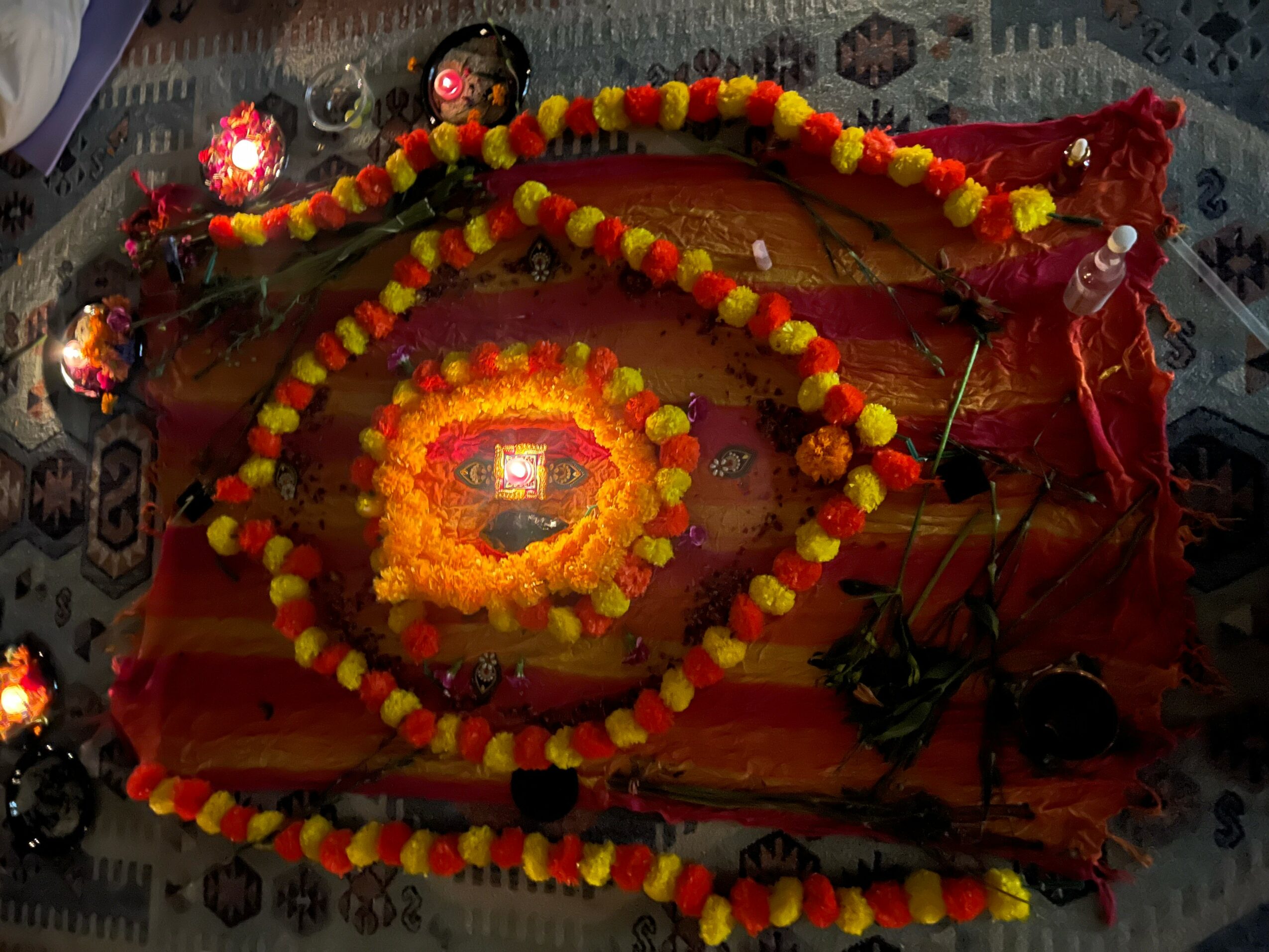
One ritual in particular has always lived in my bones: Mha Puja. Mha Puja is performed during the Newari New Year as part of Tihar. It is a ritual of cleansing and self-worship: an honoring of one’s own body as divine. Each person sits before a mandala created uniquely for them. Offerings are placed. Oil lamps are lit. Prayers are spoken not to a distant deity, but to the self.It is a radical act: to recognize the divinity within your own body.Growing up with this ritual shaped me profoundly. Mha Puja taught me that the body is not something to control, shame, or override. It is something to honor. To cleanse. To bless. To sit before with reverence.
That teaching echoes through every space I enter.
As a client advocate working with survivors of domestic violence, I witness how violence attempts to sever people from their own sacredness. Abuse distorts autonomy. It convinces someone that their body is not their own. Advocacy, for me, is helping someone clear what has been imposed upon them. It is sitting beside them as they rebuild safety. It is reminding them that their life force, their intuition, their divinity was never extinguished.
In birth work, I see the same threshold.
As a doula, I support people through pregnancy, labor, and postpartum: moments when the body becomes both vulnerable and unimaginably, supernaturally powerful. In the birth room, I hold the belief that this body laboring before me is sacred. That informed consent is sacred. That choice is sacred. That the person giving birth is not passive: they are creation itself.
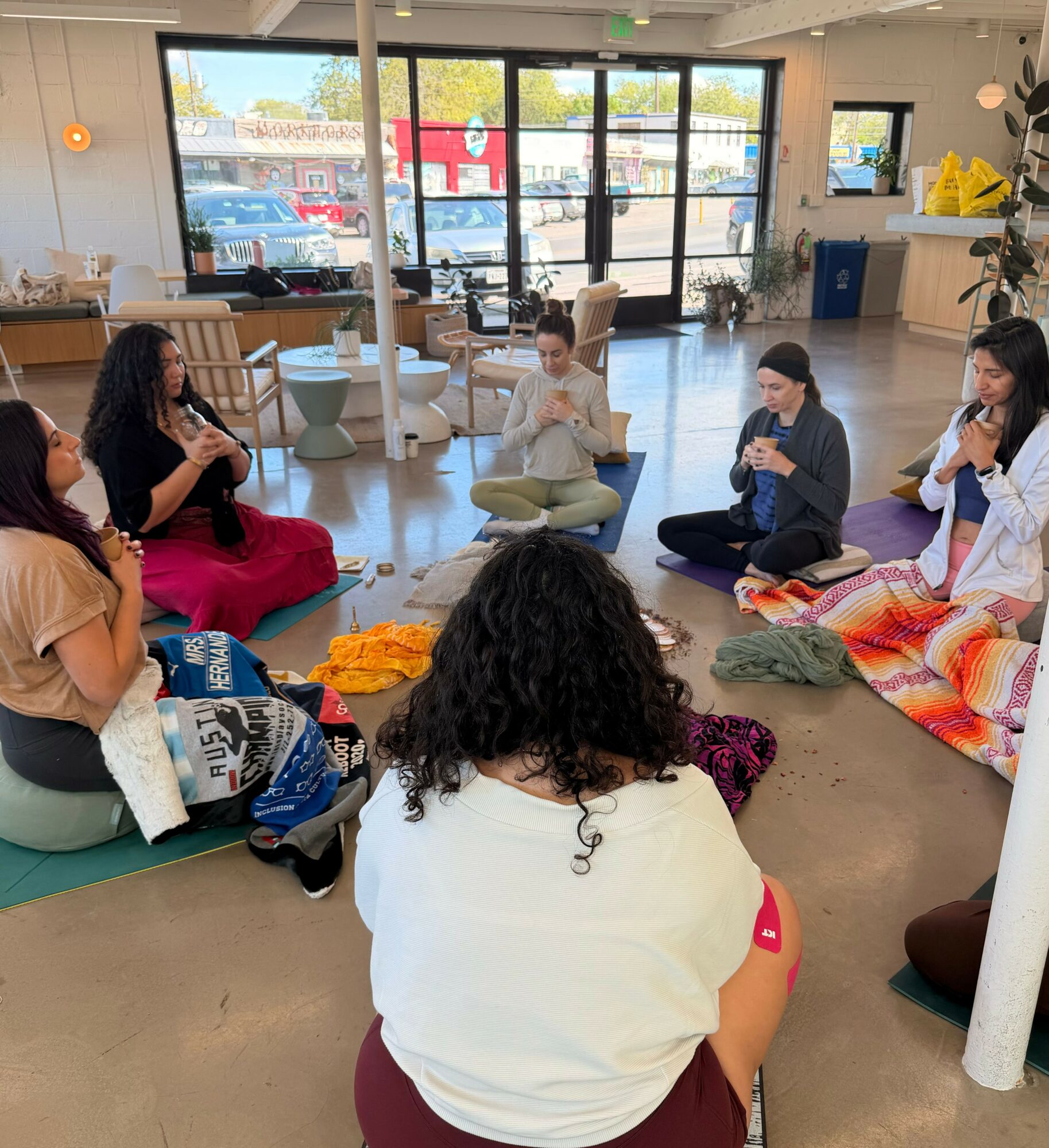
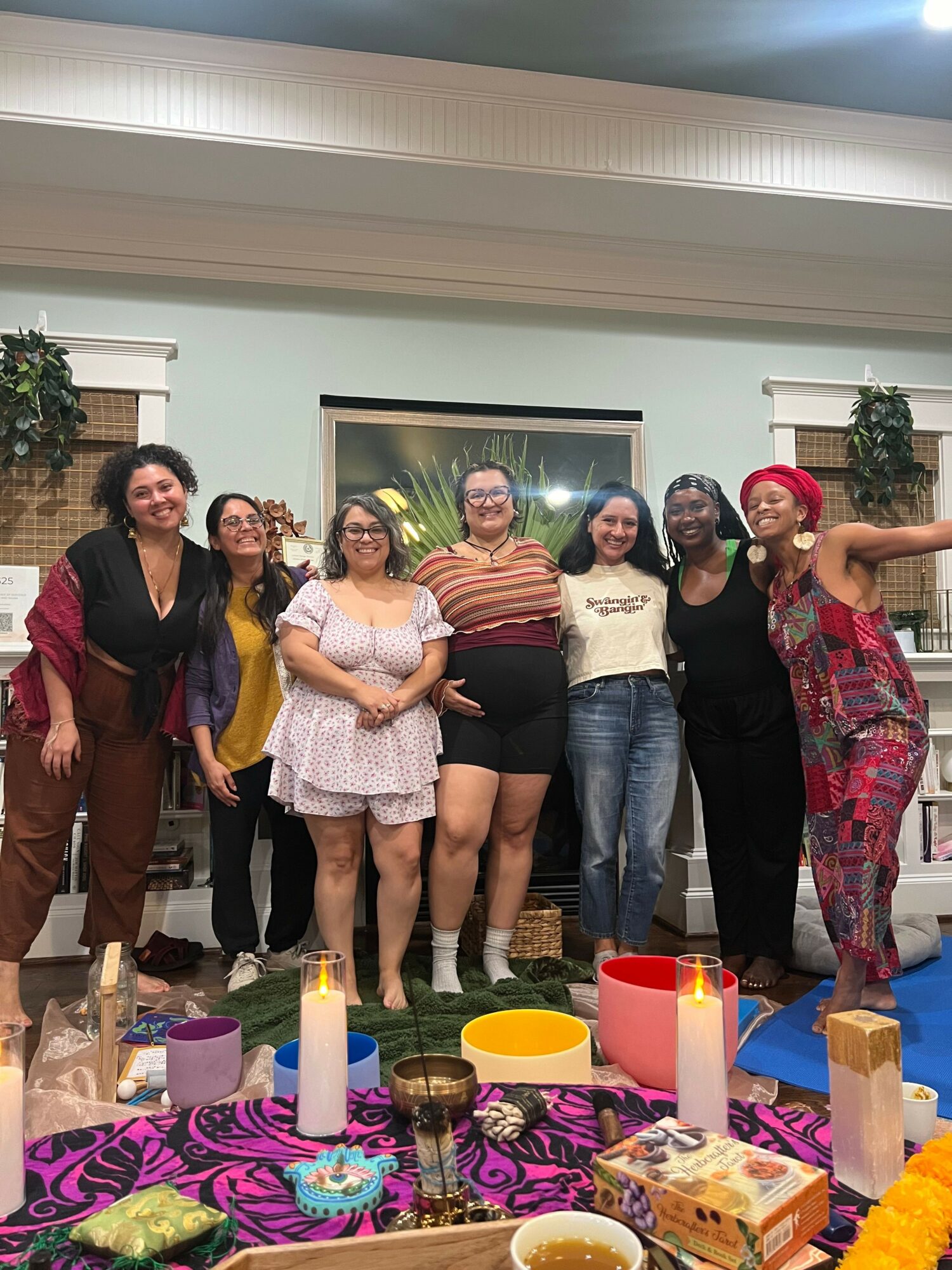
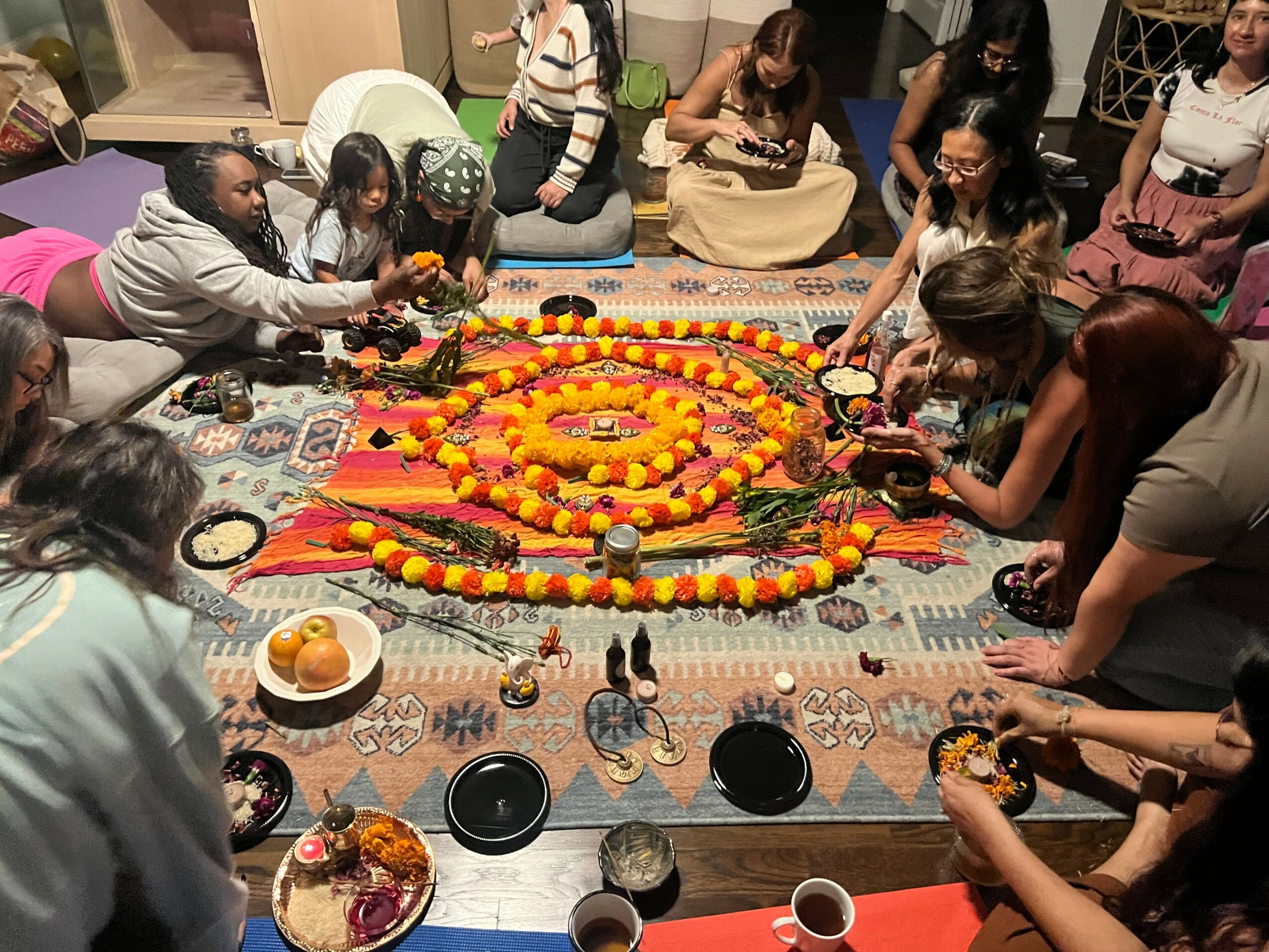
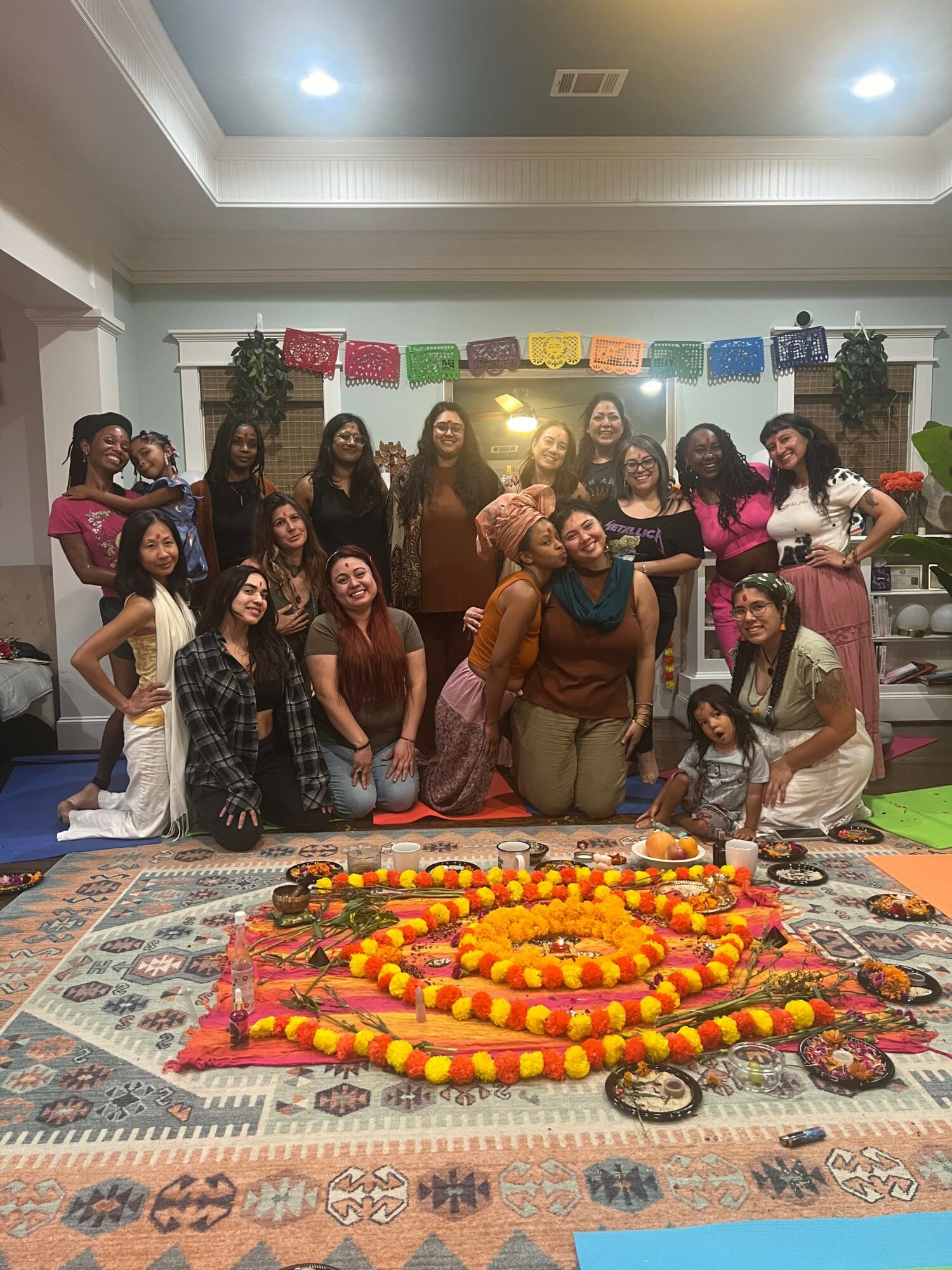
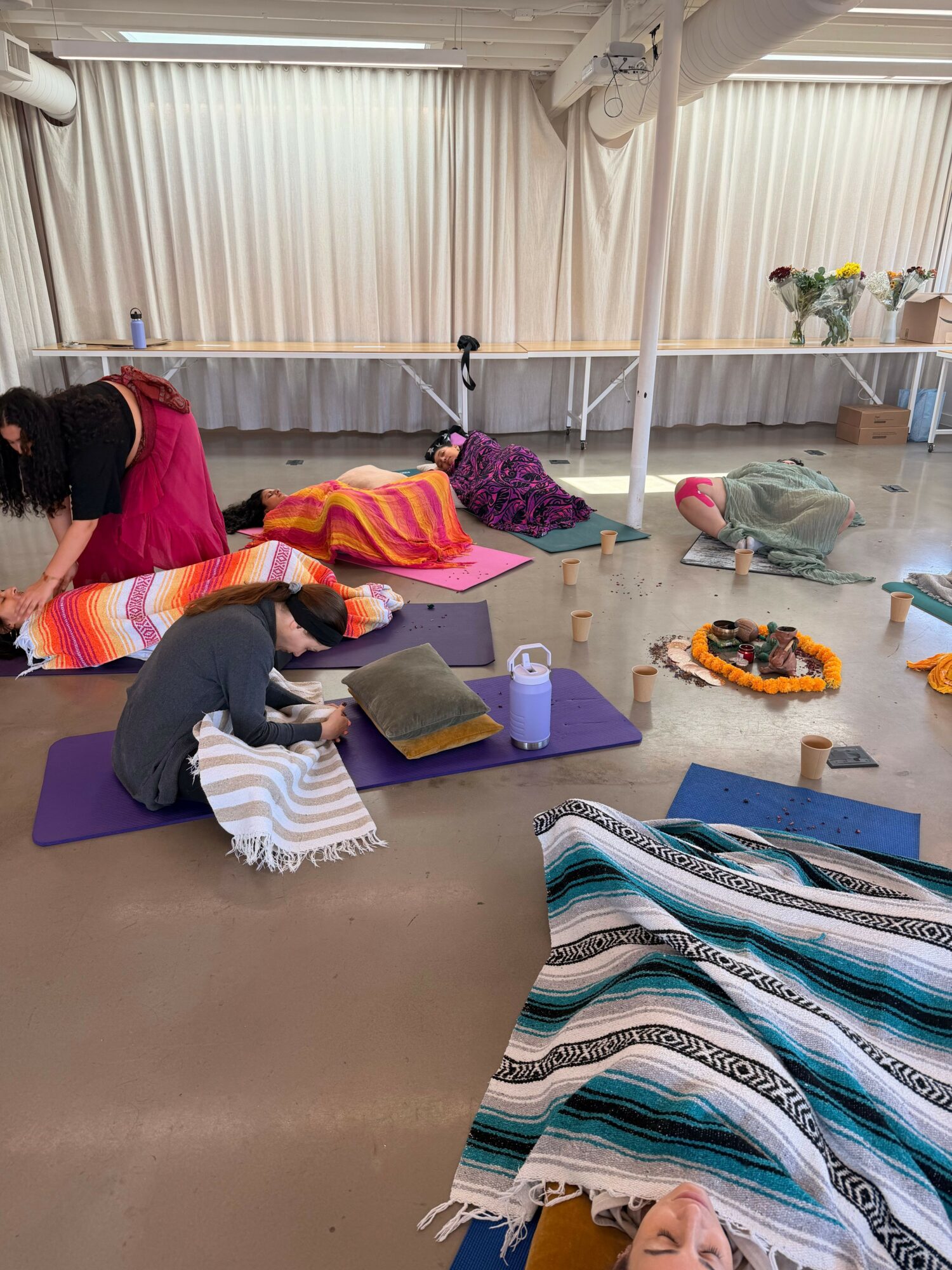
Last year, I brought Mha Puja into one of the womb circles that my creative partner and dear friend, Blossom Leland of Goddess Glow Birthing, and I host. Our circles align with the natural rhythms of the moon, taking place twice a month on the full and new moons. In circle, we gather in community to reflect on how we are moving through the ebbs and flows of our lives, sharing or choosing to reflect internally, in a sacred circle: being witnessed and held in reverence and trust. We offer a powerful experience of womb heartbeat locating, shared to us by our beloved friend and birthworker, Alexis Ramirez of Sol y Luna Diosa, learning from Indigenous Kichwa wisdom shared by Martha Arotingo of Partera di Anaku, from Ecuador. The practice of womb heartbeat locating allows people with wombs to meet the heartbeat of their womb; something that often comes as a surprise, and can be profoundly intimate to feel the aliveness in a space that holds so much both personally and societally. Body wisdom, relaxation, trust, ritual and creativity are at the heart of our circles. Aligning with each moon, we tailor our yoga flow, journaling prompts, tea and communal ritual to align with the astrological symbolism and energy of the moon.
In this special Mha Puja circle, each individual created their own mandala, which served as their own personal altar of devotion. Using traditional puja elements of flowers, fruit, rice, and candles, the act of creation was part of the ritual, and in turn emphasized that art is a beautiful expression of self love. I shared the story of the ritual; how my ancestors and family sat before themselves in devotion. Taking the time to intentionally cleanse yourself of the past, and to bless yourself, your hopes and your dreams for a prosperous future is an act of devotion so simple yet so powerful. Many of the women in that circle were caregivers, birth workers, therapists, survivors — people accustomed to pouring outward. To ask them to sit in stillness and worship themselves felt almost uncomfortable at first. But something shifted. The ritual allowed them to reclaim themselves not as service providers, not as survivors, not as roles — but as sacred beings.
In that room, my ancestry met my present work. My Newari lineage met Houston soil. Tradition became living, breathing, and communal. Art held it all together: the mandalas, the altar-building. Art gave form to something spiritual and intangible. It allowed each person to externalize their worthiness.
I move between cultures every day. I move between courtrooms and hospital rooms. Between crisis response and candlelight. Between paperwork and prayer. Being multicultural has taught me to translate — not just language, but meaning. It has taught me that ritual can travel. That healing can be both ancient and immediate.
Advocacy is spiritual work.
Birth is spiritual work.
Self-recognition is spiritual work.
Mha Puja reminds us that before we care for others, before we survive systems, before we bring life into the world — we must recognize the divinity within ourselves.
That is the work I carry forward.
Whether I am helping someone draft a safety plan, holding a hand during labor, or guiding a circle through self-blessing, I return to the same truth my ancestors practiced:
Your body is not a battleground. It is an altar. And it deserves to be honored
My services and offerings seek to empower individuals to listen to their innate body
wisdom, through ritual, movement, herbalism and doula-care that is trauma-informed
and culturally sensitive. I bring creativity, ritual and divination to the entire process of pregnancy, and am developing a tarot & pregnancy toolkit for self-reflection and deeper self-trust particularly for birthing people. It is an honor to serve Houston families and birthing people, and I feel fulfilled bringing my trauma-informed lens and cultural background into the birth room and to the birthing process.
We all face challenges, but looking back would you describe it as a relatively smooth road?
One of the greatest obstacles to my work is that it exists at the intersection of systems that were not built to honor the sacredness of the body. As a client advocate, I navigate bureaucracies that move slowly while survivors need safety urgently. Funding limitations, housing shortages, and legal barriers often constrain what justice can look like in real time. In birth work, I witness medical systems that can sideline informed consent, particularly for women of color and immigrants, whose pain and intuition are too often dismissed. I also carry the complexity of translating ritual and ancestral practices into spaces that may not immediately understand them, sometimes feeling the quiet pressure to make my work more “palatable” or less spiritual. And on a personal level, holding trauma in both advocacy and birth spaces requires constant tending to my own nervous system so that I do not become depleted. Yet these obstacles clarify my commitment. They remind me that this work is not only about individual support, but about gently resisting systems that disconnect people from their power and insisting, again and again, on dignity, autonomy, and the sacredness of the self.
Alright, so let’s switch gears a bit and talk business. What should we know?
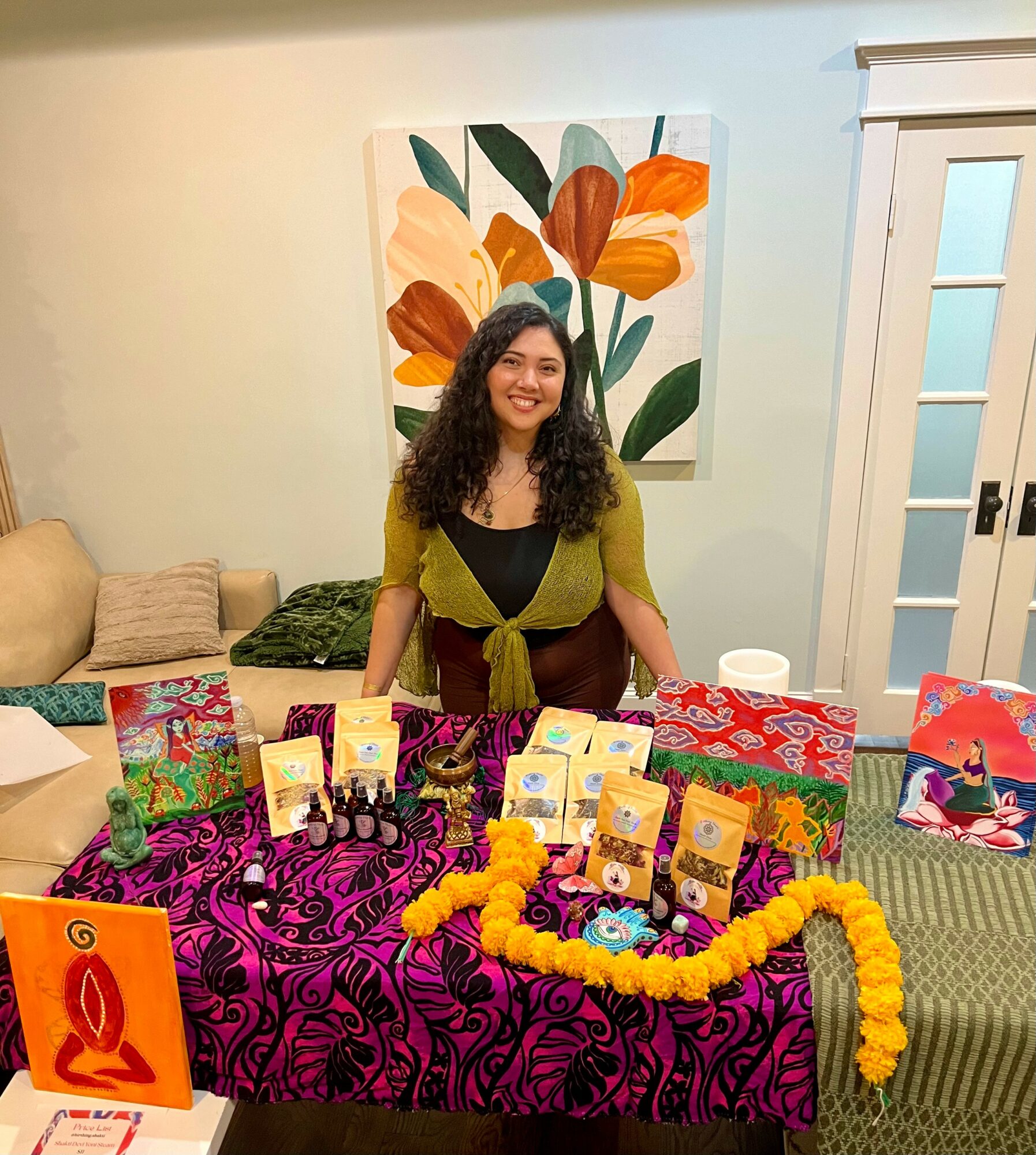
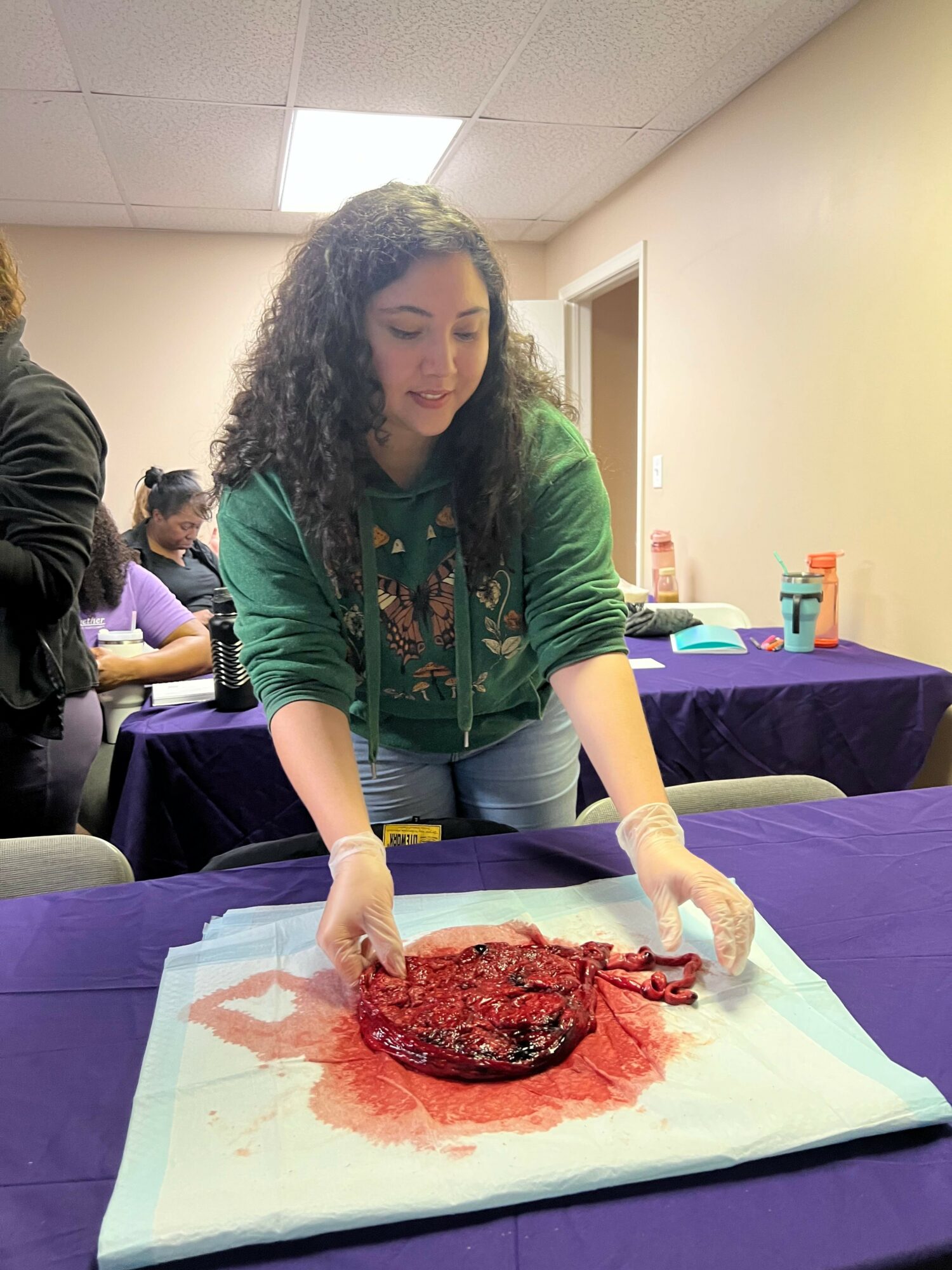
As a birth worker, I offer full-spectrum doula support that honors pregnancy, birth, postpartum, and all reproductive experiences with compassion and informed care. I provide physical and emotional comfort measures throughout pregnancy and labor, guide partners in preparation so they feel confident and connected, and create grounding spaces where informed consent and autonomy remain central. My practice also includes placenta art as a ritual honoring of birth, handcrafted herbal products to support the body’s transitions, and creative offerings such as art prints and art-based reflection tools. Through artistic play and tarot-led explorations of self, I help clients access intuition, process transformation, and reconnect with their inner wisdom. In circle facilitation, I weave all of these elements together — ritual, creativity, education, and embodied support — to create spaces where individuals and communities can move through life’s thresholds feeling held, empowered, and deeply seen.
What makes you happy?
In fourth grade, I started an all-girl vigilante justice group called the Kind Girls. We patrolled the playground to stop bullying against girls — and, of course, designed our own costumes. Even then, I understood myself as someone meant to stand beside others in moments of vulnerability. That instinct has followed me into adulthood, shaping my work as a doula, advocate, circle facilitator, and artist. What began as childhood protectiveness has matured into a deep commitment to bodily autonomy, safety, and empowerment.
Fulfilling this childhood calling feels especially meaningful because it has required me to walk my own path of transformation. I have learned to sit with my anxiety, to build self-trust, and to move through uncertainty with steadiness. The same practices I offer others — grounding, reflection, ritual, creative expression — are ones I have used to come home to myself. Finding peace within my own nervous system allows me to hold space for others without urgency or fear. It allows me to lead from embodiment rather than reactivity.
Bringing this work to the Houston community is an honor. In a city as expansive and diverse as ours, I believe internal healing has a ripple impact. When someone reclaims their voice in a birth room, leaves an unsafe situation, or blesses themselves in ritual, that shift extends beyond the individual. It touches families. It reshapes relationships. It transforms communities. The little girl who once patrolled the playground could not have imagined the scale of this work — but she would recognize the heart of it. I am still standing beside others. Only now, the costumes have become candles, mandalas, birth rooms, and brave conversations — and the justice we seek begins within.
Pricing:
- Pricing is outlined on my website
Contact Info:
- Website: birthingshakti.my.canva.site/birthing-shakti
- Instagram: @birthing.shakti