






Today we’d like to introduce you to Joni Adams.
Joni, we appreciate you taking the time to share your story with us today. Where does your story begin?
The Story Behind the Practice
If you had told me years ago that I would spend most of my life sitting with people and talking about their feelings, their struggles, and their hopes for change—I probably would have smiled and said, “That actually sounds pretty great.”
For the past 29 years, I’ve worked in the mental health field, and for 21 of those years I’ve had the privilege of serving as a Licensed Professional Counselor in Texas. What first drew me to this work was a deep curiosity about people—their stories, the ways they adapt to life’s challenges, and the incredible resilience that often appears when someone finally feels heard and understood.
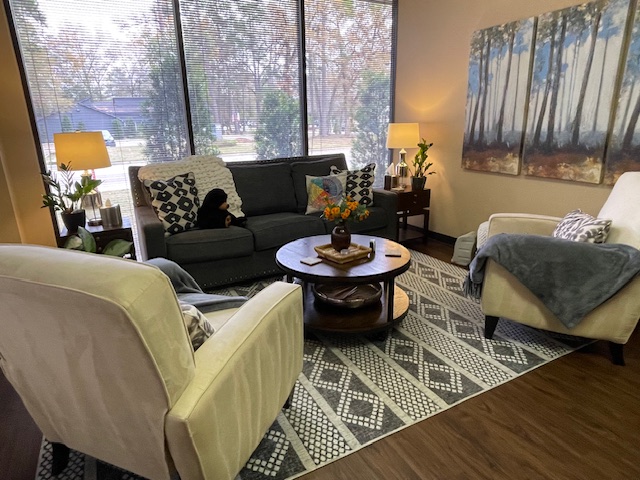
In 2011, I opened Kingwood Psychotherapy & Assessment Center as a solo practitioner. At the time it was a small, simple beginning—one office, one therapist, and a strong belief that people deserve thoughtful, compassionate support when life gets difficult.
Over time, the practice began to grow. Not just in the number of clients we served, but in the vision for what it could become. It has been an amazing experience to collaborate with so many other amazing Kingwood therapists, physicians, and school counselors. It’s so beautiful to see our community come together during times of need, such as when hurricane Harvey destroyed our community. Churches opened their doors, neighbors kayaked through streets looking for survivors, physicians were there to prescribe emergency medication to those to had no time to grab it before flood waters were rising.
Today, Kingwood Psychotherapy & Assessment Center has evolved into a small group practice, and one of the most meaningful parts of this stage of my career is having the opportunity to supervise, mentor, and support some incredibly talented up-and-coming therapists in our community. Watching new clinicians develop their skills, confidence, and clinical voice is something I truly cherish.
While the practice has expanded, the foundational cornerstone remains the same: creating a place where people feel safe, respected, and supported as they navigate life’s challenges and growth.
After nearly three decades in this field, I still feel grateful for the opportunity to do this work every day. Being trusted with someone’s story is the ultimate privilege—and it’s an honor to walk alongside people as they move toward healing and change. I sincerely thank each client who has given me this tremendous gift.
Would you say it’s been a smooth road, and if not what are some of the biggest challenges you’ve faced along the way?
The structure of the mental health marketplace has considerably changed over the years. Independent clinicians now compete with large, venture-capital-backed therapy platforms and digital mental health companies that have significant marketing resources and technological infrastructure. These platforms often dominate search results and online directories, making it harder for smaller practices to remain visible. Private practitioners increasingly find themselves investing time and money into websites, search optimization, social media presence, and online profiles simply to maintain a steady flow of referrals. For many therapists, this shift toward constant digital visibility feels far removed from the relational focus that originally drew them to the profession. This is definitely true for me.
Technology itself presents both opportunities and challenges. Telehealth has expanded access to care and created flexibility for many clients and clinicians. However, the same digital ecosystem that allows therapy to happen remotely has also introduced new forms of competition. Artificial intelligence mental health tools, chatbots, and self-help applications are increasingly marketed as substitutes for therapy. While these technologies can offer education or temporary emotional support, they cannot replicate the depth of the therapeutic alliance. Psychotherapy relies heavily on attunement, emotional presence, and relational safety—qualities that emerge through human connection rather than algorithms. Still, the rapid development of AI has raised questions about how society values human care and expertise in an era of automated solutions.
At the same time, therapists are working with clients whose lives are increasingly shaped by constant digital engagement. High levels of screen time, social media comparison, and fragmented attention have contributed to rising rates of anxiety, loneliness, and depression. Many therapists report that part of their work now involves helping clients rediscover presence, embodied awareness, and authentic relationships in a culture that often prioritizes speed, distraction, and virtual interaction. The therapeutic space has become one of the few environments where people are invited to slow down, reflect, and experience genuine interpersonal connection.
Adding another layer of complexity is the broader social and political climate. Political polarization has intensified family conflict, identity stress, and mistrust across communities. These tensions often enter the therapy room through strained relationships, moral injuries, or deep ideological divides between loved ones. Therapists must navigate these conversations carefully, maintaining a space that prioritizes empathy, curiosity, and psychological safety in a time when many public conversations are marked by hostility and certainty.
Yet despite these obstacles, the fundamental value of psychotherapy remains remarkably resilient. In an era increasingly shaped by automation, digital communication, and social fragmentation, the simple act of two human beings sitting together and engaging in honest, compassionate dialogue has become more important than ever. While the structure of the field may continue to evolve, the core of therapy—the healing power of human connection—remains something that technology cannot replace. Often times so much is said in a therapy session, without saying a word.
Alright, so let’s switch gears a bit and talk business. What should we know about your work?
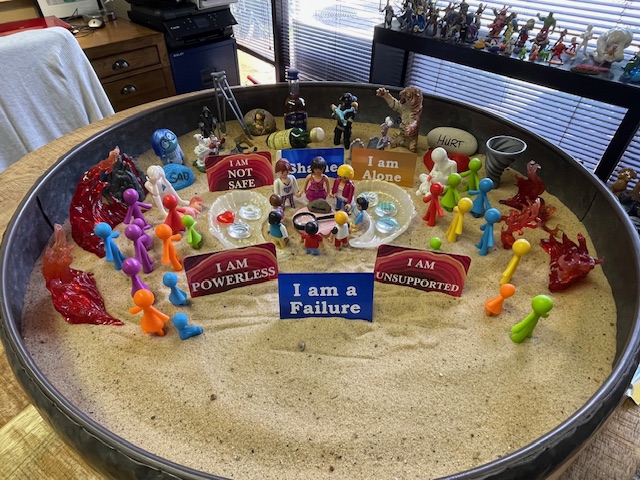
Most of my professional development has gravitated toward a trauma-informed multidisciplinary approach. I continue to learn new things about the fascinating relationship between the physical and psychological parts of our existence. My approach to therapy includes utilizing EMDR, sandtray, and polyvagal theory integration. I try to balance my time between meeting with my clients, supervising students and LPC Associates, helping with EMDR trainings and consultations, and providing free workshops or presentations to the community.
Can you tell us more about what you were like growing up?
I grew up as an average kid in Victoria, Texas. I loved school, competing in dance competitions, and hanging out with my friends. Victoria is a small town, so some of my favorite hangouts were the mall, Sonic, and the skating rink. I got my first job as a Sonic carhop when I turned 16. I would have loved to skate the orders to the customers, but unfortunately it wasn’t a roller skating Sonic.
Pricing:
- $185 per 50-min session with Joni Adams
- $145 per 50-min session with an LPC Associate Supervised by Joni Adams
Contact Info:
- Website: http://www.mykingwoodtherapist.com/
- Facebook: https://www.facebook.com/joniadamslpc/
- LinkedIn: https://www.linkedin.com/in/joniadams