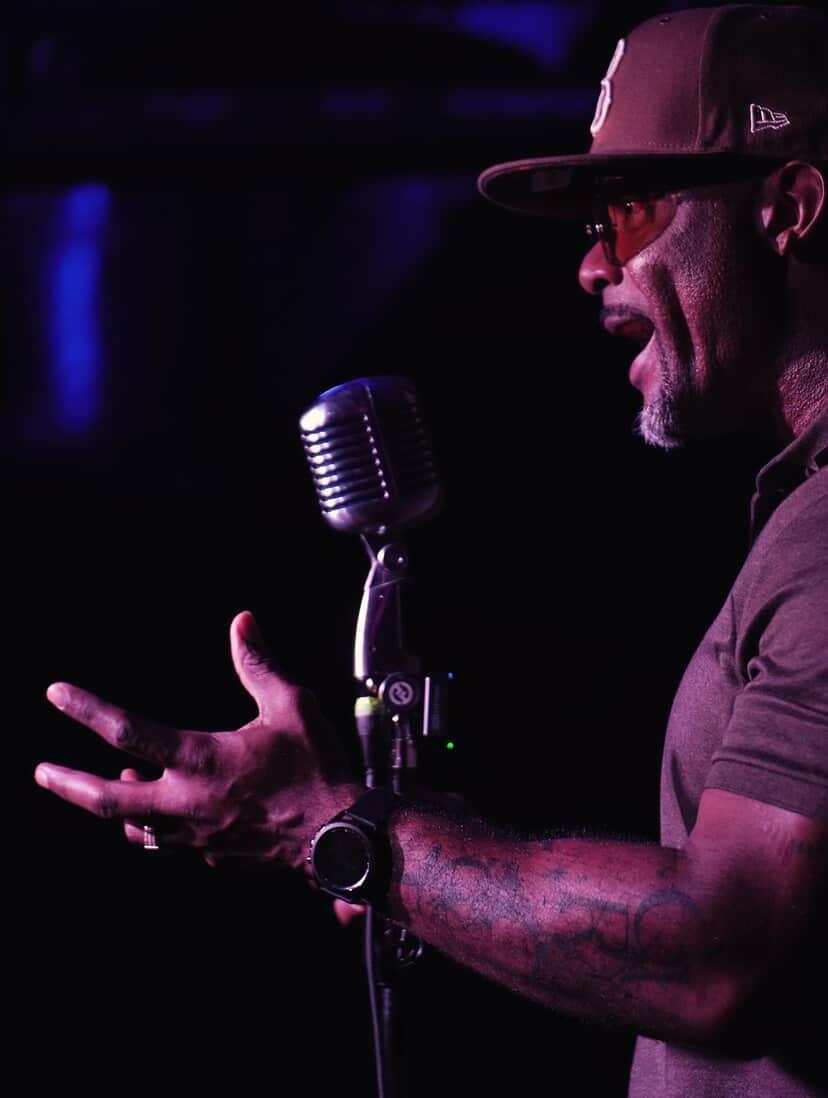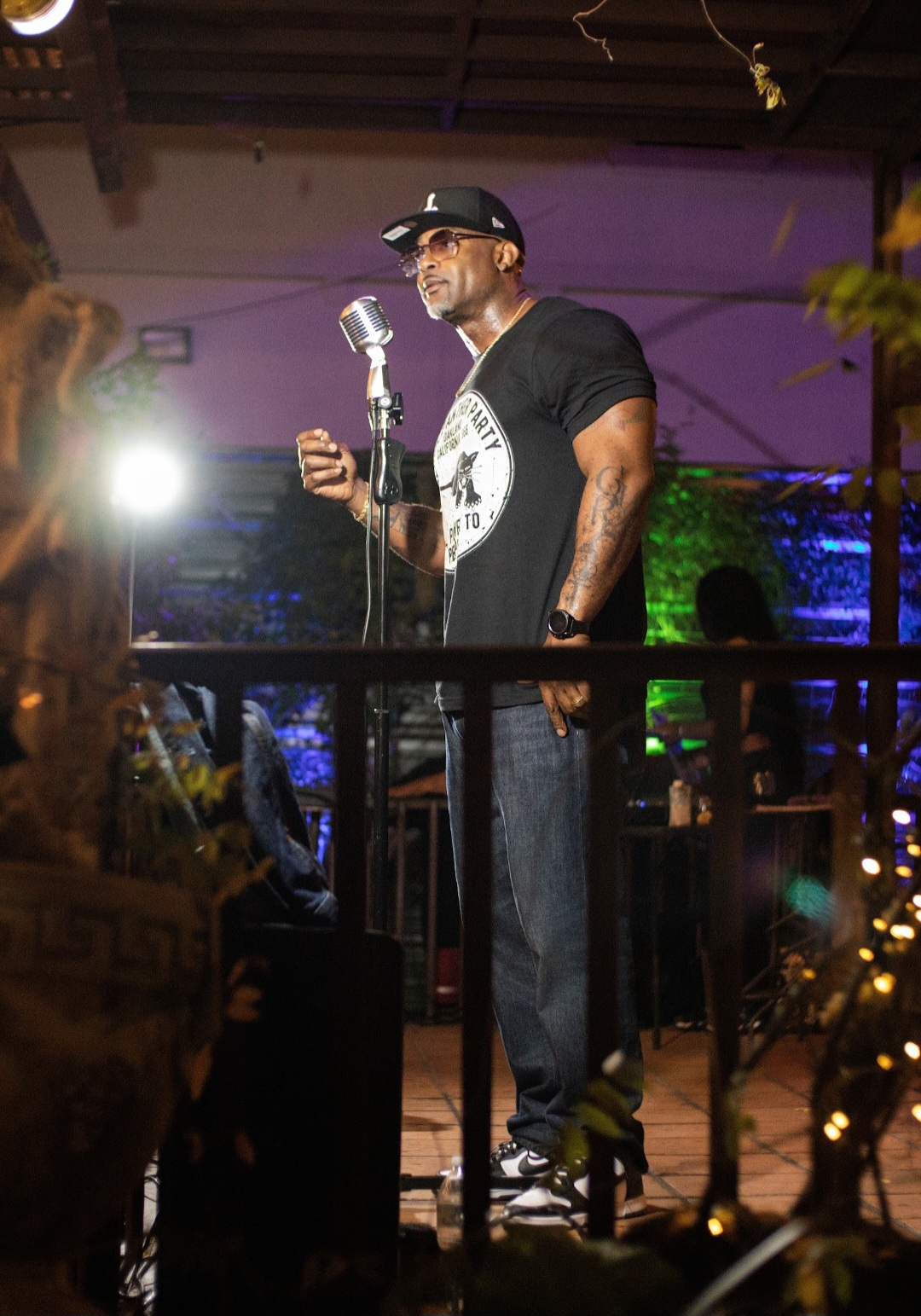





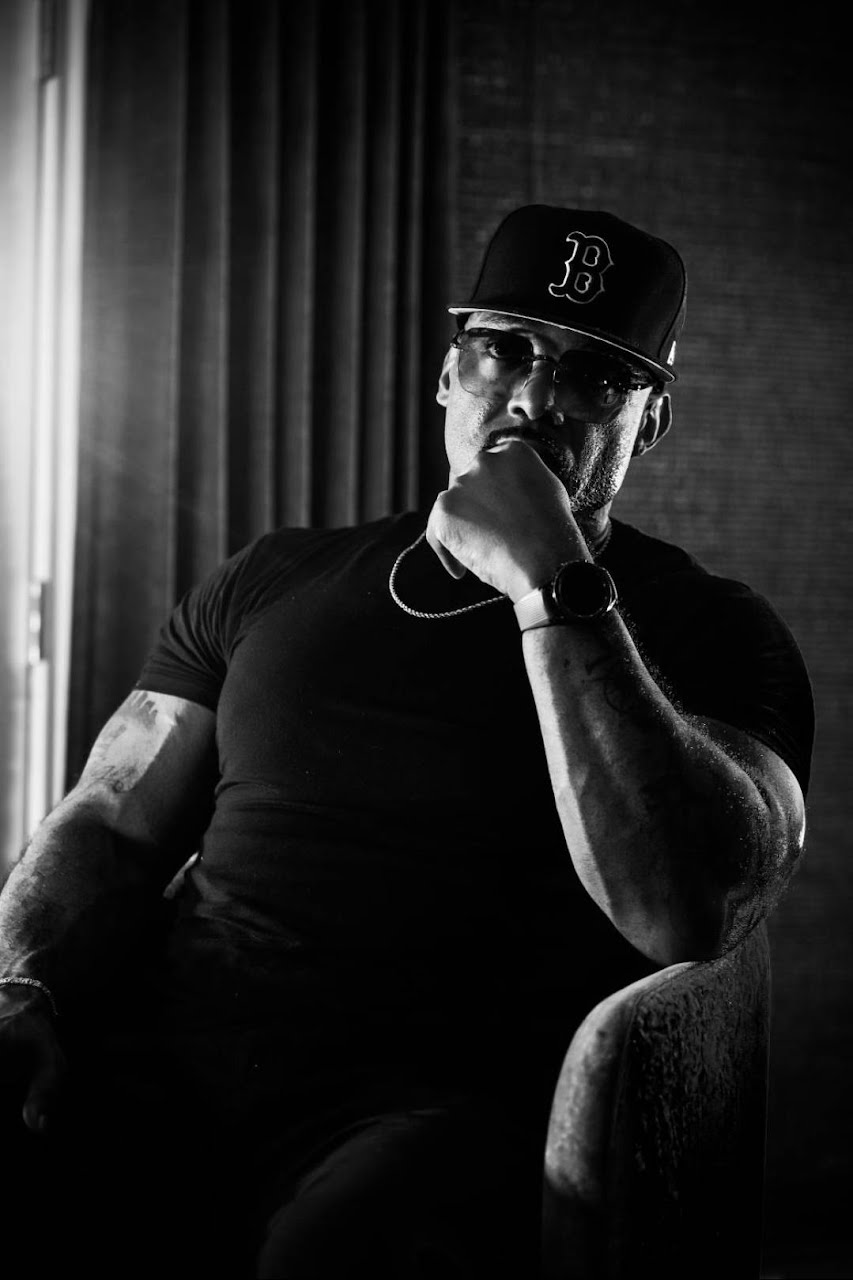
Today we’d like to introduce you to Fred B..
Hi Fred, we’d love for you to start by introducing yourself.
My mother instilled a relentless work ethic and a love of literacy in me from an early age. From second grade through middle school, while she cooked dinner, she’d have me read aloud — often from a shorthand dictation book, sounding out the translated text. If I stumbled or lost confidence, I had to start the paragraph over. She’d push me to read above my grade level, and she kept me fed with Ebony magazine, Sports Illustrated for Kids, and the newspaper — anything that would sharpen me beyond comic books. I didn’t appreciate it at the time, but it built the foundation for everything I do now as a communicator.
I grew up immersed in church — perfect attendance in Sunday school, active in youth ministry, singing, ushering — all of it planting seeds of leadership and public speaking that would later blossom. I eventually became a youth pastor and associate pastor, and it was in those early years that I also discovered spoken word, performing at open mics like First Fridays in Northridge, where I became a regular and found my voice as an artist.
That same scene is where I met my wife — though it took a while. She was working the door, I was the guy who got on the mic, and despite circling the same community for years (her mother and sister already knew my work), she wasn’t easily impressed. We connected eventually, and she’s been my creative partner ever since — reading drafts, giving feedback on tone and cadence, handling the analytical and administrative side of our business while I handle the art.
In 2014, I stepped down from ministry — voluntarily, out of a desire for integrity. Grad school had sharpened my thinking and raised questions I could no longer set aside, and I didn’t want to stand in front of people pontificating things I privately doubted. The fallout was harder than I expected: the community I’d given years to largely disappeared, and I had to grieve not just a role but an identity. In that uncertainty, I found poetry — watching a slam and realizing it could hold the same things ministry once held: community, ritual, healing, truth-telling — just in a different shape.
After marriage, grad school, kids, and relocating, I took roughly a decade away from performing altogether. When I returned, Houston’s poetry scene reignited everything — it gave me a rich, accessible community of working artists in a way I hadn’t experienced before. That return led to two major milestones: producing Heart Burns, my own one-hour poetry special with WeGoLive, which sold out and required moving venues twice; and being named one of the Kings of Poetry by Poetry Lounge, one of Houston’s longest-standing open mics. Poetry has become a continuation of the ministry I started in church — just without the walls, reaching people who’d never set foot in a sanctuary.
Would you say it’s been a smooth road, and if not what are some of the biggest challenges you’ve faced along the way?
The hardest stretch was stepping down from ministry in 2014. I wanted to be honest with myself and explore questions I couldn’t unsee after grad school, rather than show up disingenuous. But the fallout was brutal — I’d built my entire trajectory around being a pastor, and once I stepped aside, the community I’d given years to disappeared almost overnight: no more check-ins, no more fellowship, people quietly told to disassociate from me. I’d tried to leave as gracefully as possible — proper notice, requested accountability, protected the leadership who’d endorsed me — but wasn’t met with that same consideration.
What I learned is that the language of “spiritual father and son” only holds as long as you’re producing value for the institution. The moment you’re not, you go from son to servant to stranger. That period brought real grief — grief over a calling, an interpretation of God I’d held onto, a community, and a sense of who I was outside of the title. People kept asking why I was running from my purpose, and the honest answer was that I wasn’t running — I just couldn’t go back to a form of ministry I’d already outgrown. I had to sit in that uncertainty, not knowing if there was a next chapter at all, before I found one.
There was also the challenge of being boxed in by subculture. Coming up through the church, art there often got siloed — it wasn’t just poetry, it was “Christian poetry,” with an unspoken expectation to stay within certain lines and audiences. Growing past that required deconstructing some of my own assumptions and learning to hold space and fellowship with a much broader range of people, without needing everyone to conform to my beliefs first.
Producing Heart Burns came with its own obstacle: I’d never executive produced anything before. I’d been a featured artist with a 10–15 minute set, but never responsible for the full vision — selecting the lineup, the theme, the run of show, working with my producing partner to fill a room, and learning that a show is about far more than performance. Everything from the greeting at the door to lighting, sound, and timing had to feel harmonious, and that was an entirely new skill set to develop under real pressure, with real money and reputation on the line.
And after a ten-year hiatus from performing — marriage, grad school, kids, relocating — there was the challenge of rebuilding momentum from scratch: finding out whether the gift was still there, and whether people would still respond to it.
Kelvin Truitt — for First Fridays back in Northridge in the early 2000s. That’s where I got real momentum.
Park Windsor Baptist Church, Livingstone Cathedral of Worship, and a handful of other churches that allowed me to get comfortable on microphones, managing crowds, presence, etc.
WeGoLive — strong endorsement, frequent bookings, connections, promotion, and most recently producing alongside me on Heart Burns, my 1-of-1 poetry experience. I learned a lot about the business side of things, producing, and proper promotion. It was a wonderful experience and a defining moment.
Poetry Lounge — recently acknowledged me as one of the Kings of Poetry. Their committee nominated me among 30 other emerging and well-established voices in the Houston poetry community. That recognition was special because of the weight Poetry Lounge carries in the community: their long-standing presence and the caliber of talent that funnels through there.
Write About Now (WAN) — gave me my first extended feature, an experience that expanded my influence, skill, and expectations for the future.
Charles Jones, Simeon, Justin Sanders, Lemuel, Ray Chaves, Troy, and Tre Richards — all instrumental early on in my first recording project, released in 2005. Charles Jones, my best friend and owner of MLB Entertainment, along with his wife (actor and coach), still provide constant thought partnership.
My mother — for all the years when I’d come home and insist I didn’t have any homework, she still made me read aloud while she cooked dinner. She made me comfortable with public speaking and insisted on literacy, presence, and excellence. She always advocated for and demonstrated a passion for reading.
My wife — who hears and endures all the drafts, who encourages me after every performance, and takes on an extra share of housework so I can have space to rehearse and plan. She has always said yes to my dreams and even challenged me to dream bigger. She’s been a constant source of wise counsel. The arts brought us together — she was working the door at an open mic when I recognized I might know her, and her family already knew of my art.
Poets I’ve gleaned from at a distance, and been fortunate enough to brainstorm or receive coaching from directly: Scott Free, Ebony Stewart, Fluent, and Saji Sami.
Other influences: Obbie West, for his internal rhyme scheme; ChristheCoCreator (on Instagram), for his mastery of metaphor and imagery.
Appreciate you sharing that. What else should we know about what you do?
I’m a poet, storyteller, and instructor by trade — two decades deep in the learning and development space. My background as a former pastor and teacher in ministry can’t help but shape how I write and how I deliver: most of what I do reads as entertainment, but I’d like to think there’s a measure of edutainment in it too. Even when a piece doesn’t land on a tidy conclusion, my goal is for the experience to provoke thought, reflection, and a little instruction along the way.
That’s shown up in a lot of different rooms. I’ve been contracted for corporate Juneteenth and Black History Month celebrations, retirement parties, weddings — I’ve even officiated a few — and virtual poetry sessions and motivational speaking engagements. I ran my own training consultancy for a stretch, and I’m comfortable in just about any modality built around oratory: platform speaking, forums, workshops, all of it.
At its core, my work is trying to do two things at once: hold up a mirror so people see themselves more clearly, and create enough room for people to question the assumptions and borrowed arguments they’re carrying — to let go of ideas that no longer serve them, push past groupthink, and find the courage to do that publicly. I want my content to inform, but more than that, I want it to liberate
Where we are in life is often partly because of others. Who/what else deserves credit for how your story turned out?
Kelvin Truitt — for First Fridays back in Northridge in the early 2000s. That’s where I got real momentum.
Park Windsor Baptist Church, Livingstone Cathedral of Worship, and a handful of other churches that allowed me to get comfortable on microphones, managing crowds, presence, etc.
WeGoLive — strong endorsement, frequent bookings, connections, promotion, and most recently producing alongside me on Heart Burns, my 1-of-1 poetry experience. I learned a lot about the business side of things, producing, and proper promotion. It was a wonderful experience and a defining moment.
Poetry Lounge — recently acknowledged me as one of the Kings of Poetry. Their committee nominated me among 30 other emerging and well-established voices in the Houston poetry community. That recognition was special because of the weight Poetry Lounge carries in the community: their long-standing presence and the caliber of talent that funnels through there.
Write About Now (WAN) — gave me my first extended feature, an experience that expanded my influence, skill, and expectations for the future.
Charles Jones, Simeon, Justin Sanders, Lemuel, Ray Chaves, Troy, and Tre Richards — all instrumental early on in my first recording project, released in 2005. Charles Jones, my best friend and owner of MLB Entertainment, along with his wife (actor and coach), still provide constant thought partnership.
My mother — for all the years when I’d come home and insist I didn’t have any homework, she still made me read aloud while she cooked dinner. She made me comfortable with public speaking and insisted on literacy, presence, and excellence. She always advocated for and demonstrated a passion for reading.
My wife — who hears and endures all the drafts, who encourages me after every performance, and takes on an extra share of housework so I can have space to rehearse and plan. She has always said yes to my dreams and even challenged me to dream bigger. She’s been a constant source of wise counsel. The arts brought us together — she was working the door at an open mic when I recognized I might know her, and her family already knew of my art.
Poets I’ve gleaned from at a distance, and been fortunate enough to brainstorm or receive coaching from directly: Scott Free, Ebony Stewart, Fluent, and Saji Sami.
Other influences: Obbie West, for his internal rhyme scheme; ChristheCoCreator (on Instagram), for his mastery of metaphor and imagery.
Contact Info:
- Website: https://Bookfredb.com
- Instagram: Iamfredb
- Youtube: Iamfredb