



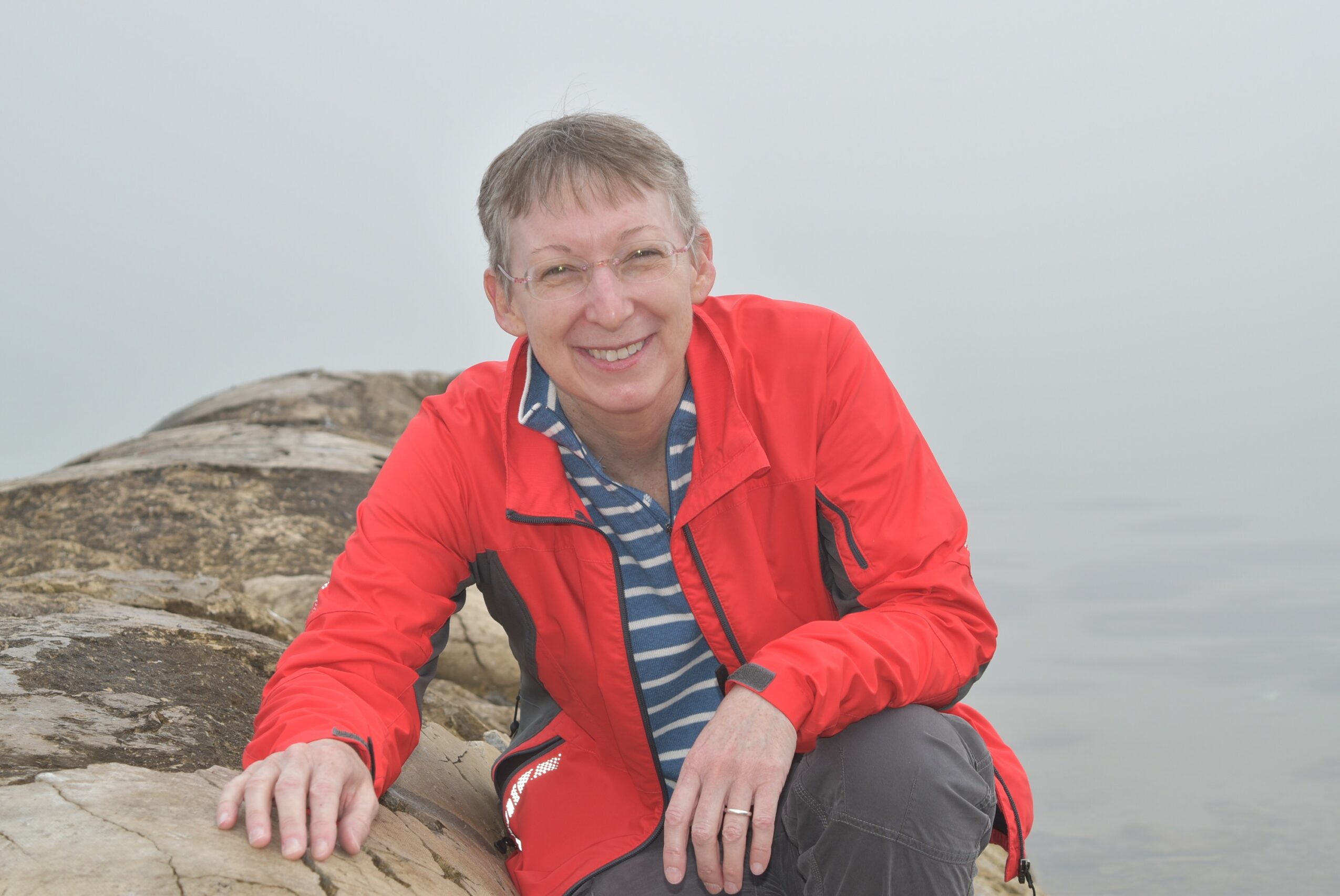
Today we’d like to introduce you to Suzette Mouchaty.
Hi Suzette, we’re thrilled to have a chance to learn your story today. So, before we get into specifics, maybe you can briefly walk us through how you got to where you are today?
.The nuts and bolts answer to how I became a professional artist is that I followed a path through local non-profit and public institutions. I started by taking night and weekend classes at Art League and then the Glassell Studio School at the MFAH. Five years later I had a portfolio that got me into the graduate program at the UH School of Art. The steps are easy to recount, but the actual journey was internal and it’s impossible to describe. I was so committed to the endeavor, so emotionally invested, that by the time I finished the 3-year grad program I was exhausted and I wanted to withdraw and just wrap myself in a cocoon. I remember one of my professors, Michael Ray Charles, saying, “please don’t turn inward, don’t hide your work away, please don’t do that”. It’s hard to keep the faith sometimes, but artists are very generous and the Houston art community is really supportive. Anya Tish was so encouraging – when she exhibited my work in her gallery I felt like I had a stake in the ground. Wayne Gilbert and Bill Davenport each gave me carte blanche to take over their gallery spaces for month-long exhibitions, and my recent foray into public art would’ve been impossible without the kind of support offered by the True North: Heights Boulevard Sculpture Project.
I’m sure it wasn’t obstacle-free, but would you say the journey has been fairly smooth so far?
.One of the challenges I’ve faced has been finding a studio space that allows me to perform the variety of tasks involved in the production of the kinds of pieces that I make. It’s hard to find a space amenable to large scale construction as well as finer work, like air brush painting, beading or making works on paper. At one point I actually had three studio spaces, which was crazy making since I had to spend so much time keeping track of what was where. The other obstacles are probably the same for most artists – covering expenses, both professional and personal, and still finding time to make artwork. I often have to put my art production on hold in order to keep the boat afloat, so to speak.
As you know, we’re big fans of you and your work. For our readers who might not be as familiar what can you tell them about what you do?
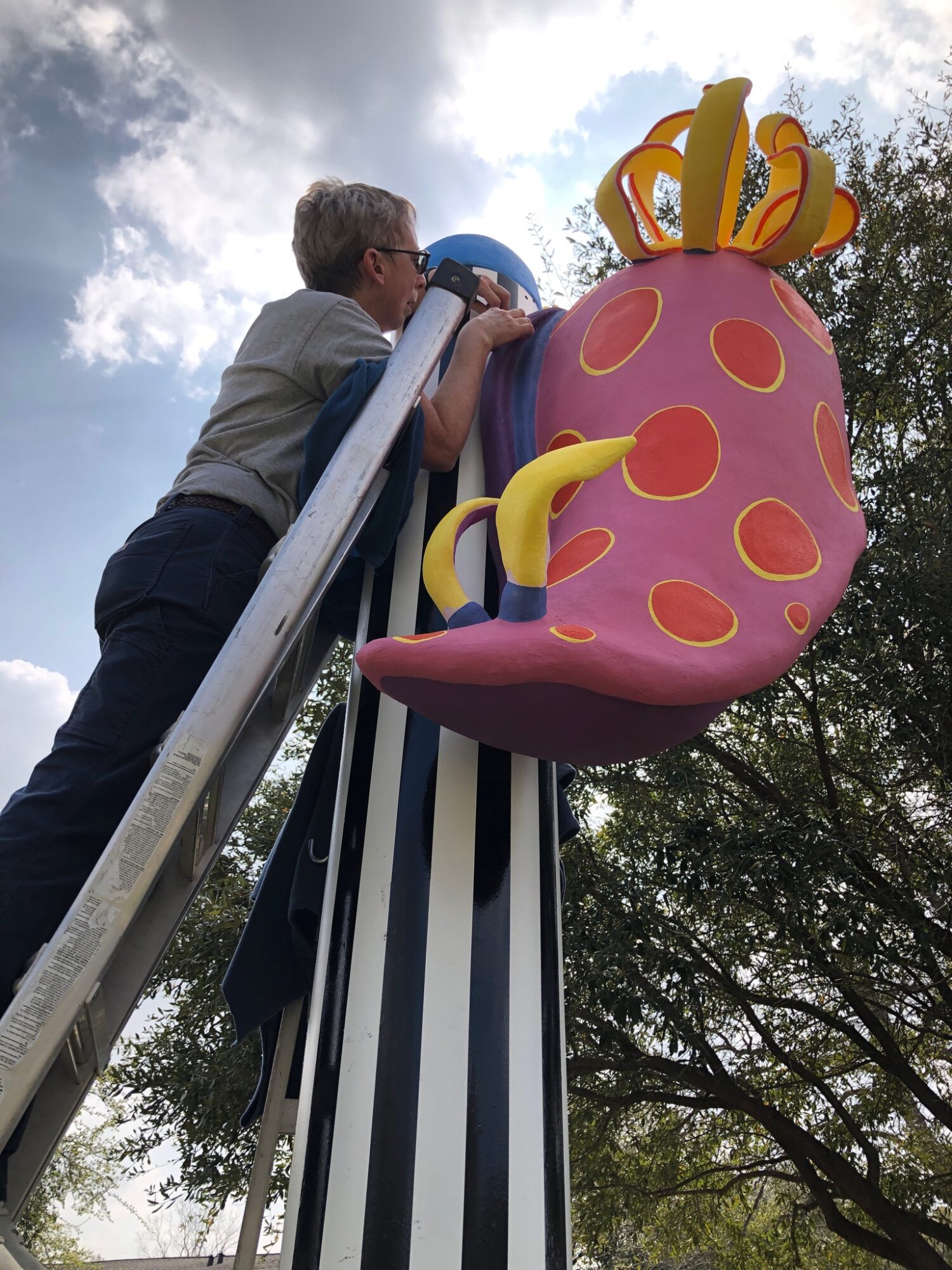
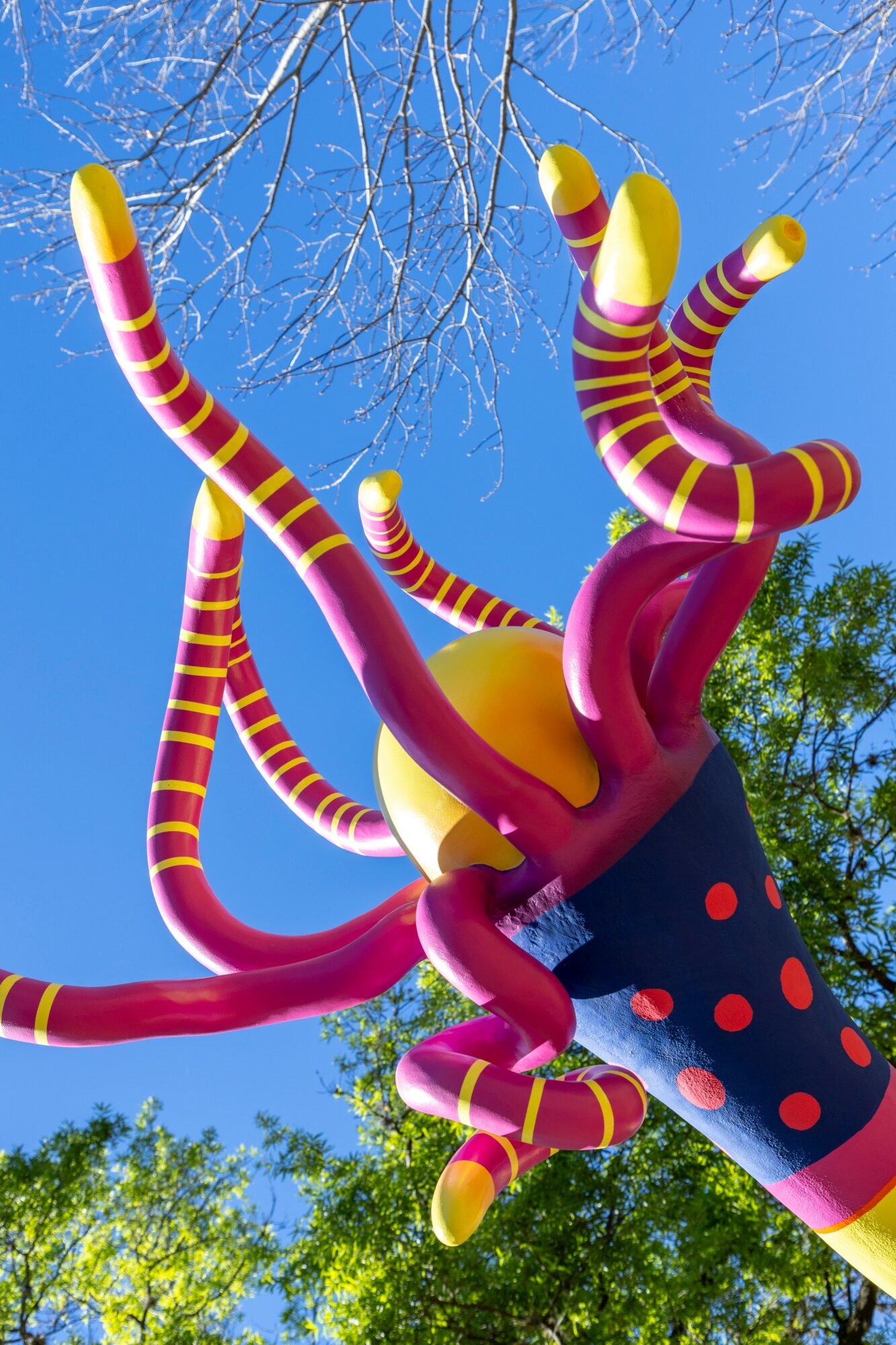
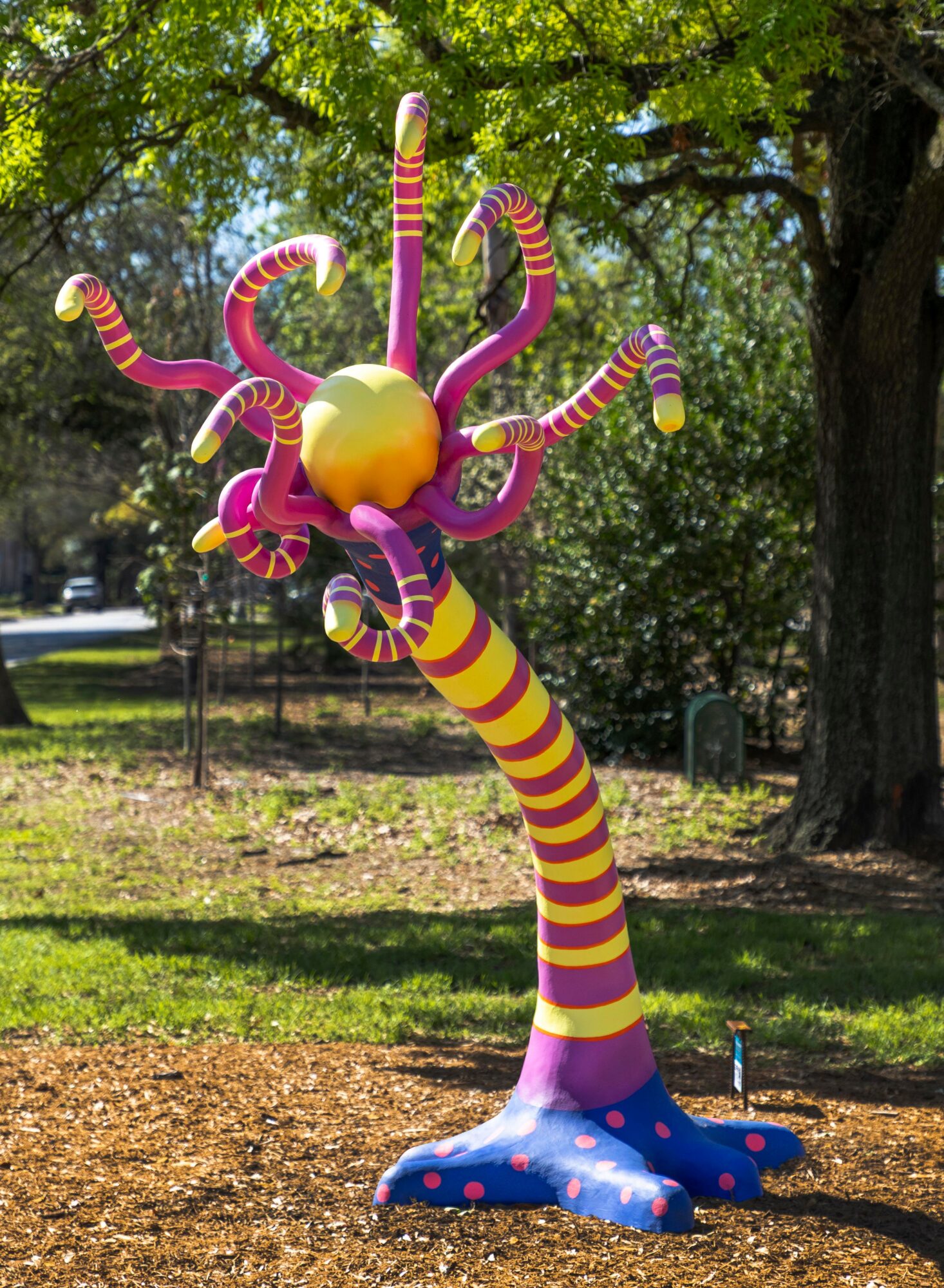
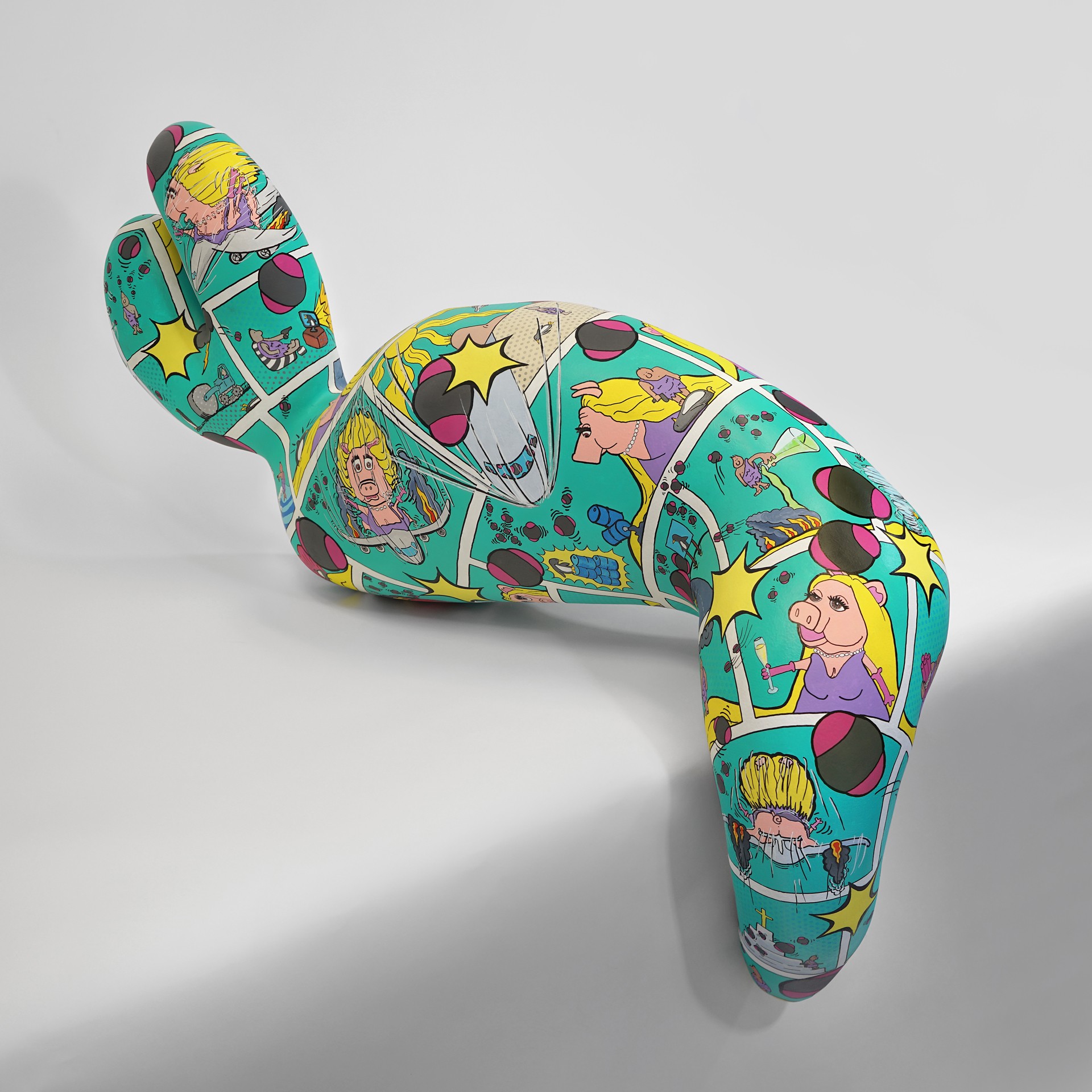
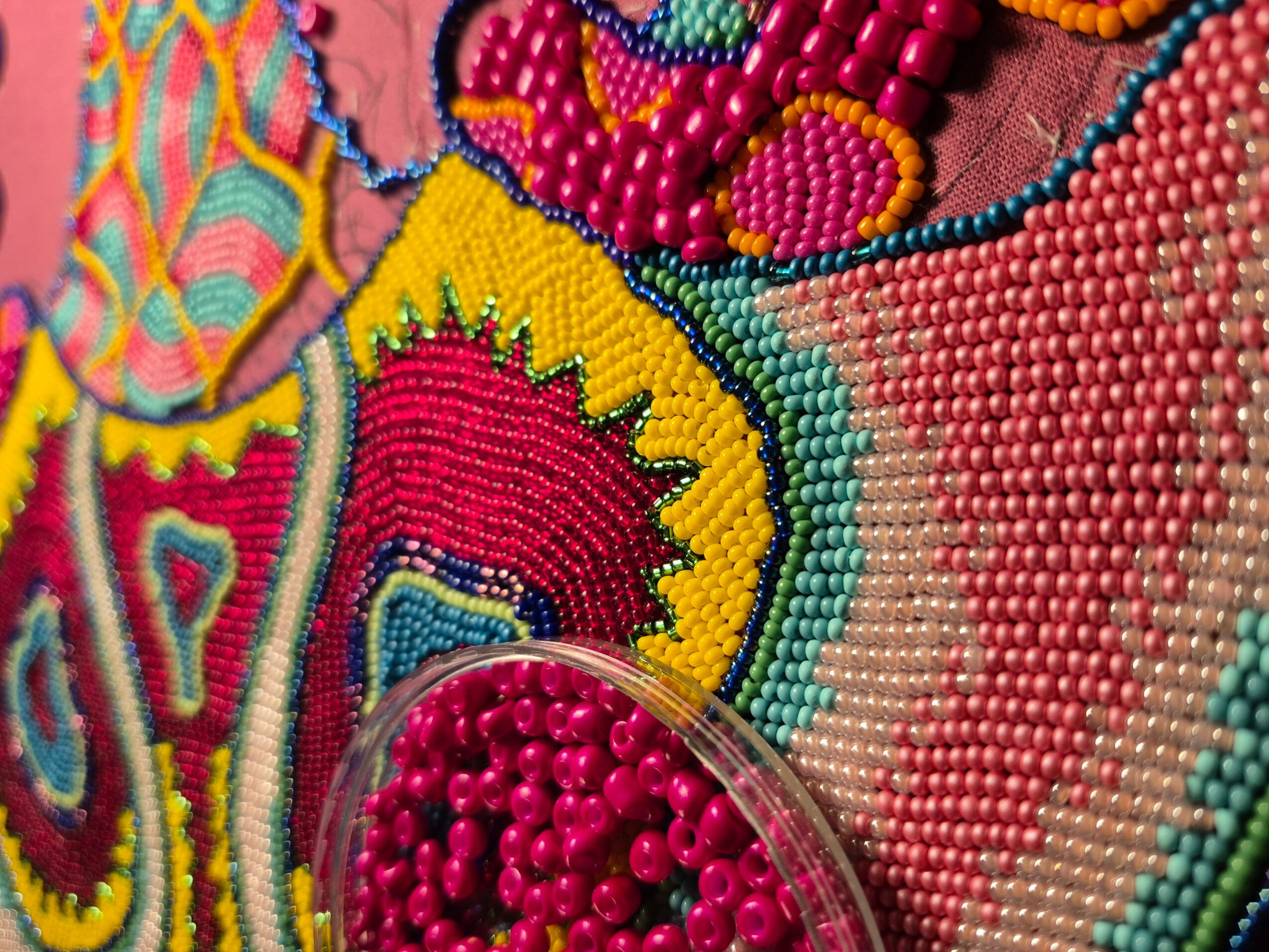
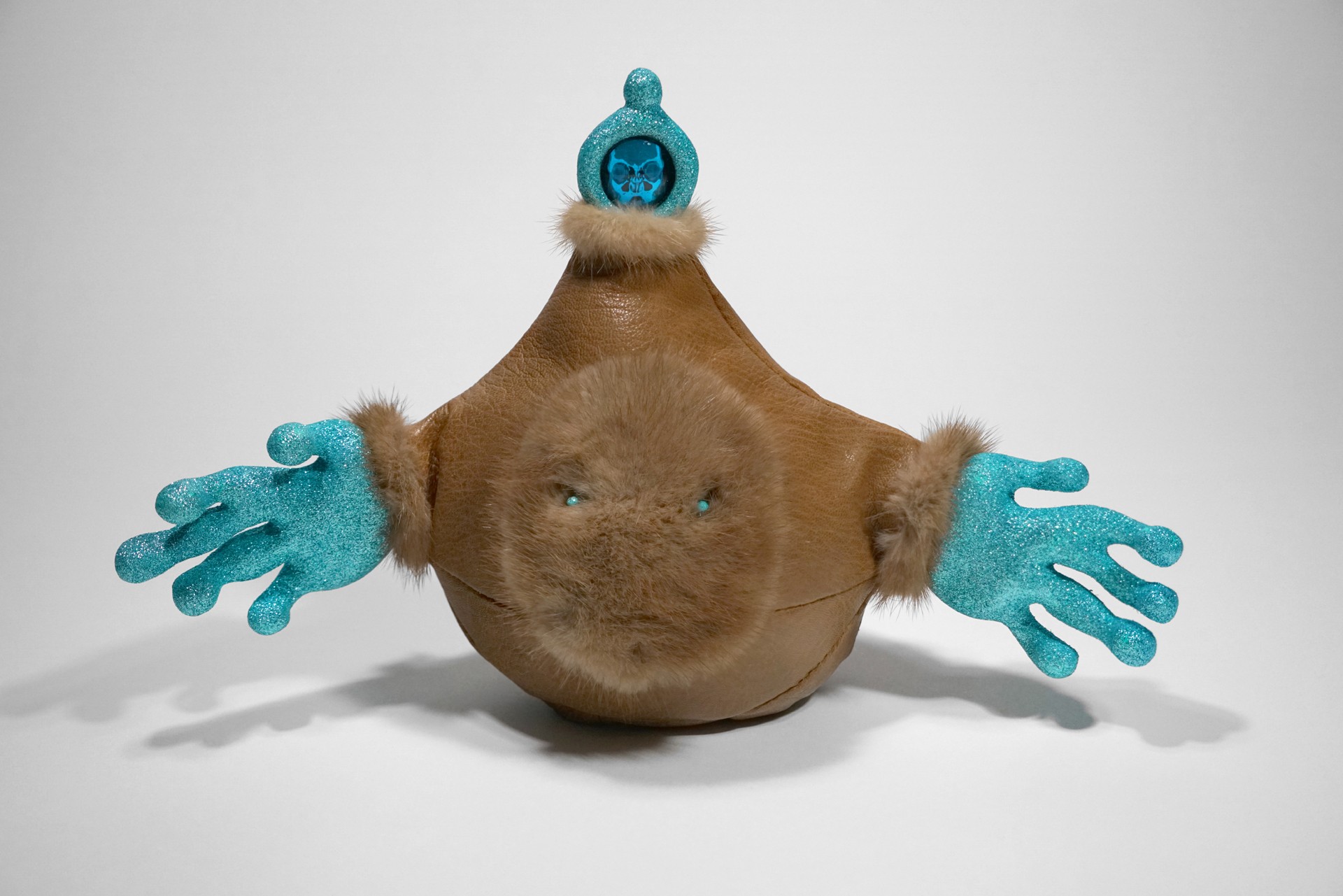
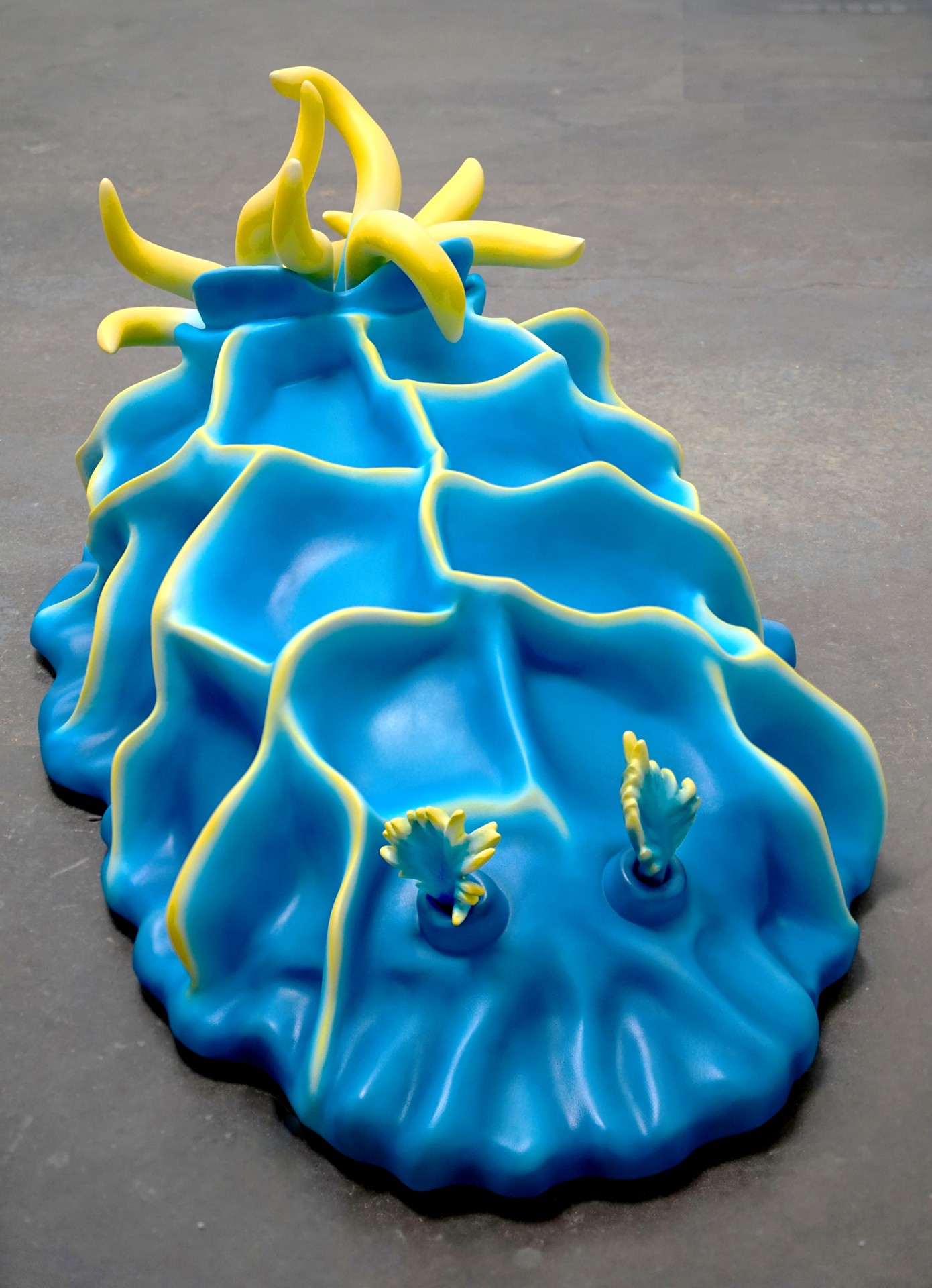
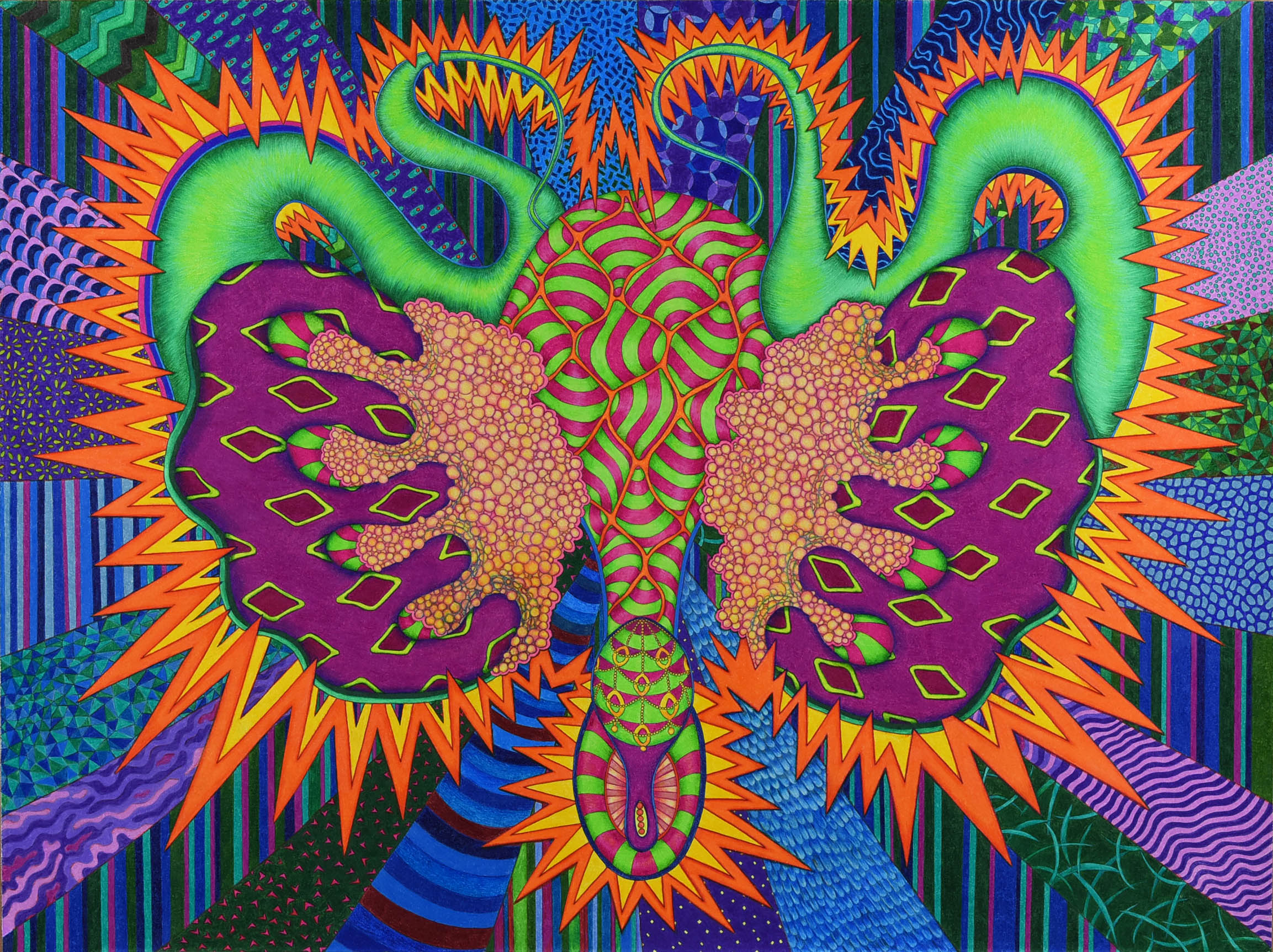
.Art feeds an obsessive need I have to somehow make sense of the world around me. I have a background in science, so for better or for worse, my artistic practice blends rational scientific thought with the imaginary and subversive of the artistic realm. I really love making quirky objects that address sociopolitical or environmental concerns with a slight tang of humor. I’m not specialized in any particular technique or type of artwork although I probably enjoy carving the most. Organic forms, brightly colored creatures, and references to the human body appear throughout my work. I’m not very prolific, mostly because I’m constantly exploring new media and materials. There’s always a learning curve which slows me down but that definitely keeps things interesting and helps me stay in the moment. This year its concrete sculptures and hand-sewn beadworks.
Where do you see things going in the next 5-10 years?
.Technology is changing fast and artists have always explored it. Artificial Intelligence computer software is a new tool that many artists will be put to use as they think about our culture and respond to it through their work.
Contact Info:
- Website: https://suzettemouchaty.com/
- Instagram: @smouchaty