





Today we’d like to introduce you to Michael Silverman.
Hi Michael, so excited to have you with us today. What can you tell us about your story?
I’m Michael Silverman, an independent game developer and the founder of Silverware Games. I’ve spent more than a decade designing, developing, and releasing games, often working across several disciplines—from game design and programming to writing, production, testing, and marketing.
My path has not been a straight line or an overnight-success story. It has been a long process of learning how to turn unusual ideas into playable experiences, completing projects with limited resources, listening to players, and improving with every release. One important early project was 100 Bullets, which gave me experience designing and shipping a game for Xbox. Since then, I’ve continued creating independent games for mobile devices, computers, and the web.
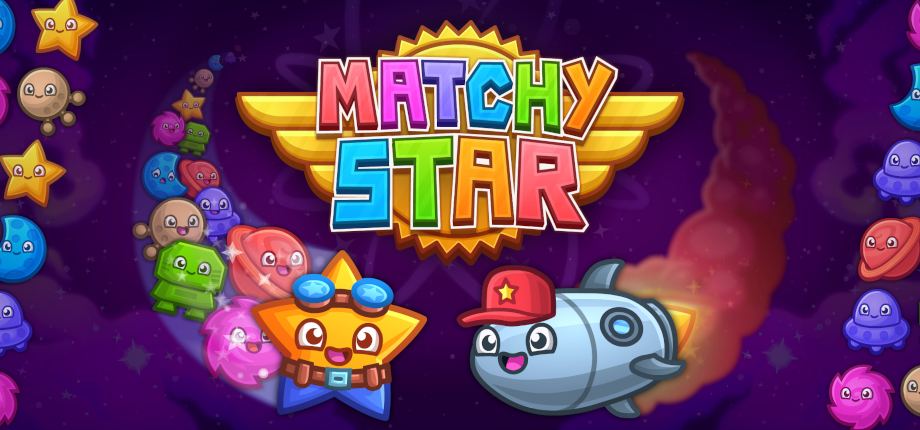
My current flagship project is Matchy Star, a skill-based matching game with a colorful science-fiction setting. I wanted to explore how deep and surprising a matching game could become without relying on the casino-style pressure or manipulative mechanics often associated with the genre. The result combines strategic matching, character abilities, collectible items, and runs that change as the player progresses.
Matchy Star is now in alpha testing, and a playable demo is available to trusted testers while I prepare it for a wider release. Watching people play has become an important part of the development process because it reveals things that are almost impossible to see while working alone. I’m particularly interested in thoughtful criticism that helps make the game clearer, more enjoyable, and more welcoming to different kinds of players.
Alongside Matchy Star, I continue experimenting with smaller games, interactive web projects, and games designed to involve livestream audiences. What ties the work together is my belief that independent games can be inventive, optimistic, and mechanically substantial without requiring an enormous studio.
I’m still building, learning, and refining the work. For me, getting “where I am today” does not mean reaching a finish line. It means having the experience and persistence to keep turning ideas into finished games—and still being excited by what the next one might become.
Would you say it’s been a smooth road, and if not what are some of the biggest challenges you’ve faced along the way?
It has definitely not been a smooth road. Independent game development combines creative work, technical work, and running a small business, and each of those presents a different challenge.
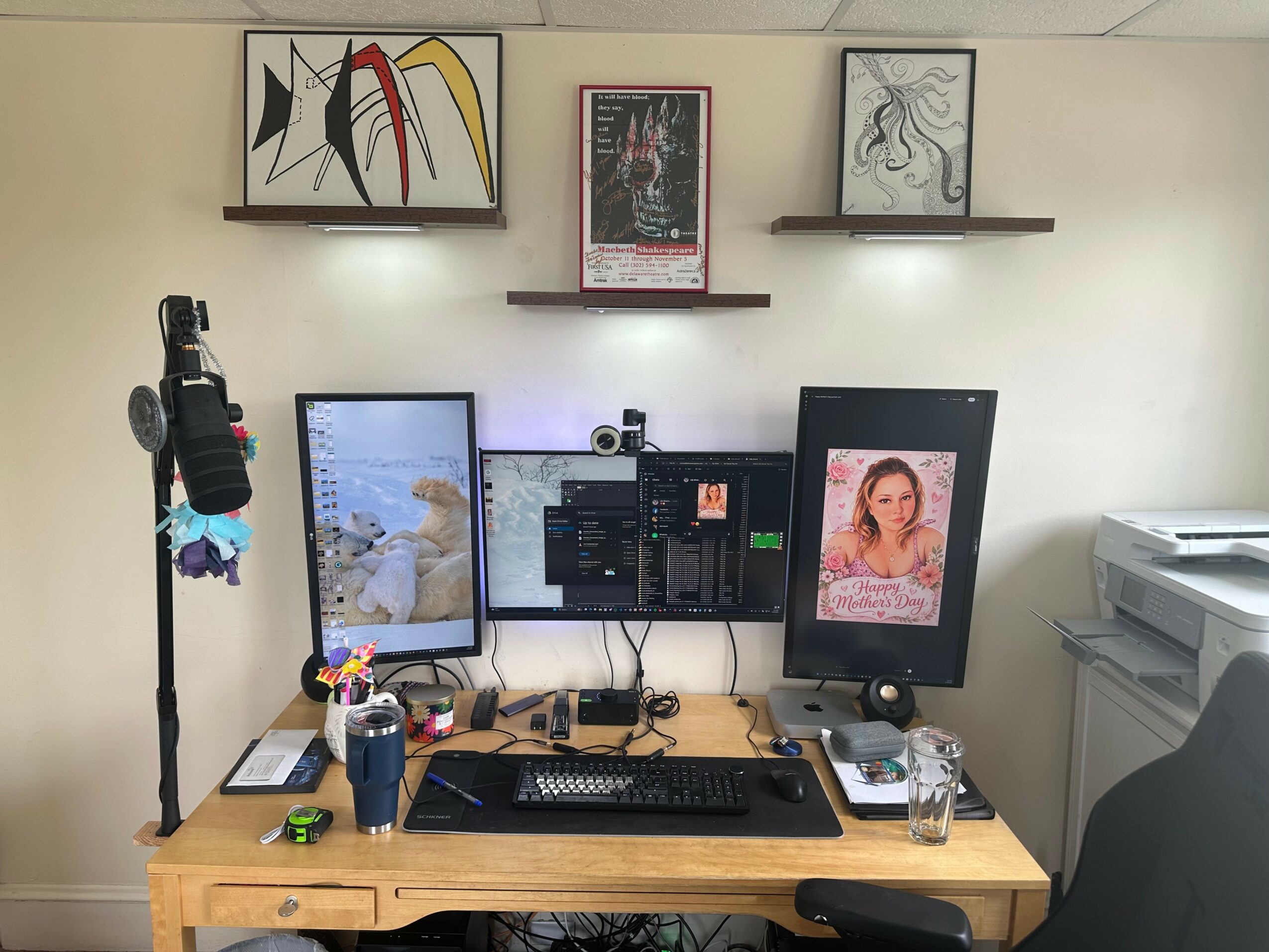
The most consistent struggle has been resources. At a small studio like Silverware Games, I often have to move between designing a game, programming it, writing documentation, creating or directing artwork, testing, maintaining websites, promoting the work, and talking with players. Wearing that many hats teaches you a great deal, but it also means development can take longer than it would with a larger team.
The games business itself changes constantly. Platforms, storefronts, software, marketing channels, and player expectations can all shift while a project is still being developed. Creating a good game is only part of the job; helping the right players discover it is an entirely separate challenge. Some collaborations and projects have worked well, while others never reached the audience or outcome I hoped for.
There is also a psychological challenge in working independently for a long time. When you are close to a project every day, it can be difficult to distinguish between an idea that needs more persistence and one that needs to change. I have learned to seek feedback earlier, test with real players, document my decisions, and remain willing to revise work that I may have spent months building.
That lesson has strongly influenced the development of Matchy Star. Rather than waiting until everything feels “finished,” I am sharing the playable alpha with trusted testers and watching how they actually experience the game. That process can be humbling, but it is also one of the best ways to improve.
The road has included false starts, technical problems, financial uncertainty, and projects that did not connect as strongly as I wanted. At the same time, those experiences gave me the ability to solve problems, complete ambitious work with limited resources, and keep going without losing the curiosity that made me want to create games in the first place.
Great, so let’s talk business. Can you tell our readers more about what you do and what you think sets you apart from others?
Silverware Games is a Boston-area independent game studio founded by game designer and developer Michael Silverman. We create original games that are colorful, approachable, mechanically inventive, and a little difficult to categorize.
Our work ranges from mobile and web games to larger PC projects. What ties the games together is a willingness to experiment. Rather than simply reproducing a familiar genre, we try to find the unusual idea hidden inside it: a matching game with the strategic depth of a roguelike, a multiplayer game shaped by its livestream audience, or a small web game built around one surprising interaction.
Our current flagship project is Matchy Star, a skill-based strategy and matching game set in an optimistic, eccentric universe. Players travel through star systems, build a changing collection of stars and items, unlock characters with different abilities, and learn how to recognize increasingly complex patterns. It is designed to provide the immediate satisfaction of a matching game while offering much more long-term depth.
One thing that sets Matchy Star apart is its philosophy. Many modern matching games are structured around artificial scarcity, gambling-like pressure, or paying to escape frustration. We are building something different: a substantial game in which improvement comes from learning the systems, developing strategies, and becoming a better player. The project is currently in alpha testing, with a playable demo available to trusted testers as we prepare it for a broader public release.
I’m especially proud that Silverware Games has remained a place for unusual ideas. Independent development gives us the freedom to make games with humor, personality, and optimism—and to involve players earlier in the creative process. We actively value playtesting and thoughtful criticism because the goal is not merely to finish a game, but to make something players will want to understand, master, and share.
Readers can learn more about Matchy Star and follow its development at https://matchystar.com. More games, experiments, and information about Silverware Games can be found at https://silverwaregames.com.
What quality or characteristic do you feel is most important to your success?
The quality that has mattered most is what I would call constructive stubbornness: the willingness to keep working on a difficult idea while remaining open to changing how I approach it.
Game development constantly creates reasons to stop. A technical problem can seem impossible, a design may not work the way it did in your imagination, or a project may take much longer to find its audience than expected. Persistence is essential—but persistence by itself can become repeating the same mistake. The constructive part means listening to criticism, examining what is not working, and being willing to rebuild something without abandoning the larger goal.
I have also learned that finishing matters. Creative people rarely suffer from a shortage of ideas; the difficult part is carrying an idea through all the unglamorous stages required to turn it into something another person can actually play. I take pride in being self-motivated, solving unfamiliar problems, documenting what I learn, and continuing until the work becomes real.
That combination of persistence and adaptability has sustained Silverware Games through many changes in technology and the games industry. It is also central to Matchy Star: I have held onto the original vision of a deep, skill-based matching game while repeatedly changing the interface, systems, and presentation in response to what players actually need.
Contact Info:
- Website: https://matchystar.com