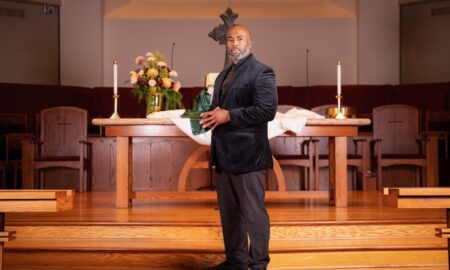







Today we’d like to introduce you to Cynthia Clay Briggs.
Cynthia, please share your story with us. How did you get to where you are today?
I have been involved with Communities In Schools of Houston (CIS) since its beginning when I was the organization’s first social worker in 1979 working on a single school campus. Today, I am the organization’s current Executive Director, and in charge of the direction of CIS on over 120 school campuses throughout the Houston area.
I am in the unique position of looking at education from behind the desk as a former teacher and in the trenches as a school social worker. Research has proven that the one intervention that minimizes all “at risk behavior” is getting and keeping students on grade level. Yet, attempts to improve academic performance usually focus only on things that happen in the school house like rigorous curriculum, qualified and motivated teachers, principals with vision and leadership capabilities, safe climate and time on-task.
I agree that all of those variables are critical to academic success. However, there are other factors that can’t easily be controlled by the schools that affect school performance. We are finally able to accept the fact that poverty and all its maladies makes teaching and learning difficult for children who are hungry, lack proper clothing, live in unsafe environments, and who hurt physically or mentally. Schools cannot do it alone. Schools cannot be expected to remedy the problems caused by poverty without assistance from the public outside the school house. Out-of-school factors must be addressed in schools with large numbers of children who reside in poverty.
Every successful academic program or reform effort that serves poor children includes a comprehensive student support strategy. CIS is an effective, sustainable and scalable example of a successful integrated support model. Ninety-three percent of our students are eligible for free and reduced-price lunch. Each year, Communities In Schools lowers dropout rates and increases graduation rates: 98% of CIS students stay in school.
We must position students to achieve success. Preparing Houston’s children for the future is imperative to the economy’s success and growth.
Great, so let’s dig a little deeper into the story – has it been an easy path overall and if not, what were the challenges you’ve had to overcome?
Our biggest obstacle is always that the most vulnerable in our society are often the most in need. CIS has first-hand knowledge of the kind of support students need because we are the only organization to have student support specialists in the schools. Our students support specialists work long into the evening and on the weekends. I’ve personally woken up board members in the middle of the night and asked them, “What can we do for this child tonight?” The need is real. When you have children without food, without electricity, children who have never seen a dentist or who have mental health issues that have been largely ignored or overlooked, it can be hard to sleep at night.
It has not always been a smooth road, there have been disruptions throughout. For example, the organization has had financial lows when service needs have outpaced our resources. In the last few years, a significant number of students have been referred to CIS experiencing depression, anxiety, anger, or substance abuse. As a result, we created our CIS Mental Health Initiative which increased the number of CIS mental health professionals and mental health partners on the campus to better serve students and their needs. We also piloted our CIS Newcomer Support Program in the spring of 2016 in order to provide additional support to “newcomer” children and youth: immigrants, refugees and unaccompanied minors. This was first piloted in Spring Branch ISD with a new CIS Newcomer Specialist working in the SBISD Welcome Center, then traveled to various campuses to counsel with Newcomer students.
While both the struggles that our students face daily as well as the ones our organization has faced have been significant, CIS of Houston is nearing its 40 year anniversary, and I know with certainty CIS does community enriching, life-altering work. I know this because we hear it directly from those affected: a school district leader who said her district was able to meet the needs of students and families after Hurricane Katrina only because of CIS, a mother who thanked CIS for helping her family stay in their apartment while she found new employment, a student whose life was saved when he calmly shared his suicide plan with CIS, and a teacher who described how he could finally focus all of his efforts on teaching knowing that CIS would attend to all other student needs. I am certain that CIS makes the needed difference. This is what makes all the struggles, the heartache, and long hours 100% worth it.
Communities In Schools of Houston – what should we know? What do you guys do best? What sets you apart from the competition?
What sets CIS apart from other organizations who serve students is that our staff are located ON the school campus … full-time. Research has proven that the closer the intervention, the more effective the intervention. There are many other providers who provide support and relationships, however we are the ONLY one who does it “in school.” Often times, access to community aid and resources is fragmented, impersonal, and hard to access. Families in need of assistance frequently struggle to identify agencies that can help, find transportation and time to access services. CIS resolves this problem being on the campus for students every single day at school as well as by bringing additional services to the family through their children when they are most accessible—during the school day. CIS partners with over 400 community agencies, bringing them onto the school campus to match needs with resources.
CIS coordinates a personalized response to meet the needs of at-risk children on the school campus. CIS brings community resources into schools to empower success for all students by:
• Removing barriers for vulnerable students at risk of dropping out (direct services through supportive guidance, counseling, academic support, parental involvement, and special college and career activities, designed to expand a child’s cultural awareness and vision for their future)
• Keeping kids in school and on the path to graduation
• Leveraging evidence, relationships and local resources to drive results.
During the 2015-2016 school year, CIS touched the lives of 111,285 students on 121 school campuses in five independent school districts: Aldine, Alief, Ft. Bend, Houston, and Spring Branch, two charters, and four Community College campuses. CIS implements a Dropout Prevention Case Management model designed to help at-risk students overcome the many academic, emotional, and social obstacles that hinder their
success in school.
We also have the data to show that what we do works. Evidence of our effective from the 2015-2016 school year:
• 98% in grades 7 through 12 stayed in school;
• 95% of eligible seniors graduated;
• 96% showed marked improvement in academics, attendance, and/or behavior; and
• 93% were promoted to the next grade level.
Any shoutouts? Who else deserves credit in this story – who has played a meaningful role?
CIS has always been a community effort. Thanks to our initial founders: Judge Wyatt and Heidi Heard, HISD Superintendent Billy Reagan, first Executive Director Jill Shaw Binder, President of the CIS Board Bob Gower, Governor Mark White and First Lady of Texas and CIS Board member Linda Gale White.
We are grateful to our current Board of Directors as well as all of our advocates, stakeholders and supporters who make our work possible. We look forward to a productive year ahead – together we can bring hope to Houston’s children in need.
Contact Info:
- Address: Communities In Schools of Houston
1235 North Loop West
Suite 300, Houston, TX 77008 - Website: http://cishouston.org
- Phone: 713.654.1515
- Email: info@cis-houston.org
- Facebook: https://www.facebook.com/cishouston
- Twitter: https://twitter.com/cishouston
- Other: https://www.linkedin.com/in/communities-in-schools-of-houston-7550aaab/


Getting in touch: VoyageHouston is built on recommendations from the community; it’s how we uncover hidden gems, so if you know someone who deserves recognition please let us know here.