


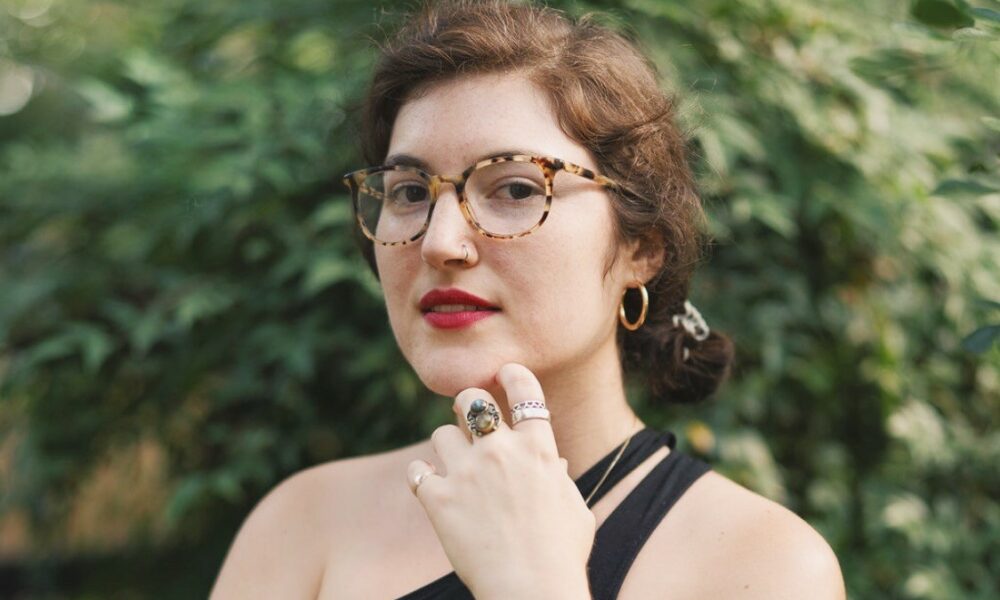
Today we’d like to introduce you to Sabs Katz.
Hi Sabs, so excited to have you with us today. What can you tell us about your story?
My first introduction to environmentalism was in middle school when Houston rolled out the municipal recycling program. I loved saving all of my school papers and notes and recycling them at the end of the year, knowing that I was doing something good for the environment. After I graduated and went off to college at Boston University, a friend and I decided to challenge ourselves to live zero waste for a semester – the goal of which was to send nothing to landfill. Instead, we brought all our reusable bags to the grocery store, recycled where possible, composted our food scraps, thrifted our clothing.
After getting through the initial habit changes, I ended up really appreciating the simplicity of a minimalist lifestyle. I started my blog, Sustainable Sabs, in 2016 shortly thereafter to document my progress, share my experience, and connect with others in the community.
Two years ago, following the murders of George Floyd and Breonna Taylor, a friend and fellow content creator, Leah Thomas, created a viral Instagram post that defined intersectional environmentalism. Inspired by Professor Kimberlé Crenshaw’s work on Critical Race Theory, intersectional environmentalism highlights, rather than ignores, the interconnectedness between racial and environmental justice. Leah, along with myself and fellow Houstonians Diandra Esparza and Phil Aiken, created the platform Intersectional Environmentalist (IE) to increase awareness, share resources, and build community and coalition with those fighting for a more just future for people and the planet. Since, we’ve built a website, amassed a community of over 440k across our social platforms, and produced countless resources and programming to continue shifting the narrative of environmentalism to one that encompassed justice work.
I’m sure you wouldn’t say it’s been obstacle-free, but so far would you say the journey has been a fairly smooth road?
I think most things in life tend to not be smooth – but making mistakes and ‘failing’ is part of the learning process.
With IE, we started off as a corporation to prove to companies that you could be a for-profit business while also being heavily mission-driven, pay your workers fairly, and not fall prey to the nonprofit industrial complex. However, after spending time refining our programming and offerings, we realized that a nonprofit structure would better allow us to focus on the programming we (and our community) are really excited about. We are so grateful for all of the partners we’ve gained along the way and truly believe in every resource, partnership, and offer we’ve created, but even more so we are grateful now to wholeheartedly invest in the things we want to bring to life.
Personally, I’ve struggled a lot with eco-anxiety and burnout. According to a survey highlighted in Medical News Today, a whopping 75% of young respondents say ‘ the future is frightening’ (https://www.medicalnewstoday.com/articles/eco-anxiety-75-of-young-people-say-the-future-is-frightening). I’m learning that we cannot fill from an empty cup, and have been working to better incorporate time for joy, rest, and optimism as much as possible.
Can you tell our readers more about what you do and what you think sets you apart from others?
Outside of my work as a Co-founder and the Partnerships Lead at IE, I’m still a content creator and creative passionate about community building and inspiring change. I’m known mostly for living a low-waste lifestyle, being vegan, being into sustainable and secondhand fashion, and for highlighting access issues and injustices within the environmental community.
There are so many access barriers when it comes to sustainability – not everyone knows how/where to compost, not everyone has plant based food options near them, or can afford to shop exclusively at the farmers market. Not everyone can buy zero waste products or invest in renewable energy. So I aim to highlight and amplify intersectional perspectives – while also reminding folks that we cannot be perfect environmentalists in a flawed system. I think that’s what sets me apart from others – so often we see perfection as a goal (being perfectly zero waste, being the perfect advocate), but I hope to remind people that we are human and can’t do it all. But there is power in numbers and we’re going to need every voice we can get in order to drive real, positive change.
My proudest accomplishment by far has been being a part of the IE team and community. I am consistently inspired by the passion, drive, and work being done in the environmental justice space, and am incredibly grateful for the opportunity to connect with folks who’ve been doing this work for years.
What were you like growing up?
Growing up I knew I wanted to be a writer. In my senior year of high school, I had an internship at the Houston Chronicle Classroom, and I had a few different blogs, too. I was pretty independent, worked hard, and liked to think critically (probably stemming from my love of board games). Overall, I think I was hungry to keep learning about the world and about people who were different than me. Houston is a beautifully diverse city, but I struggled to find ‘my people’. While I do still have some friends from high school, I’m especially grateful for the community I’ve found in Brooklyn.
Contact Info:
- Website: sustainablesabs.com
- Instagram: instagram.com/sustainablesabs | https://www.instagram.com/intersectionalenvironmentalist/
- Youtube: https://www.youtube.com/channel/UCh6O_Rk2Vmr4-UdOI36bSdA


Image Credits
Main Headshot: Sanetra Longno