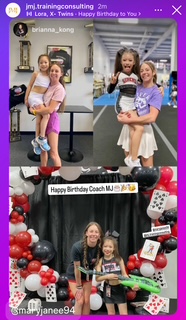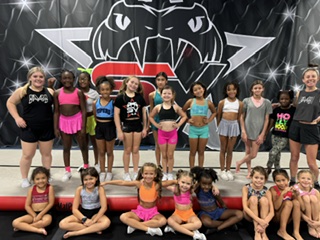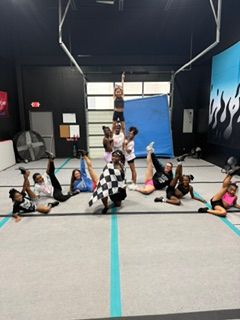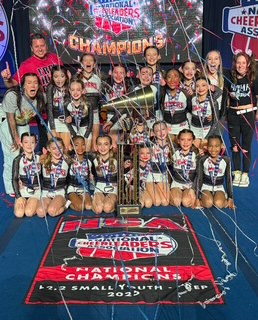





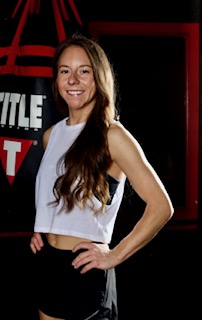
Today we’d like to introduce you to MaryJane Hall.
Hi MaryJane, so excited to have you on the platform. So before we get into questions about your work-life, maybe you can bring our readers up to speed on your story and how you got to where you are today?
My path into coaching started somewhat unexpectedly. I didn’t begin cheerleading until I was 15, going into my junior year of high school. Despite already having a strong tumbling background, I made JV as a junior—which, at the time, felt pretty embarrassing. Looking back, though, not immediately being recognized for what I could do became an important part of my story.
My high school trained tumbling once a week at LA Athletics, and that’s where someone saw potential in me and invited me to join their Level 4 All Star team, Twisters. All Star cheer was where I really began to shine. By the end of that first year, one of my high school coaches saw me basing a high-level two-man stunt and couldn’t believe what I was doing outside of school, especially considering I hadn’t even made our school competition team that year.
The following year, I did make the school competition team, while also competing on both International Level 5 and Senior Level 5 All Star teams. There was even one memorable day when my school and All Star gym had competitions at the same event, and a last-minute emergency required me to fill in for LA’s Senior Level 3 team. I competed with four different teams in one day.
But the part that ultimately shaped my career wasn’t just competing—it was discovering how much I loved teaching.
By the end of my first year in All Star cheer, I was coaching tumbling classes and working summer camps. The following year, I became the summer camp director and was given my first team to coach. I continued running camps for several summers while attending LSU, where I was fortunate to receive Louisiana’s TOPS scholarship.
Near the end of college, circumstances unexpectedly took me away from LA Athletics. With one semester left at LSU, I still needed to work, so I joined Louisiana Cheer Force and continued coaching while finishing my degree. In December, just weeks before graduation, I secured a teaching position at Buchanan Elementary. I walked across the stage at LSU and started teaching the following Monday, finishing the school year teaching third-, fourth- and fifth-grade math.
I had already committed to coaching my Tiny team at Cheer Force, though, so every afternoon I would leave school and head straight to the gym—often coaching or practicing until 9 p.m. I was a teacher during the day and a coach at night, and eventually I realized those two identities were never really separate. Teaching has always been at the heart of the way I coach.
After moving to Texas, my career in cheer continued to grow. I eventually stepped into gym management and All Star program leadership, where I had the opportunity to help build a program, develop coaches and athletes, and experience some incredible competitive successes. During one chapter of my career, the program I helped lead earned seven NCA National Championships and its first Summit Championship during those three years.
Over time, I also began working independently with schools, gyms, coaches and athletes, which grew into JMJ Training & Consulting. Today, my work spans coaching, choreography, clinics, program development and consulting. I especially love working with smaller gyms, developing programs and coaches who may not have access to the same resources as larger organizations.
When I look back, there’s something fitting about the fact that my cheer career started with being the junior who only made JV. I know what it feels like to have potential that someone hasn’t recognized yet. Someone at LA Athletics saw something in me before I fully understood where it could take me, and that opportunity changed the direction of my life.
Now, I get to be that person for someone else.
Whether I’m working with a young athlete who needs someone to believe in her, a coach who needs guidance, or a developing program that just needs access to the right resources, that is still my favorite part of what I do. I’m not just there to teach skills. I want to help develop athletes and coaches—and give them the knowledge and confidence to keep growing long after our time together.
I’m sure it wasn’t obstacle-free, but would you say the journey has been fairly smooth so far?
Definitely not—but some of the hardest parts of my journey have ultimately shaped the way I lead, coach, and define success today.
In 2023, after more than three years of pouring myself into a program, its athletes, and its families, I was unexpectedly let go. During that time, the program had experienced tremendous growth and competitive success, including seven NCA National Championships and its first Summit Championship. Losing something I had invested so much of myself into was incredibly difficult. It felt like I had lost much more than a job.
What surprised me most, though, was realizing that losing the position didn’t mean losing the people.
The athletes and families I had poured into continued pouring into me. They checked on me, encouraged me, attended my clinics, continued trusting me with their children, and recommended me to schools, gyms, and programs. Some of the greatest opportunities I’ve received since then can be traced back to a former athlete, parent, or family simply telling someone else, “You should call Coach MJ.”
I’ve watched that ripple continue in ways I never could have planned. A mother of one of my former athletes recommended me to an athletic director, which led to my position as a skills coach for Emery High School. Another former cheer mom eventually became the head cheer coach at Stephen F. Austin High School and brought me in to help train her athletes. Families I worked with years ago have connected JMJ with schools, recreational programs, and gyms for choreography, clinics, and coaching education. Even now, parents I haven’t worked with in years will reach back out because their child or school team needs something and they still think of Coach MJ.
Those experiences became a big part of the reason I created JMJ Training & Consulting. I never wanted one person, position, or organization to have the power to determine whether I could continue doing what I love. JMJ gave me professional and financial autonomy, but it also gave me something even more important: the freedom to expand my reach and continue building relationships with athletes, coaches, and programs wherever I could be useful.
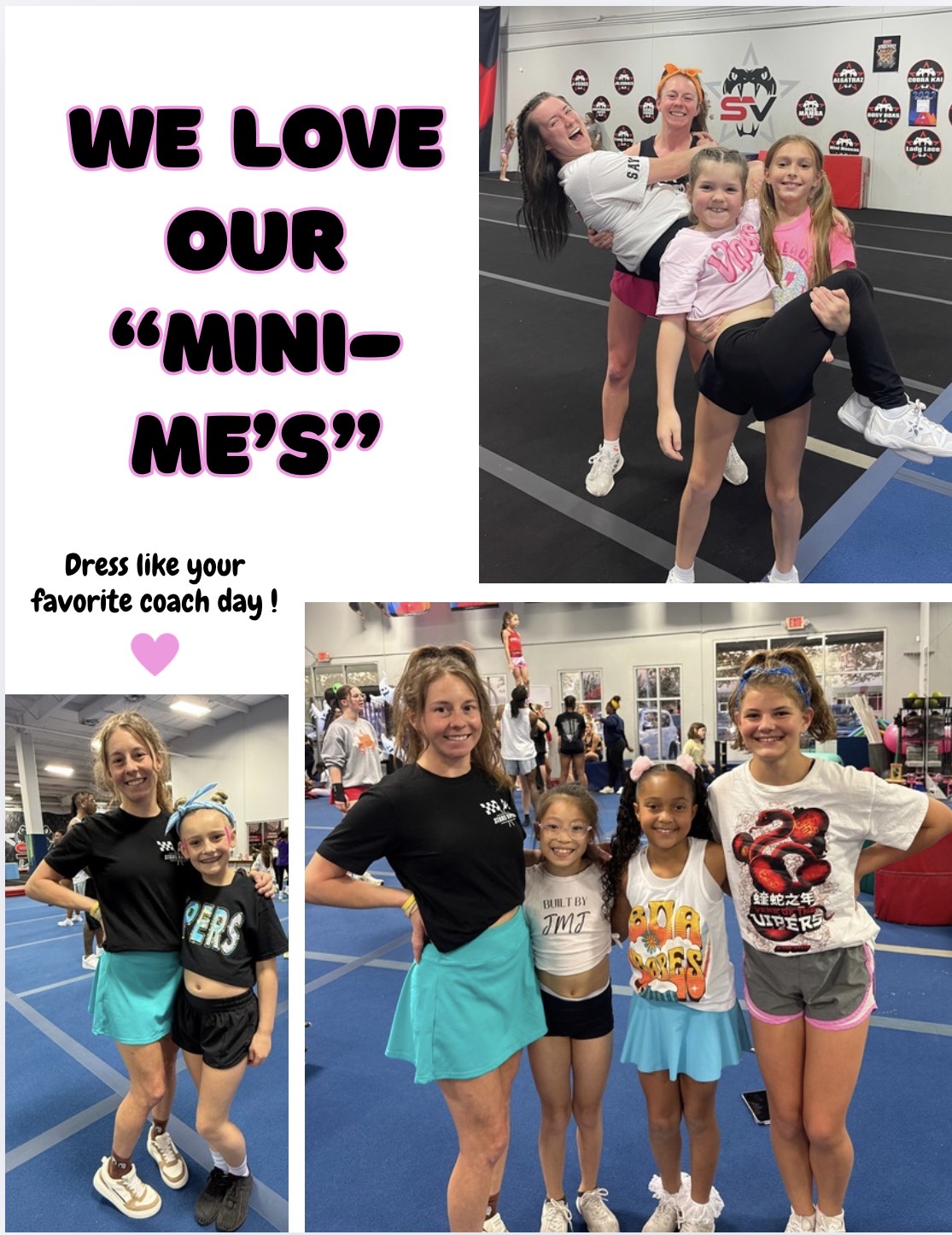
Eventually, I found another home at Stars Vipers Katy, and once again, what began as coaching grew into family.
In more recent years, I went through a period of significant personal upheaval that included concerns for my safety as well as legal, housing, property, and financial challenges. There were times when simply continuing to show up required more resilience than I thought I had.
During some of those most difficult moments, my cheer community showed up for me in ways I will never forget. The owners, staff, athletes, parents, and families around me gave me grace when I needed it, offered help without being asked, checked on me, and reminded me that I wasn’t alone. Families overwhelmed me with messages, letters, gift cards, and acts of kindness. I still have many of those letters displayed around my apartment, and their words pick me up on the days when I’m down.
I’ve spent much of my career trying to be a positive light in young athletes’ lives—to help them feel safe, confident, capable, and loved. One of the most humbling parts of my journey has been realizing how many of those athletes and families have become that same light for me.
The road has taught me that titles, organizations, circumstances, and even carefully made plans can change. But the knowledge you’ve gained, the relationships you’ve built, and the impact you’ve had on people don’t disappear with them.
So no, the road hasn’t always been smooth. But when I think about what has carried me through the difficult parts, it isn’t the championships or the accomplishments.
It’s the people.
Thanks for sharing that. So, maybe next you can tell us a bit more about your business?
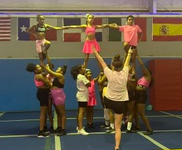
JMJ Training & Consulting provides cheerleading and tumbling training, choreography, education, and program support for athletes, coaches, teams, and organizations. My services include choreography, tumbling and stunt clinics, private and group skills training, custom camps, staff training, curriculum development, competition preparation, and ongoing consulting.
My background in both education and competitive cheer shapes the way I approach everything I do. I’m a teacher at heart, so I’m never interested in simply teaching an athlete a skill or giving a coach an answer without helping them understand the why behind it. My goal isn’t just to develop better athletes; I want to help develop knowledgeable, confident coaches and stronger programs, too.
One part of JMJ’s mission that is especially important to me is making quality training and resources accessible to programs that may not have the same resources as large, established All Star gyms. I absolutely love working with D2 programs, extra-small gyms, school and recreational teams, newer programs, and inexperienced coaches. Honestly, that’s often where I thrive. You don’t have to be an elite All Star program to deserve knowledgeable coaching, safe progressions, strong choreography, or someone genuinely invested in helping your athletes succeed.
I don’t view my relationship with a client as ending when the choreography weekend or clinic is over. If I choreograph for a team, I’m still invested when they take that routine to competition. I’ll review scoresheets, provide feedback, brainstorm upgrades or adjustments, answer questions about routine legalities, and help troubleshoot when something isn’t scoring the way we expected. I’ve even helped clients contest legality deductions at competitions, down to sending them the exact language I would use if I were standing there with them, and we’ve successfully gotten points restored.
I want my clients to feel like they have someone in their corner.
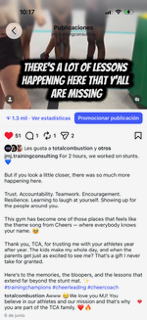
One of my longest-standing choreography clients, TCA, was also one of JMJ’s earliest. I’ve now had the privilege of doing their choreography for four years and watching their program grow from renting floor space at a fitness facility, to practicing in an elementary school gym, to having a building of their own. When they’re competing locally, you’ll often find me right there helping coach warm-ups and sitting in the coaches’ box—not because that’s necessarily part of the choreography package, but because I’m proud of them and genuinely want to see them succeed.
That kind of relationship is what I’m most proud of building through JMJ. Much of my business has grown through word of mouth—one athlete, parent, coach, or program recommending me to another. To me, there really isn’t a better endorsement than someone I’ve worked with trusting me enough to say, “Call Coach MJ.”
Of course, I care deeply about technique, safety, scoresheets, and competitive success. I love helping athletes learn new skills and teams become stronger competitors. But I also believe competitive cheer gives us an incredible opportunity to develop confidence, resilience, accountability, teamwork, work ethic, and character.
Eventually, every athlete will perform their last routine. The trophies will collect dust and the scoresheets will be forgotten, but I hope what they learned about themselves and from the people who coached them lasts much longer.
That’s what “Training Champions” means to me. It’s not only about producing championship routines or athletes who can perform difficult skills. It’s about helping young athletes feel safe, confident, capable, and loved—and helping coaches and programs build environments where that can happen.
If you had to, what characteristic of yours would you give the most credit to?
I think the quality most responsible for my success is that I genuinely care about the people I work with.
I’ve always been deeply invested in my athletes, coaches, families, and programs—not just in what they accomplish, but in who they are and who they’re becoming. I want to know what motivates an athlete, what she’s struggling with, and what will help her believe in herself. When I’m working with a coach or program, I want to understand what they actually need rather than simply provide a one-size-fits-all service.
I celebrate their successes like they’re my own, worry about their struggles, and continue thinking about ways I can help long after I’ve technically finished the job. But I also think that’s why so many of my professional relationships have lasted for years.
Much of JMJ’s growth has come through word of mouth. Former athletes become coaches and call me to help with their teams. Parents recommend me to other families and programs. Clients bring me back year after year. Those opportunities weren’t created by a marketing strategy as much as they were created by relationships and trust.
My education background has certainly contributed to my success, as have my technical knowledge, experience, work ethic, and willingness to keep learning. But knowledge alone doesn’t make someone a great coach. People have to know that the knowledge you’re giving them comes from someone who is genuinely invested in seeing them succeed.
I think that’s what has carried me the furthest: I care, and I show it.
Contact Info:
- Website: https://jmj-trainingandconsulting.square.site/
- Instagram: https://www.instagram.com/jmj.trainingconsulting/
- Facebook: https://www.facebook.com/share/1D2crVMwN6/?mibextid=wwXIfr