



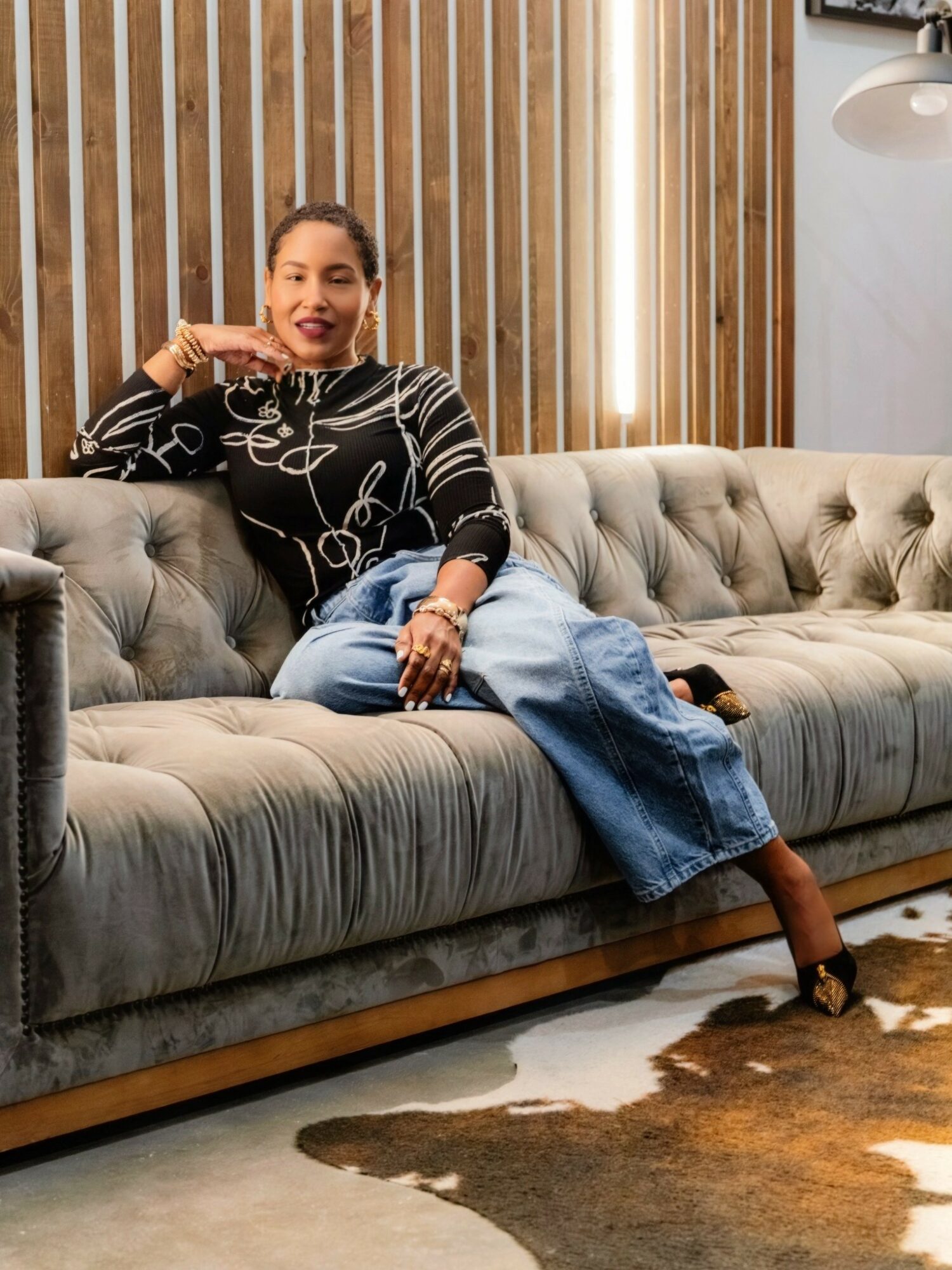
Today we’d like to introduce you to Denise Upshaw.
Hi Denise, can you start by introducing yourself? We’d love to learn more about how you got to where you are today?
My journey to this work began with burnout and with honesty. I spent years moving through government, policy, and corporate spaces, doing meaningful work, yet slowly losing myself in the process. From the outside, everything looked aligned. On the inside, I was exhausted and disconnected from the parts of me that once felt most alive. I knew something had to change.
What brought me back was art. I started showing up in creative spaces again, galleries, studios, community events, not with an agenda, but with openness. I listened. I observed. I remembered who I was before productivity and performance took center stage. Being immersed in Houston’s creative community did not just heal me, it awakened me. I was deeply inspired by the brilliance, resilience, and generosity of Black creatives across the city, and at the same time, I could not ignore how many were carrying the weight of systemic barriers quietly and alone.
I did not want to enter this space as a savior or a disruptor. I wanted to walk alongside those who had already been doing the work, often without recognition or adequate support. Black Houston Creatives Network was born from that intention, to lend my skills in strategy, communications, and community building toward advancing access, visibility, resources, and economic opportunities for Black creatives in Houston.
One of our earliest initiatives, Dream in Color, embodied that spirit. It was more than an art supply drive. It was an act of collective care. We partnered with community rooted organizations deeply committed to youth arts and advocacy, including Project Row Houses and CoolxDad through their CoolxKids program. Local businesses, nonprofits, and faith based organizations, including Art League Houston and Jerry’s Artarama, opened their doors as drop off sites and champions of the effort.
What happened next still humbles me. In just three weeks, the community showed up with overwhelming love, donating more than 150 volunteer hours and nearly 15,000 new and gently used pieces of art supplies. Every paintbrush, sketchbook, and marker represented possibility. It meant a child could imagine differently. It meant creativity could become a refuge, a confidence builder, and maybe even a future career path. Dream in Color reminded us that when we invest in creativity, we invest in hope.
As we step into 2026, our focus is on building the infrastructure that will truly support and sustain our creative ecosystem. Our work is guided by the CREATIVES framework, which represents Community, Resources, Economic opportunities, Access, Technology, Impact, Visibility, Education, and Sustainability. At its core, this model reflects our desire to show up for creatives in ways that feel thoughtful, responsive, and rooted in real care for the people and stories that shape our city.
Over the next year, our energy is going toward laying a strong, thoughtful foundation. We are starting with community, bringing creatives together, listening closely, and growing alongside the people we serve. We are also building our internal leadership team, creating space for those who want to contribute their gifts and help shape the future of this work.
In that same spirit, we are actively seeking partners to support this year’s Dream in Color art supply drive, offering another way to invest in and uplift the next generation of creatives. This season is about moving with care, collaboration, and intention, so the ecosystem we build is one that truly holds creatives, not just today, but for the long term.
At its core, Black Houston Creatives Network exists because I deeply believe in what the arts make possible. Creativity is a career path. It is a source of healing. It is record keeping. It is community. Think about how good food, through the culinary arts, brings people together across tables and generations. Think about how a well composed ballad can stop you in your tracks, make you feel seen, or help you process something you did not yet have words for. That is the power creatives hold every day.
Creativity saved me, and I believe it is the heartbeat of any metropolitan city. It shapes culture, fuels connection, and gives cities their soul. If we want creatives to continue investing their time, talent, and truth into our communities, we have to nurture the industry and create real economic opportunities that allow them to sustain themselves. This work is about honoring Houston’s Black creative legacy, amplifying voices that have earned the opportunity to be heard, and building a future where Black creatives do not have to choose between passion and livelihood. It is about community, care, and creating space for all of us to truly thrive.
Can you talk to us a bit about the challenges and lessons you’ve learned along the way. Looking back would you say it’s been easy or smooth in retrospect?
No, it has not been a smooth road, but it has also not been an unkind one. While there have been challenges, they have been far outweighed by the generosity, encouragement, and support of the community. From the very beginning, people showed up with openness and trust, and that outpouring has carried this work forward in ways I could not have anticipated.
One of the earliest and most important lessons was learning how to build trust within the art community with intention and humility. That meant meeting creatives where they already were, celebrating their work without overshadowing it, and creating space for them to lead the conversation. I spent time listening deeply, moving thoughtfully, and treating lived experience as data. Rather than assuming what creatives needed, I centered their voices and allowed their realities to shape the work.
Another part of the journey has been unlearning old definitions of success while still honoring the skills I gained in government and institutional spaces. I had to release the idea that legitimacy only comes from titles, formal structures, or funding, while recognizing the value of my background. Much like my work in politics, I often serve as a bridge between systems and community, helping creatives navigate institutions and helping institutions better understand the needs of creatives.
Ultimately, these experiences shaped Black Houston Creatives Network into what it is today. They taught me to lead with listening, to move with care, and to build something rooted in trust, gratitude, and community ownership, where the support of the people has always mattered more than speed or optics.
Can you tell our readers more about what you do and what you think sets you apart from others?
At the heart of my work is building bridges. I lead Black Houston Creatives Network as a growing ecosystem that brings together creatives, community organizations, and corporate and government institutions in ways that create real access, visibility, and economic opportunity for Black creatives. I specialize in strategy, communications, partnership development, and community infrastructure, and that background informs how I am shaping BHCN in its early stages.
And to be clear, BHCN is more than networking events or fundraisers. While we are still a new organization, our vision is expansive. We imagine a future where Houston creatives travel the world, participate in creative and cultural exchanges alongside Black creatives globally, and where Houston is fully recognized for what it already is, the cultural mecca of the South. A vision like this cannot live inside one person. It requires all hands on deck. That is why building relationships, scouting talent, and inviting people into the work is one of my primary focuses as we grow.
I am known for being able to move fluidly between worlds that do not always speak the same language. My background in public policy allows me to navigate systems, policies, and institutions with confidence, while my proximity to the creative community keeps the work grounded, authentic, and people centered. I often serve as a bridge, helping creatives access opportunities while helping institutions engage communities with more care, clarity, and accountability.
On a personal level, one of the things I am most proud of is the woman I am becoming in this season. I come from humble beginnings in Oakland, California, during the height of the 1980s and 1990s drug epidemic. I was raised by a phenomenal single mother, and to this day, I do not know how she managed to juggle everything she carried. My mother immersed me in the arts as a child. Painting, poetry, music, you make it. My parents instilled in me the value of education while reminding me to stay invested in my community. I have always lived that principle through mentoring at risk girls, but this moment feels different. Building BHCN represents a new level of responsibility and intention, and I am grateful for every experience that prepared me to take this step.
What sets me apart is how I am building. I do not lead from a place of extraction or visibility for its own sake. I lead collaboratively, treat lived experience as data, center community voice in decision making, and design programs that are responsive rather than prescriptive. From the beginning, I have been intentional about honoring the work that existed before me and creating pathways for others to be seen, paid, and sustained.
Ultimately, I recognize that I am in the early chapters of this journey. From standing up programs, boards, and specialty courts earlier in my career to now laying the foundation for this organization, it has been both humbling and energizing. This season is about stewardship, learning, and building something worthy of the community it serves.
My life is reflective of a quote by my favorite poet, Maya Angelou, who said, “My mission in life is not merely to survive, but to thrive; and to do so with some passion, some compassion, some humor, and some style.” That quote has followed me through every season of my life, especially the ones that required resilience, faith, and reinvention.
I have survived circumstances that could have hardened me, but I chose to thrive with intention. Passion fuels my work, compassion guides how I show up for people, humor keeps me grounded, and style reflects my creativity and how I move through the world. That philosophy shapes how I live, how I lead, and how I build community. It is not just about making it through, it is about creating a life and a body of work that leaves people more connected, more seen, and more alive than before.
What matters most to you?
What matters to me most is supporting and protecting storytellers. Creatives are the modern-day scribes of our culture. They document our joy, our grief, our resistance, and our becoming. Long after policies shift and trends fade, it is the work of artists, writers, filmmakers, designers, musicians, and cultural workers that holds the truth of who we were and how we lived.
A “creative” is not limited to a single medium or title. A creative is anyone who uses imagination, skill, and lived experience to make meaning and move people. This includes visual and performing artists, writers and filmmakers, but also culinary artists, makeup artists, hairstylists, designers, and makers whose work shapes how we experience culture in everyday life. These forms of creativity are often overlooked, yet they are essential to how communities gather, celebrate, heal, and express identity.
They also create healing through their artistry. Creatives give language to pain, transform grief into beauty, and make space for emotions we are often taught to suppress. Their work becomes a mirror and a refuge, not just for themselves, but for entire communities. As Maya Angelou so powerfully said, “There is no greater agony than bearing an untold story inside you.” I believe that deeply. When storytellers are silenced or unsupported, that agony multiplies. When they are protected and resourced, their stories become medicine.
This is why my work centers dignity, sustainability, and care for creatives. They deserve more than applause or momentary visibility. They deserve protection, fair access, and pathways to thrive without sacrificing their well-being or integrity. Supporting creatives is not just about art. It is about safeguarding culture, preserving memory, and ensuring future generations inherit stories rooted in truth, healing, and possibility.
Pricing:
- Free to become a member of the network
Contact Info:
- Website: https://www.thethrivelifeco.com
- Instagram: https://www.instagram.com/blackhoustoncreatives
- Facebook: https://www.facebook.com/@blackhoustoncreatives
- LinkedIn: https://www.LinkedIn.com/in/denise-n-upshaw
- Youtube: https://www.youtube.com/@blackhoustoncreatives
- Other: https://forms.gle/iq1C1EhFxhGSY7U46
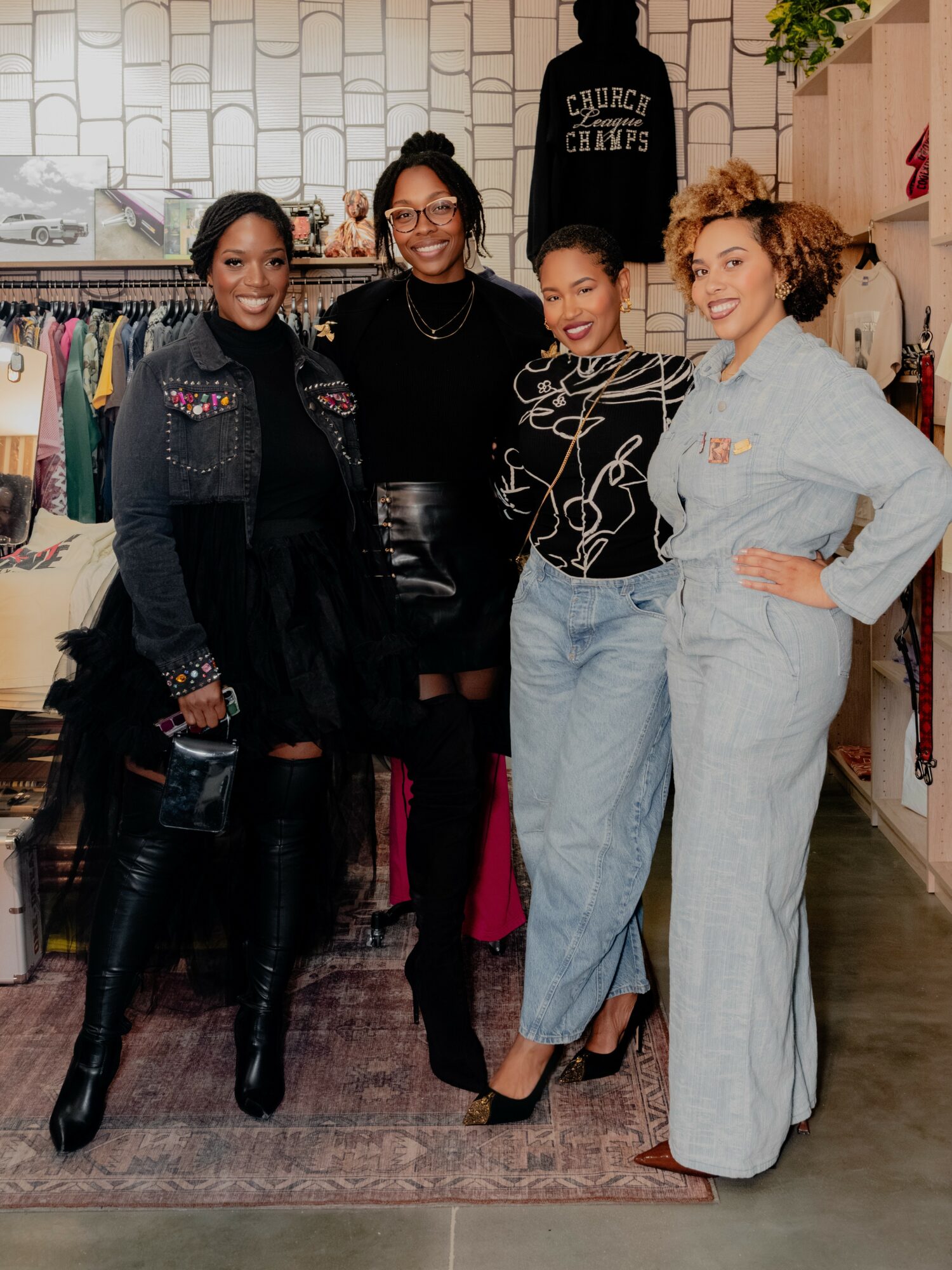
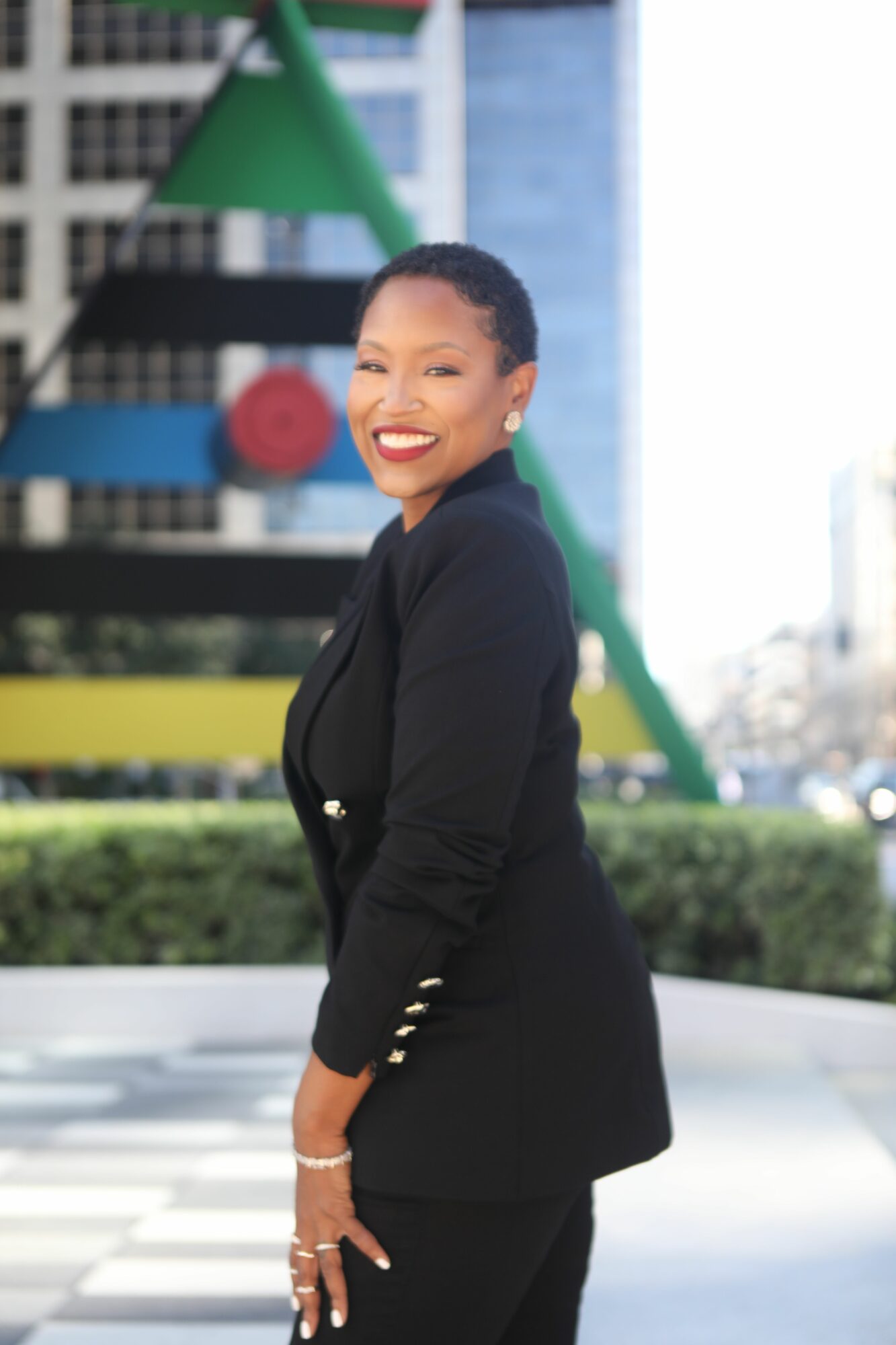


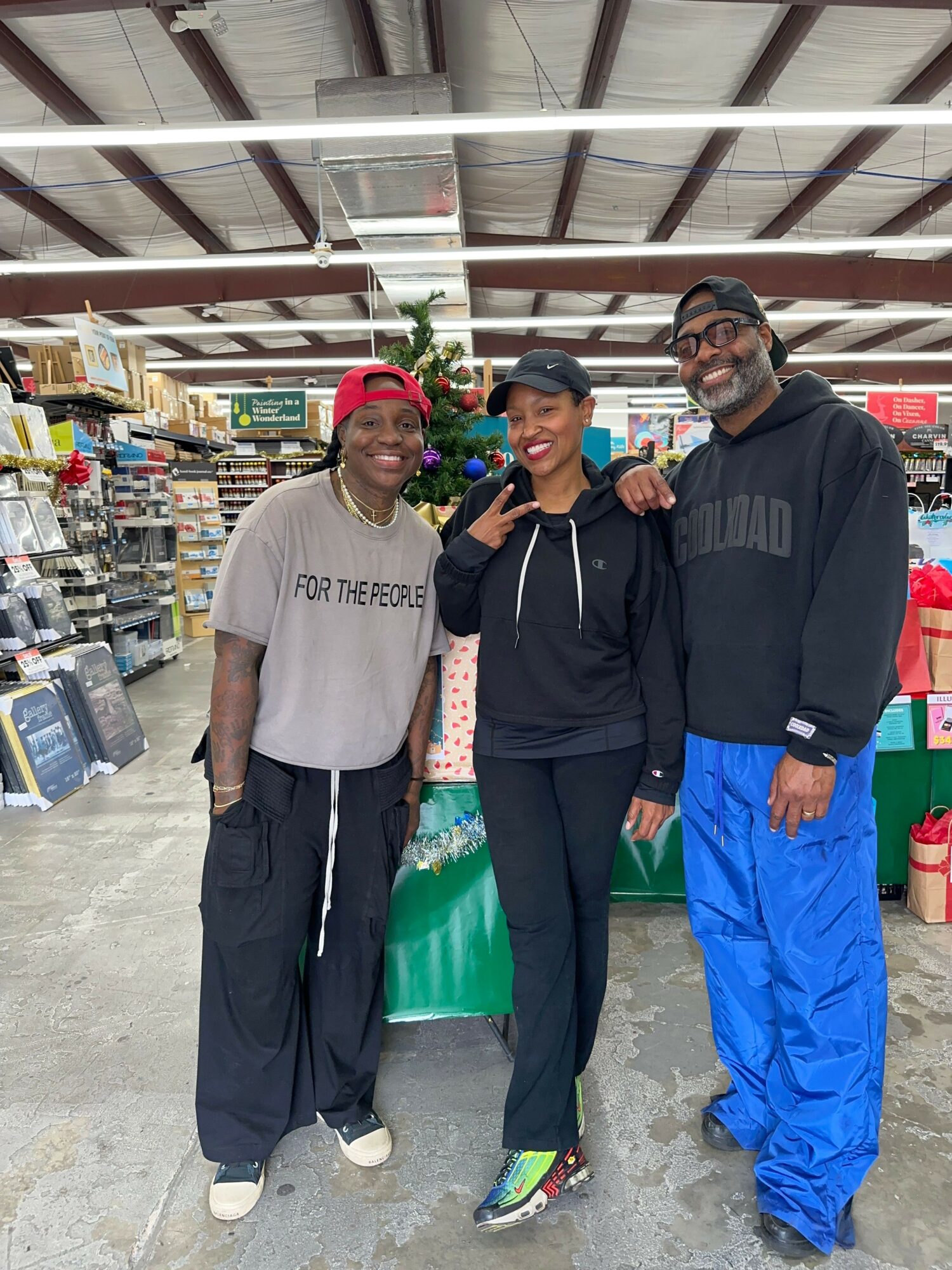
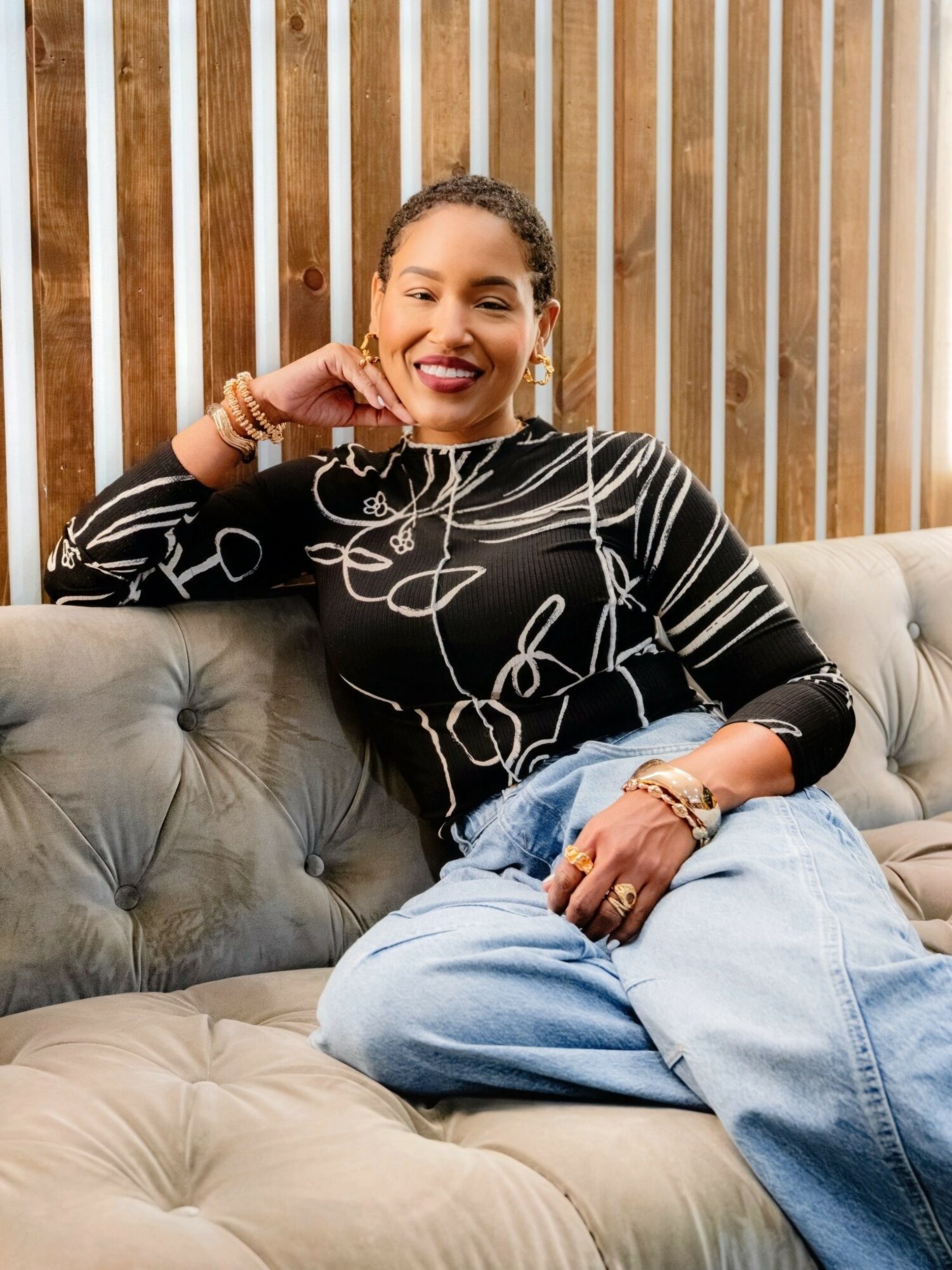

Image Credits
William Isaac
Kevin Rawls
Th3rdEyes Studios