






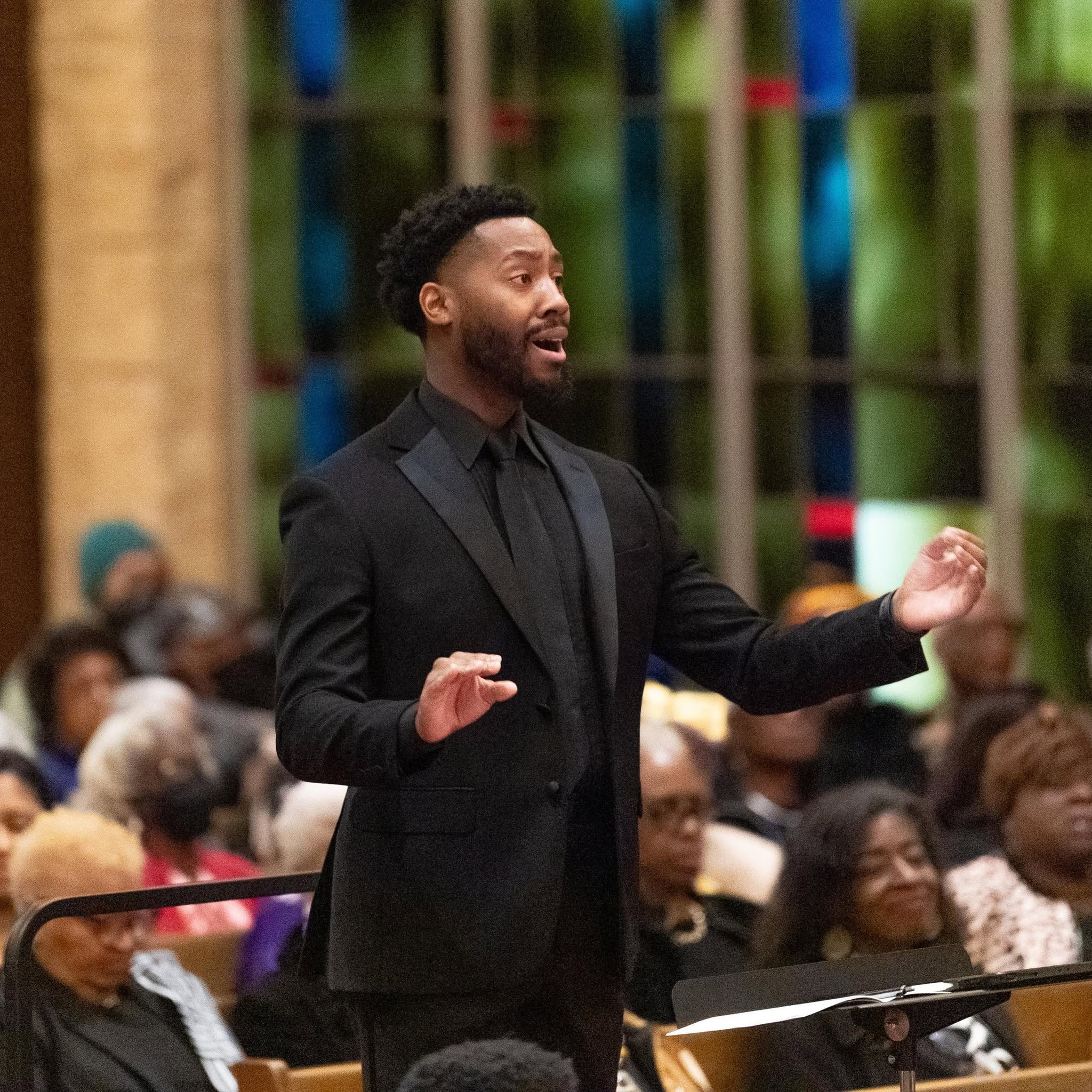
Today we’d like to introduce you to Dr. ASHTON JONES.
Hi Dr. ASHTON, we’re thrilled to have a chance to learn your story today. So, before we get into specifics, maybe you can briefly walk us through how you got to where you are today?
My journey with Texas Southern University has really come full circle. I arrived at TSU as a young musician from Tulsa, Oklahoma, whose musical world had been shaped almost entirely by the Pentecostal church. Music was a central part of my life, but I had very little formal training. In fact, I came to TSU to study piano largely because I had never had the opportunity to take regular lessons growing up and wanted to develop those skills in a formal setting.
What I found at TSU was much more than a degree program. I was immersed in a tradition of musical excellence that encouraged versatility. Over time, I became cross trained in both piano and voice, something I later learned was a hallmark of the TSU music program through my relationship with the late Ruth Stewart and my research into the department’s history. That tradition was also embodied by Ruthabell Rollins, whose legacy, alongside Stewart’s, remains central to the institution today.
After earning my bachelor’s degree from Texas Southern University, I continued my studies at Manhattan School of Music, where I completed a master’s degree in classical voice, and later at University of Missouri–Kansas City Conservatory, where I earned the Doctor of Musical Arts degree while studying voice and conducting.
Even as a student, I knew I wanted to direct a collegiate choral program. More importantly, I hoped one day to return to TSU and contribute to the institution that had shaped me. After teaching in public schools and serving at Langston University, I was invited back to my alma mater as Director of Choral Activities and Assistant Professor of Music. Today, having completed my second year on the faculty, I have the privilege of helping develop the next generation of musicians while also preserving and advancing the rich legacy of TSU’s music program. Returning to TSU has been both a professional milestone and a deeply personal homecoming.
We all face challenges, but looking back would you describe it as a relatively smooth road?
Overall, it has been a remarkably smooth journey. If there has been a challenge, it has largely been my own eagerness to see the program and the students reach the highest levels of musicianship possible. As an educator and conductor, I have a very ambitious vision for what our ensembles can achieve, and sometimes the hardest part is simply being patient with the process.
What has made that challenge enjoyable is that the students have been incredibly receptive. They are eager to learn, willing to work, and open to being challenged. Watching their growth from semester to semester has been one of the most rewarding parts of my career. Teaching at TSU has given me the opportunity to share the knowledge and experiences I’ve gained as a performer, educator, and conductor, while also learning from my students in return.
So, while there is always a desire to move faster and accomplish more, I would say the experience has been overwhelmingly positive. I’ve enjoyed every step of building on the foundation that was laid before me and helping guide the program into its next chapter.
Thanks for sharing that. So, maybe next you can tell us a bit more about your work?
I serve as Assistant Professor of Music and Director of Choral Activities at Texas Southern University, where I oversee the choral program, teach voice, and mentor students preparing for careers in music and related fields. My work sits at the intersection of choral conducting, vocal pedagogy, performance, and music scholarship. While I am known as a conductor and educator, I have also maintained an active career as a classical singer, which allows me to bring both the performer’s and teacher’s perspectives into the classroom and rehearsal hall.
One area that has become particularly important to me is the integration of choral and solo voice training. I believe the healthiest and most expressive choirs are built from singers who understand how their individual voices function. Whether I am working with a beginning singer or an advanced ensemble, my approach is grounded in helping students develop vocal freedom, technical consistency, and artistic confidence.
I am also deeply invested in preserving and documenting the history of TSU’s music program. Much of my current research focuses on the musicians and educators who built the program during the mid twentieth century, including figures such as Ruth Stewart and Ruthabell Rollins. Their work helped train generations of African American performers, teachers, and cultural leaders, and I believe those stories deserve greater recognition.
What I am most proud of is the opportunity to return to my alma mater and contribute to the institution that shaped me. As a student, I dreamed of directing a collegiate choir, and now I have the privilege of doing that at the very university where my own journey began. There is something uniquely meaningful about helping the next generation of TSU students discover their voices while continuing a legacy that has impacted so many lives.
What sets me apart is my perspective. I have experienced music from many angles: growing up in the church, performing professionally, teaching in public schools, working at an HBCU, and studying at some of the nation’s leading conservatories. Those experiences allow me to connect with students from a wide range of backgrounds and help them see both the artistic and human possibilities that music can offer.
How do you define success?
I define success as a deep sense of satisfaction that comes from pursuing something meaningful and seeing it come to fruition. For me, success begins with a yearning, a strong desire to achieve, grow, create, or contribute. The accomplishment itself is important, but what makes it meaningful is the journey, the work, and the commitment required to get there.
When a goal is reached, whether it is building a successful choir, earning a degree, preparing a great performance, or overcoming a personal challenge, there is a sense of fulfillment that is both rewarding and affirming. That feeling is what I consider success.
I often share with my students that success is ultimately personal. Society, colleagues, family members, and even social media may try to define it for us, but only the individual can determine what success truly looks like in their own life. For one person it may be a career achievement, for another it may be raising a family, serving a community, or simply becoming the best version of themselves.
Success is not a one size fits all concept. It is the satisfaction that comes from setting a meaningful goal, pursuing it with intention, and knowing that you have become better because of the process.
Contact Info:
- Instagram: https://www.instagram.com/denzeljones_/
- Facebook: https://www.facebook.com/ashtondenzeljones/
- LinkedIn: https://www.linkedin.com/in/ashton-d-jones-dma-2b1797101/