





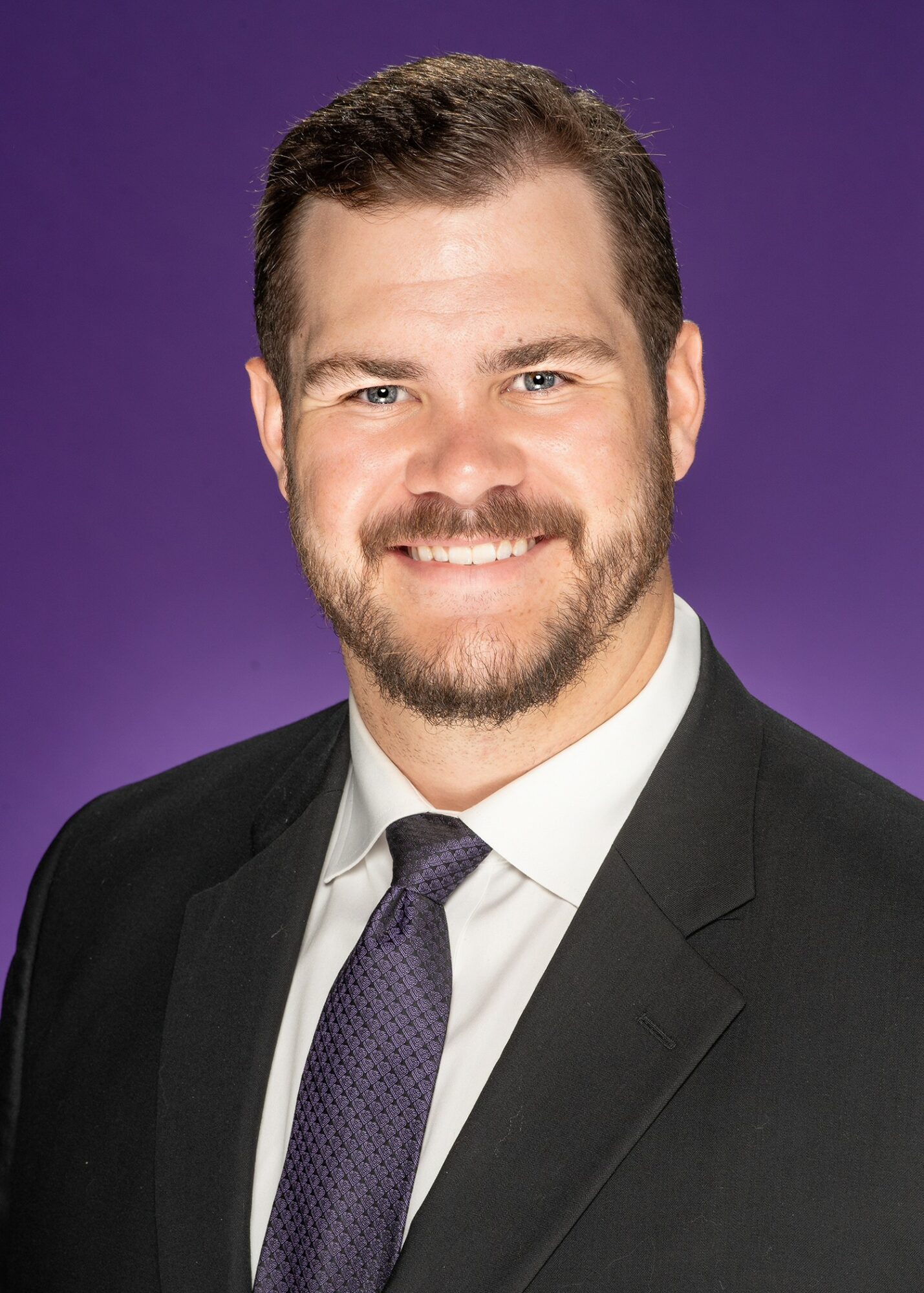
Today we’d like to introduce you to Nate Guyton.
Hi Nate, thanks for sharing your story with us. To start, maybe you can tell our readers some of your backstory.
My story mirrors the purpose and vision for Guyton Counseling Services, a vision where the pragmatic and clinical are not separate from the theoretical and educational. The Guyton name is a legacy of academic excellence in healing professions. My grandfather, Arthur C. Guyton, was a brilliant physiologist, Dean of the University of Mississippi Medical School, and the principal author of The Guyton and Hall Textbook of Medical Physiology, an international bestseller in medical education. Arthur Guyton had ten children with his wife – my grandmother, Ruth Guyton – all of whom became physicians. The second eldest of this family of physicians is Dr. Robert Guyton, now retired after a decades long career as Chief of Cardio-Thoracic Surgery at Emory University.
This is where my story begins: going on rounds—patient visits surgeons schedule to inquire of proper post-surgery care and recovery—in the hospital with a man I saw as larger than life. Seeing his white coat billow behind him, his voice somehow firm and kind, and a multitude of subtle practices in patient-care forever imprinted in my mind. Dr. Guyton was flexible and adaptable, moving from clear command in addressing his colleagues as a leader to a professional playfulness when visiting yet another patient’s family whose loved one will make a full recovery. I remember that at some point of every patient visit I witnessed, he gently placed a hand upon his patient. A single touch from a healing hand, the same hands that performed such skilled procedures on the very same body, evoked an animation as Dr. Guyton made contact: a blink, a smile, a labored movement to touch in return. Even a small boy could make the connection: these semiconscious people, healing from the trauma of heart surgery, knew the touch of the man who saved their life.
Can you talk to us a bit about the challenges and lessons you’ve learned along the way. Looking back would you say it’s been easy or smooth in retrospect?
My father shaped me as a professional and leader more than any other single person, and our whole world as a family revolved around his career. And what a family it is! A blended family, I am the youngest of eight—four half siblings from my father (Courtney, Kate, Bart, and Carrie), two from my mother (Jessie and Jimmy), and one full sibling (Clara). My mother, Mary Elizabeth Bowie, a retired ICU nurse of 25 years, communicated to all of us the good reasons for the level of commitment required to save lives, the necessity for our sacrifices to grow up without our father more often than not. I saw this as a child, the brilliance of my hero who radiated the aura of his intellect, and wondered if I was, in fact, a Guyton. Upon entering my own schooling, I fell behind at a startling pace relative to my peers and siblings. Diagnosed with dyslexia and ADHD before the first grade, and failing tasks as simple as writing my storied family name, built a cumulative dissonance between how I viewed my own academic competence and that of “the Guytons’.” Teachers insisted that special education was my best route to any possibility of success while my mother fiercely advocated for me. Meanwhile, the pressures she faced from a career in the ICU, one of my siblings suffering a brain tumor diagnosis, marriage to a world-class surgeon, and her own childhood trauma coiled a gripping salience to alcohol’s relief. She fell into an addiction that devastated our family, and I blamed myself for every pour, attributing my perceived failures to the destruction I was so desperate to stop.
Until middle school, my story demonstrates what I like to call, “a privileged hardship.” I wanted for nothing in my childhood, and I never knew the pangs of hunger, transience, or personal illness that come from alternative circumstances. But pain is not a piece of pie. It’s baked into the whole experience of the human experience, a totality of what it means to see another suffering person and relate, all-be-it even in small ways. My pain of academic inadequacy, an alternative education that, by the grace of God, my parents could afford, and a parent suffering from an alcohol use disorder left me in equal parts submissive and outraged. Little did I know, and little did my academic family expect, that I would come to find solace in perhaps the most unlikely of places: the football field.
Football filled the gaps for me in ways that traditional education simply fails ADHD, dyslexic, and angry boys. The moment I put my hand in the ground and crashed into another human, grappling for movement in a physics equation with immeasurable third-variables, I knew that I found a sanctuary, a blessed anecdote for a dysregulated nervous system. My history of mockery in the classroom, the “chip on my shoulder” of never measuring up, and the right supports—from the right people and at the right time—led to a high volume of those third-variables. What I lacked in athleticism, speed, and strength I made up for in tenacity, leadership, and grit. For the first time in my life, I excelled at something. For the first time, I trusted the embrace of teammates who celebrated my talents as I celebrated theirs.
Despite my success, I faced rejection again in the brutal calculus of college recruiting. A 5’10” offensive lineman, no matter how big his heart, does not get offered by Division I programs. Despite opportunities at the Division II and III level, I did the only thing that made sense. With the support of my parents, family, and High School Football Coach (John Hunt, then and current head coach of Woodward Academy in College Park, GA), I walked-on to the #2 team in the country going into the 2015 football season: Texas Christian University.
Football carried me through my most challenging formative years and became a cornerstone of life lessons in every setting. I walked-on at TCU pursuing my own dreams. I dreamed of earning a scholarship and proving wrong every school that passed me up. I dreamed of a starting role at the Division I level. I dreamed of defying the odds and going to the NFL despite my career already existing on life support. My dreams, my dreams, my dreams consumed me in my early days at TCU. Then I met my teammates, and I learned about “privileged hardship.” My teammates were gracious, and they immediately recognized I came from hard knocks of my own, a kind of grit recognizes grit respect, because I sure did not have enough “game” on the field for the traditional phrasing. Then they began to teach me, not directly in didactic instruction, but at the speed of relationship. My teammates taught me that the rhythms of faith live beyond Sundays as we attended Fellowship of Christian Athletes every Monday. There, I learned about Jesus, and I accepted him as my Lord and Savior in February of 2016 at FCA’s College Advance. My teammates taught me the humility required for leadership, that connection before correction within the preferred language of the connected is the most effective means towards a shared end. My teammates taught me brotherhood, that even when I failed, lacked, or struggled, grace is available to those who ask for it. I walked-on to TCU for my dreams; I stayed for my teammates’.
While Dr. Guyton influenced me as a professional, my teammates influenced me as a human being. Through their influence, I developed a role defined by servant-leadership. Not many knew that I did, in fact, earn a scholarship at TCU. Gary Patterson, TCU Hall of Fame Head Coach, had a policy against publicizing the social-media, feel-good-stories of the walk-on getting on scholarship, teammates celebrating the overlooked now recognized. He and I had an understanding, I like to think, that I knew my role. I am broaching that understanding now in the interest of describing the circular and peculiar nature of what I call “God Winks.” These are the little moments of connectivity in a narrative to which each respective person is expert in their own right, in the moments when God uses the least expected and the least qualified for His Glory.
In college, the Guyton genes seemed to kick in, but more likely it was those third variables of hard work and grit. I earned a 3.96 GPA overall in my undergraduate studies, a 4.0 GPA in my Psychology Major and Writing Minor. My second God wink complements the first: I became my teammates’ informal tutor and study companion. On regular occasion, I would find myself in class with a teammate, many of whom were almost certainly suffering from years of undiagnosed dyslexia, post-traumatic stress, and substance misuse issues. These same teammates would regularly ask me to sit in the back of class on test day so that my test answers kept our team eligible with my cooperation. Not only did I refuse, but sat in the front row, daring anybody to cheat off my test in front of the professor. I did not make many friends in those days, and I began inviting teammates to study with me as a peace offering. Many refused, and as many took me up on the offer. Through these study groups, several key players regained eligibility, and I began to learn the value of adapting my approach to the person I was trying to help. This happened in the classroom and on the field. Some players benefited from the rah-rah speech while others needed a different approach. The more experienced I became as a teammate, the more I enjoyed inviting different teammates to teach me how to work with them best, and the more efficient and effective I became in that skilled and constantly evolving intuition.
Great, so let’s talk business. Can you tell our readers more about what you do and what you think sets you apart from others?
The possibility(s) considered led to Guyton Counseling Services in its latest iteration and growing maturity, a vision where the pragmatic and clinical are not separate from the theoretical and educational. For our clients, GCS offers a comprehensive range of tailored counseling services such as individual, couples, and family therapy. Additional specializations of EMDR therapy and tailored workshops and presentations are available. On the surface, with these descriptions, we meet the mark for what might be expected in a counseling practice. What separates us is a tailored experience that privileges your voice and can demonstrate, through numbers, how effective we are in helping our clients. Across two clinicians, clients average 8.2 sessions of therapy at GCS with 86% of those clients experiencing meaningful change and 90% accomplishing the majority of their goals for therapy. These results are nearly double the benchmark of what is considered “effective therapy,” and we offer these numbers so that we communicate how important it is to us that clients get what they need from therapy.
These figures are a mere byproduct of engaging clients in their own good reasons for coming to see us and their own good reasons for when it’s time for therapy to end. At Guyton Counseling Service, therapy lasts for as many sessions as necessary and not a session longer. What is different about us is that a client has a voice in the treatment process, a collaborative experience from start to finish. Most of our clients consist of athletes, medical professionals, first responders, and veterans, however we visit with all walks of life through solution-focused dialogues describing small differences. As evidenced above, these small differences can create lasting change for the people we serve.
Can you talk to us about how you think about risk?
What’s odd about life is how certain important words and phrases take change in meaning over time, experience, and contexts. The salience of phrases like “servant-leadership” and “privileged hardship” were so important to me during my athletic journey that I thought they would never change. These were so rigid and fixed in my view, such an anchor to all I learned at TCU, that I was glad to take them into my pursuit to go pro as a teammate, my pursuit of becoming a Licensed Professional Counselor. In that journey, I learned how meanings change through dialogue, and I discovered Solution-Focused Brief Therapy (SFBT) as an approach to doing therapy that “fit” my thinking and still fits to this day. What is more, I learned that while SFBT “fits” for me as a practitioner, I have to adapt it to “fit” for my client. GCS uses Routine Outcome Monitoring to measure the two largest common factors for successful psychotherapy: effectiveness and the therapeutic alliance, alternatively described as ‘is it working’ and ‘do you (I) care’ from the client’s perspective. This helps me and GCS clinicians ensure we are “fitting” every client. We make every effort to serve with the specific approach requested by the person in front of us. We privilege their voice in the process of their experience with us. We lead in the community informed by the voices we serve.
And that is why GCS began as early as it did. Through my experiences as a teammate at TCU, I felt we were doing a poor job in the mental health industry adapting to our clients. I continued to hear the word “resistance” in clinical circles that were describing challenging cases, and my question from my solution focused training became, “How do we learn how to cooperate with a client who doesn’t match our “fit” in helping them?” I sought to answer this question by taking a risk with the support of my supervisor (Dr. Kelly Guidry, LPC-S), my wife (Brooke Guyton), and my closest childhood friend (Peter Nagel, who has a remarkable story of his own). Just several months after graduating from my master’s program at TCU, I decided to open Guyton Counseling Services as an LPC-Associate. LPC-Associates traditionally cannot own their own practice and must achieve 3,000 hours of supervised work in the field before becoming a fully licensed LPC. Since COVID-19 increased the demand for mental health services, Texas’ Behavioral Health Executive Council permitted associates to open their own practice, creating opportunity for increased supply of services while keeping appropriate supervision requirements in place. I was initially certain I would not open my dream of a practice this early in my career.
However, I was fortunate enough to have encouragers. Peter encouraged me by inviting me, not for the first time, to take the hard path for the sake of what I would learn along the way. Dr. Guidry and Brooke (formerly Brooke McDougald and AJGA legend, TCU and UH Golf Student-Athlete) respectively encouraged my reflection on the amount of clinical experience I gained in my graduate program as well as the way I defied the odds and led with distinction as a walk-on without playing time. They reminded me that both were risks in their own right by walking on to the #2 team in the country, carving out a role that added value to our team, and taking on as much work as I did in graduate school (full time student, graduate assistant in the Chancellor’s office during the COVID-19 pandemic and TCU’s substance use and recovery services, Life Skills Program implementation at a substance use treatment center, PRN Clinician in residential substance use treatment as an Licensed Chemical Dependency Counselor-Intern, intern therapist at a behavioral health hospital and a family resource center, and staff support for athlete and collegiate recovery communities at TCU).
With their consistent reminders and encouragement of what is possible through a team effort, GCS was born, and it would not exist without them. Taking risks, in my life, exists in an openness to possibilities beyond what I alone can see. Through curiosity of what someone else might see— what Brooke, Kelly, and Peter saw, how this moment might play out differently that I envision—we invite a difference that makes a difference to act on that risk. My role, therefore, is to remain open, and to remain in humility as I allow openness to change my view enough to consider possibility(s).
Contact Info:
- Website: https://guytoncounseling.com
- Instagram: https://www.instagram.com/explore/locations/166967479823532/guyton-counseling-services/recent/
- Facebook: https://www.facebook.com/p/Guyton-Counseling-Services-61552701931418/
- LinkedIn: https://www.linkedin.com/in/nathanaguyton
- Other: https://nate-guyton.clientsecure.me/
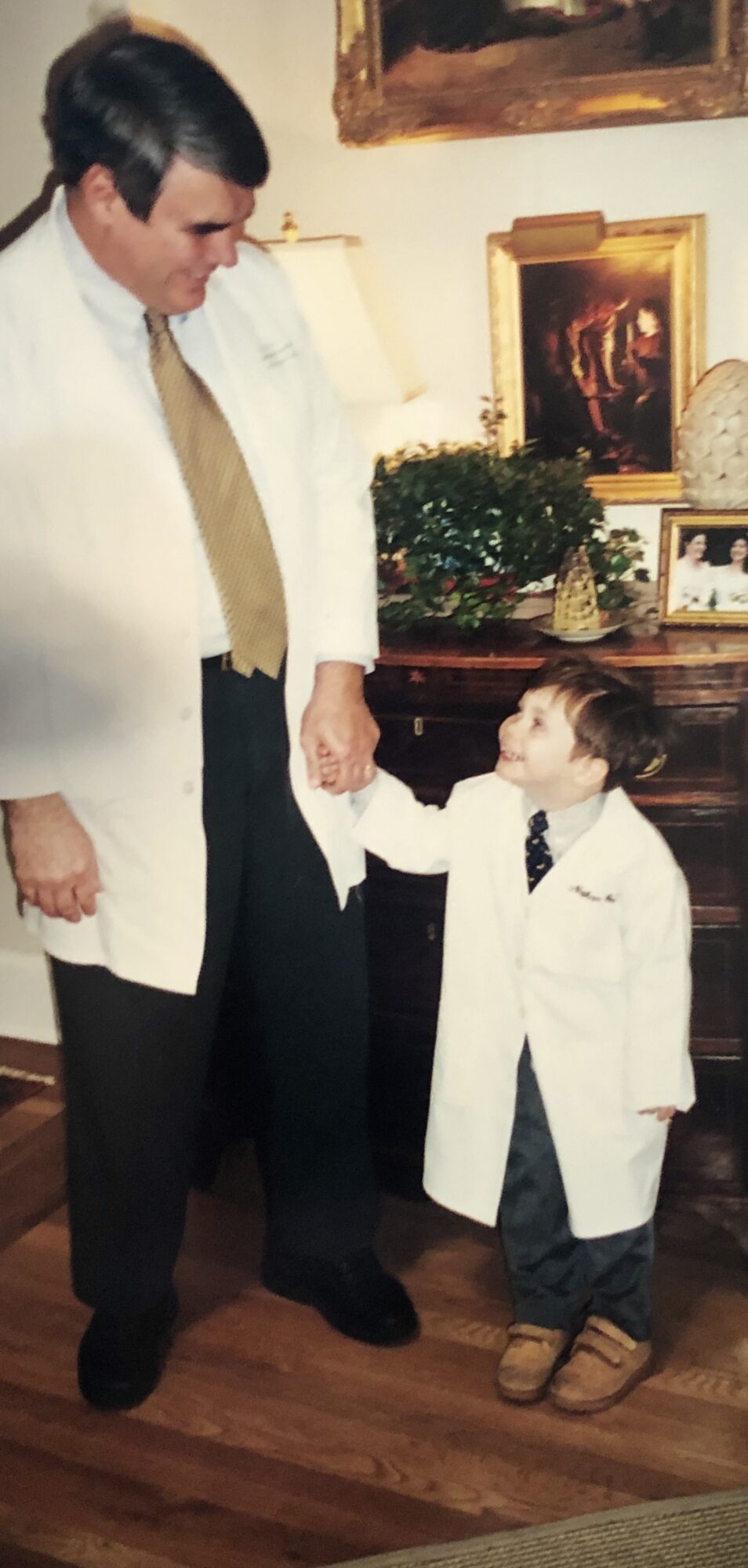
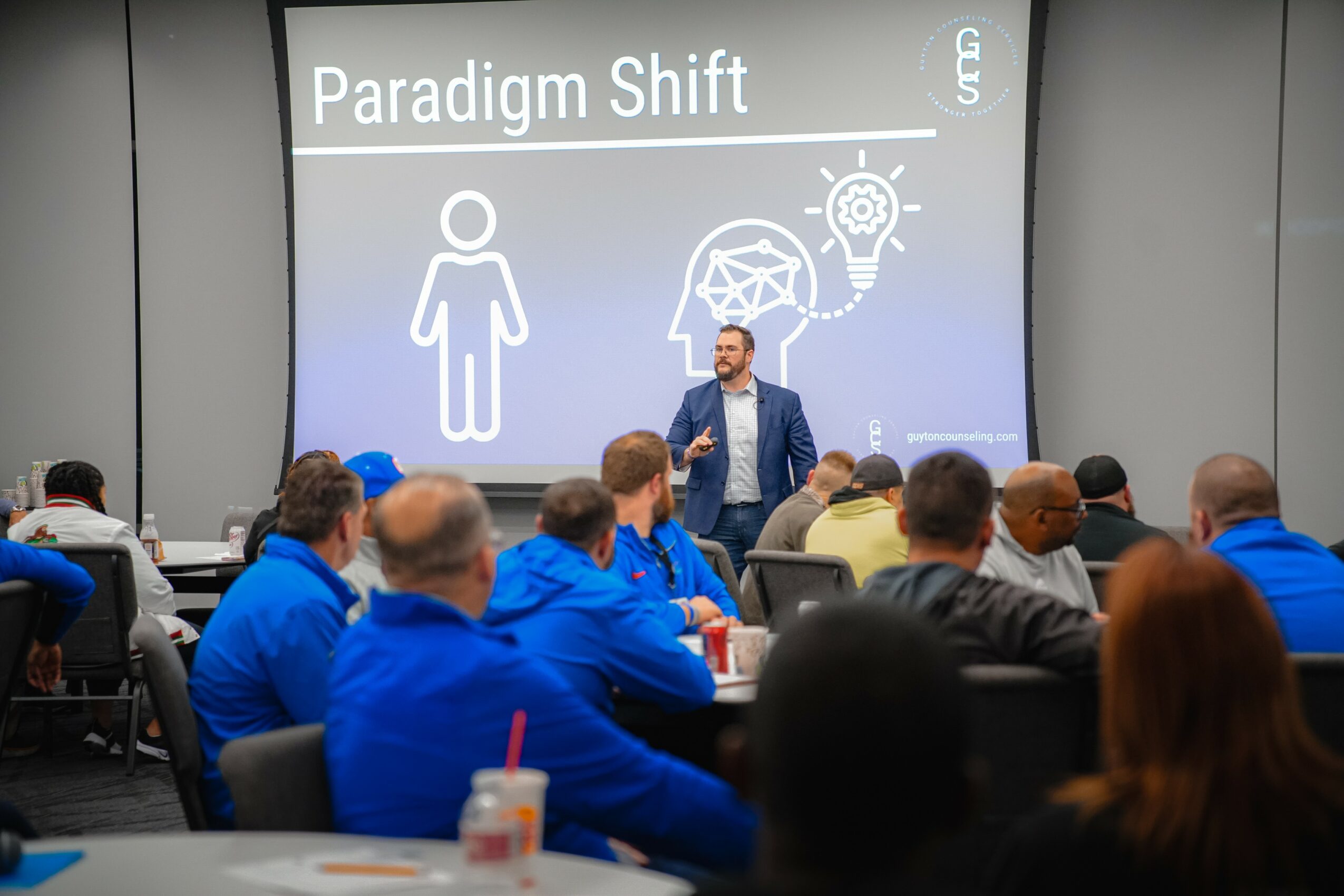
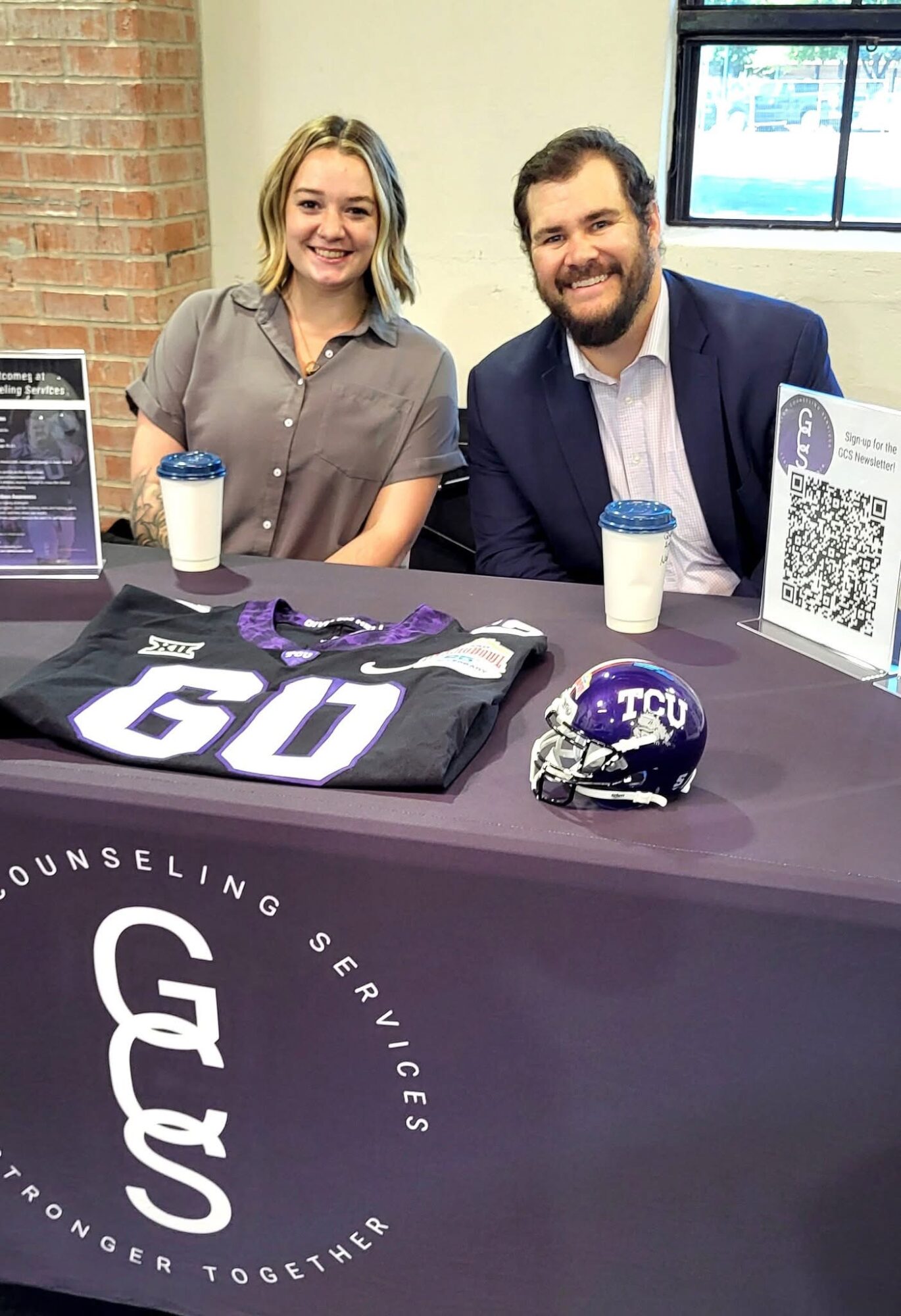
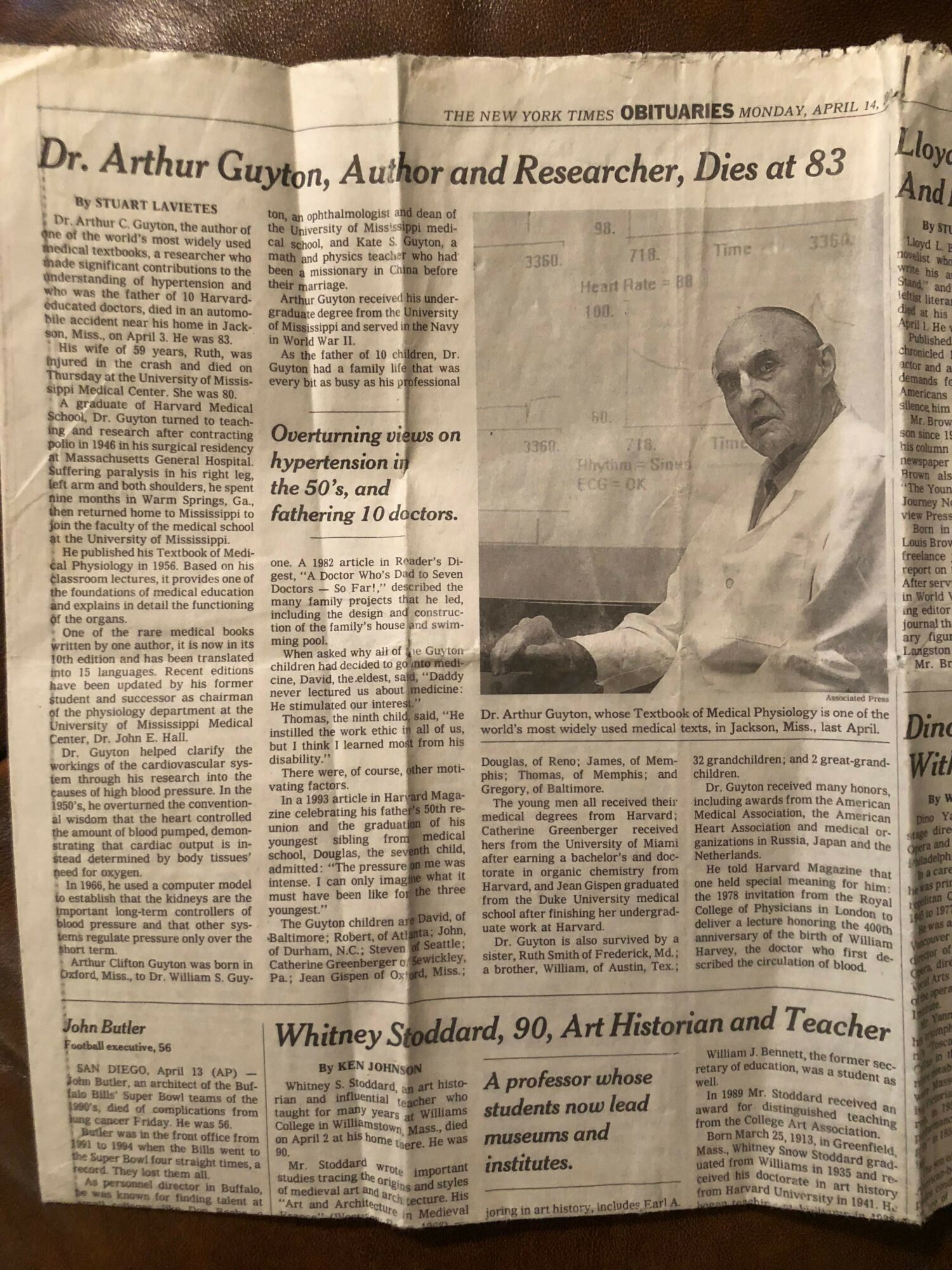
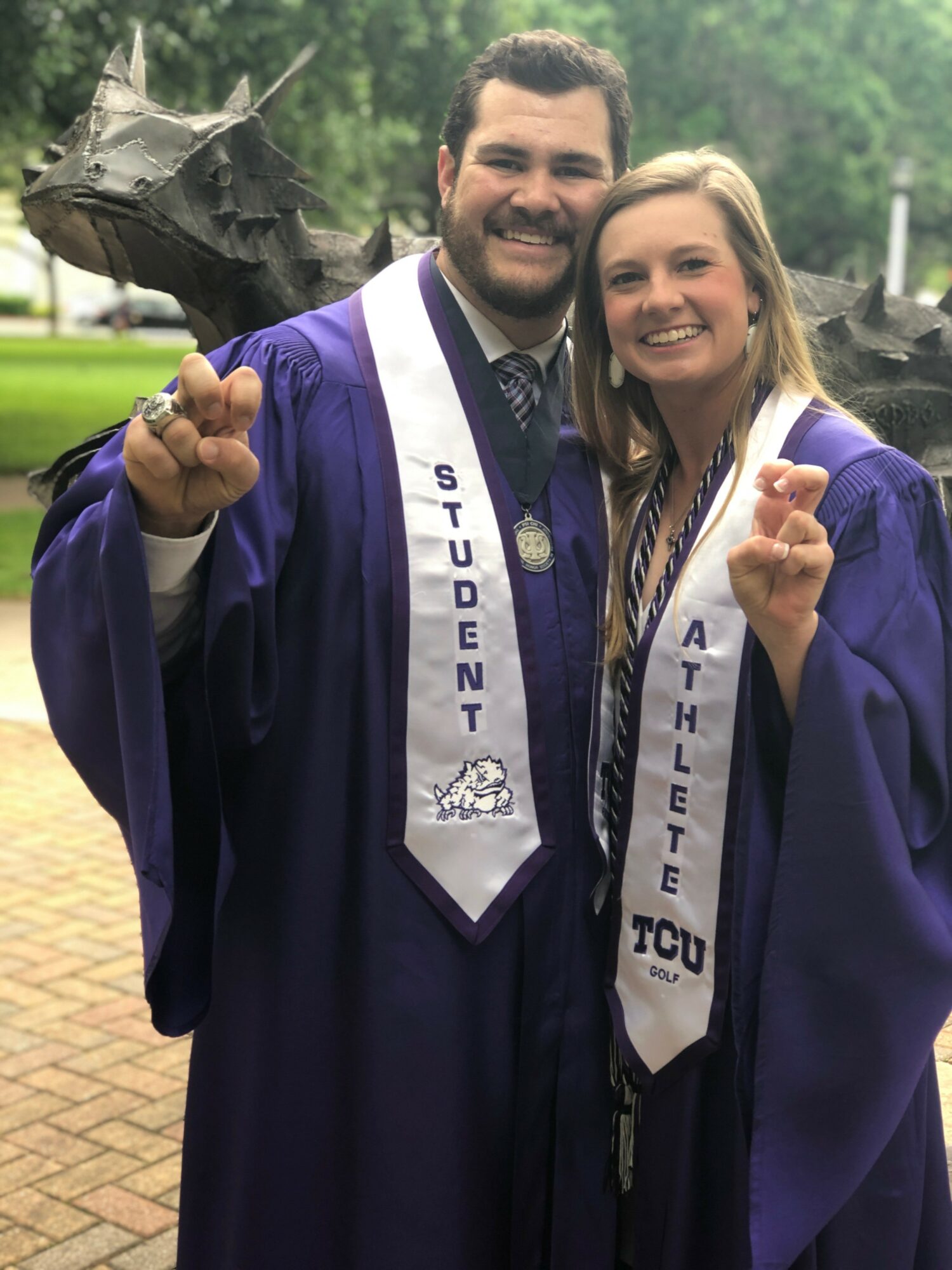
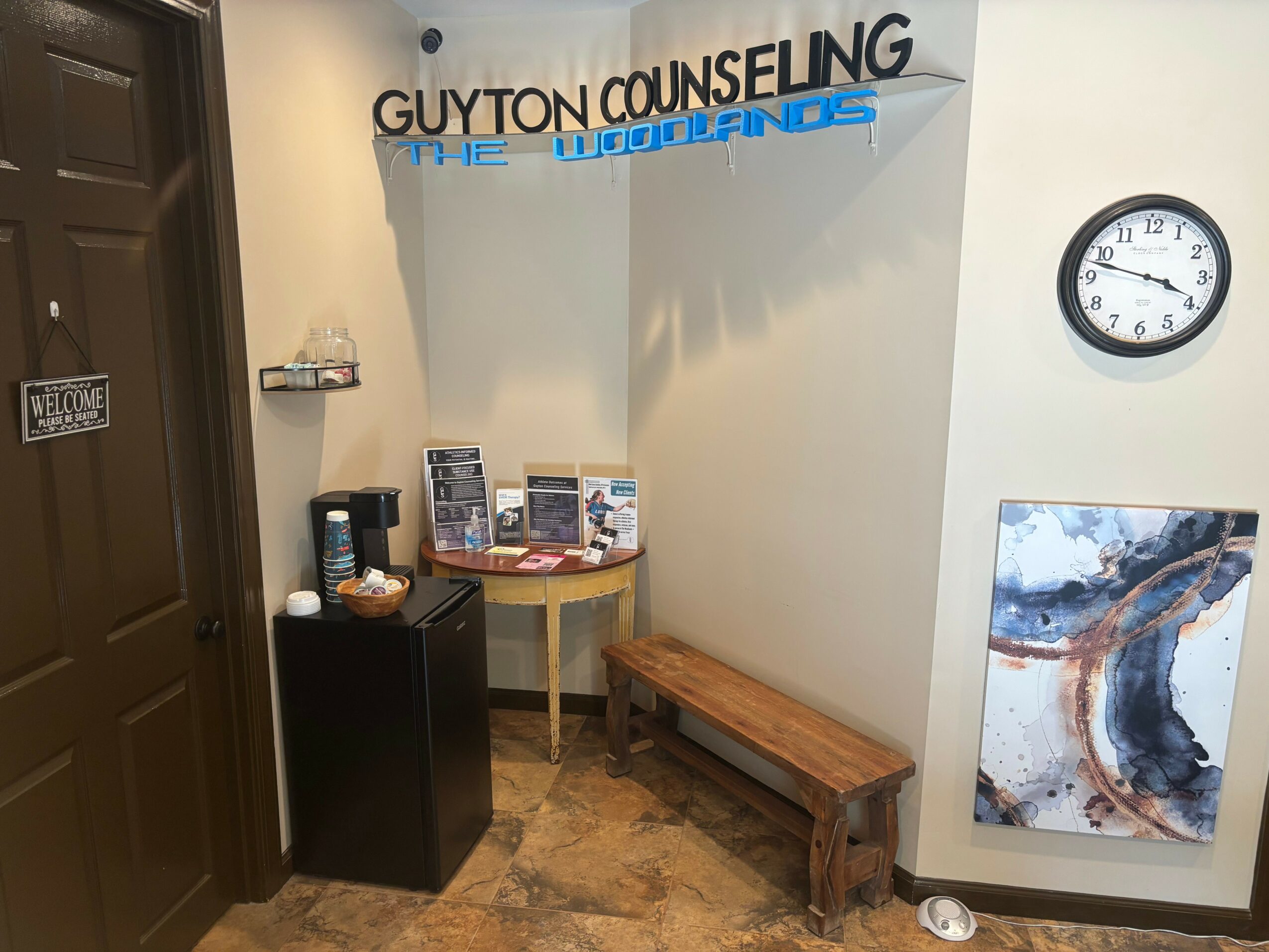
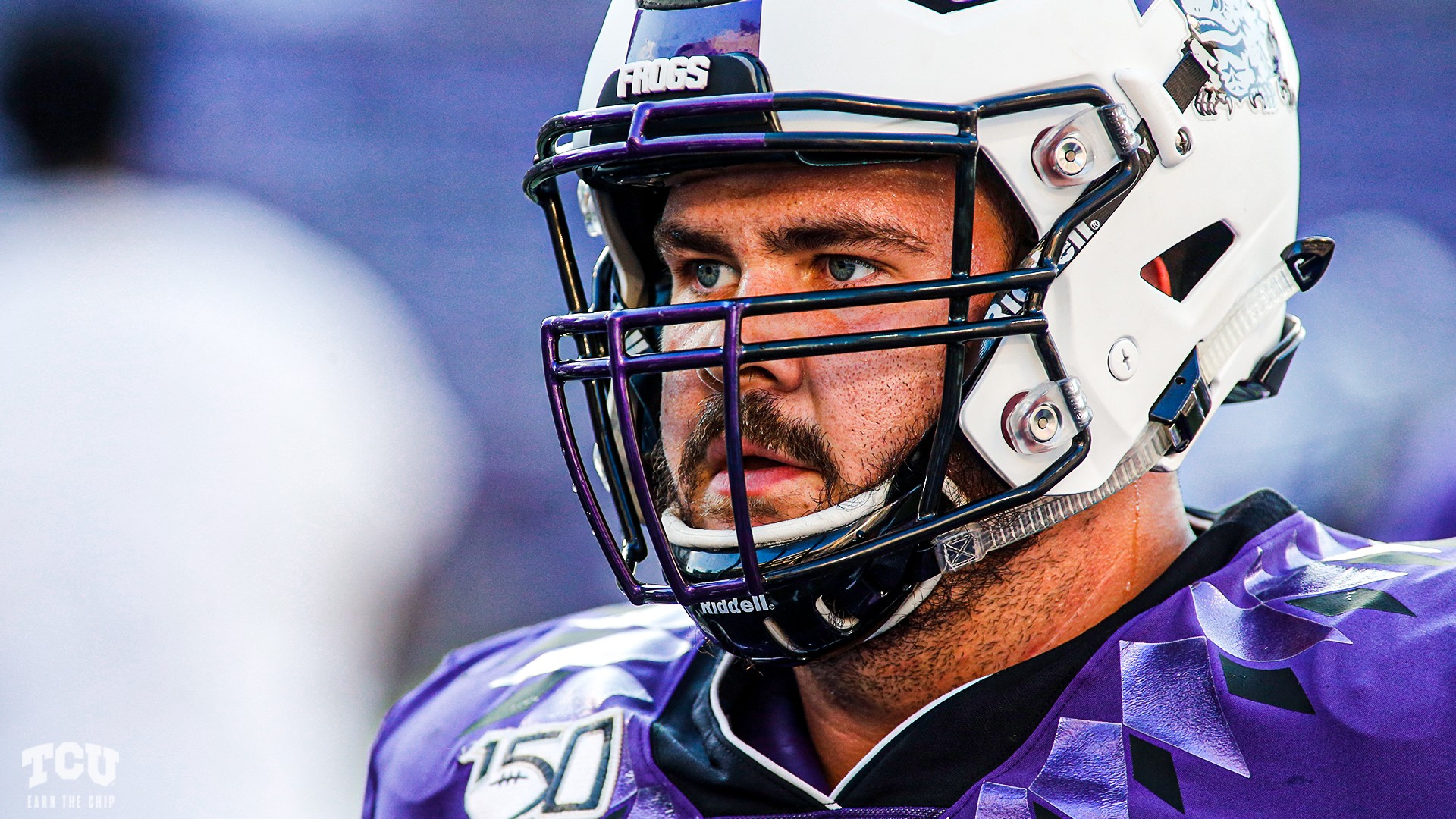
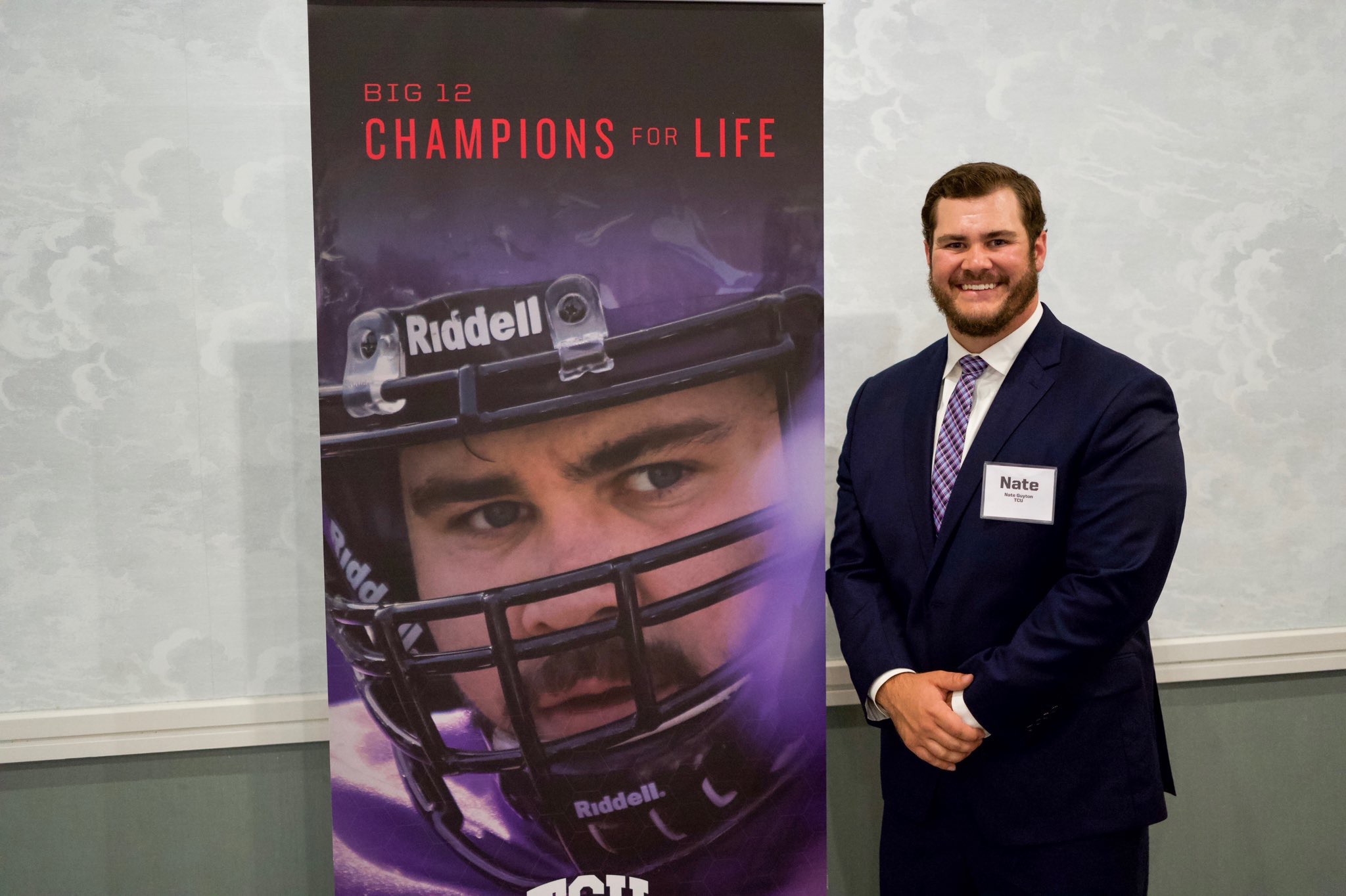
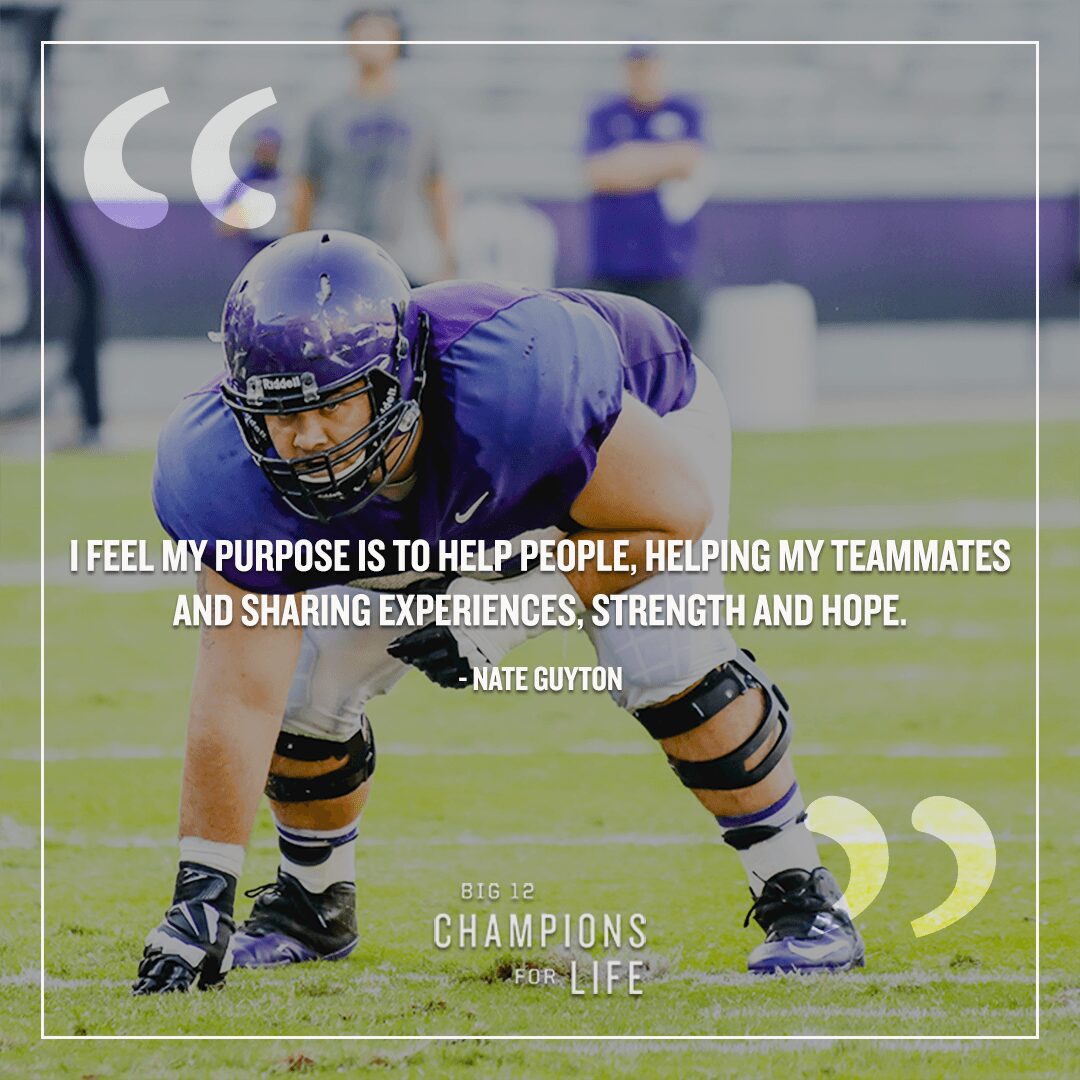
Image Credits
TCU Football (helmet/action shots)