






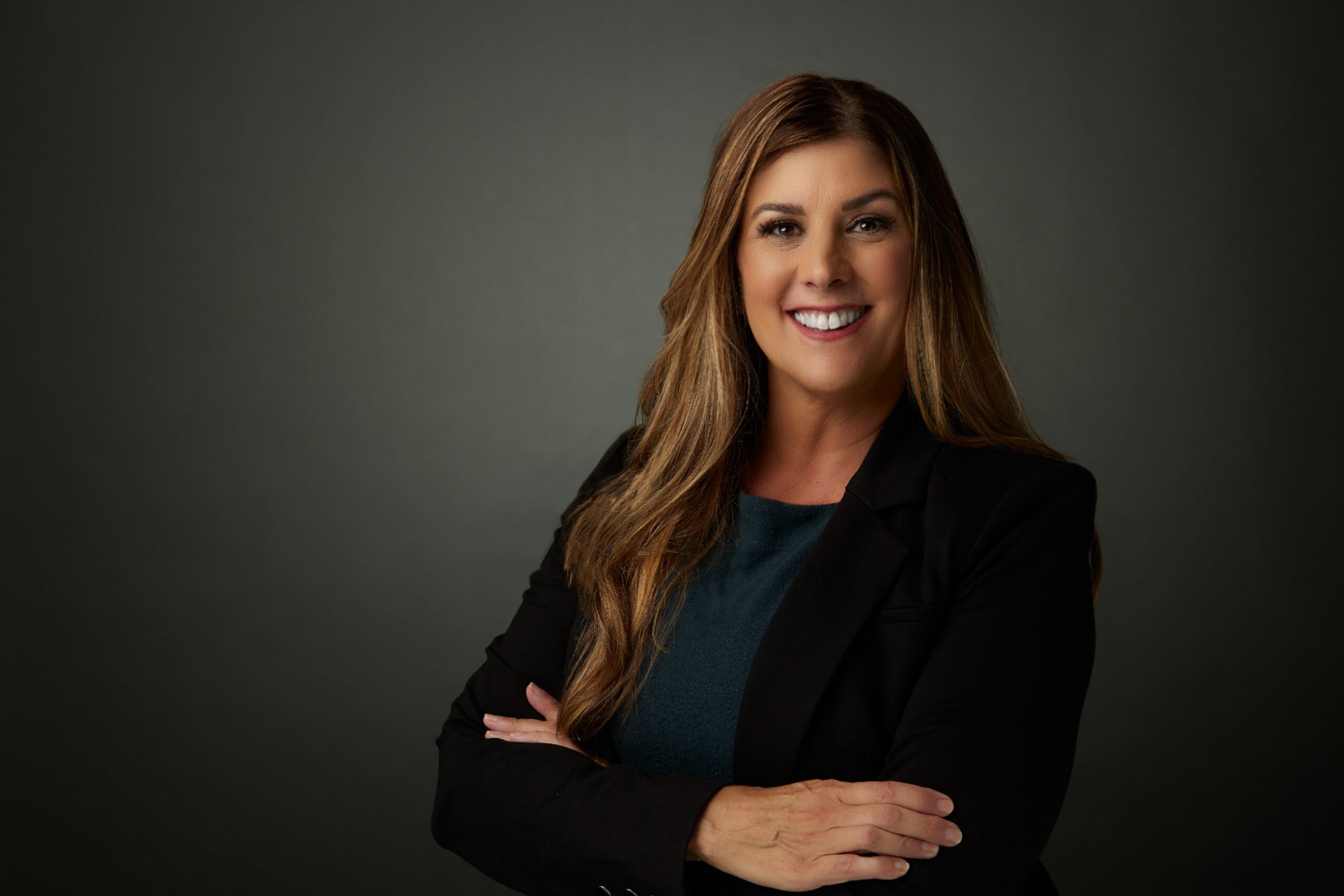
Today we’d like to introduce you to Lisa Albert.
Hi Lisa, we’d love for you to start by introducing yourself.
Like many people who enter behavioral health, I didn’t set out with a detailed career plan. What I knew was that I wanted to understand people whose lives had been shaped by trauma and help them discover hope, healing, and possibility. I began as a direct service clinician, and those early years taught me lessons that have stayed with me throughout my career. Every person has a story, every challenge deserves compassion, and lasting change happens through relationships built on trust.
My “why” is also deeply personal. I am the daughter of a first responder, and I grew up around the realities that come with a life of service, both the pride and the weight of it. I learned early that behind every siren is a human being carrying the weight of what they’ve seen, and a family waiting at the dinner table hoping they come home whole. That experience shaped how I see people in crisis and continues to ground me in the belief that healing is never just clinical; it is emotional, relational, and shared.
As I gained experience as a clinician, I discovered that I was just as passionate about developing therapists as I was about serving clients. I found myself creating practical tools, supervision models, and training approaches that helped bridge the gap between what therapists learn in graduate school and what they experience in the therapy room. I quickly realized that while graduate school teaches someone how to become a therapist, clinical supervision is where they discover the therapist they were meant to become.
To me, supervision has never been about simply fulfilling the hours required for licensure. It is about helping clinicians develop confidence, sound clinical judgment, ethical integrity, and, perhaps most importantly, their own authentic clinical self. Every therapist eventually develops a philosophy of practice and a way of connecting with people that is uniquely their own. My greatest privilege is helping them discover it.
Today, through my private practice, I provide clinical supervision, consultation, education, and mentorship to clinicians pursuing independent licensure and to experienced clinicians seeking to become supervisors themselves. My role as Executive Director of the Network of Behavioral Health Providers reflects that same passion on a broader scale; strengthening the behavioral health workforce, building collaborative systems, and expanding access to care across Greater Houston. Whether I am mentoring one clinician or helping shape the future of the profession, my purpose remains the same: investing in people so they, in turn, can transform the lives of others.
Alright, so let’s dig a little deeper into the story – has it been an easy path overall and if not, what were the challenges you’ve had to overcome?
No, it definitely hasn’t been a smooth road, but looking back, I wouldn’t change the journey because every challenge has helped shape the person, the clinician, and the leader I am today.
Professionally, I’ve been fortunate to have extraordinary mentors who challenged me, believed in me, and continue to encourage me today. I’ve also experienced leaders who lacked the vision, integrity, or support that people deserve. While those experiences were difficult, they became some of my greatest teachers. They clarified the kind of leader I wanted to become and reinforced my belief that leadership is less about authority and more about creating an environment where others can grow, thrive, and discover their own strengths.
Personally, one of my greatest teachers was my two-year-old son. During a particularly difficult season of cancer treatment, he walked over, gently took my face in his little hands, looked into my eyes, and simply said, “No cry, Mama. It’s okay.” In that moment, the roles were reversed. The child became the teacher. He reminded me that strength is not always found in having the answers; sometimes it is found in love, presence, and hope.
That experience changed how I see people. It taught me to look for strengths instead of shortcomings, possibilities instead of obstacles, and potential instead of limitations. It also reinforced something I have come to believe deeply: some of our greatest teachers are not teachers at all. They are the people, relationships, and moments that quietly shape who we become.
Whether I’m supervising a clinician, mentoring a leader, or collaborating to strengthen behavioral health systems, I carry those lessons with me every day. I believe leadership is not about creating people in our own image. It is about creating the conditions for them to discover their own strengths, trust their own voice, and become who they were meant to be.
Looking back, I realize that some of life’s greatest teachers never stand at the front of a classroom. They are the mentors who believe in us, the challenges that test us, the people we serve, and sometimes even a two-year-old little boy who reminds his mother that hope is stronger than fear.
Thanks – so what else should our readers know about your work and what you’re currently focused on?
When people ask what I do, I used to say, “I’m a therapist.” I quickly learned that, depending on the audience, that answer could clear a room. These days, I usually smile and say, “I help therapists become therapists.” That almost always gets a puzzled look, which opens the door to a conversation about what I really do.
At the heart of my work is developing people. Through my private practice, I provide clinical supervision, consultation, and education for emerging clinicians and future supervisors. I believe graduate school teaches the science of therapy, but clinical supervision is where therapists develop their Clinical Self: the confidence, clinical judgment, philosophy, and authentic presence that cannot be taught from a textbook. My role isn’t to create therapists who practice as I do. It’s to help them discover the clinician they were meant to become.
That same philosophy guides my work as Executive Director of the Network of Behavioral Health Providers. I have the privilege of building connections that make behavioral health systems stronger by bringing organizations together around shared challenges, developing workforce initiatives, and creating opportunities that no one organization could accomplish alone. While one role focuses on developing clinicians and the other on strengthening systems, both begin with recognizing potential and helping people bring it to life.
I genuinely believe that lasting change happens when trust comes before strategy. Relationships have always been at the center of my work. I’m often told that one of my greatest strengths is bringing people together, asking thoughtful questions, making meaningful introductions, and helping people connect ideas in ways that lead to practical solutions. Looking back, I have to laugh because my elementary school report cards usually included comments about me talking too much or asking too many questions. Thankfully, those same qualities eventually found the right career.
What I’m most proud of isn’t a single program or accomplishment. It’s watching other people grow. Seeing a supervisee become a licensed clinician and later become a supervisor themselves. Watching an idea evolve into a workforce initiative that helps launch the next generation of behavioral health professionals. Seeing organizations that once worked independently begin solving problems together. Those moments remind me that our greatest legacy isn’t what we build ourselves; it’s what we help others build long after we’re gone.
What sets me apart is that I don’t believe leadership, or supervision, is about having all the answers. I believe it’s about creating the conditions where people feel safe enough to ask better questions, contribute their unique strengths, and discover what they’re capable of becoming. Whether I’m working with one clinician or an entire behavioral health system, my goal is the same: to leave people stronger, more connected, and better equipped than when we first met
Are there any books, apps, podcasts or blogs that help you do your best?
Lately, I’ve found myself thinking less about personal or professional development and more about the idea of becoming. Looking back, I realize that the books, experiences, and people who have influenced me most all share a common thread: they challenged me to see the world and myself differently.
My favorite book is The Alchemist by Paulo Coelho. I read it while backpacking across Europe in my 20’s, and the timing could not have been more perfect. The journey itself, with all of its uncertainty, adventure, and discovery, became intertwined with the book’s message that the greatest gifts are often found in the process of the journey rather than the destination. It taught me that growth often happens somewhere between where we begin and where we think we’re going.
Another book that profoundly influenced me isn’t one I’d call a favorite, but it certainly changed my perspective. Reading The Jungle by Upton Sinclair in high school not only led to nearly 40 years of avoiding hot dogs, but more importantly, it opened my rather sheltered eyes to the realities of poverty, exploitation, and systemic injustice. It challenged me to look beyond my own experience and planted seeds that would later shape both my career and my commitment to serving others.
I’ve also learned that some of life’s greatest teachers aren’t found in books at all. They are the mentors who challenge us, the clients who trust us with their stories, the colleagues who inspire us, the difficult seasons that stretch us, and sometimes the people we least expect. Those experiences have shaped me every bit as much as anything I’ve ever read.
For my daily dose of inspiration, I return to the words of Maya Angelou, Helen Keller, Mother Teresa, and Mahatma Gandhi. Their wisdom continually reminds me to lead with purpose, compassion, humility, and hope.
The quote that has become my personal mantra is from Maya Angelou:
“I’ve learned that people will forget what you said, people will forget what you did, but people will never forget how you made them feel.”
To me, that isn’t simply an inspiring quote; it’s a philosophy. It has guided me as a therapist, clinical supervisor, leader, and person. Whether I’m sitting with a supervisee, collaborating with community partners, or supporting someone through a difficult moment, I hope people leave feeling seen, valued, and believing a little more in themselves than they did before we met. If that happens, then I’ve done meaningful work.
Contact Info:
- Website: https://www.theclinicianconnection.com/
- LinkedIn: https://www.linkedin.com/company/the-clinician-connection-llc