
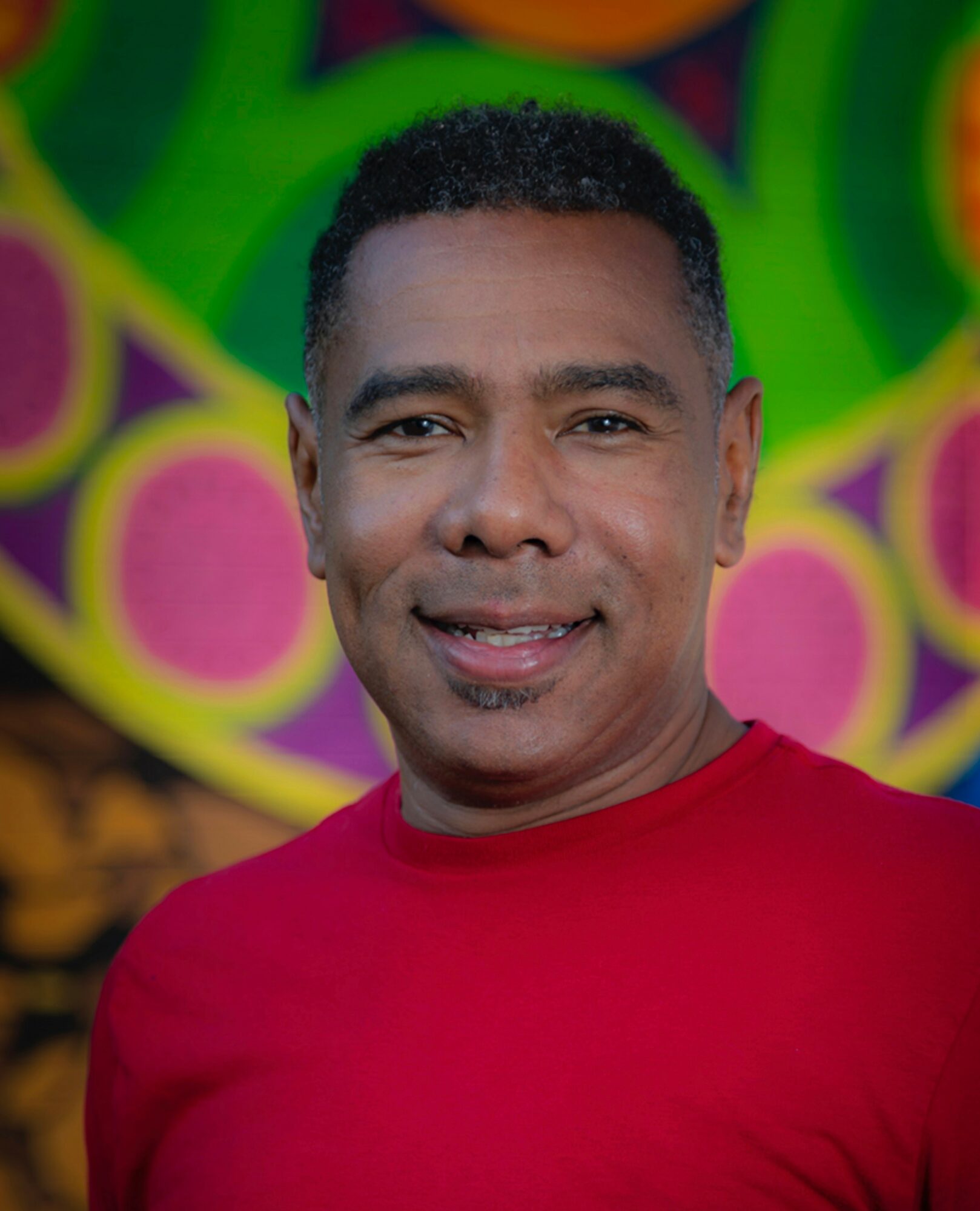
Today we’d like to introduce you to Reginald Adams.
Hi Reginald, can you start by introducing yourself? We’d love to learn more about how you got to where you are today?
My journey as an artist began long before I understood that art could become a career. As a child, creativity was how I processed the world, expressed myself, and connected with others. Over time, that natural curiosity developed into a deeper interest in using art to transform not only objects, but people and places.
I began my professional career more than 30 years ago, creating murals, mosaics, sculptures, and community-based art projects throughout Houston. Early on, I recognized that public art could do far more than beautify a space. It could preserve history, strengthen identity, encourage dialogue, and give communities a sense of ownership in the places where they live.
That realization shaped my entire creative practice. Rather than working alone in a studio, I became interested in bringing people directly into the creative process. Since then, I have helped produce more than 350 public art projects and have worked with thousands of young people, artists, volunteers, residents, and community leaders. My work can be found in parks, schools, airports, transit corridors, historic neighborhoods, and public spaces across the country.
Over ten years ago, my practice expanded in a very personal and spiritual direction when I began building labyrinths and incorporating sound meditations into my work. What started as an exploration of sacred geometry, reflection, walking meditation and healing quickly became a central part of my creative language. I was drawn to the idea that art could be both physical, spiritual, and experiential, something people walk through, listen to, and feel within their bodies.
That work opened an entirely new path for me. I began creating community-driven labyrinth installations and offering sound meditation experiences in collaboration with artists, healers, and local communities. These projects have taken me around the world, allowing me to build temporary and permanent labyrinths in diverse cultural settings and to share sound meditations as a form of collective grounding, reflection, and connection. In each place, the intention has remained the same: to create space for stillness, healing, and shared presence.
One of the most meaningful chapters of my career has been founding the Absolute Equality Juneteenth Mural Project, a national public art initiative that uses murals and community engagement to explore the history, meaning, and continuing relevance of Juneteenth. The project has allowed me to collaborate with artists and communities in cities across the United States while helping bring greater visibility to stories that have often been overlooked.
My creative practice has also expanded beyond traditional visual art. Today, my work includes immersive environments, labyrinths, storytelling, augmented reality, animation, sound meditation, and projects that combine art, history, technology, wellness, and community development.
Looking back, the path has never been completely linear. It has been built through experimentation, relationships, persistence, faith, and a willingness to keep evolving. What has remained constant is my belief that art has the power to bring people together, reveal shared humanity, and transform the way we experience a place.
Today, I see myself not only as an artist, but as a creative community builder. My goal is to continue creating meaningful experiences that honor history, inspire imagination, and leave communities stronger than I found them.
Would you say it’s been a smooth road, and if not what are some of the biggest challenges you’ve faced along the way?
It has definitely not been a smooth road. Building a career as an independent artist and creative entrepreneur has required persistence, adaptability, and a willingness to keep moving forward even when the path was unclear.
One of the greatest challenges has been helping people understand the true value of public art. Art is often viewed as something decorative that can be added at the end of a project, rather than as an essential part of community development, cultural preservation, and placemaking. I have frequently had to advocate not only for my own work, but for adequate budgets, fair compensation, and meaningful opportunities for other artists.
There have also been the everyday realities of entrepreneurship, including inconsistent funding, delayed payments, managing cash flow, securing contracts, coordinating large teams, and balancing creativity with administration. As the scale of my projects grew, I had to learn skills that were never taught in an art studio, including budgeting, fundraising, project management, community engagement, public speaking, and partnership development.
Some of the most difficult moments came when the work itself challenged people. When we created the first Absolute Equality Juneteenth mural in Galveston, I received death threats because of the subject matter. That experience made it very clear that public art dealing with race, history, and freedom can carry real consequences. It was disturbing, but it also reinforced why the work mattered. The mural was not simply an image on a wall. It was part of a larger effort to tell the truth, honor the history of Juneteenth, and make that history visible in the city where the celebration began.
Another challenge has been carrying ambitious ideas before other people could fully see them. Some of my most meaningful projects began as concepts that seemed too large, unconventional, or difficult to execute. There were times when I had to hold the vision through rejection, skepticism, limited resources, and long periods of uncertainty.
I have also had to learn how to protect my energy. When your work is connected to community, history, social justice, and public responsibility, it can be difficult to separate the artist from the mission. Burnout is real, especially when you feel personally responsible for every detail and every outcome.
At the same time, those struggles have shaped me. They taught me how to become more resourceful, collaborative, disciplined, and resilient. I have learned that obstacles are often invitations to redesign the path. The road has not been smooth, but every challenge has clarified my purpose and strengthened my commitment to creating work that carries truth, meaning, and lasting impact.
Appreciate you sharing that. What else should we know about what you do?
I am a public artist, community developer, and creative entrepreneur. For more than 30 years, I have created art that transforms public spaces while helping communities tell their own stories. My work includes large-scale murals, glass and ceramic mosaics, sculpture, labyrinths, immersive installations, and participatory art experiences.
I specialize in community-engaged public art. That means the creative process is rarely limited to me working alone in a studio. I often collaborate with residents, young people, historians, neighborhood leaders, fellow artists, and volunteers to develop work that reflects the identity and aspirations of the people who will experience it every day.
I am known for creating ambitious, multilayered projects that combine art, history, culture, storytelling, and community participation. My projects can be found in parks, schools, airports, transit corridors, cultural institutions, and neighborhoods throughout Houston and across the country. Over the course of my career, I have helped produce more than 350 public art projects and engaged tens of thousands of young people and community members in the creative process.
One of the projects I am most proud of is the Absolute Equality Juneteenth Mural Project, which I founded to commemorate the history and continuing significance of Juneteenth through public art. The initiative began with a mural in Galveston, the birthplace of Juneteenth, and grew into a national movement involving artists and communities in cities across the United States. I am proud that the project has created opportunities for artists while bringing overlooked history into highly visible public spaces.
I am also proud of my work with Selestial Sacred Sound Sessions, a practice that integrates sound, meditation, and collective healing into creative space. These sessions create environments where people can slow down, reflect, and reconnect with themselves and one another through intentional soundscapes and guided communal experience. In many ways, this work extends my exploration of spirituality in public art, including the use of labyrinths as sacred, walking meditations. I see labyrinths as powerful communal tools for grounding, reflection, and shared presence, spaces where people can physically move through intention, release, and renewal together. Alongside sound meditation, they allow me to create environments that are not only artistic but also deeply restorative, offering new ways for communities to gather in stillness, healing, and connection.
I am also proud of the many neighborhood-based projects that may never receive national attention but have made a meaningful difference in the lives of the people who helped create them. Whether it is a mosaic in a community park, a mural designed with students, a labyrinth built as a space for reflection, or a sound-based gathering designed for collective healing, I value work that gives people a sense of connection, pride, and ownership.
What sets my practice apart is my ability to see art as both a finished object and a living experience. I am not only interested in what a project looks like. I think deeply about how it is created, who is included, what stories it carries, and how it can continue to engage people long after the installation is complete.
My work increasingly incorporates augmented reality, animation, sound, wellness, and interactive storytelling. I am interested in the space where ancient cultural and spiritual practices meet emerging technology, and where art can become a doorway into history, healing, imagination, and human connection. I like to call this the intersection between Ancestral Intelligence and Artificial Intelligence.
Ultimately, I believe my role is larger than simply making beautiful things. I use creativity to build relationships, preserve memory, activate public spaces, bring people together, and help people recognize themselves within the cultural landscape. Through both visual art and spiritual practices like labyrinths and sound meditation, I aim to create sacred communal experiences that foster healing, presence, and belonging. That sense of purpose is at the center of everything I create.
We all have a different way of looking at and defining success. How do you define success?
I define success as creating work that has meaning beyond the moment it is completed. Recognition, awards, and financial stability are important, but they are not the full measure of success for me. I am most fulfilled when the work creates connection, preserves a story, opens a conversation, or helps people see their community and themselves with greater clarity and pride.
A recent example is my participation in the FELLED exhibition at the Coconino Center for the Arts in Flagstaff, Arizona. The exhibition explores race, labor, land, and the history of forestry. As I began developing my work for the exhibition, I started researching the life of my grandfather, T.C. Adams, who worked as a lumberjack, logger, and farmer in rural Louisiana.
What began as research for an art project became something much more personal. Digging into his history encouraged me to reach out to my aunts and uncles and ask them to share their memories of growing up with a father whose life was shaped by logging and farming. Through their stories, I have learned more about his work ethic, sacrifices, hardships, and the experiences that shaped our family. The project has brought us closer together and created a new space for family stories that might otherwise have been lost.
To me, that is success. The art is not only producing an exhibition or an object for people to view. It is helping me better understand where I come from, strengthening relationships within my family, and preserving memories for future generations.
Success also means sustaining a creative life with integrity. It means having the freedom to pursue ambitious ideas, support my family, create opportunities for other artists, and continue growing without losing sight of why I began.
Ultimately, I measure success by impact. Did the work bring people together? Did it preserve something meaningful? Did it create space for voices and histories that might otherwise be overlooked? At this stage in my life, success is not a single destination. It is building a body of work that reflects purpose, courage, service, and a deeper connection to the people and stories that shaped me.
Contact Info:
- Website: https://www.reginaldadams.com
- Instagram: @reginaldadams
- Facebook: @reginaldcharlesadams
- LinkedIn: @reginaldadams
- Youtube: @reginaldadams