





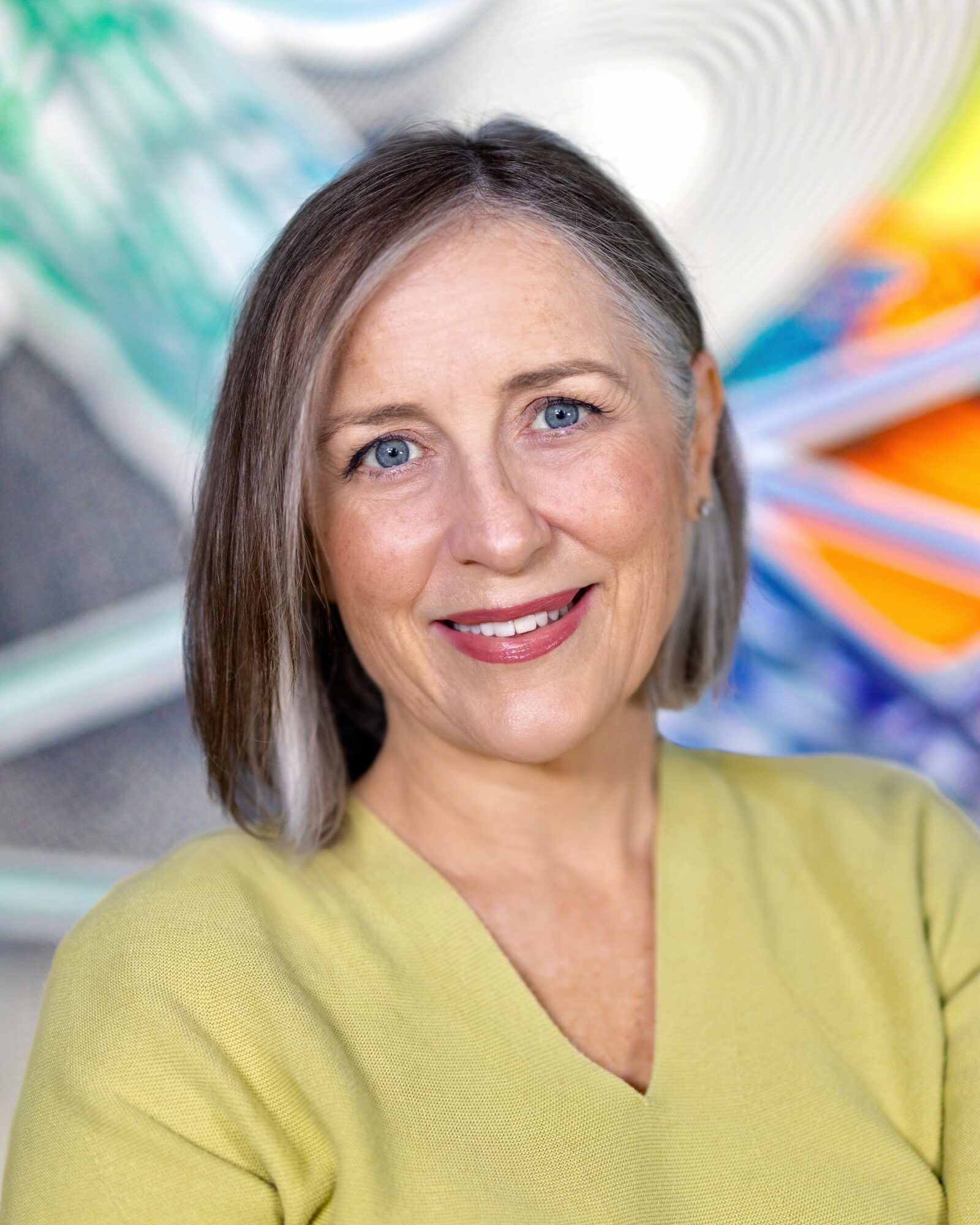
Today we’d like to introduce you to Cynthia Clayton.
Hi Cynthia, so excited to have you with us today. What can you tell us about your story?
My journey as a singer started before I could talk (I’m told), as a toddler who loved to vocalize every tune she heard. Singing in choirs and shows at school and church cemented singing as a way of life for me, so it was natural to pursue it in college, although my true dream was rock stardom! During my time as an undergraduate at UCLA, I discovered classical singing and opera, and then followed that with graduate study across town at USC. From there, I participated in young artist programs and small gigs until my full-time singing career finally started at Opera San Jose in the early 90s. I was fortunate enough to build a career singing primarily leading lyric soprano roles at opera houses across the country, and sometimes abroad, and I did this as my only “real” job for well over a dozen years. Between gigs, particularly when my children were small, I did some voice teaching and discovered that I had a love for helping singers discover how to use their voices with greater skill and efficiency. Dipping my toe into teaching gave me more insight into my own evolution as a singer, and allowed me to continue honing my own skills as my voice continued maturing.
In 2005, my husband (opera baritone Hector Vasquez) and I had a small family and a desire to travel a bit less and put down roots. I was extremely fortunate to capture a tenure-track position at the Moores School of Music, University of Houston, and we moved from our tiny New York City apartment to a home in the Houston suburbs in 2005. For the last twenty years, the balance of my professional life gradually tipped from “singer who teaches” to “teacher who sings,” and I have loved every moment of this process. I continue to work with singers who have career aspirations ranging from professional opera singers to private voice teachers to high school choir directors and performing arts administrators; I also still perform when the opportunity arises, though this is less of a focus for me, as I have aged out of most of the roles that were central to my freelance career through the decades. My main professional focus these days is helping singers hone their craft so that they may fulfill their artistic goals, whatever those may be. In so doing, I hope I’m doing my little part to give back to an art form I love deeply!
I’m sure it wasn’t obstacle-free, but would you say the journey has been fairly smooth so far?
Being a performer is rarely a smooth road, even for the most exceptional singers. I had a lot of technical setbacks in my own training, and I really feel fortunate that I worked as much as I did despite not really feeling like I truly had mastery over my singing until my late 30s. When you’re a gig singer, as most opera singers in the US are, sometimes you have to accept contracts for roles that maybe don’t fit you well, or are slightly beyond your skillset. Other times, the role is great, but you get sick and have to decide whether you can get through the challenges of the part anyway or will need to cancel. Then there are life decisions, like deciding to have a family, that can have a huge impact on career trajectory. Finding balance as a professional singer is a really tricky thing.
Once I joined the academic world, I was expected to continue performing prominently, and that was also quite a challenge! I can barely remember much of my 40s, as I was parenting, teaching, and performing in equal measures much of the time. I’m not sure how I juggled all that, looking back at it! Along the way, my voice and repertoire continued to expand, so I had to be recalibrating technical approaches for myself, much in the same way I help young singers figure out how to manage their voices.
Then about 10 years ago, I caught an upper-respiratory virus that caused months of chronic coughing that none of my doctors could adequately quell. As a result, I suffered an injury to one of my vocal folds (the nightmare of every singer). While I could still sing, everything about producing my voice became much more challenging. I had to focus far more on technique than I ever had, and my performance life became quite stressful for about 8 months, until I had enough free time to get the surgical repair I needed. Professional singers don’t like to talk about the injuries we have suffered, or admit to needing surgery on their voice, but it happens often, and for so many reasons beyond poor technique. I managed my own vocal recovery and was able to get back to singing as easily as before the injury. This experience gave my teaching an added focus on vocal health and longevity, so I cannot regret that journey in the long run.
I suspect few of my colleagues were aware that this happened, given that I took no interruption of my singing or teaching activities. In fact, I gained promotion to full professor just a few years later. This was followed in short order by the covid-19 pandemic, which (to no one’s surprise) was an even bigger obstacle to the businesses of singing and teaching. So for me, professionally, these last ten years have been a period defined by adjusting, recalibrating, thinking creatively and moving forward regardless.
Alright, so let’s switch gears a bit and talk business. What should we know about your work?
As an opera singer, I have mostly been hired to sing full lyric soprano roles, like Mimi in La Bohème, Cio Cio-San in Madama Butterfly, and Leonora in Il Trovatore. I have performed mostly in regional houses in cities all around the US, meaning that instead of the kind of upper-echelon international singing career that brings fame and riches, I was simply working regularly through the years singing masterpieces in front of appreciative audiences, without having to face the pressures associated with fame or stardom. I feel very fortunate to have had the privilege of this career.
As the balance of my professional life slowly tipped toward teaching more than singing, I began to see that the challenges I faced in my singing career brought even more clarity and depth to my teaching. It’s as if I was always meant to be a voice teacher, and the decades as a professional singer were simply the experience I needed to better help my students approach their own journeys toward technical proficiency and mastery of their singing. I would say that most of my teaching now is focused on imparting everything I wish I had been told as a young singer, particularly the things that I think most of us learn “the hard way.”
I love an underdog story. The students I’m most proud of are not necessarily the ones who went on to prominent careers or won major awards (though I am certainly proud of them!), but rather the ones who struggled with singing and persevered, and eventually overcame their issues. Whether singing is a vocation or a hobby, there is nothing better than singing freely with a voice that is responding easily, and nothing worse than a voice that isn’t functioning well and is unreliable. For people in the latter category, it’s often easier to give up on their singing dream than it is to rebuild their singing technique from the ground up. I have been on this journey with several singers through the years, and there is nothing more gratifying than helping a singer achieve a solid, reliable technique after they have struggled with entrenched problems.
Building on these values, my latest creative focus is on a series of interviews with internationally-renowned singers, asking them to speak about their individual journey and growth, and particularly what they think goes into singing beautifully, reliably, and consistently at the highest levels. The project is still ongoing; the first six interviews are available to view online at www.singingpraxis.com. Over the next few years, I plan a total of at least 18 interviews, plus bonus content that will address the most common technical issues that classical singers face. I have found that the very top singers in the world are quite generous with sharing their processes, approaches, and even their struggles. In this way, I hope to make access to their thoughts and experiences available to aspiring classical singers everywhere.
Where we are in life is often partly because of others. Who/what else deserves credit for how your story turned out?
In a way, it’s up to each singer to do the work of teaching themselves to sing, with the guidance of people they trust. I was so fortunate to have a supportive family, particularly my mother, Diana Novak. She was my biggest fan and cheerleader, paying for lessons to help me get into college, traveling to cheer me on as I was getting my career started, and celebrating every success along the way. I lost her in 2007, but her voice lives inside me always.
The teachers, coaches, and conductors, colleagues and mentors who had a hand in guiding me are too numerous to name, though I’ll always give a special shout-out to Jane Randolph, who was my last official voice teacher back in the 1990s. Jane fueled my desire to truly understand my voice and how it works best, rather than just trying to make me sound good. I was able to build upon the work we did together long after our lessons ended.
This might sound odd, but I have always felt that the the composers of the music I have devoted my singing life to (particularly Mozart, Puccini and Verdi) have taught me more about my voice and my artistry than any living human being. It’s impossible to adequately express how they communicate their own understanding of the singer’s voice through the demands they make in their compositions. Any skills I have exist because they made me figure it out!
I also have to credit my colleague Joseph Evans, a wonderful tenor and delightful human being. Without his support, I may never have gotten my job in Houston. He was a wonderful colleague and mentor to me from my first day at UH through his retirement a few years ago. He is just one of so many UH colleagues who make the Moores School of Music such a wonderful professional home.
My husband and I have been on our parallel singing and teaching journeys together for over three decades, and I can say definitively that without Hector Vásquez as my partner, I probably would have given up so many times along the way. I love him dearly and feel so fortunate that he has stuck by me through it all. And I can’t credit him without mentioning that our grown children have been loyal supporters their entire lives! Both of them have lovely voices themselves, and our youngest, Emilio, has decided to pursue singing as his vocation, which delights us endlessly.
Contact Info:
- Website: https://www.claytonvasquez.com
- Facebook: @SopranoCClayton
- LinkedIn: https://www.linkedin.com/in/cynthia-clayton-05143552
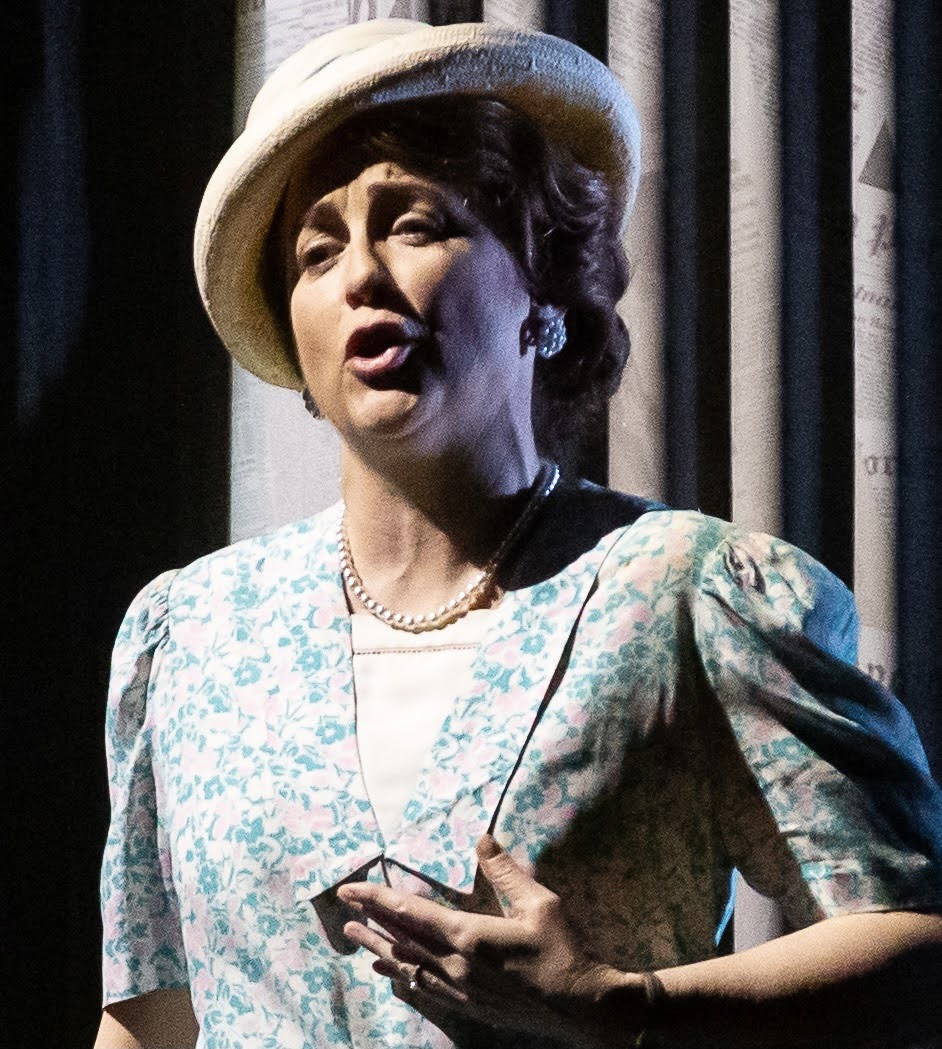
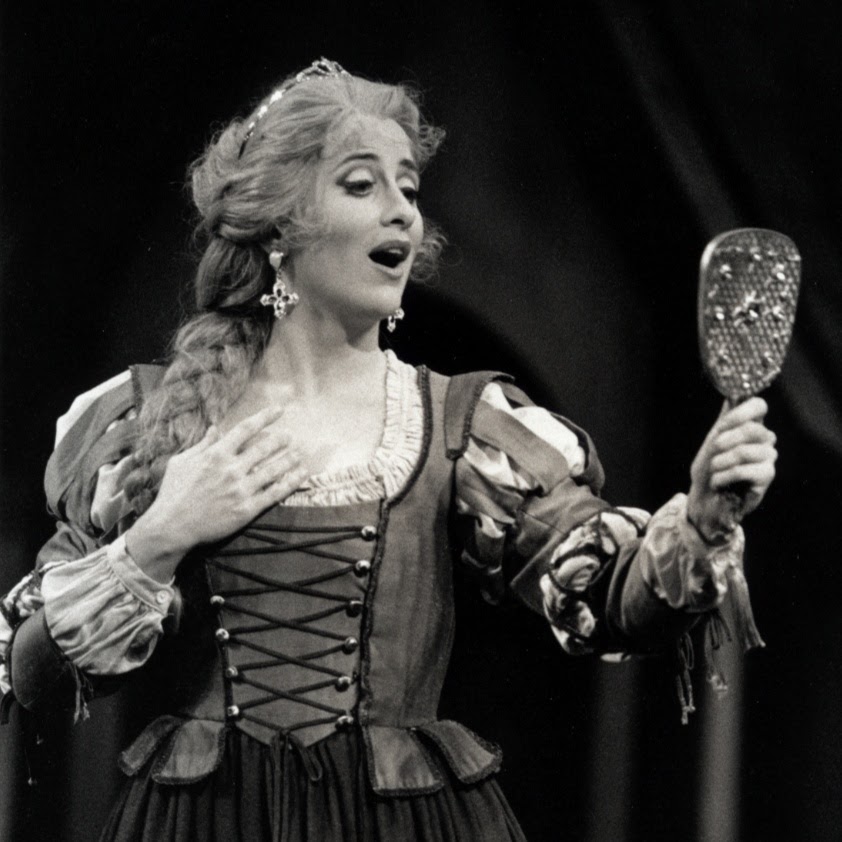
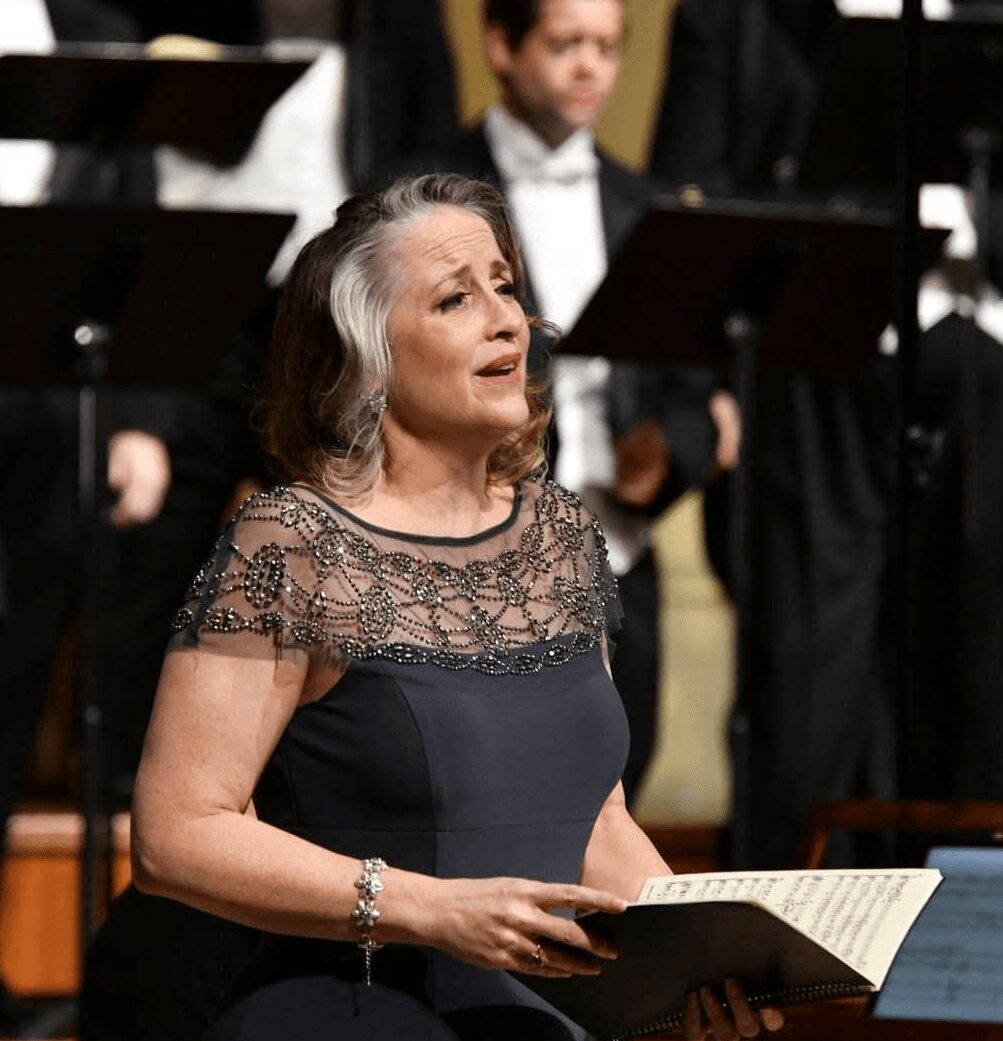
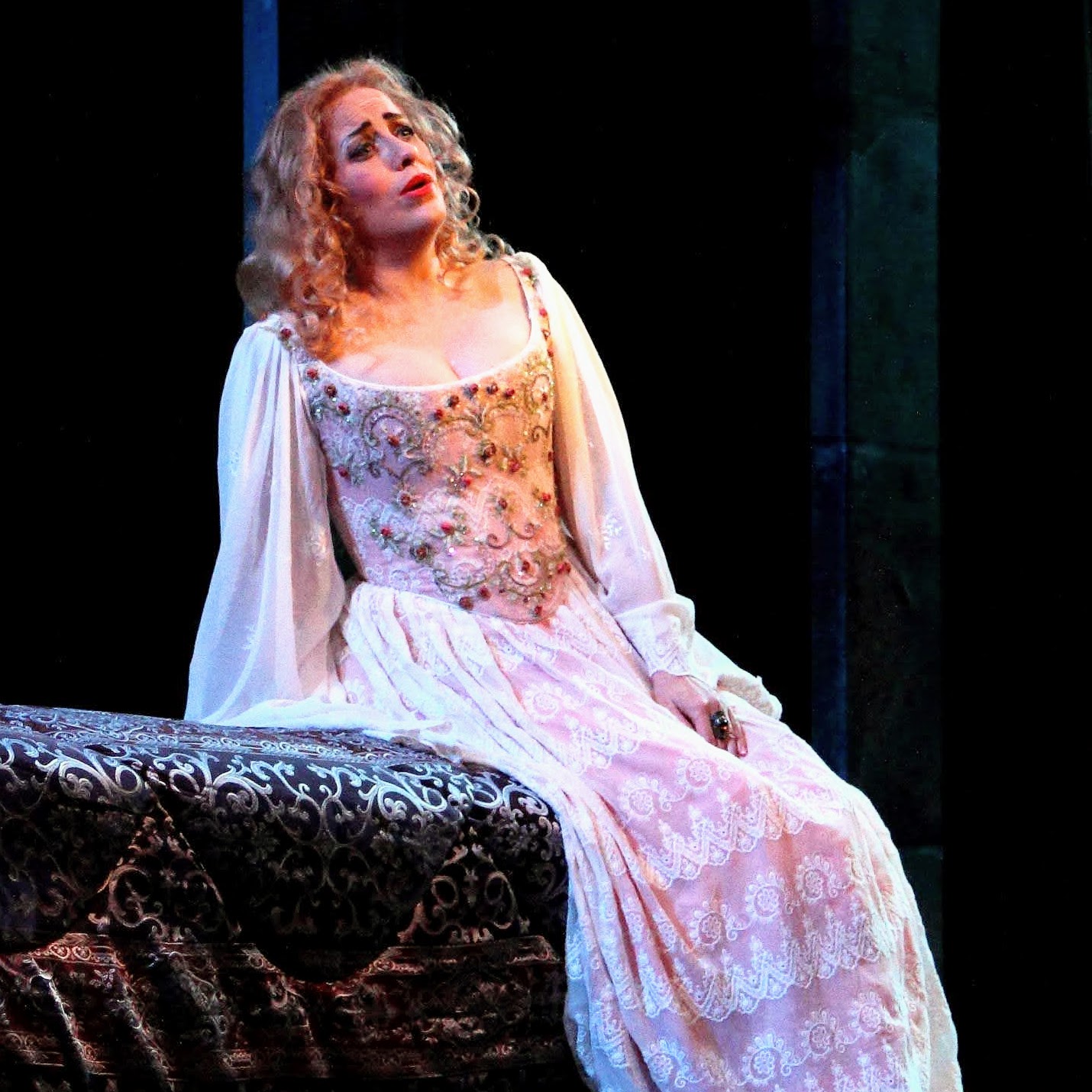
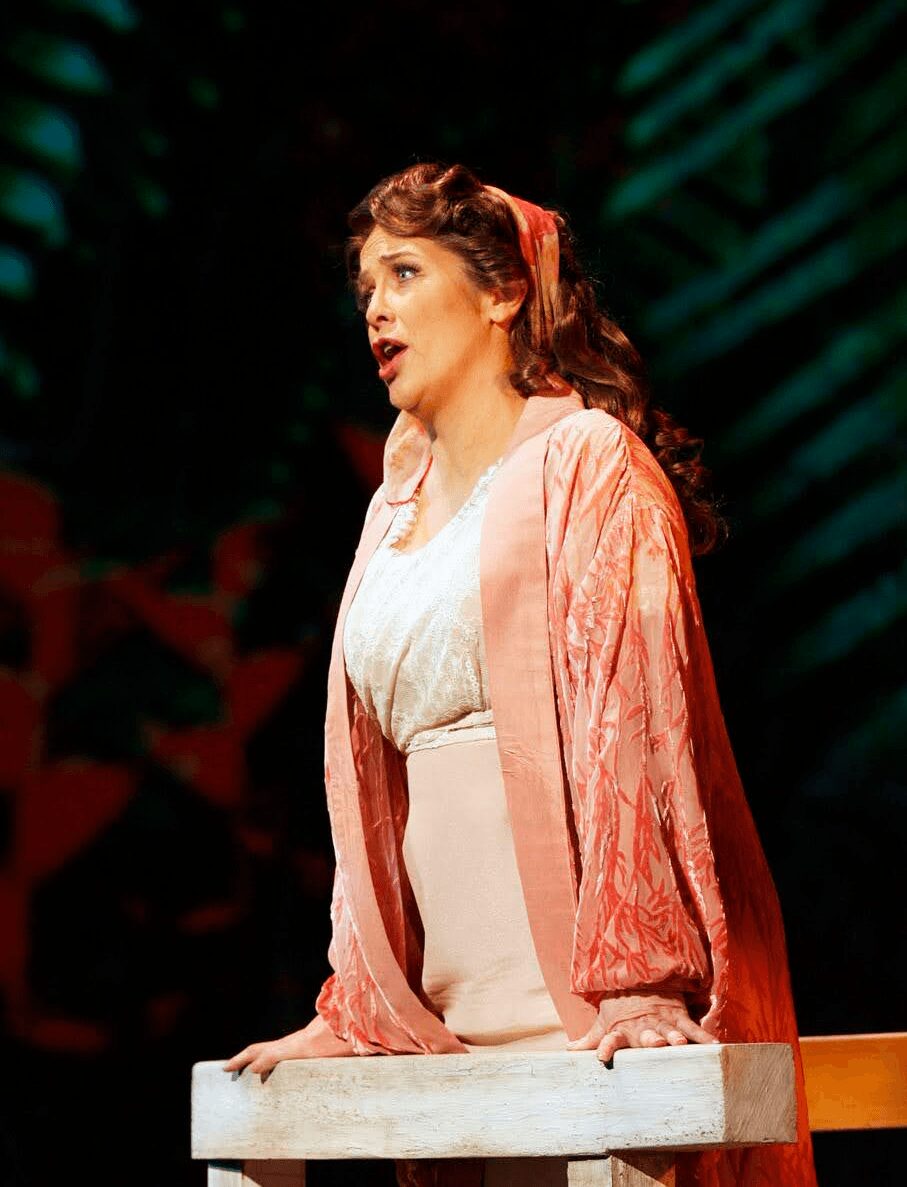
Image Credits
Greta Connolly, Lynn Lane, Kent Miles