




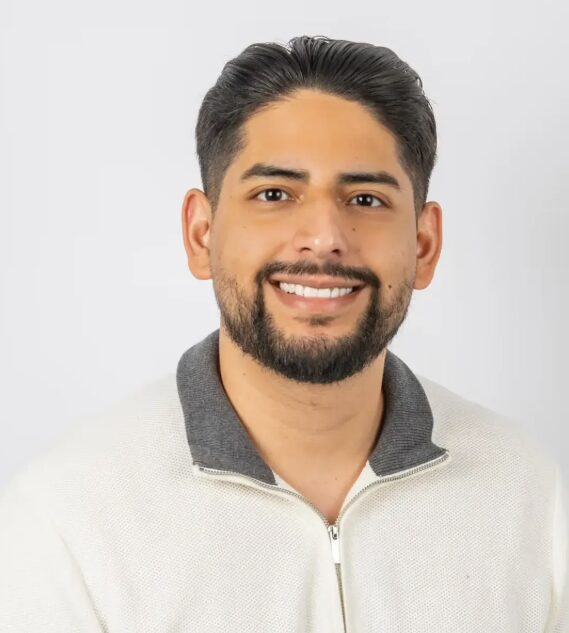
Today we’d like to introduce you to Humberto Marquez.
Hi Humberto, can you start by introducing yourself? We’d love to learn more about how you got to where you are today?
I started my career working industrial jobs that often required traveling out of town for extended periods. The days were long — 12 to 16 hours — with very few days off. I did it intentionally because it was the fastest, most accessible way for me to stack capital early on. I stayed in that environment for about three years, and while it reinforced my work ethic, it also made it very clear that it wasn’t a long-term path I wanted to stay on.
After that, I invested both time and money into a logistics brokerage business alongside my older brother. It was my first real exposure to entrepreneurship and the early challenges businesses face—cash flow, operations, growth decisions, and risks. That experience taught me a lot, but it also helped me realize where my long-term interests were.
I decided to pivot into real estate because of how many angles there were — especially on the investment side. I was never interested in the traditional model of selling “forever homes”. What drew me in was the unemotional, analytical nature of investment decisions: identifying value, working through numbers, and evaluating risk came naturally to me, so it felt like a strong fit. The first step was getting my real estate license.
I began by selling distressed single-family homes after joining a national home-buying firm. Within my first five months, I sold around 20 properties and then moved into acquisitions for the firm. That role became an anchor for my career because I had to evaluate properties quickly and determine which investment strategy made the most sense — whether that was a flip, long-term rental, short-term rental, room-by-room rental, teardown, or redevelopment. It forced me to deeply understand multiple strategies, risk-adjusted returns, and how investors think. Many of those deals moved on extremely tight timelines, sometimes within 48 hours.
Short-term rentals entered the picture when I was recruited by a San Francisco-based startup due to my experience analyzing deals and pitching them to investors. The company initially focused on long-term rentals but eventually pivoted into short-term rentals and then short-term rental management. That gave me exposure beyond underwriting— I got a firsthand look at day-to-day operations, scaling challenges, and what actually breaks at the operational level. I also spent a lot of time selling against competitors in a crowded space, which sharpened how I think about differentiation and value.
That startup was eventually acquired, and I left shortly after. While the timing wasn’t planned, it created a natural inflection point. I decided to combine my upgraded real estate brokerage with a full-service short-term rental management company that operates in multiple states and already in our road map, multiple countries. That allowed me to bring together everything I had learned—investment analysis, acquisitions, operations, and execution—into one integrated platform.
Today, what I focus on is helping investors make smarter, more durable decisions around short-term rentals by treating them like real businesses, not side projects.
I’m sure it wasn’t obstacle-free, but would you say the journey has been fairly smooth so far?
Not at all. It’s been very far from smooth, and a lot of that was by choice. I decided early on to bootstrap the business. Ownership mattered, but the real reason was control and speed. I wanted the ability to make decisions immediately—sometimes imperfect ones—without waiting on approvals, investors, or committees. In this business, hesitation is expensive.
The downside was that I carried far more weight myself than I probably should have early on. I was doing things that weren’t the best use of my time simply because I couldn’t justify hiring yet. There were long stretches where I was buried in small operational tasks while also trying to make high-level decisions, and that mental context switching is exhausting. You can lose sight of the bigger picture if you’re not careful.
Bootstrapping also means every dollar matters. There’s no safety net. You feel mistakes immediately—bad hires, wrong tools, slow months. Growth would have been faster with more capital, especially on the marketing side, but the constraint forced discipline. I had to be very intentional about where money went, and I learned quickly that “busy” doesn’t equal “progress.”
One of the harder lessons was investing in technology. Early on, spending money on systems feels risky when cash is tight, but not investing would’ve broken us operationally. We made some mistakes, but the right tools ultimately bought back time, reduced chaos, and allowed us to scale without burning out.
Looking back, those challenges shaped how I operate today. We’re lean, decisive, and built around efficiency. The road wasn’t smooth, but the friction forced better habits—and those habits are now a competitive advantage.
Great, so let’s talk business. Can you tell our readers more about what you do and what you think sets you apart from others?
We’re a turnkey real estate firm built specifically for investors who want exposure to short-term rentals without guessing their way through it. We help clients analyze deals, acquire properties, design and furnish them, and then operate and manage the asset end-to-end. The goal is simple: remove friction at every stage and treat short-term rentals like real businesses, not experiments.
We’re built for real estate investors who want to diversify their portfolios with short-term rental assets but don’t want to be operators themselves. Short-term rentals have a reputation for being chaotic and management-heavy, and in many cases that reputation is earned. Where we’re different is that we’ve designed our company around controlling that chaos through systems, not personalities.
What most people underestimate is how tightly operations and accounting need to work together in this space. It’s not just managing guests—it’s reconciling thousands of line items across multiple booking channels, payment processors, pricing tools, and expense categories in real time. We’ve invested heavily in technology, APIs, and processes that allow us to track performance accurately and make informed decisions quickly. That operational backbone is what allows everything else to work.
What I’m most proud of brand-wise is the reputation we’ve built. When potential clients reach out to us, we’re often already at the top of their list because of the research they’ve done before the first call. That tells me the brand is doing its job before we ever enter the conversation.
If there’s one thing I want people to remember about us, it’s this: there’s nothing passive about short-term rentals—success comes from systems, execution, and control. That philosophy drives how we build, how we operate, and how we protect our clients’ capital.
Is there anyone you’d like to thank or give credit to?
My dad deserves the most credit. He’s no longer here, but his influence is woven into everything I do. Growing up, no matter how big or unconventional an idea was, he never once told me it was unrealistic or unachievable. That kind of belief stays with you. It gave me an almost irrational confidence that if I committed to something, I could figure out how to execute it.
That mindset became especially important later, when there wasn’t much external validation—during hard pivots, uncertain moments, and times when the business was still fragile. His voice became internalized. Even after he passed, that belief didn’t leave. It’s something I still carry with me, and it continues to shape how I take risks and move forward.
Beyond family, I didn’t have a traditional mentor guiding every step. Much of my growth came through experience and from clients who trusted me early, before everything was fully built. That trust created a deep sense of responsibility—to show up prepared, to improve quickly, and to build something worthy of their confidence.
If I had to sum it up, the people who helped me most were the ones who believed in me before there was proof. My dad was the first, and my early clients reinforced it. That belief is what pushed me to build something real and lasting.
Contact Info:
- Website: https://www.gowithsurge.com/