




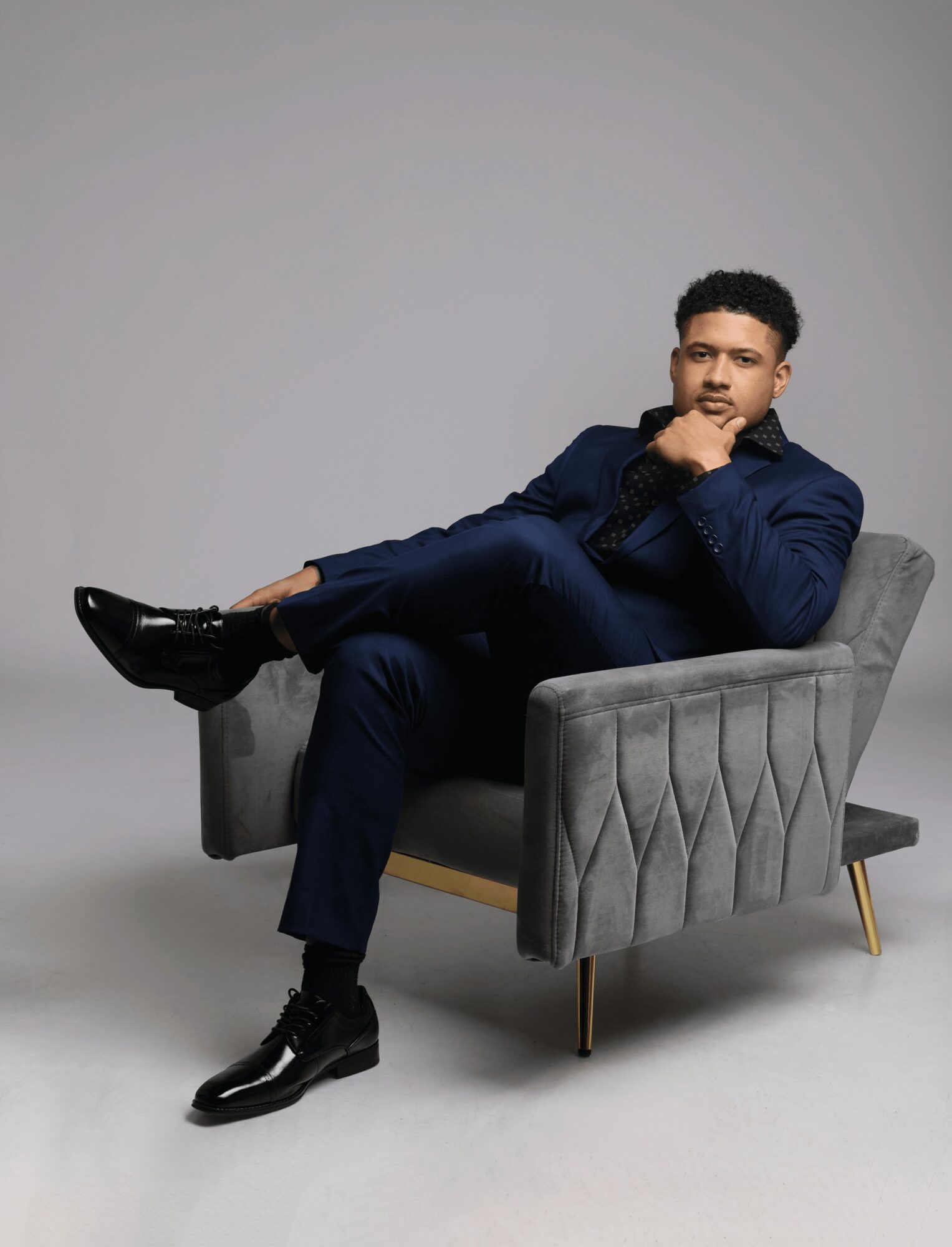
Today we’d like to introduce you to Jeff Dumé.
Hi Jeff, we’d love for you to start by introducing yourself.
I started without a clear path, but I always had a strong work ethic and a belief that I could build something meaningful if I stayed consistent.
Early on, I worked construction jobs and focused heavily on sports. At that stage, I thought my future might be tied to athletics, but over time I realized I needed to understand how business actually works, how money moves, and how decisions are made inside organizations. When I went to college, I spent a lot of time figuring things out on my own. I explored finance, marketing, and business development while trying to understand where I could create real impact long term.
I took on roles that gave me responsibility and exposure rather than comfort. I built organizations, worked in marketing environments, and focused on developing skills that would translate into real business outcomes. None of it felt perfectly aligned at the time, but it built a foundation in discipline, communication, and problem solving.
I eventually entered the recruitment industry, which became a major turning point.
I started at an internal recruitment agency and worked my way up from an associate consultant to a business manager. Over four years, I went from zero to over $550,000 in annual billings, generating more than $1.3 million in total revenue. I was responsible for placing leadership and technical professionals while managing compensation structures totaling over $6 million across the candidates I worked with.
That level of performance led to long term relationships and trust on both sides of the market, resulting in over 50 professional recommendations on LinkedIn. More importantly, it gave me a real understanding of how companies hire, how candidates make decisions, and where deals actually break down.
Through that experience, I started to notice a consistent issue. The problem was not a lack of talent. It was how hiring decisions were being made.
Different interviewers were asking different questions. Expectations were unclear. Decisions were often based on opinion instead of defined criteria. That led to mis hires, lost time, and inconsistent outcomes for companies. At the same time, it created an uneven experience for candidates, where equally qualified individuals could have very different outcomes depending on how they were evaluated.
Around that time, I also wrote a book titled From $0 to $500K: A Recruiter’s Journey to Growth and Excellence, where I documented the mindset, systems, and execution required to grow in a performance driven recruiting environment. That process reinforced how important structure and consistency are when building anything at a high level.
That realization is what led me to start Mainframe Solutions.
I wanted to build something that went beyond traditional recruitment. Instead of just filling roles, the focus became improving how organizations operate and how leadership decisions are made. That evolved into a model that combines executive search, operational systems, and structured hiring processes.
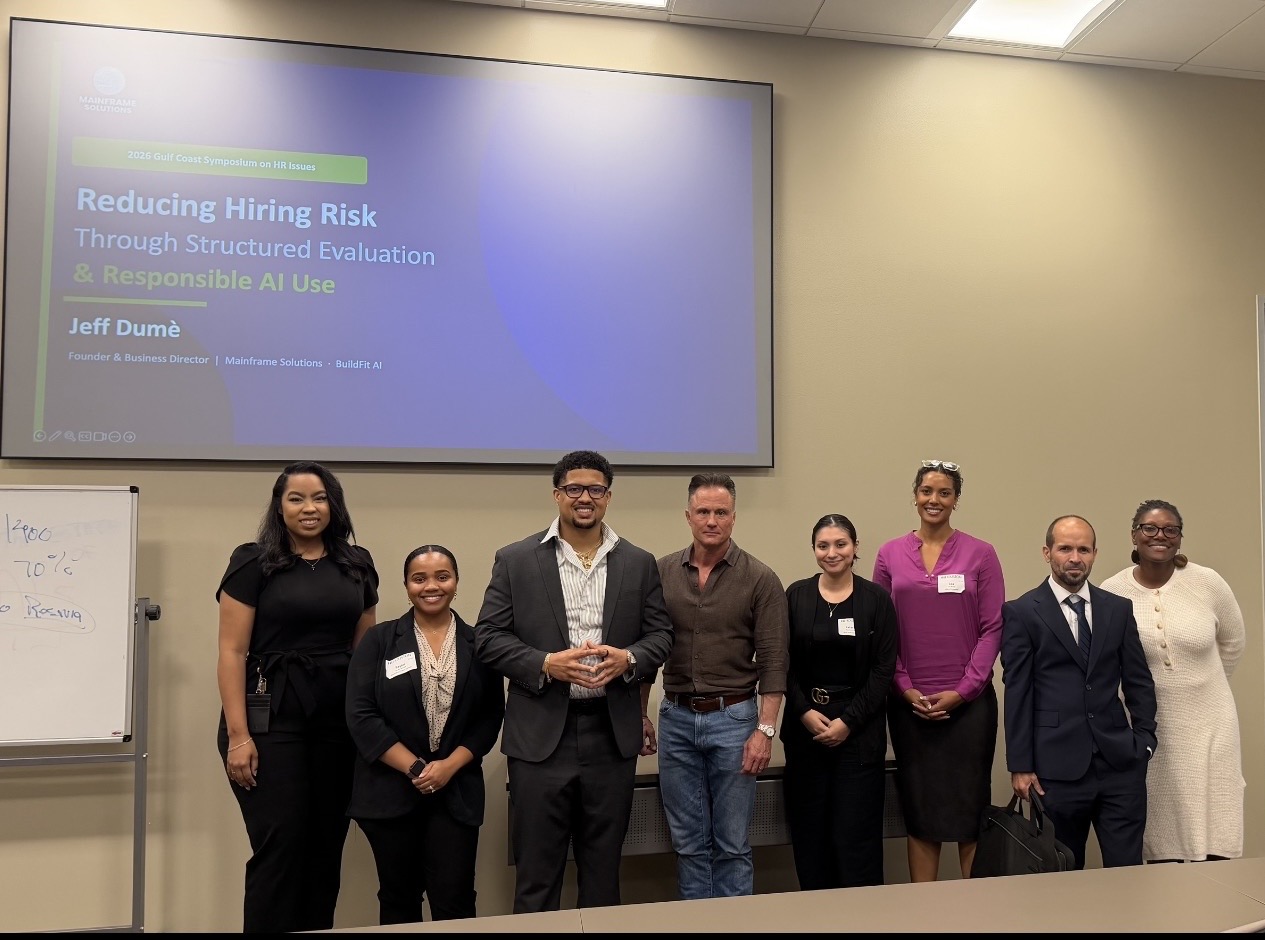
As that continued to develop, I built BuildFit AI to bring structure and consistency into the interview and evaluation process. The goal is not to replace human decision making, but to support it with clear criteria, documented evaluation, and alignment across teams so companies can make better hiring decisions and reduce risk.
Today, Mainframe Solutions operates as a single partner supporting organizations from start to finish across hiring, systems, and execution. We work across both public and private sectors, and we are also positioned as a federal contractor, which allows us to support more complex environments where structure, accountability, and compliance matter.
At this stage, the focus is continuing to scale the business, expand into new markets like Dallas, and build systems that help organizations grow more efficiently while making better, more consistent decisions.
Would you say it’s been a smooth road, and if not what are some of the biggest challenges you’ve faced along the way?
It has not been a smooth road.
Early on, one of the biggest challenges was operating without guidance. I had to figure out finances, career direction, and how to build relationships through trial and error. Moving to a new city without a guaranteed outcome forced me to become adaptable and disciplined very quickly.
As I progressed in recruitment, the challenge shifted into performance. Working in a results driven environment meant everything was measured. Consistency, resilience, and execution became non negotiable. Every deal required alignment between the client, the candidate, compensation expectations, and timing. If one variable was off, the entire process could break down.
That experience taught me how fragile hiring outcomes can be, even when there is strong talent on both sides.
When I transitioned into building my own business, the challenge changed again. Moving from individual production to building systems that others can operate within requires a different level of thinking. It is no longer about how well you perform personally. It is about whether the structure you build can produce consistent results without depending on you.
Another challenge has been shifting how companies think about hiring. Many organizations are used to relying on intuition or unstructured interviews. Introducing defined criteria, accountability, and consistency into that process requires a mindset shift. It is not just a process change, it is a leadership decision.
In many cases, the resistance is not because the system does not work, but because it requires a higher level of discipline and visibility than what they are used to.
Each phase required a different level of growth, both personally and professionally, and each challenge shaped how I approach building today.
Appreciate you sharing that. What should we know about Mainframe Solutions?
Mainframe Solutions is built to support organizations across hiring, systems, and operational growth as a single partner.
We focus on improving how companies operate by combining executive search, software development, AI governance, and structured hiring systems into one aligned model.
On the operational side, we develop custom software and internal systems that improve efficiency, streamline workflows, and allow companies to scale more effectively. The goal is to help organizations operate with greater visibility, control, and consistency so they can increase revenue and execution across the business.
On the hiring side, we support organizations through executive search by identifying and placing candidates who align with both the technical requirements of the role and the long term goals of the company. This ensures that talent is not only qualified, but positioned to succeed within the organization.
We also support companies through website development and digital infrastructure that improves client exposure, strengthens employer branding, and increases candidate engagement and attraction. This allows organizations to bring in stronger applicants and create a more consistent pipeline of talent.
AI governance is a core part of our model. We work with organizations to ensure AI is implemented and used in a structured, accountable, and effective way that aligns with operational goals. The focus is not just on using AI, but on using it correctly within the business.
As part of this system, we developed BuildFit AI.
BuildFit AI is proprietary software designed to standardize how candidates are interviewed and evaluated. It ensures hiring decisions are structured, consistent, and aligned with operational goals and performance metrics defined by the organization.
Candidates are evaluated against the same criteria, creating a fair and consistent process while helping companies build stronger shortlists. All hiring decisions remain human-led, with BuildFit providing the structure and insight needed to support those decisions.
The goal across everything we do is simple.
Help companies build the right foundation so they can grow effectively, while ensuring candidates are placed into roles where they can succeed.
By aligning hiring, systems, and execution, organizations are able to improve efficiency, reduce mis hires, increase retention, and drive stronger long term performance.
Can you talk to us a bit about the role of luck?
Luck plays a role, but it is not what drives outcomes.
There are moments where timing works in your favor and opportunities show up at the right time. There are also moments where things do not go your way despite effort, preparation, and intent.
What I have learned is that consistency creates more exposure to both. The more you show up, build, and stay disciplined, the more opportunities you put yourself in position to see. Whether they work out or not, you are in the room.
In business, preparation matters more than timing. When an opportunity presents itself, the difference is not whether it appeared, but whether you are ready to execute on it.
Over time, you realize that what people often call luck is usually the result of preparation meeting the right moment.
Pricing:
- Executive search structured as a percentage of first year compensation.
- BuildFit AI structured based on company size, hiring volume, and level of implementation.
- Operational systems and software project based pricing depending on scope and complexity.
Contact Info:
- Website: https://mainframesolutions.net
- LinkedIn: https://www.linkedin.com/in/jdume
- Other: https://buildfitai.net