





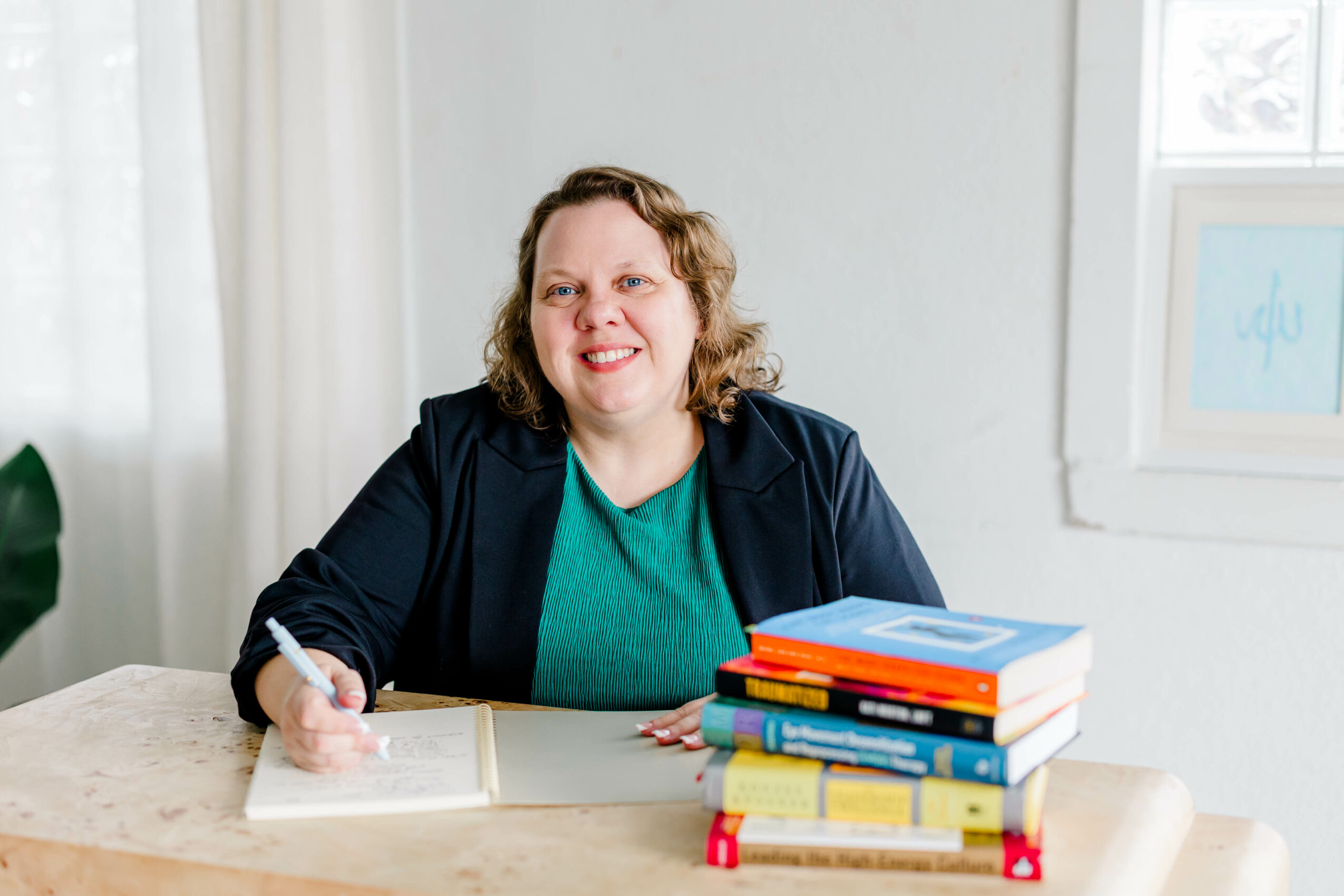
Today we’d like to introduce you to Katrina Tie.
Hi Katrina, we’d love for you to start by introducing yourself.
My name is Katrina Tie, and I am a Licensed Professional Counselor-Associate (LPC-Associate), supervised by Dr. Tara Fox, LPC-S.
My path into this work hasn’t been traditional. I began in education after teaching abroad, and it was there that I first saw how often people struggle quietly, carrying emotional and relational weight that goes unnoticed. Working closely with students, families, and colleagues gave me early insight into how much people are expected to manage internally while continuing to show up outwardly.
Houston is where that understanding deepened. Working in fast-paced, high-demand environments, I consistently witnessed how much people are asked to perform and adapt, even when there is very little space to acknowledge what they are carrying beneath the surface.
Over time, a clear pattern emerged. The people who were doing what was asked of them, working, parenting, caring for others, keeping things moving, were often the ones quietly carrying stress, trauma, and exhaustion they didn’t feel permitted to name. They were dependable. Reliable. The ones others leaned on. Many didn’t see themselves as someone who “needed help,” even as the weight they carried continued to grow.
That pattern became impossible to ignore during COVID. As systems strained and supports disappeared, the people who were already carrying the most took on even more. Working in education at the time made this especially visible. Educators, first responders, and community organizers kept things moving for their families, students, and communities while absorbing fear, grief, uncertainty, and responsibility with very little space to process it themselves. It was during that period that I fully understood how much the most dependable people carry and how rarely they are supported before reaching a breaking point.
That awareness changed the direction of my work. I pursued clinical mental health counseling to better understand how stress and trauma live in the body and mind, and how healing can happen in ways that are realistic and sustainable. Seeing how often support arrives only after people are depleted clarified something important for me: care works best when it comes earlier.
Opening my own practice in Houston allowed me to address that gap directly. My goal has never been to wait for people to fall apart before offering care, but to create support that is accessible, trauma-informed, and grounded in real life. At the core of my work is a belief that healing should feel steady, respectful, and sustainable, especially for those who spend so much of their lives holding things together for others.
Alright, so let’s dig a little deeper into the story – has it been an easy path overall and if not, what were the challenges you’ve had to overcome?
It hasn’t been a smooth road. One of the biggest challenges has been learning how to build and lead sustainably while holding multiple roles and responsibilities. Like many people in helping positions, I was used to solving problems and pushing forward, often without stopping to consider what that pace was costing me.
Another challenge has been navigating systems that prioritize productivity over well-being. In many environments, caring deeply about people can quietly lead to burnout when emotional safety and boundaries aren’t valued.
The most important lesson along the way has been redefining success and learning to set boundaries without guilt. Growth didn’t come from doing more; it came from creating structure, clarity, and room to breathe. That shift fundamentally changed how I work and how I support others, by modeling that sustainable care and well-being can coexist.
We’ve been impressed with Tie Counseling Services, PLLC, but for folks who might not be as familiar, what can you share with them about what you do and what sets you apart from others?
My work focuses on trauma-informed mental health care for people who are used to functioning, managing, and carrying a lot. Many of the individuals I support think they are “Just going through a hard time and just need a little help.” They may appear capable and put-together, yet feel overwhelmed, on edge, or disconnected in ways they can’t fully explain.
I specialize in helping people slow down in ways that feel safe and supportive rather than forced. My approach integrates evidence-based trauma therapy with an understanding of how stress and life demands affect the nervous system. The goal isn’t to fix anyone; it’s to help people understand what they’ve been carrying and create space for relief, clarity, and reconnection.
What sets my work apart is the emphasis on sustainability. Healing shouldn’t feel like another task to perform. I also bring a systems-aware lens into the room, helping people understand how stress and trauma are shaped not only by personal experiences, but by roles, expectations, and environments.
From a brand perspective, I’m most proud that my practice reflects the same values I encourage in my clients: compassion, clear boundaries, and balance. Everything is designed to feel steady, respectful, and supportive.
We all have a different way of looking at and defining success. How do you define success?
I define success as sustainability. Success isn’t about constant growth, productivity, or pushing through at all costs; it’s about creating lives and systems people can actually live inside without burning out.
In my work, success looks like someone feeling more grounded, clearer in their boundaries, and less alone with what they’ve been carrying. It’s watching people move from simply getting through the day to feeling more present and connected to themselves.
On a broader level, success means contributing to environments, in therapy and in the community, where emotional safety and well-being are valued early, not only after someone is overwhelmed.
Ultimately, success doesn’t have to be loud or dramatic. Sometimes it’s quiet, steady, and deeply life-giving, and that kind of impact matters.
What I want readers to know is this: you don’t have to wait until things feel unbearable to reach out. Even if you tell yourself others have had it worse, how you feel still matters, and support is allowed.
Pricing:
- Individual Session – $65 for 50 minute session
- Couples Sessions – Starting $80 for a 50 minute session
- Short-Term Intensives – Starting $100 for 90 minutes
- Parent Support Group Therapy (10-week group) – starting at $50 per session
Contact Info:
- Website: https://www.tiecounseling.com/
- Instagram: https://www.instagram.com/tiecounseling2025/
- Facebook: https://www.facebook.com/people/Tie-Counseling-Services/61580309648580/#
- LinkedIn: https://www.linkedin.com/in/katrina-tie-43a064384/
- Twitter: https://x.com/Tiecounseling
- Other: Email: support@tiecounseling.com Phone: (281) 944-5008


Image Credits
Amairani Thomason