





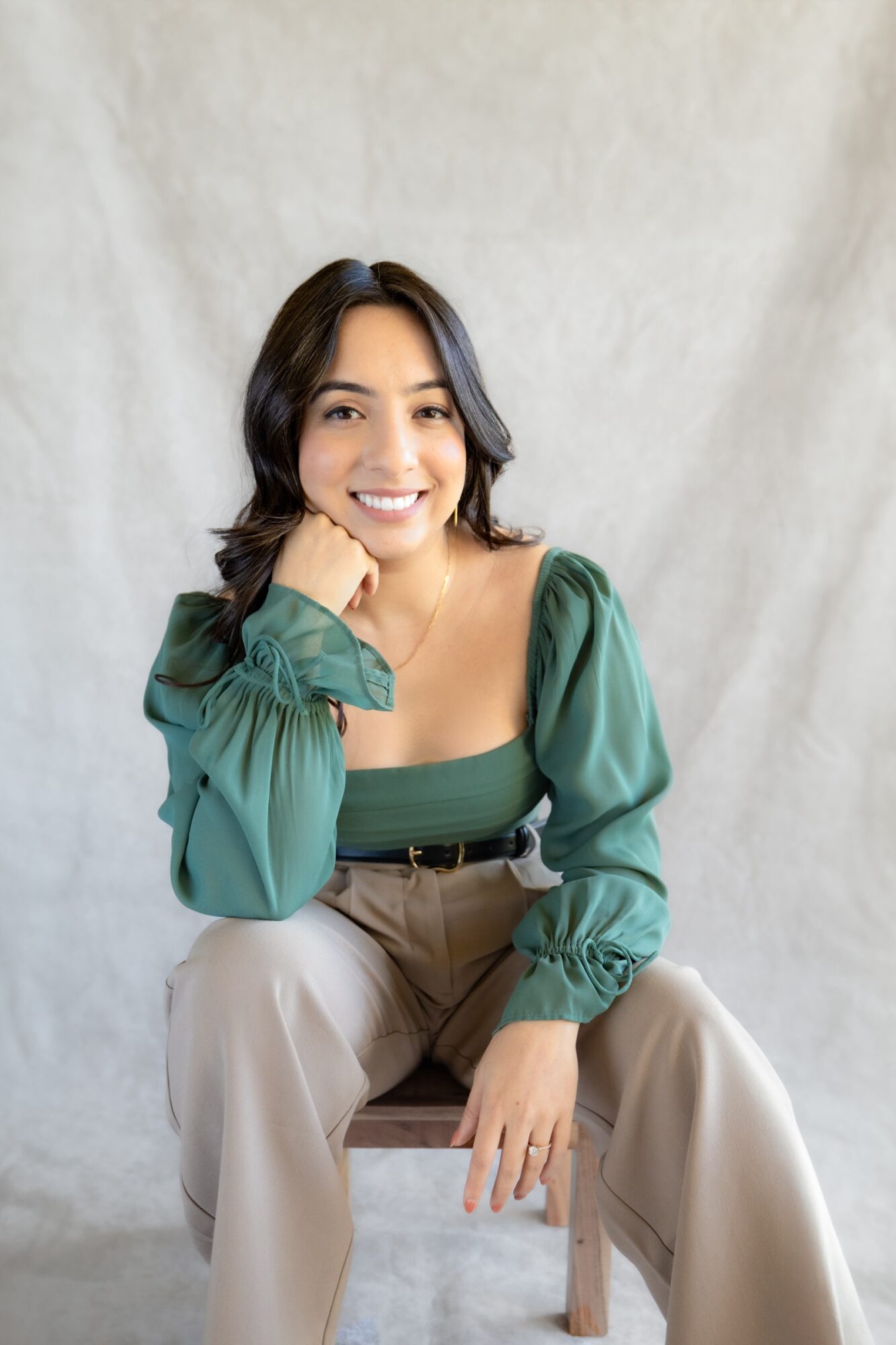
Today we’d like to introduce you to Sanna Khoja.
Hi Sanna, so excited to have you with us today. What can you tell us about your story?
I have always wanted to help people. It is part of my family and community values, and it has shaped me for as long as I can remember. Becoming a therapist felt like a natural way to use my curiosity and care to support others. Even as a kid, I paid close attention to what people were feeling and to what was happening in my own body. I wanted to understand why certain sensations showed up, why emotions felt so big, and why I held tension even when life seemed okay. Searching for those answers was also my way of soothing anxiety. I believed that if I understood the why, I would find relief.
Over time, that curiosity became something deeper and more ancestral. In my culture, healing encompasses the integration of mind, body, spirit, and community, and I’ve always been drawn to this holistic approach. This work feels like something I was meant to remember, not just learn.
I volunteered throughout high school, majored in psychology in college, worked at a behavioral clinic for children, and went on to graduate school for counseling. Afterward, I worked in psychiatric hospitals where I provided inpatient and outpatient group therapy, intake, and assessment. I worked with many kinds of people and conditions, including schizophrenia, catatonic psychosis, substance use disorders, and mood disorders. I later moved into outpatient settings, including psychiatric clinics where I collaborated with psychiatrists, nurse practitioners, and other therapists, and then into group private practices where I narrowed my focus to anxiety, perfectionism, OCD (Obsessive Compulsive Disorder), and trauma.
Again and again, I saw that behind many diagnoses there was unhealed trauma. It was discouraging to see how little relief some clients experienced when their conditions were at their most acute. That led me to train in EMDR (Eye Movement Desensitization and Reprocessing) and in ERP (Exposure and Response Prevention) for OCD. I saw significant results with those approaches. As I worked with more complex trauma, I wanted additional tools, so I sought training in Brainspotting and in Thomas Zimmerman’s Four Blinks Flash technique.
Through my training and time with clients, I realized healing is not about having all the answers. Knowledge is empowering, but it is only the first step. Real change happens when we move from insight to embodied experience, when we allow ourselves to feel, release, and reconnect. The more room I made for uncertainty, the clearer it became. We do not have to know everything to heal.
That understanding is the heart of my work today. As a somatic therapist, I help people reconnect with themselves by slowing down and listening to what their bodies already know. My approach combines cognitive and somatic methods, respecting intuition and the body’s innate healing ability. It feels both sacred and deeply personal, honoring the people and traditions that came before me.
Would you say it’s been a smooth road, and if not what are some of the biggest challenges you’ve faced along the way?
No, it has not been smooth. College, graduate school, and much of my life were hard because I lived with undiagnosed ADHD (Attention Deficit Hyperactivity Disorder) and other undiagnosed chronic illnesses. It often felt like swimming upstream while others moved easily. Day-to-day functioning was a struggle. Doing well academically sometimes meant falling behind with friends, chores, or draining my own energy.
Entering the field brought new challenges. As a new graduate working in intensive outpatient groups, I saw how deeply trauma affected people and how little the system supported the care they needed. Insurance companies often set limits and hold therapists to a standard that reflects the fast-paced medical system, rather than the actual art that the therapeutic process requires. Those early years were exhausting, holding severe trauma while feeling undervalued and underpaid.
I can get impatient and want things to move quickly, and I have had to learn that meaningful growth takes time. Slowing down and trusting the process continue to be practices I follow. I have made mistakes in groups or felt unsure how to work with certain populations. Those moments led to growth and learning, but they also triggered insecurity and anxiety. This work often mirrors life. There were times I was grieving losses in my family or navigating hurricanes and the global pandemic while supporting clients through the same issues. It was so very human, sometimes healing, and often very difficult.
I also learned that therapy alone is not enough. People need community care and systemic support. It is hard to heal if you do not have enough to eat, a safe place to live, or your basic needs met. That reality shaped my understanding of healing as both personal and collective.
All of this informs how I show up. Healing and growth are not about perfection or performance. They are about patience, self-compassion, and the courage to meet yourself honestly. It is okay to make mistakes and to do things imperfectly.
We’ve been impressed with Sanna Khoja PLLC, but for folks who might not be as familiar, what can you share with them about what you do and what sets you apart from others?
I help high-achieving professionals, founders, business owners, and creatives to ease anxiety, unwind stuck patterns, and show up under pressure with steadiness through a neuroscience-informed, body-based approach. My focus includes ADHD/neurodivergent care (with adult ADHD evaluations), OCD, and trauma, and I customize care to each person’s culture, identity, and values. I’m Houston-based with a fully virtual practice serving all of Texas. I also offer business coaching and specialized support for performers and competitors in sports and the arts.
As a South Asian, neurodivergent woman and child of immigrants, I offer care that’s culturally attuned, values-driven, and practical. In session, I’m warm and grounded with a clear emphasis on accountability and empowerment. Healing requires both gentleness and active engagement. Our goal is a life that feels more authentic and embodied, not just less symptomatic.
I integrate EMDR, Brainspotting, Four Blinks Flash, and Parts Work (Internal Family Systems/ego states) to support your goals. My differentiator is integration rooted in neuroscience, body awareness, and a strong therapeutic relationship, so sessions feel personal, practical, and immediately useful, not theoretical. I value clarity and collaboration. I explain what we are doing and why, and I welcome questions and healthy skepticism. Curiosity, resistance, and uncertainty are expected here and useful. Beyond weekly therapy, I offer Therapy Intensives and Performance Brainspotting.
Therapy Intensives are three-hour or longer sessions offered as single-day or multi-day formats. They are designed for people who have completed foundational therapy, have dependable internal and external resources for grounding and self-regulation, and want concentrated transformational work. Intensives suit high-capacity clients, including leaders, founders, clinicians, executives, and performers, who prefer focused progress over months of weekly therapy. Many clients report noticeable shifts in fewer total hours, improved nervous-system settling, and clear next steps.
Performance Brainspotting focuses on the nervous system behind performance. We target overthinking, fear spikes, the yips, and freeze by accessing subcortical patterns linked to memory, emotion, sensation, and survival. We identify and process the blocks that undermine your performance so your system can settle and perform. Clients describe steadier pressure moments, better sleep, increased confidence, less avoidance, and a clear toolkit they can use right away on stage, on the field, or in the studio.
At the core, healing does not look the same for everyone. My aim is to create a safe, culturally attuned, neuroscience-informed space where people can reconnect with their bodies, values, and sense of possibility. Interest in Therapy Intensives or Performance Brainspotting can begin with a brief consultation followed by a 90-minute video session to design a personalized plan.
Risk taking is a topic that people have widely differing views on – we’d love to hear your thoughts.
For me, risk is often quiet courage, listening to my gut, honoring my ethics, and choosing alignment over comfort.
Early in my career, that meant leaving jobs that didn’t fit my values. Those choices were hard when stability mattered, but I couldn’t stay in places that didn’t reflect the care I want to offer. Sometimes risk isn’t chasing something new; it’s knowing when to walk away.
Starting my practice was another big risk. Stepping away from the structure of agency work and also the safety of working under someone else’s practice to build something that felt true to me took self-trust. I believed there was room for culturally attuned, somatic, neuroscience-based care.
There are emotional risks too, showing up fully as a South Asian, neurodivergent woman in a field that hasn’t always made space for difference. Choosing authenticity over expectation has deepened my work and purpose.
I see risk-taking as self-trust in action. It isn’t recklessness. It’s listening closely, moving with integrity, and allowing uncertainty to be part of the process. The risks I’ve taken have brought me closer to the therapist, business owner, and person I want to be.
Contact Info:
- Website: https://sannakhojalpc.com
- Instagram: https://instagram.com/sannakhojalpc
- Facebook: https://facebook.com/sannakhojalpc


Image Credits
Smiles & Shutter Photography – Unaza Ali Hassan