






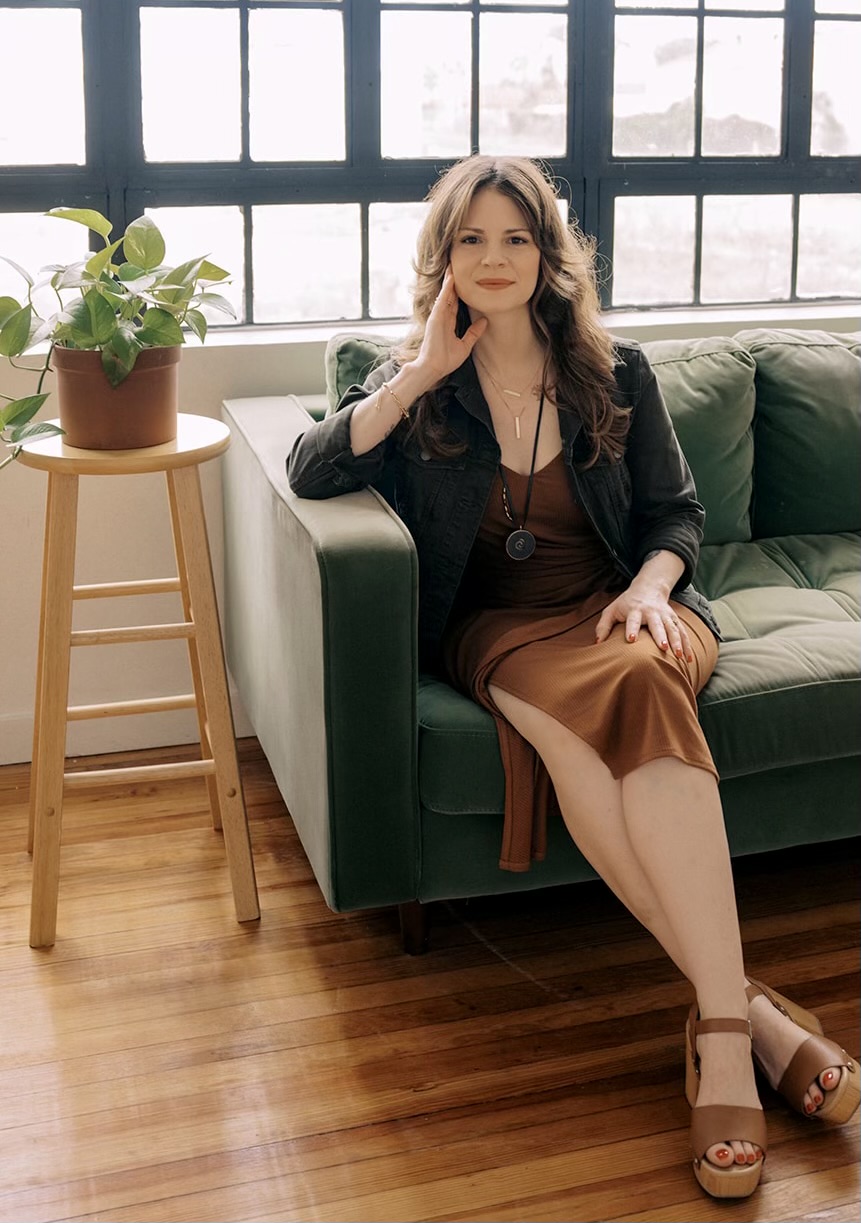
Today we’d like to introduce you to Jennifer Lancaster.
Hi Jennifer, we’re thrilled to have a chance to learn your story today. So, before we get into specifics, maybe you can briefly walk us through how you got to where you are today?
I’ve always been a very creative person. In college, I studied studio art and wanted to be a photographer. But a psychology elective changed everything. I became fascinated by the human mind and the way life experiences and relationships shape people’s health, and I never looked back. I earned my Bachelor of Science in Psychology from the University of St. Thomas here in Houston, then went on to earn my Master of Social Work from George Mason University in Virginia.
Something I wasn’t always open about is that two social workers helped my family during a difficult time when I was in high school. That experience was meaningful in ways I carried for a long time, and ultimately it was part of what drew me to this work.
Early in my career, I worked with treatment-resistant psychiatric and eating disorder presentations at The Menninger Clinic and Monte Nido. But my interest was always in trauma, and the connection between trauma and eating disorders became very clear to me as I continued this work. I noticed that people often struggled to fully recover and sustain that recovery because standard treatments alone weren’t addressing the trauma underneath their symptoms or helping them repair their relationship with their body. I wanted to do it differently.
That’s what led me to complete a year-long training in psychedelic-assisted therapy with the Integrative Psychiatry Institute and to begin offering ketamine-assisted therapy to my clients. What I noticed with clients was different from anything I’d seen before. People who had struggled for sometimes decades were finally experiencing real change. The medicine was helping them access and process things that had been out of reach in traditional therapy, and that’s when everything shifted for me professionally.
I eventually opened Houston Healing Collective as a group practice that specializes in treating trauma and eating disorders by integrating traditional treatments with therapies that I believe go deeper and help people address the source of their pain. What I didn’t expect was that building the practice gave me room to express my creativity again, through designing programs like ketamine therapy retreats, yoga groups for eating disorder recovery, and EMDR intensives.
Can you talk to us a bit about the challenges and lessons you’ve learned along the way. Looking back would you say it’s been easy or smooth in retrospect?
It has not always been a smooth road. I went to school to be a therapist, not a business owner, and I’ve made a lot of mistakes along the way. But I’ve also had some really big wins.
Beyond the usual business challenges, one of the harder things was learning to talk openly about my work with psychedelic-assisted therapy. Early on, I worried about how colleagues in the field would receive it. At first, I only talked about it with my clients. But I kept noticing that more and more people were genuinely curious, and I realized I had a lot to share. I love educating people, and the research is fascinating. So eventually I did what I tell my clients to do and just leaned in — all in. I started giving professional talks and trainings on psychedelic-assisted therapy for trauma and eating disorders, and offered new services like ketamine therapy retreats and ketamine-assisted EMDR intensives. Looking back, that decision to stop playing it safe professionally is really what shaped Houston Healing Collective into what it is today. We’re now among the first practices in Houston to offer ketamine-assisted EMDR, a protocol that combines very low-dose sublingual ketamine with EMDR reprocessing, and it’s produced some of the most meaningful clinical results I’ve seen in my career.
There have definitely been people who weren’t receptive, and clinicians who want to hold to more traditional ways of doing things. I’ve done a lot of work on not letting that stop me. Putting yourself out there can be scary, but it’s also necessary if you want to share what you know and help people understand that there are other options out there.
As you know, we’re big fans of Houston Healing Collective. For our readers who might not be as familiar what can you tell them about the brand?
Houston Healing Collective is a group practice specializing in trauma and eating disorders, and we approach that work differently than most. We’re trained in more traditional, evidence-based treatments, but we’ve also seen their limits. We saw a problem and got creative. Over time, we’ve integrated emerging, research-backed approaches that help people address the root cause of their pain, not just manage their symptoms. We don’t just help people challenge their thoughts and behaviors. We help them understand and address what’s driving those patterns in the first place — often trauma, shame, or a fractured relationship with themselves and their body. When that relationship begins to heal, it has a ripple effect on their relationships with the people they love and on how they move through the world. That’s why we offer treatments that work beneath the surface, at the level of trauma and the nervous system, including EMDR, ketamine-assisted therapy, ketamine-assisted EMDR, and trauma-informed yoga, alongside traditional individual, family, and couples therapy.
We also invest heavily in our clinicians’ development. Everyone on our team receives specialized training because I believe that a clinician who is growing is a clinician who can help people grow. Mediocre therapy isn’t something I’m willing to offer, and it isn’t something our clients deserve. We’re not here to help people just cope or maintain. We want people to get their life back or finally build the life they actually want. We want them to feel like they are truly living in the present, not arrested by the past or held back by pain they’ve carried for years.
In terms of your work and the industry, what are some of the changes you are expecting to see over the next five to ten years?
Psychedelic-assisted therapy is finally getting the attention it deserves. It’s not just a trend. The research has been building for decades. What’s changing is that people are starting to hear about it, talk about it, and take it seriously. We’re seeing policy start to reflect that too. Federal and state governments are beginning to direct funding toward psychedelic research because the evidence is hard to ignore, particularly for PTSD and treatment-resistant conditions that haven’t responded to anything else.
But honestly, what I notice most is that people are tired of just managing their symptoms. They’re tired of just surviving. They want to actually heal. I’m seeing more and more people who have done years of traditional therapy, tried multiple medications, and still feel stuck, and they’re actively looking for something different. They’re more open than ever to approaches that go deeper, and I think that’s only going to grow.
I believe that psychedelic-assisted therapy is going to become a much more widely used tool in mental health treatment. As more people experience real results and share their stories, and as the research continues to build, I think minds will continue to open.
Contact Info:
- Website: https://houstonhealingcollective.co
- Youtube: https://www.youtube.com/@HoustonHealingCollective