





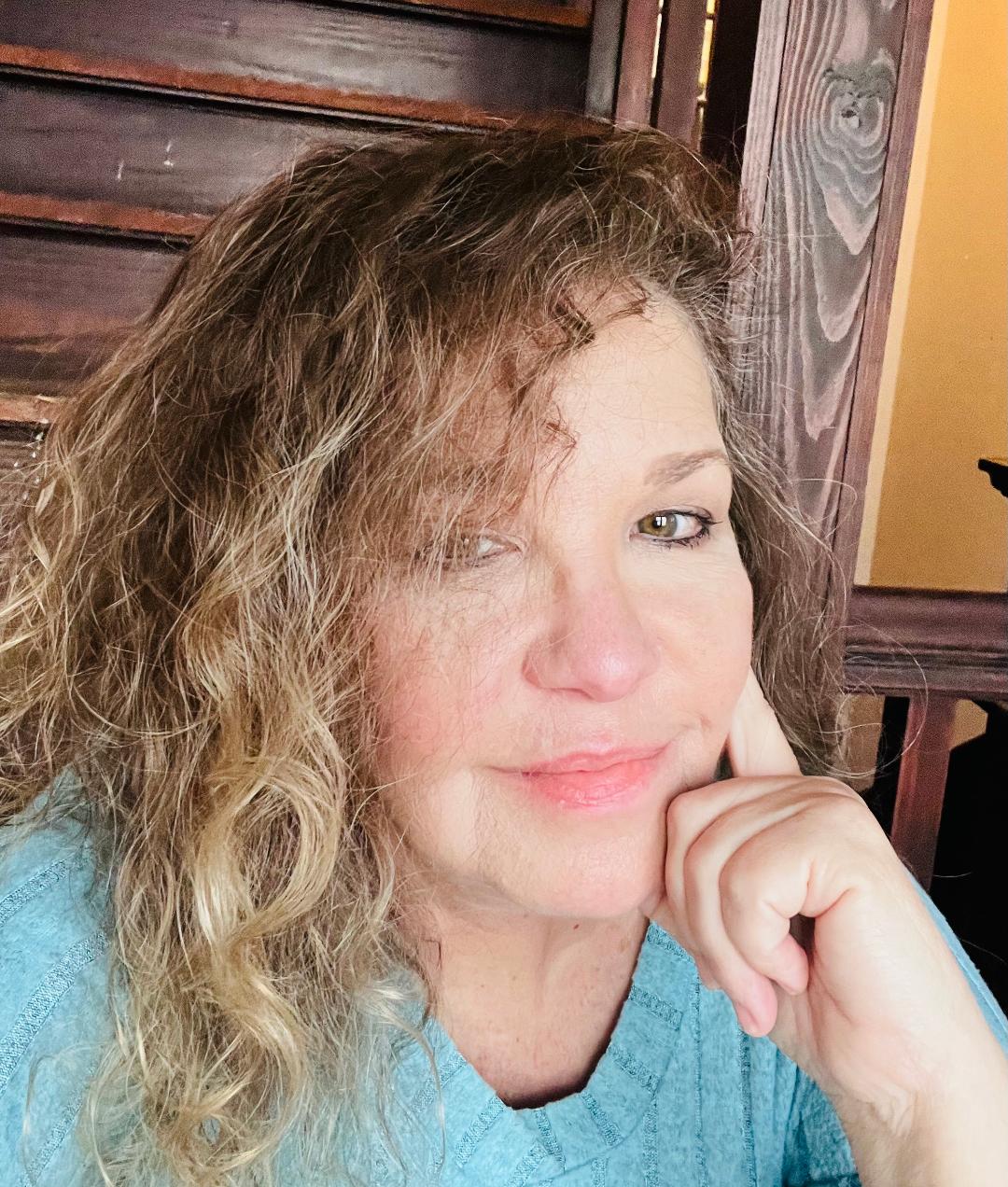
Today we’d like to introduce you to Stacey Eskelin.
Hi Stacey, thanks for sharing your story with us. To start, maybe you can tell our readers some of your backstory.
I never wanted to be a writer.
Never.
To me, writers were drunks and debauchers (i.e., Hunter S. Thompson, Charles Bukowski, Hemingway) or worse, they were the most boring, pretentious people at a party, the ones you avoided. Uniformly, they were “wits” of various types: acerbic, rapier, dry. Drunk or sober, they could be wickedly perceptive–and cutting. I despised the idea of being a writer, having no idea, of course, that I already was one.
The day I realized I was a writer–worse, a novelist–never came, largely because it was who I’d always been … except that I was too dense to realize it. At the age of twelve, I played hooky from school for nearly a month to write my first novel, a historical fiction about Henry VIII’s fifth wife, Kathryn Howard. And I didn’t stop there. At nineteen, I wrote a prescriptive nonfiction called DRIVE YOUR WOMAN WILD IN BED (don’t ask!) that became a national bestseller. Naively, I assumed that once I’d made my mark on the publishing world, I could write what I wanted. It so doesn’t work that way. If you find success in a specific genre, you are expected to write more books in that genre. Forever. Until you die.
What most writers, including myself at that time, don’t fully grasp is that publishing is a business. They don’t much care if you want to write something; they just expect you to write it.
After that early success, I lost my way for a bit. I also had kids, which are the best kind of distraction. I convinced myself that nobody read books any more, and that writing was a silly waste of time. But that’s the problem with being a creative. You either are one or you’re not. You don’t get a choice in the matter. I was born with a compulsion to write, and unless I was working on a project and raw-dogging pure authorial chaos, I grew discontented and restless.
This condition is not unique to me. It is true of anyone in the arts. The work chooses you; you do not choose the work.
Knowing how briskly romance novels sold, I started writing them. Doing a deep dive into genre fiction brought structure to my own fiction. It made me a better writer. I won dozens of awards, attracted good agents, and sold books. But I wanted to know more, do better, and write my passion project–even if it didn’t sell and nobody read it. Especially if it didn’t sell and nobody read it.
I found that passion project in DEAREST SHELLEY, which is a historical fiction about the Romantic poets–Percy Bysshe Shelley, Mary Shelley, Lord Byron, and Mary’s stepsister, Claire Clairmont. The real story isn’t a romance–it’s about the struggle of reconciling Romantic ideals with cold, hard reality. The tension inherent in youthful idealism is something we all face as some point in our lives, especially when we run afoul of the limitations imposed on us by life and people. Having said that, the Romantics moved the dial in a way that seems particularly relevant today.
So far, my agent loves the project, and who knows? Maybe it will see the light of day after all. Regardless, I’m not writing it for the market. I’m writing it because the real story of what happened is so much more compelling than anything I’ve seen Hollywood churn out. I don’t write to “entertain.”. Not anymore. I write to investigate, ask questions, and let readers arrive at their own conclusions.
I’m sure it wasn’t obstacle-free, but would you say the journey has been fairly smooth so far?
The late abstract artist Joseph Marioni once said that the goal of every creative should be to “transcend the material, transcend the technique, and transcend the ego.”
For writers, that is very hard.
First, I will submit that writing–good writing–is one of the most fiendishly difficult art forms. Everyone thinks he or she can write. This hubris is like a strange form of Dunning-Kruger (“I can put together a clever email; therefore, I should write a book.”) But the reality is a bit different. Everyone sucks in the beginning. They are so bad (I was, too!) they have no idea just how self-conscious, amateurish, and bad they really are. It takes years of apprenticeship to get any good at this stuff, and even then, the fate of most writers is to hit their own “level of incompetence” and wash out.
The only thing that saves you in the end is the compulsion to write.
If you have the compulsion to write, you will stick with it, no matter what. You will share work with your peers, receive feedback without dissolving like a cake left out in the rain, continue writing, submit your writing to contests, agents, publishers, prioritize your education–and most importantly, put the work above your own ego. Only then will you be happy with the results. Happy with the business? Never. But the product itself is the only thing you can control.
In a way, writing professionally is like doing battle in a gladiatorial arena: Aspire to be the last one standing, dripping broadsword in hand. Surviving the ups and downs–not just angling for a position on the bestsellers’ list–is your reward. If you write what you love, chances are someone out there will love it, too. But do not make the mistake of believing that “success” in this business is measured in copies sold or advances received. Success is being able to achieve your own artistic goals, regardless of audience share. If you shoot for that, you will have set yourself the only task that is worthy of you.
Alright, so let’s switch gears a bit and talk business. What should we know about your work?
I’ve written about twenty-one books over the course of my career, some as a ghostwriter, some under my own name or an assumed one. One of those books became a national bestseller, and I appeared on dozens of daytime TV talk shows and radio shows to promote it. But I’ve also have books that never sold, or that made it to a publisher but failed to gain traction with an audience. I also one self-published book called Stripped Down: A Naked Memoir that has done surprisingly well. The city of Houston appears as almost another character in that book.
Any advice for finding a mentor or networking in general?
You should never stop looking for mentors. My only rule is: Never join a critique group where you’re the strongest writer. That’s not going to do you any good. You need people who inspire you, challenge you. You need people who are at least one or two levels up from where you are; otherwise, you will stagnate.
Fortunately, there are resources here in Houston, if you look for them. Houston is an undervalued gem of a city. Whatever you need or want, you will find it here. Houston is the living embodiment of “Build it, and they will come.”
Contact Info:
- Website: https://cappuccino.substack.com/
- Instagram: staceyeskelinauthor