





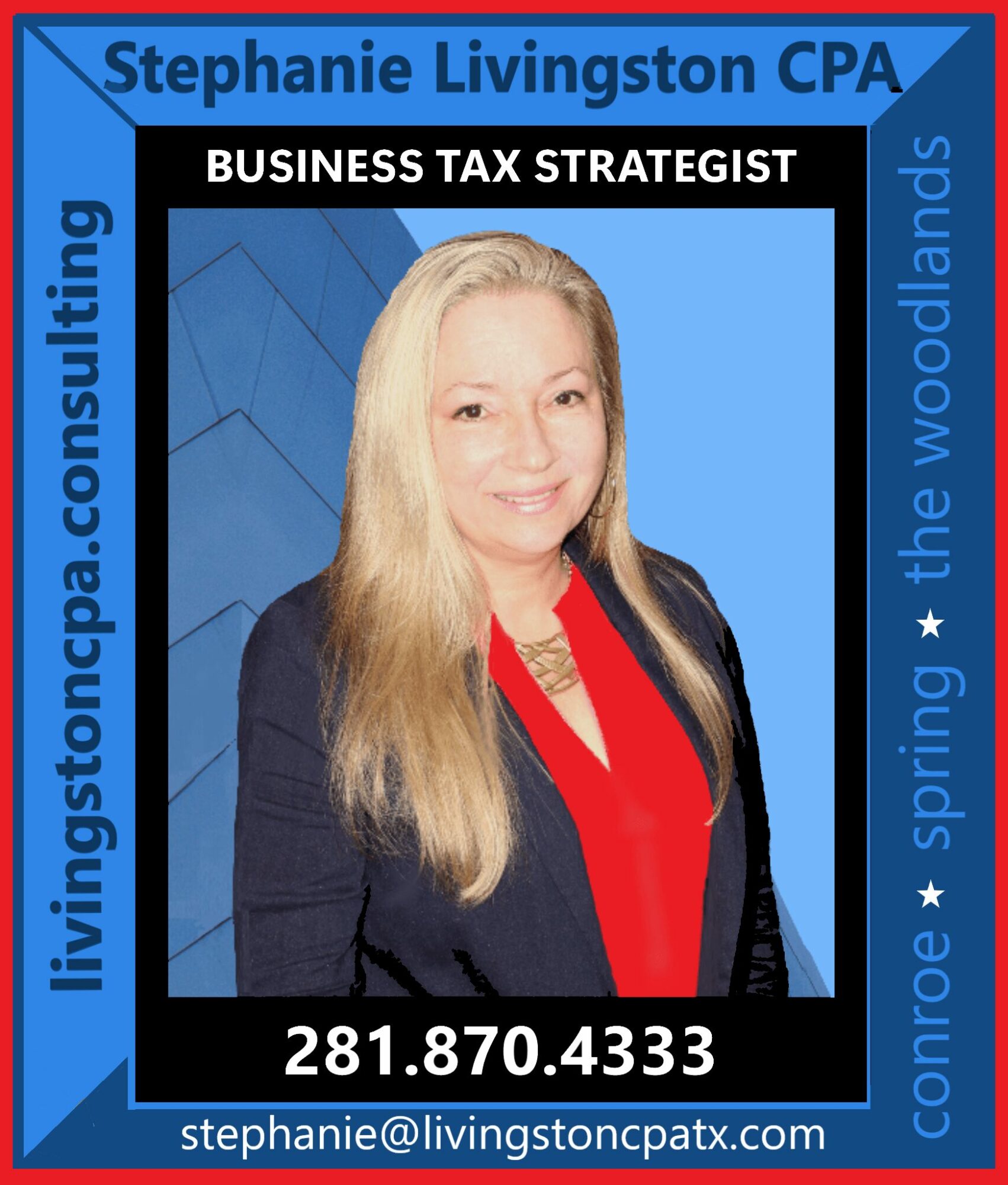
Today we’d like to introduce you to Stephanie Livingston.
Hi Stephanie, thanks for sharing your story with us. To start, maybe you can tell our readers some of your backstory.
“COVID” gave me my launch when I refused the most unpalatable offer from my employer of thirteen (13) years to keep my job with a 35% pay cut to help the company “weather the storm”.
And so on that dreary day in March of 2020, I knew that I was faced with losing my ability to maintain the monthly mortgage on our family home of many years.
Ultimately, my provider instinct resulted in the opening of three (3) new businesses, each having unique business revenue streams. The goal of opening three (3) separate businesses was to enable the quickest identification of the best market response to prove-out the best business model for achieving sustainable long-term income. As with the game of chess, there are many winning maneuvers, but only one combination of moves achieves the fastest win.
By the end of the first year unemployed, two (2) of (3) startups fizzled. But, as either luck or fate would have it, I found the remaining viable business startup venture to be the most personally satisfying and rewarding. This business publicly known today as Stephanie Livingston CPA PLLC, or Livingston CPA, where I enjoy wearing the title of, “Business Tax Solutions Strategist”.
A Business Tax Solutions Strategist is a person that can “play” the game of tax with many scenarios in play at the same time. It’s very much like playing a game of chess with myself where I have the opportunity to know how the other player will respond. In the professional “game”, the other player is the IRS Revenue Code, Treasury Bulletins, and business tax litigation US Districts case decisions as well as prevailing judicial opinions in States of interest. I read everything I can find that may be relevant for a particular Client who presents me with a challenging tax scenario I’m trying to abate, mitigate, change, or optimize.
Additionally, I believe that a good CPA should know a bit about business law. No, a CPA is not a lawyer. But should a CPA understand business law(s). Absolutely! It goes hand-in-hand with a winning strategy. Should every client plan for a lawsuit? No. But should a client be advised in terms of formation and litigious risk when setting up an entity in the best style of original formation as well as the best entity taxation classification elections.
We all face challenges, but looking back would you describe it as a relatively smooth road?
The challenge I face most, is that most people associate the word “tax” with a person who performs a data entry exercise relating to tax. When in reality, “Strategic Tax” is a high-caliber tax scenario-consideration-exercise requiring much mental contemplation where only the end-result of the best deemed conclusion of strategic options is the data-entry aspect of tax.
A Strategic Tax Solutionist such as myself, considers alternate tax landings within IRS allowable and legally defensable tax positions, and determines how to achieve a Client’s best outcome, given existing variables or variables that could exist in different situations.
This is where the art of creativity and the absolutes of certain tax-scapes (landscape of tax) become indistinguishable in my mind, and where I’m free to begin very tactical games in my head that produce different results.
When I’m considering variables that are not currently present, my thoughts always start with “If only “x or y” were true then I could derive new “z”, with what-if scenarios, a/k/a “Alternative Futures Analysis” made famous by Dr Steven Metz (Military Analysis techniques) and others like Dr Jim Dator.
But, this critically necessary alternative futures technique is not to be executed without first considering a different end in mind (borrowing from and made famous by Dr Steven Covey).
Overall, my Clients receive higher overall satisfaction and more long-term tax savings with my creative and sometimes very complex and very layered strategies, as compared to a traditional tax services provider who works only with what you provide, and never considering what you may not have known or thought to ask and didn’t present.
Yes, I do spend more time on average with each of my Clients during an average tax preparation service, beginning to end. And yes, my turnaround times are longer. And finally, “yes,” I do ask a lot of questions to probe a better final net tax result.
This is what I call, “taking care of my tax clients very well, and to the best of my professional abilities.” Nothing less is acceptable in my mind, and no tax return will be finished until I have exhausted my last final ideological attempts to better my Client’s ending best strategic tax position.
My target Clients are people who are business owners, high net wealth individuals, and everyday people who want better and more strategic results from their tax service provider.
Strategic Tax is a topic that is more like a great big fun puzzle to me. So I provide strategic tax services in the same manner as master chess players can consider multiple outcomes at the same time.
As always, strategy wins the game!
We’ve been impressed with LIVINGSTON CPA PLLC, but for folks who might not be as familiar, what can you share with them about what you do and what sets you apart from others?
My brand is “Strategic Business Tax” and my business tag line is “Strategy Wins the Game”. My Logo symbolizes Chess pieces – a game that is won with the better strategy.
I am very proud to represent the best strategic tax interests of my clients and that my clients and I participate in this effort together as a team.
I see the world of “Tax” in terms of Good, Better, and Best. I see a Client’s current tax variables and spend time imaging how their net tax burden could be altered in some way if only “x, y, or z” were true.
I actively work with my Clients by asking many probing questions, the result of which enables me to help them change their net taxable income using many elements allowable within the tax code, in combinations of transactions whereby in enabling one, often many more are enabled. Or, I might offer a new way to look at a particular tax variable, or a new way to structure their business all together.
For example, I helped one of my clients add a Schedule F, Farm Operations to their tax return which enabled them to deduct the cost of maintaining their perimeter fence on a rural tract that they didn’t know was deductible. This was after I found out they permitted the neighbor to cut hay on their property but weren’t reporting the activity as agricultural farm activity at all. Once the parcel was identified as Farm, then the property taxes paid for the parcel were also deductible, and the farm equipment and supplies used to regularly maintain the parcel in good condition. Another time, I suggested a re-structuring of a minority partnership interest as a new general partnership within an existing limited partnership so that my Client could take full advantages of flow-through deductions. And for my Artist, I suggested to her that her “Samples” had depreciable value, even though the wall faux finish samples were painted haphazardly on an unframed wall. But because she used the value of her painted finishes samples over time before salvaging the wall space for new updated design samples, the depreciable value included the time and materials used to create the sample, being a sample with a finite useful life since design styles go out of style. And to my RV Client’s surprise, I helped him depreciate his infrastructure underneath and on top of his unimproved land, being a paved gravel road with installed drainage infrastructure, when he was told by another CPA that “land” is <b><i><u>never</u></i></b> depreciable.
I have a million more examples, but these creative solutions do not become highlighted to my mind until I have asked many questions and probed the best outcome from my client Q&A.
I do spend more time on average with each of my Clients during an average tax preparation service from beginning to end. And my turnaround times are longer. But the time I spend really getting to know my business clients so that I can probe the very best final net tax result is part of the necessary process. As a general rule to follow, one that I tell everyone is that, if your CPA is not asking questions, you may be over-paying business income tax.
This is what I call, “taking care of my tax clients very well, and to the best of my combined abilities.” Nothing less is acceptable in my mind, and no tax return will be finished until I have exhausted my resourceful ideas at a last final attempt to better my Client’s ending tax position.
Is there any advice you’d like to share with our readers who might just be starting out?
When my Business Clients come to me who are just starting out as entrepreneurs, my “Starting” advice is always the same: 1) Start with an LLC.
2) Elect S-Corp or C Corp Taxation for your LLC, even if your LLC members are Partners.
3) If the business activity bears high exposure to litigation, split operational revenue streams into more than one standalone LLC entity or consider a Series LLC for real estate properties.
4) Pay yourself as a W-2 employee.
5) Don’t be afraid of failure; start imperfectly – just start!
Pricing:
- A standalone S Corp return for an LLC-S Corp is $1,500
- A standalone personal return is $450
- A Living Trust is $2,500
- My strategies more than pay for the price of my services.
- Clients love me for how invested I am in their success.
Contact Info:
- Website: https://www.livingstoncpa.consulting
- Facebook: https://www.facebook.com/LivingstonCPA/
- Linkedin: https://www.linkedin.com/in/stephanielivingstoncpa/
- Youtube: https://www.youtube.com/channel/UCRp2ssajvrl9uHKpxEY0_cA
Image Credits
Brianna Livingston, photographer, videographer brianna@livingstoncpatx.com