




Today we’d like to introduce you to Carrie Watkins.
Hi Carrie, we’d love for you to start by introducing yourself.
My path to becoming a nonprofit CEO was definitely not a traditional one, but looking back, I can see how each part of my life prepared me for the next. I studied speech communication in college, with an emphasis on public speaking. I was fascinated by communication…how people connect, how ideas are presented, and what makes someone listen, trust, or take action. That DID NOT mean I was fearless in front of a large audience. As I later discovered, speaking in class and standing on a stage in front of 1,200 people are two entirely different experiences.
Before entering the nonprofit world, I held several sales positions. Sales has always come naturally to me, but my real gift is connection. Sales, fundraising, partnerships, and speaking are simply different ways I use it. I can usually build a bond with someone pretty quickly, and I genuinely enjoy learning what matters to people. I pay attention, read the room, and can usually tell when it is the right moment to make an ask and when the smartest thing I can do is stop talking. That second skill took a little longer.
After having twin boys, I became a stay-at-home mom and spent the next 12 years focused on raising them. The twins were a complete surprise because there are no twins anywhere in our family. I also spent the first 13 years of their lives believing they were fraternal, until a DNA test confirmed they were identical. I called my best friends completely stunned, and their response was basically, “Um, yes. Everyone knows that except you.” Apparently, being the only person who could easily tell them apart had given me a false sense of expertise. Raising twins taught me how to manage chaos, solve problems quickly, and stay flexible when plans changed,…..which was usually before breakfast.
When my boys started school, I began craving a sense of purpose outside of motherhood. I wanted connection and something that would bring me back to myself, the version of me who was ready to do more. I found that through volunteering. I joined In the Pink, a local committee that raises money for breast cancer services in our community. Its annual luncheon welcomes approximately 1,200 guests who come together to celebrate, support, and honor people whose lives have been touched by breast cancer. I dove right in and volunteered to co-chair the silent auction, a role that usually didn’t attract a long line of applicants so that was an easy in! I gradually took on more responsibility and was eventually asked to serve a two-year term as an event co-chair. It was essentially a full-time job with overtime and no paycheck.
That experience, hands down, changed the direction of my life. It reminded me how much I loved building relationships, raising money, and turning a big idea into something real. It gave me purpose at a time when I needed it and introduced me to one of the best friends of my life, someone who would later help carry me through one of my worst seasons.
There was a catch, though. Becoming co-chair meant speaking onstage in front of 1,200 people, and the thought of that made me want to throw up. It almost made me turn down the opportunity. I wanted the role; I just wanted it without the part where I had to get onstage. With some good advice from a friend and a little digging to find my courage, I accepted.
My co-chair and I practiced our speech constantly for weeks. We were so nervous that we basically memorized every word, every glance, and every laugh. Every movement was planned. For the record, memorizing a speech word for word is not a great public-speaking strategy, but at the time my goal was simple: get through it and get off the stage. Afterward, the hospital CEO who had asked me to co-chair said, “You did a phenomenal job! You never even looked at your notes. It was almost like you memorized the whole thing.” I laughed and said, “That’s because I did.”
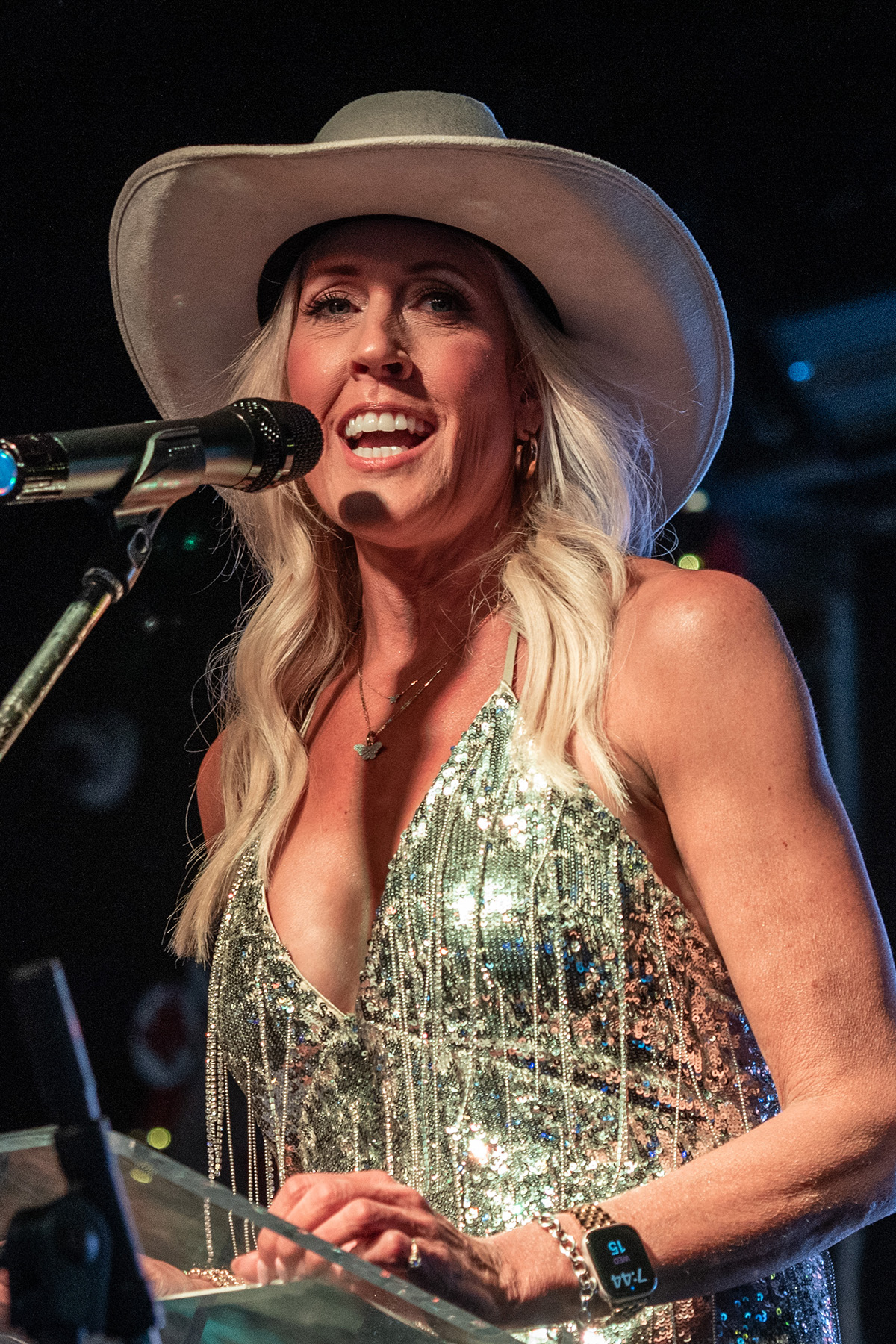
That experience taught me that sometimes courage looks a lot like being completely terrified, preparing like crazy, and walking onto the stage anyway. Now, speaking is one of the parts of my work I enjoy most. Somewhere between memorizing every word and trying to escape the stage, I discovered that I loved having the opportunity to move a room. I look forward to those opportunities now!
As I began considering returning to work, the 12-year employment gap on my résumé felt enormous. I knew I was capable, but I couldn’t figure out how to make those years translate onto a piece of paper. Eventually, I realized I had not stopped growing. Through my volunteer work, I had been leading teams, managing major projects, fundraising, solving problems, and building relationships throughout the community. I had developed real skills. They simply did not always come with a paycheck or a formal title.
In the Pink also brought me to Meals on Wheels Montgomery County. A woman I served with named Andrea was on the Meals on Wheels board. She had seen my love of feeding people and my heart for seniors, mostly because I talked about my grandfather (aka GrandBob), all the time. GrandBob was one of the most important people in my life. He died on Thanksgiving morning, and losing him completely changed that holiday for me. I decided to create something positive in his memory, so I started an annual food drive called GrandBob’s Gobblers. I invited friends over for brunch and asked them to bring canned goods in exchange for mimosas and a good time. It gave us a way to do something meaningful together every November in honor of GrandBob.
Feeding people and bringing people together have always felt natural to me, as though they are part of the cloth I was cut from. Andrea had attended GrandBob’s Gobblers, and one day she asked whether I would consider serving on the Meals on Wheels board. While I was thinking about it, a memory came flooding back that I couldn’t believe I had forgotten. As a child, I had delivered Meals on Wheels after church with my grandparents, GrandMary and GrandBob, in my hometown in Missouri. In that moment, the opportunity felt connected to something much bigger than a board position.
A life of service was simply how I was raised. GrandBob served as a colonel in the Marine Corps for 32 years. My grandparents served their community, and I watched my mom and dad give countless hours to schools, boards, nonprofits, and causes they believed in. No one made a grand announcement about it. It was simply woven into the fabric of our lives. You saw a need, and you helped.
I joined the Meals on Wheels Montgomery County board in 2015 and quickly realized the mission was about far more than delivering lunch. One of the earliest stories that stayed with me involved a senior who fell in his home over the weekend and could not get up. He remained there until his Meals on Wheels volunteer arrived on Monday. When he did not answer the door, she knew something was wrong. I could not stop thinking, “What if that had been GrandBob?” It broke my heart, but it also made the mission deeply personal. That volunteer did not just deliver a meal. She was the person who noticed he was missing. She was his lifeline, and he had known all weekend that she would show up on Monday and and know something was wrong if he didn’t come to the door. She would call for help.
As a board member, I became increasingly involved in helping the organization fundraise. Then, in 2018, the Director of Development position unexpectedly became available to me. I had not applied for the job or planned to enter the nonprofit world professionally. Once again, an opportunity appeared at exactly the moment I needed it, and it felt like another step on a path that had been quietly forming for years. I said yes.
I quickly realized that the skills that had made me successful in sales became even more powerful when I used them in service of a mission I truly believed in. Fundraising felt natural because it was never simply about asking for money. It was about listening, building trust, and helping people see how their values, resources, and relationships could become part of solving a real problem. My friends, coworkers, and board members tease me that I am not afraid to ask anyone for money for Meals on Wheels. They are not wrong. It’s rare for me to meet someone without quietly putting them through what I call my “Meals on Wheels filter”: How might this person connect with our mission? Could they become a sponsor, volunteer, use our catering service, or introduce us to someone who might get involved?
It doesn’t matter whether I am at a business event, standing in line at the grocery store, sitting at a bar, attending a concert, or supposedly relaxing on vacation. Some part of my brain is almost always thinking, “I wonder how I could get this person involved.” I joke that I bleed Meals on Wheels. The truth is that I believe so deeply in the mission that sharing it never feels like a sales pitch. It feels like inviting someone into work that matters. Once I see a natural connection, I have a very hard time pretending I did not notice it. Connecting people is genuinely fun for me. I naturally notice when two people, organizations, or ideas might fit together. That might mean helping another nonprofit find a resource, introducing a sponsor to a lead they have been trying to reach, or bringing two new friends together because I sense their personalities will click. I love creating situations where everyone involved feels supported, valued, and glad the connection happened.
Five years after joining the staff, the CEO position opened. I knew there would be plenty about the role that would be new to me, but I also felt strongly that it was the next step on the path I had been following. I decided to put my name in the hat. I have taken on more than one opportunity thinking, “I am confident I can figure this out,” which is not the same as already knowing how. And I got the job. Today, I lead an organization that provides hot meals, transportation, safety checks, connection, and peace of mind to seniors throughout Montgomery County. I also serve on the board of Meals on Wheels Texas, where we advocate for stronger state funding, share resources, and help Meals on Wheels programs across the state speak with a more unified voice. The need for our services is growing everywhere, and I believe we are stronger when we work together.
When I look back, I see a series of opportunities that kept asking me to take one more step: volunteer, co-chair, board member, employee, CEO. I didn’t have the whole path mapped out, and there were definitely times when I did not know what I was doing. I just kept saying yes when the work felt meaningful and then tried to do something worthwhile with the opportunity.
Alright, so let’s dig a little deeper into the story – has it been an easy path overall and if not, what were the challenges you’ve had to overcome?
Smooth road? No. Are you kidding me? It’s been messy, unpredictable, and often harder than I let people see.
Returning to the workforce after being home with my children for 12 years was intimidating. I remember looking at my résumé and feeling as though the professional world had kept moving while I had stepped away. I knew I was capable and driven, but those qualities were difficult to demonstrate on paper. I had to take a personal inventory and give myself credit for what I had actually accomplished. I had to acknowledge that leadership does not become less real simply because you were not paid for it. Through years of volunteering, especially with In the Pink, I had learned how to lead teams, raise money, manage major projects, build relationships, and bring people together around a shared purpose. Those experiences helped rebuild my confidence and gave me the credibility to return to work.
I was determined to figure that piece out because I had known for quite a while that I needed to leave a very difficult marriage. But I kept failing to take the step, and that was its own kind of torture. I spent so many days spinning in place, paralyzed by fear. Wanting and needing to leave was one thing. Believing in myself, wondering whether I could support my boys, and being prepared to give up the life I knew were something else entirely. After 12 years at home, finding a job felt like the final piece of stability I needed to take the leap.
When the Director of Development position unexpectedly became available in 2018, it felt like another example of being led toward where I was supposed to be. The opportunity literally landed in my lap through a text message on an otherwise ordinary Tuesday night. Accepting the position gave me the foundation and courage I needed and one month into the job I filed for divorce.
The proceedings that followed were extremely volatile, frightening, and financially draining, and the case eventually went to trial. I was trying to learn a demanding new job while living with constant worry, fear, sadness, and uncertainty. There were mornings when I truly did not know whether I had the physical or emotional strength to get out of bed. In a strange way, the work became a delightful distraction from some of that personal agony. Every day required me to get dressed, show up, think creatively, solve problems, and focus on something beyond what was happening in my own life. More importantly, it gave me a reason to keep putting one foot in front of the other.
At work, I was meeting seniors who were homebound and unable to manage many of the basic daily needs most of us take for granted. Some had no reliable way to get food, much less a hot, nutritious meal. Many were living with serious health issues, hunger, loneliness, and social isolation. Some had little or no family support. Seeing their circumstances did not make my own pain any less real, but it gave me perspective and purpose. I was fighting to leave a painful situation and build a new life. Many of the seniors we served were facing losses and limitations they could not simply work their way out of. They needed someone to notice them, care about them, and show up consistently.
I sometimes wonder whether the mission helped save me during that time as much as I was trying to help advance it. The work reminded me that I still had something meaningful to contribute. Even when I felt broken in my personal life, I could still show up for someone else.
I also had an extraordinary friend beside me. She had been my co-chair at In the Pink and became one of the people who carried me through that season. There were mornings when I would call her at four o’clock, crying. She would listen, talk me through it, and remind me that I could do this. I started calling her my “spatula” because her words could scrape me off the floor and put me back on my feet. That friendship was another gift that came from saying yes to service long before I understood how much I would one day need the people it brought into my life.
After my high-conflict divorce was finalized, I began receiving calls from women who were facing divorce themselves. Someone who knew what I had been through would give them my name and say, “Call Carrie. Maybe she can help you.” I wanted to help, but I wished I had more to offer than random pieces of my own experience. So, I decided to become a Certified Divorce Coach. I completed the coursework over Zoom in the evenings for several months and went on to earn additional certifications in High Conflict Divorce, High Conflict Co-Parenting, and Transition and Recovery after divorce. In some ways, that work helped heal parts of my own pain. Because my Meals on Wheels role is so demanding, I now take coaching clients selectively when my schedule allows. I understand how confusing, isolating, and disorienting divorce can feel, particularly when it is high conflict and children are involved. I feel a responsibility to use what I learned to help someone else avoid some of the mistakes I made and navigate the process with greater clarity.
Today, my obstacles look different. Meals on Wheels Montgomery County lost $1.3 million in government funding this year. That loss forced us to cut supplemental meal programs and has left approximately 200 seniors who have already qualified for service waiting for us to have the resources to add them.
That is one of the hardest realities of my role. These are not hypothetical seniors we may serve one day. We know who they are. They meet the requirements for our meal-delivery service, and they need our help. What stands between them and a hot meal is having enough funding to purchase and prepare the food. When we add a senior, we are making a long-term commitment. Most of our clients remain with us for the rest of their lives or until they move into a residential care facility. We cannot responsibly bring someone onto the program unless we believe we can continue showing up for them.
That reality weighs heavily on me, but I am not someone who is comfortable accepting that nothing can be done. I am naturally optimistic, but optimism does not mean pretending a problem is smaller than it is. To me, it means being honest about the challenge and still believing there is a way forward. Hence my MOW filter… I’m always looking for that million dollar donor!
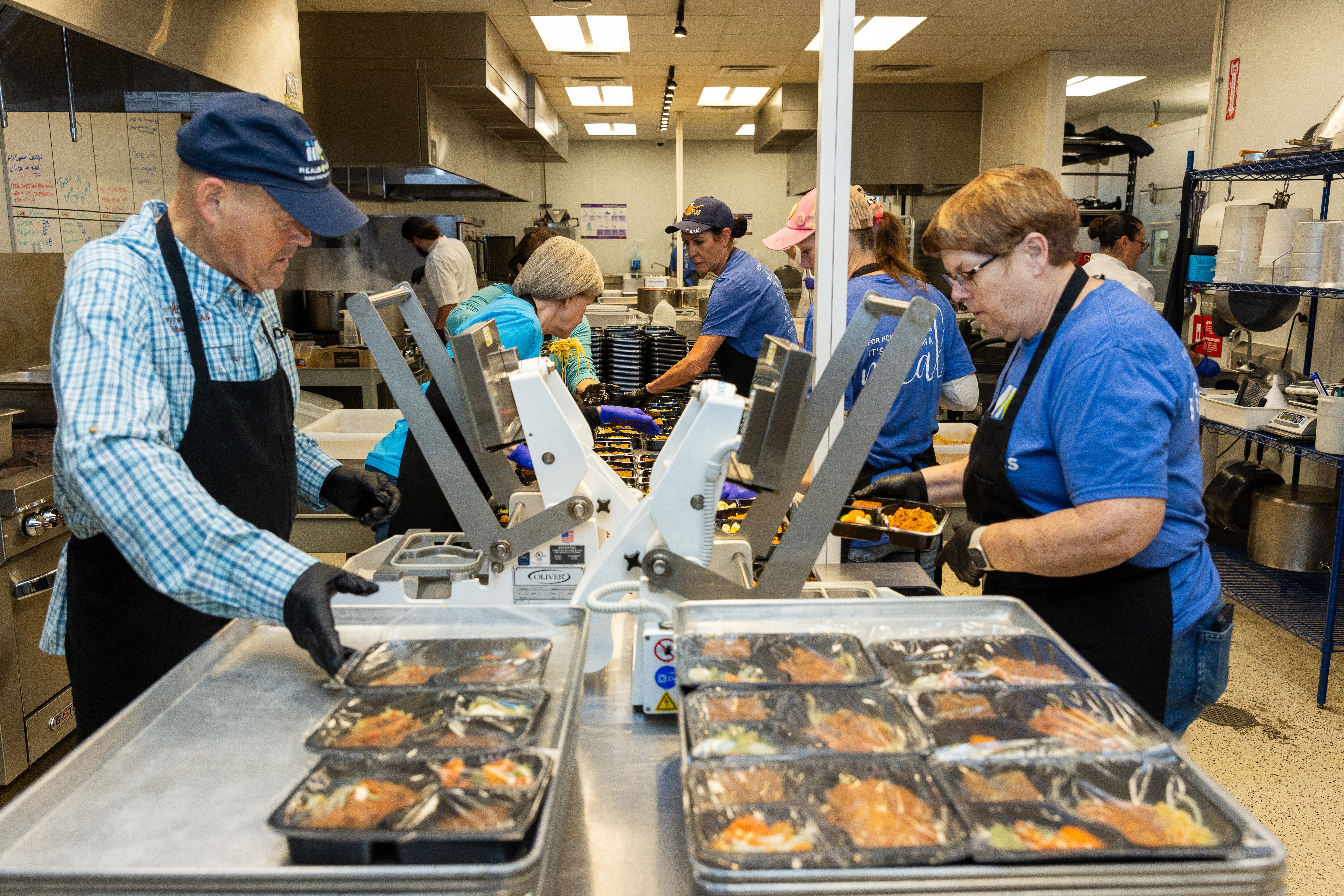
That mindset helped lead us to launch our catering business, Meals with Meaning. We already had a professional kitchen, a talented team that includes two chefs, and delicious food being prepared every day. I kept thinking, “Businesses are ordering lunch every day, and we know how to make great food. Why aren’t we connecting those dots?” Duh.
I am rarely the person who leaves a good revenue idea sitting quietly in the corner.
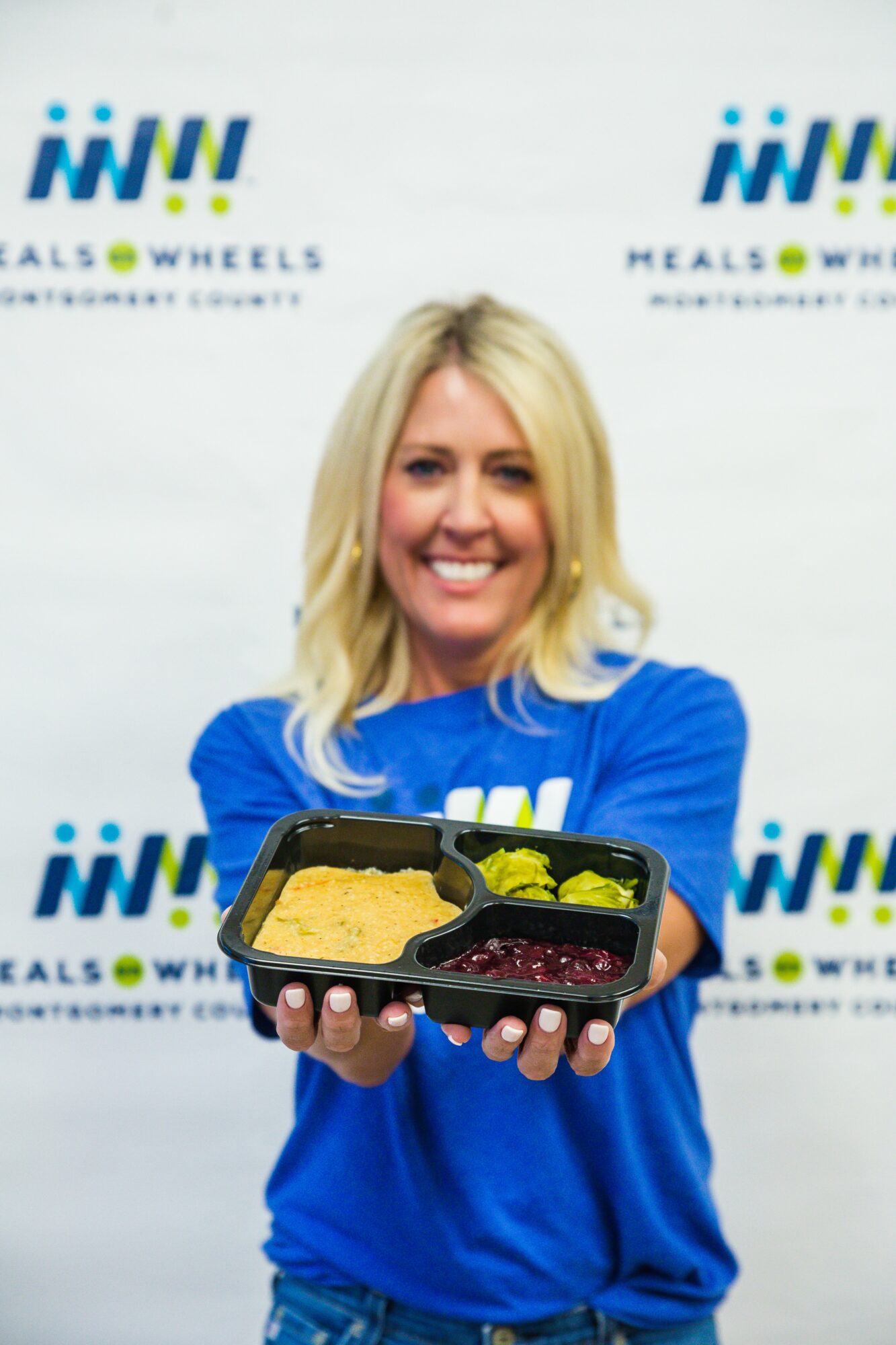
We charge $20 for a meal: approximately $10 covers the customer’s lunch, and the other $10 helps provide lunch for one of our homebound seniors. We cater primarily for corporate meetings, trainings, staff lunches, board meetings, and other daytime events. It gives businesses a way to purchase food they already need while helping us build a more sustainable source of revenue for the mission.
My job is stressful. There is real weight in knowing that so many people are relying on you, not only seniors who need food, but employees who depend on the organization for their livelihoods and a community that expects us to keep finding a way forward. I think constantly about where more funding will come from, how we can expand our services to keep pace with a growing county, and how to make decisions that are both compassionate and responsible.
Stressful? Yes. But I never wake up in the morning dreading going to work. There is a difference.
I love this work. I love serving those who once served us. I have always adored older people because I adored my grandparents. I believe seniors deserve to live the final years of their lives with dignity, connection, and as much independence as possible. Most want to remain in their own homes, surrounded by what is familiar, and they deserve every opportunity to do that safely. That’s what most of us would want for ourselves and the people we love.
The work can be hard and still be deeply fulfilling. In fact, that may be one of the clearest signs that I am exactly where I am supposed to be. The obstacles throughout my life have looked very different, but the lesson has remained consistent: I do not have to know exactly how the entire story will unfold before I take the next step. Sometimes I simply have to get up, ask for help, trust the path in front of me, and keep moving.
Can you tell our readers more about what you do and what you think sets you apart from others?
I serve as the CEO of Meals on Wheels Montgomery County, but my job is not simply to oversee meal delivery. On any given day, I may be helping solve a staff issue, meeting with a donor, thinking through a new revenue idea, talking with a community partner, advocating for funding, or trying to answer the question that is always in the back of my mind: How do we make sure this organization is strong enough to keep serving seniors for years to come?
One of the things I care about most is our staff culture. We ask our employees to treat our seniors with the warmth, patience, and care of family, and I believe our employees deserve that same sense of belonging from us. Without our team, the mission does not happen.
I want people to feel valued at work, but I also want them to grow. I look for opportunities to help employees develop personally and professionally, stretch into new responsibilities, and discover strengths they may not even realize they have. To me, a good workplace is not just somewhere people collect a paycheck. It should be somewhere they feel trusted, supported, and proud of who they are becoming and the work they are doing.
My team often brings me the problems that don’t have an obvious answer. I enjoy helping people pull apart what feels overwhelming, identify the real issue, and figure out the next step. I don’t want to solve every problem for them, because part of developing people is helping them trust their own judgment. Sometimes they need an answer from me, but sometimes they need someone to ask the right questions and remind them that they are capable of finding it.
My board relies on me in a different way. They look to me to step back and see the bigger picture: How do we make Meals on Wheels sustainable for the long term? How do we move from being approximately 60 percent government-funded toward greater financial independence, so one funding decision cannot suddenly determine how many seniors we are able to feed? Those are the questions that make my brain come alive. I love finding the right people, the right opportunity, and the right way to connect them. Sometimes that means a donor. Sometimes it means a corporate partner, a board member, a strategic introduction, or a completely new source of revenue.
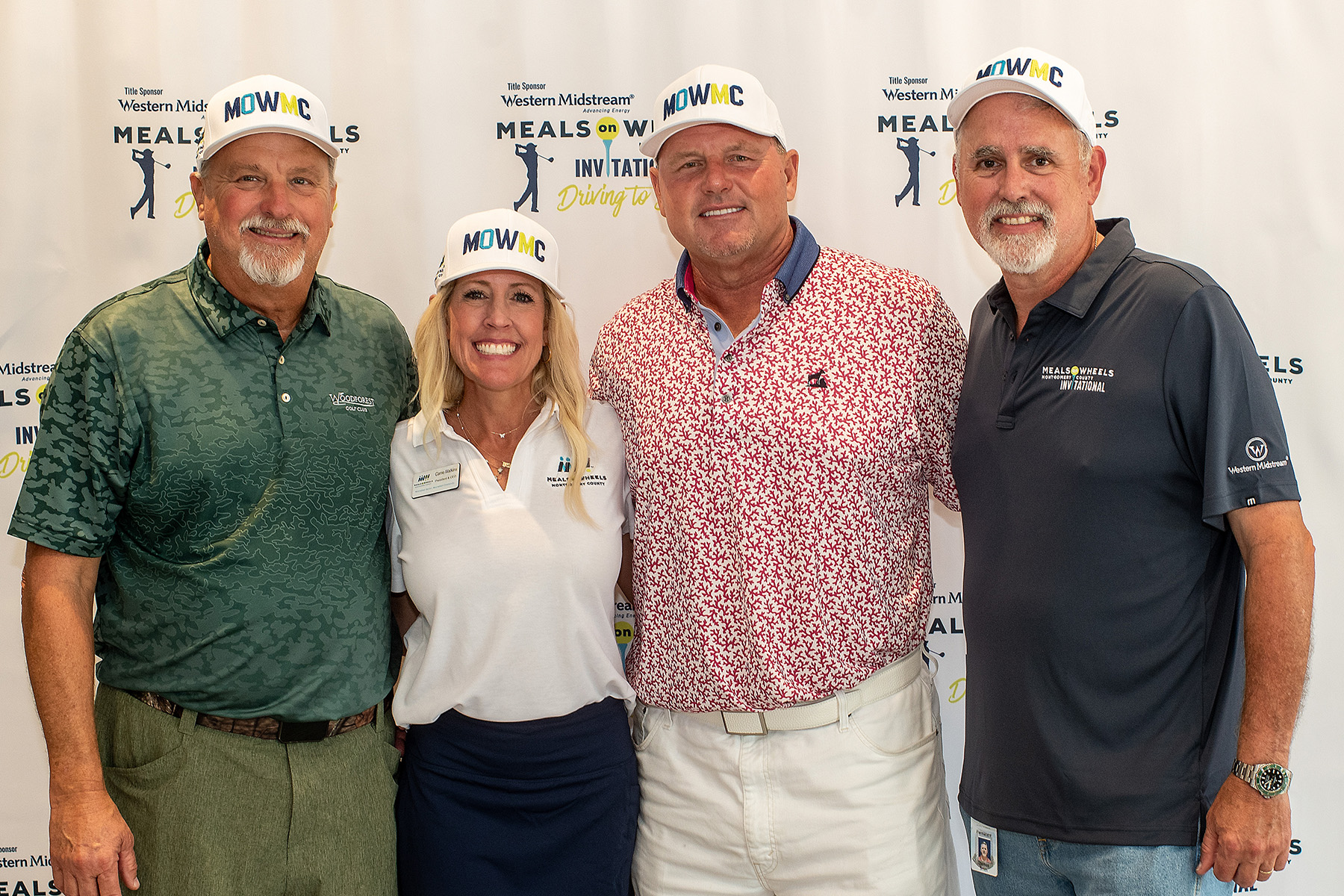
One partnership I am especially proud of is the relationship we have built with Western Midstream. Together, we created a golf tournament that has become an important revenue stream for Meals on Wheels Montgomery County. Their team engages its network of customers, vendors, and sponsors, which introduces new people to our mission and gives them a meaningful way to get involved. Their commitment also extends beyond the tournament. Western Midstream has a representative serving on our board, which gives us valuable insight, leadership, and a stronger connection to the business community. That kind of involvement matters because it means they are not simply supporting one event. They are helping us think about the long-term future of the organization. That partnership works because it isn’t one-sided. Western Midstream gets to engage its network around something meaningful, new supporters learn about the needs of local seniors, and Meals on Wheels builds relationships and revenue that extend well beyond one event. We are preparing for the tournament again this September and are excited to welcome additional high-level sponsors who want to be part of that impact!
Waste Connections is another company that I feel very proud of the relationship I have built. They have become much more than a sponsor to us. Their employees deliver a corporate meal route every week, which means someone from their team is regularly at a senior’s door providing a meal, a safety check, and a moment of connection. They’ve also been loyal and dependable financial supporters. We know we can count on them to invest in our mission year after year, often at the same level or more, and that kind of consistency is incredibly meaningful when you’re trying to plan responsibly and build financial stability. Their commitment also extends into leadership. A senior vice president from Waste Connections serves on our board, and her expertise has been extremely valuable as we have grown and faced difficult decisions. They connect us with other resources, open doors through their relationships, and show up with helping hands when there is work to be done. To me, that is what a true corporate partnership looks like. It is not one donation or one volunteer day. It is a company asking, “How can we be part of this mission?” and then continuing to show up in multiple ways.
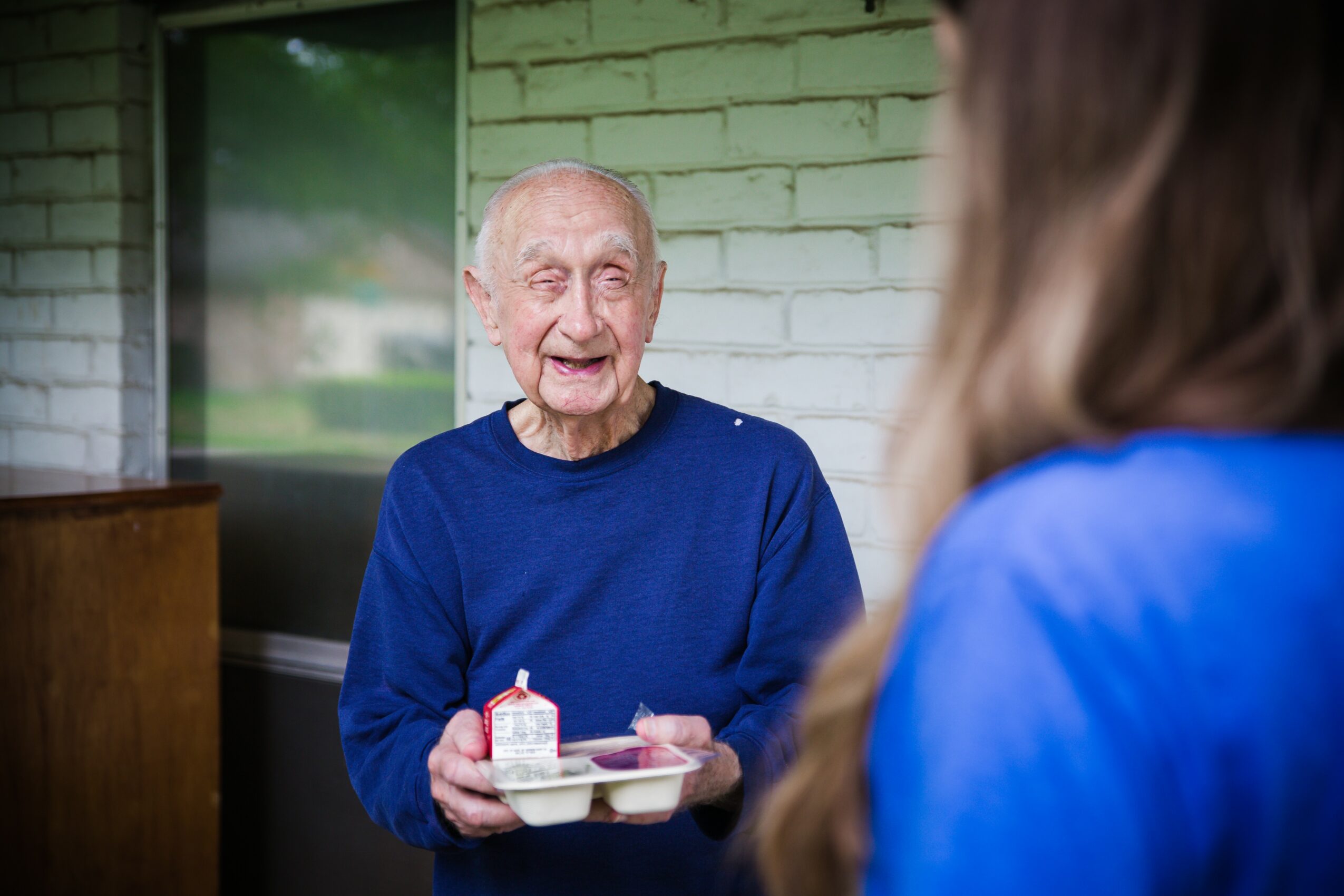
But, what I am absolutely the most proud of is how much more visible our seniors and our mission have become in the community. Many people still think Meals on Wheels is simply dropping off lunch. It is so much more than that. A delivery is also a safety check, a conversation, something the seniors look forward to, a lifeline, and the reason someone gets help when something is wrong.
Our seniors are homebound, which means they are easy for the broader community to overlook. They don’t really have the ability to advocate for themselves. I feel a deep responsibility to make sure they are seen and remembered, especially in the rooms where funding and community decisions are made.
I will work tirelessly for them because they deserve to live with as much dignity and independence as possible.
What probably sets me apart is that I bring together a sales instinct, a genuine love of people, and a willingness to keep asking, “What else could we try?” I am good at seeing possibilities and relationships that may not be obvious at first. I like solving problems, creating win-win partnerships, and turning ideas into action. I also believe nonprofit work needs both heart and business sense. Heart is what makes the mission matter. Strategy is what allows it to last. That is what I want to build: an organization where seniors feel valued, employees feel invested in, partners feel connected to the mission, and the community knows that when we say we are going to show up, we do. My ultimate goal is to ensure that this incredible community service is here to stay for years to come.
How do you define success?
I define success as building a life that is aligned with my values, filled with purpose, and still growing. I am motivated by meaningful goals. I like setting the bar high, making a plan, and going after something that feels challenging and worthwhile. Reaching a goal brings me a real sense of satisfaction and personal achievement, but what drives me just as much is who I become while pursuing it.
I never want to stop learning or evolving. I enjoy discovering a better way to solve a problem, developing a new skill, or taking on something that once felt beyond my reach. I do not believe growth should end because you earned a title or reached a certain stage of life. In many ways, that is when you finally have enough experience to get really interesting.
Professionally, success means leading with integrity, creating meaningful impact, and building something that is stronger because I was part of it. It means developing people, generating ideas, building relationships, and helping others see possibilities they may not have considered. I also feel successful when I can bring people into an idea—when I can help someone understand why it matters, see how they fit into it, and feel excited to become part of it. Communication and connection have always been two of my greatest strengths. I love using them to open doors, create opportunities, and move important work forward. A big part of success for me is helping other people succeed. I love making connections that create a genuine win for everyone involved, whether that means helping another nonprofit find a resource, connecting a business with a community partner, supporting a sponsor’s goals, or simply introducing two people who should know each other. Those moments may not come with a title or an award, but they bring me tremendous joy.
I also don’t define success as solving every problem. If that were the standard in nonprofit work, none of us would ever feel successful! Sometimes success is making meaningful progress in a difficult reality. It is feeding one more senior, creating one new revenue stream, developing one future leader, making one important introduction, or getting one room full of people to see an issue differently.
Personally, success means having a life that feels joyful, authentic, and full of meaningful relationships. It means being proud of the way I show up for my family, my friends, my community, and myself. One of my greatest sources of pride is watching my boys grow into happy young men who give their time to organizations and causes they care about. They learned that service matters not because I gave them a speech about it, but because they grew up watching it. It makes me feel like I did something right as a mom, and didn’t totally screw them up! They are also learning something my family taught me: what you receive from helping others often becomes far greater than what you originally gave.
To me, success is not a finish line. It is the combination of purpose, progress, growth, connection, and joy. I want to keep doing work that matters, keep challenging myself, and keep becoming someone capable of making a larger impact. I know I am not finished yet. There is still a lot inside me waiting to be tapped into!
Pricing:
- It costs $2600 to feed a senior for one year.
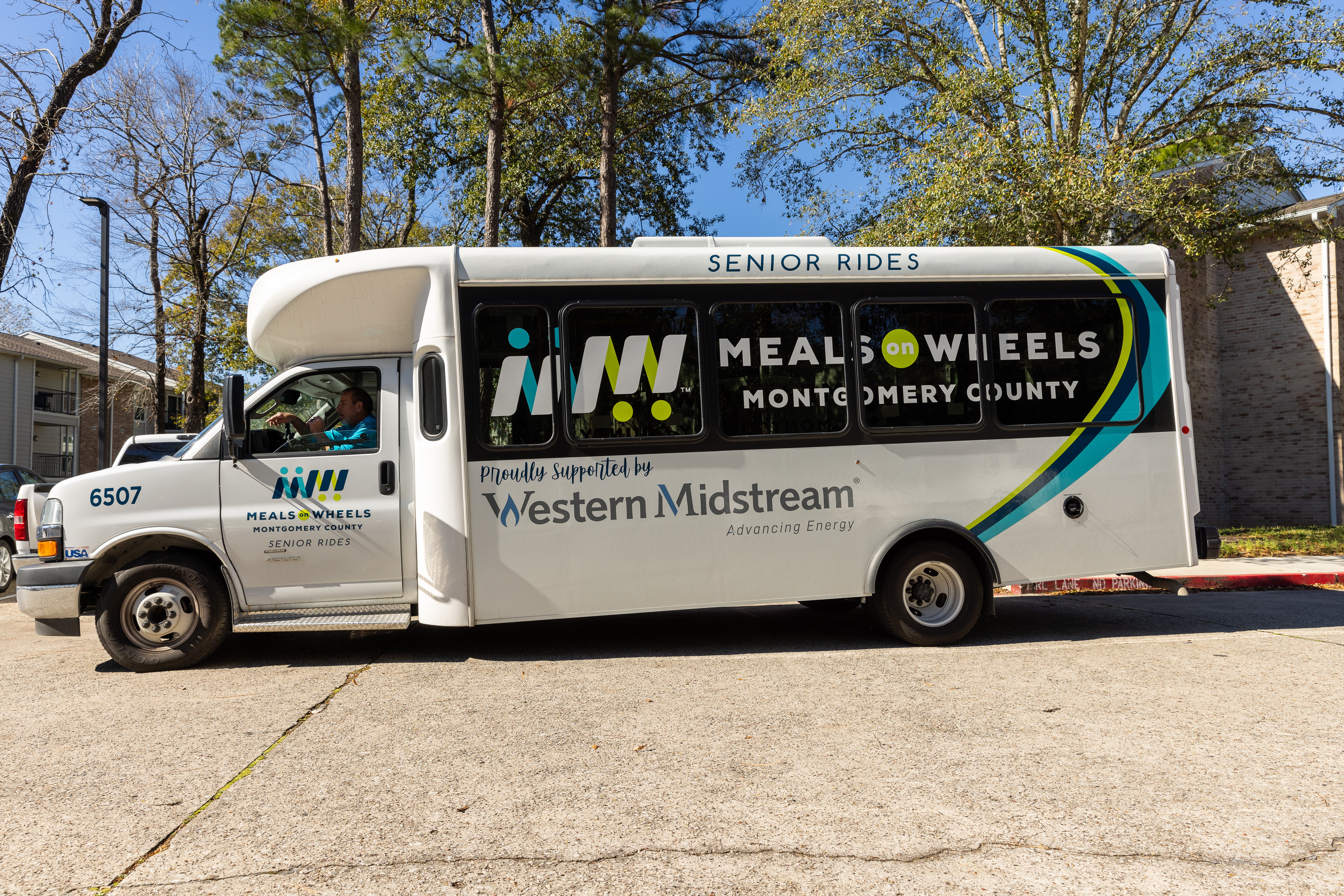
- We can wrap our buses or vans with a corporate logo for $50k. Essentially giving you a moving bilboard to show your support in the community.
- It’s free to come in and take a tour of our facility! I promise it’s worth your time. You will be surprised at how efficient
- We offer catering. Meals with Meaning – each meal costs $20. $10 feeds you and $10 provides a lunch for a senior.
- It costs $10 for us to provide one meal to a senior.
Contact Info:
- Website: https://www.mowmc.org
- Instagram: https://instagram.com/mealsonwheelsmc
- Facebook: https://facebook.com/mealsonwheelsmc
- LinkedIn: https://www.linkedin.com/company/meals-on-wheels-montgomery-county