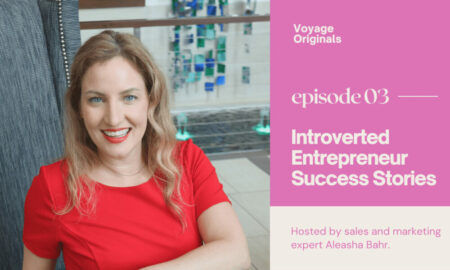

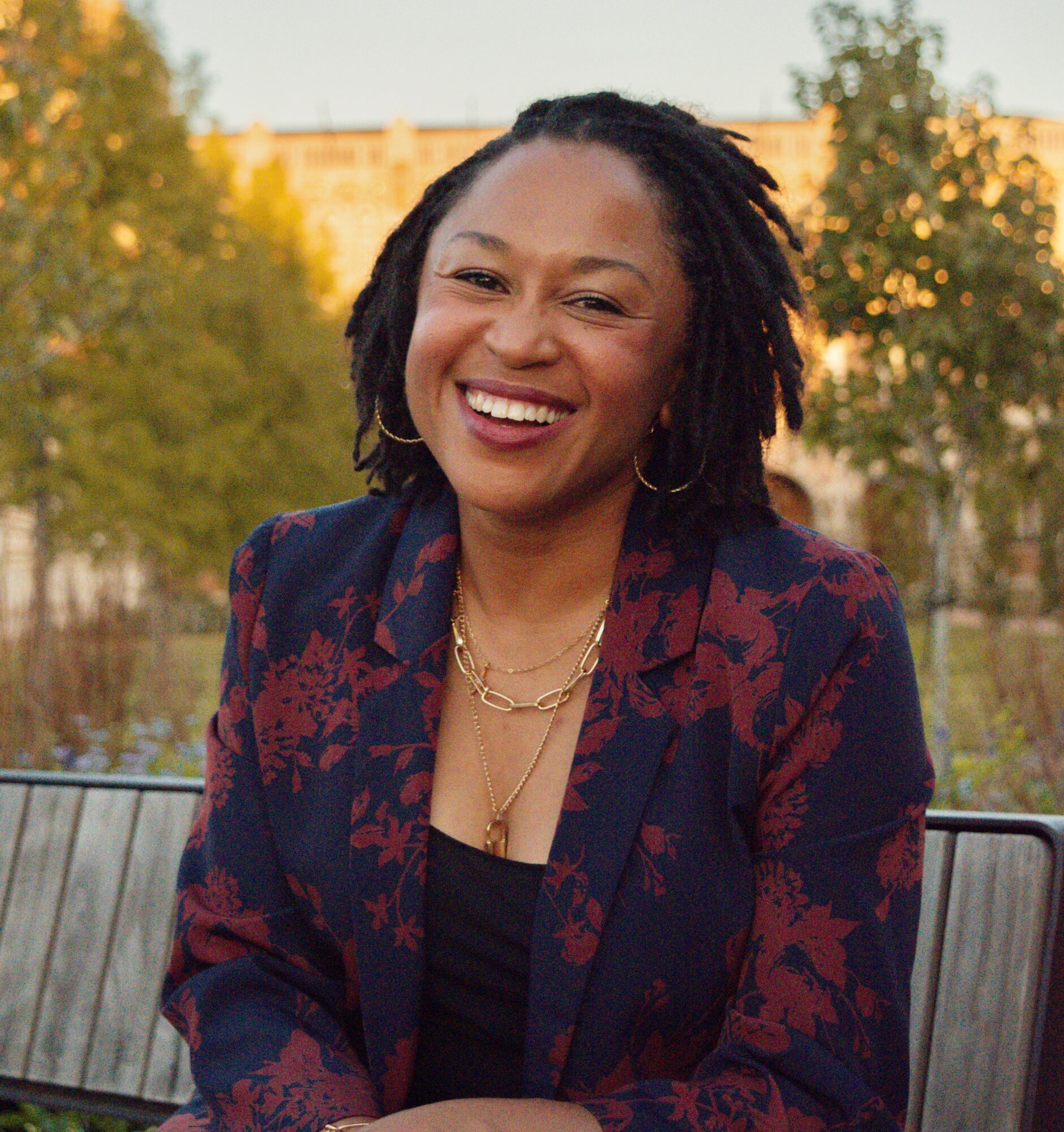
Today we’d like to introduce you to Cherise Royal.
Hi Cherise, so excited to have you with us today. What can you tell us about your story?
I’ve always been drawn to the intersection of creativity and communication. Early in my career, I worked as a journalist, photographer, and videographer, telling stories and helping people understand the world around them. That curiosity eventually led me into marketing, where I discovered that great marketing isn’t just about promotion, it’s about understanding people, building trust, and creating meaningful connections.
Over the years, I’ve had the opportunity to work across nonprofits, startups, public institutions, and higher education. Today, I lead marketing for Rice University’s Liu Idea Lab for Innovation & Entrepreneurship (Lilie), where I help tell the stories of student innovators while building programs that support new ventures.
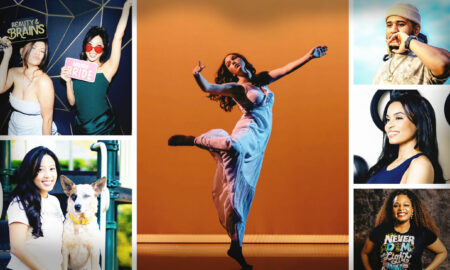
Alongside my full-time work, I’ve spent the last several years researching a question that kept coming up in conversations with artists: Why are so many incredibly talented creatives expected to figure out the business side of their careers on their own? That question became the foundation of my master’s research at the University of Houston and also shaped my work through ArtWRK Collaborative, where I create workshops, community programs, and educational resources that help artists build sustainable careers without sacrificing their creative identity.
Whether I’m speaking, teaching, writing, or designing new programs, my goal is always the same: to help people turn their ideas into something that can thrive in the real world.
I’m sure it wasn’t obstacle-free, but would you say the journey has been fairly smooth so far?
Definitely not, but looking back, I wouldn’t change it.
Like many people, I’ve experienced career pivots, uncertainty, and moments where I questioned whether I was on the right path. But one of the biggest struggles wasn’t about changing jobs. It was about feeling like I didn’t fully belong anywhere.
Throughout my career, I’ve often found myself living between two worlds. In business settings, I was the “art person.” In arts settings, I was the “business person.” It felt like I was constantly straddling two identities, never quite fitting neatly into either one. For a long time, I saw that as a disadvantage. I wondered if I was too creative for one space and too strategic for the other.
Over the last few years, though, I’ve completely reframed that experience. I’ve realized that the intersection is exactly where I belong. The ability to move fluently between creative and entrepreneurial thinking isn’t something I need to explain away. It’s my greatest strength.
That realization has shaped not only my career but also my research and the work I’m building today. It sparked my fascination with intersections as both a mindset and a practice. Some of the most interesting ideas, collaborations, and innovations happen when disciplines overlap and people who speak different “languages” learn to understand one another. I’ve come to see much of my work as building those bridges, whether that’s between artists and entrepreneurship, higher education and industry, or creativity and strategy.
Thanks for sharing that. So, maybe next you can tell us a bit more about your work?
At the heart of my work is a simple belief: artists deserve more than survival. They deserve the opportunity to build sustainable, fulfilling careers around their creative practice.
That’s why I founded ArtWRK Collaborative. Through workshops, educational programming, community experiences, and thought leadership, we’re reimagining what artist support can look like. Rather than treating entrepreneurship as something separate from an artist’s creative identity, I see it as an extension of it. The goal isn’t to turn artists into businesspeople. It’s to help them build an enterprise around their creative work that is authentic, resilient, and sustainable.
Right now I am developing a brand new artists enterprise framework that grew out of my graduate research. The methodology challenges the idea that artists simply need a business class or a better marketing plan. Instead, it asks a bigger question: What systems, experiences, and communities do artists need in order to thrive over the course of a career? That’s the question I’m most interested in exploring, and it’s become the foundation of my future work.
Risk taking is a topic that people have widely differing views on – we’d love to hear your thoughts.
I don’t think about risk the way many people do.
To me, the biggest risk isn’t trying something new. It’s spending years building a life or career that no longer reflects who you are or the impact you want to make.
Some of the biggest decisions I’ve made have involved stepping into unfamiliar territory, moving from journalism into marketing, pursuing graduate school while working full time, and investing years in research that didn’t have a guaranteed outcome. More recently, it’s been building ArtWRK Collaborative.
Those choices certainly involved uncertainty, but they were all grounded in purpose rather than impulse. My work in entrepreneurship has only strengthened that perspective. Entrepreneurs are often portrayed as fearless risk-takers, but the best founders I’ve met aren’t gambling. They’re learning, adapting, testing ideas, and making thoughtful decisions with imperfect information. That’s the approach I’ve tried to bring to my own career as well. I don’t believe in being reckless. I believe in taking informed leaps of faith.
Contact Info:
- Website: https://luma.com/artWRK
- Instagram: https://www.instagram.com/artwrkcollab/
- LinkedIn: https://www.linkedin.com/company/artwrk-collaborative/