

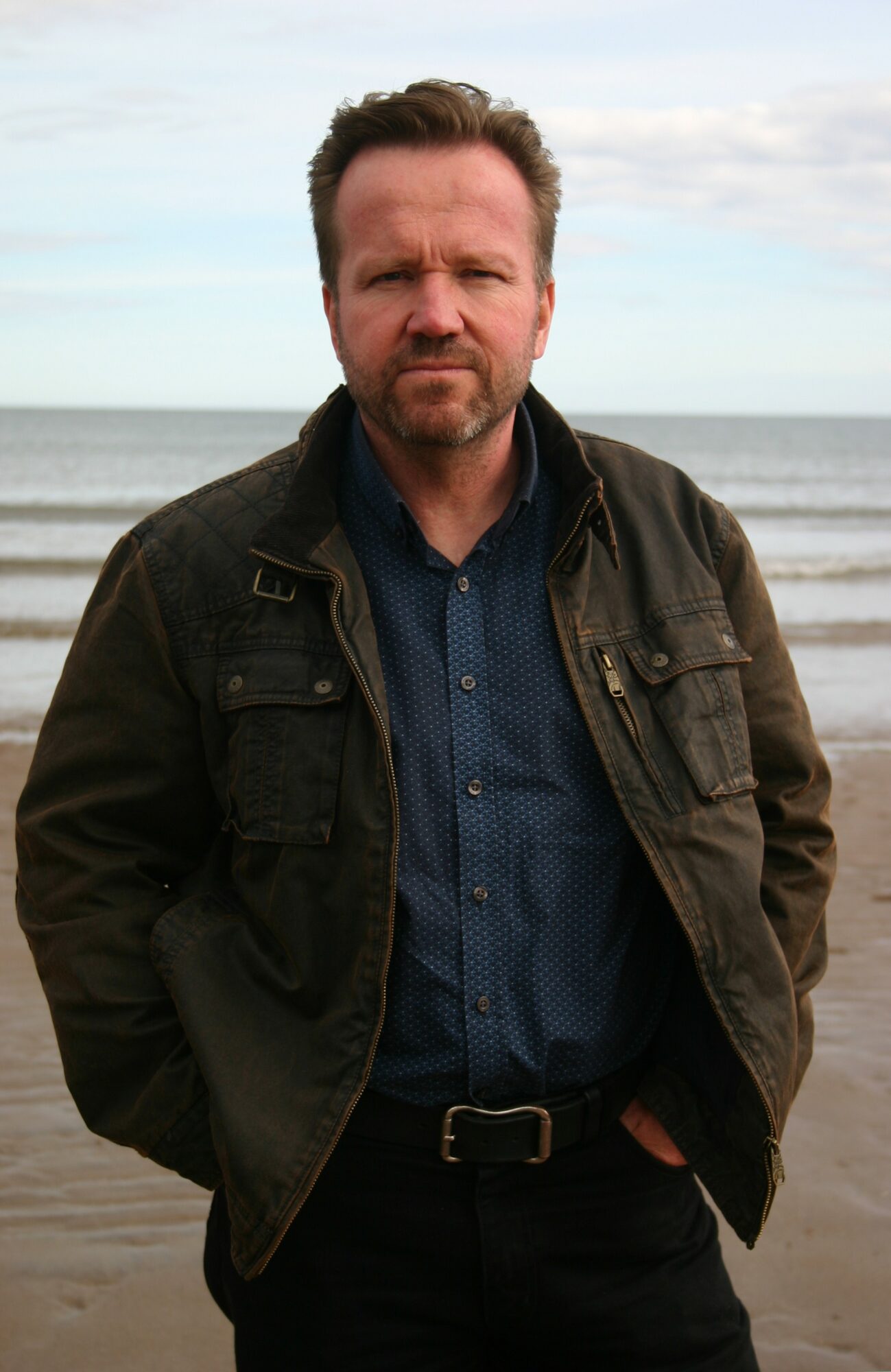
Today we’d like to introduce you to Alan.
Hi Alan, please kick things off for us with an introduction to yourself and your story.
I had a very different childhood, being born and brought up in Malawi, Central Africa. It was a fantastic place for a child to grow up; days were filled with imaginative play, as there was no TV. I played highly competitive games of African hopscotch in the village, drove wire cars, and helped build mud walls, mixing the mud by having a huge mud fight inside a large hole dug in the ground!
When I was 13, I moved with my family to Scotland and went to school in Dundee. Everything seemed fascinating to me; the huge trucks, green fields with black and white cows, and endless amounts of chocolate!
After school, I successfully applied to Duncan of Jordanstone College of Art in Dundee to study Fine Art, graduating in 1984 and then went to the Cyprus College of Art in Paphos to do a year’s postgraduate course.
On completion of my studies, I worked for a brief time in a studio in Dundee, before being offered an Acme Studio/Accommodation in London, living and working as an artist for 15 years, exhibiting with many galleries, including the Bruton Street Gallery, Mayfair, London, England & Co, Notting Hill, London, Gallery Rademakers in Amsterdam and Caldwell Snyder Gallery in San Francisco and New York.
In 2003, I moved back to Scotland with my wife and young son, acquiring an old bank in Carnoustie where I painted for 19 years. It was much more isolated than in London, but this gave me licence to be more myself and come up with unique and original ideas.
Continuing my nomadic lifestyle, we then moved to Edinburgh three and a half years ago and have relished all the culture that is on offer here!
We all face challenges, but looking back would you describe it as a relatively smooth road?
It has not been an easy road, there are always difficult times on the journey, but if you tell yourself that what you are doing is important and worth fighting for, you tend to find the strength and resolve to get through those dips in the road.
The most scary struggles are when inspiration is absent… usually when you most need it! I have learned not to panic and get through the period with good grace, trying to find jobs that don’t require too much thought.
The other most obvious problem can be money, or rather the lack of it! My advice would be; don’t wait until you are up to the wire before you do anything about it, the earlier you take action the better. I had to be creative and think how I could find new markets for my work. Sometimes I think that the pressure of having to survive as a full time practicing artist makes me dig deeper and ask myself if my most recent paintings are in fact good enough.
Thanks for sharing that. So, maybe next you can tell us a bit more about your work?
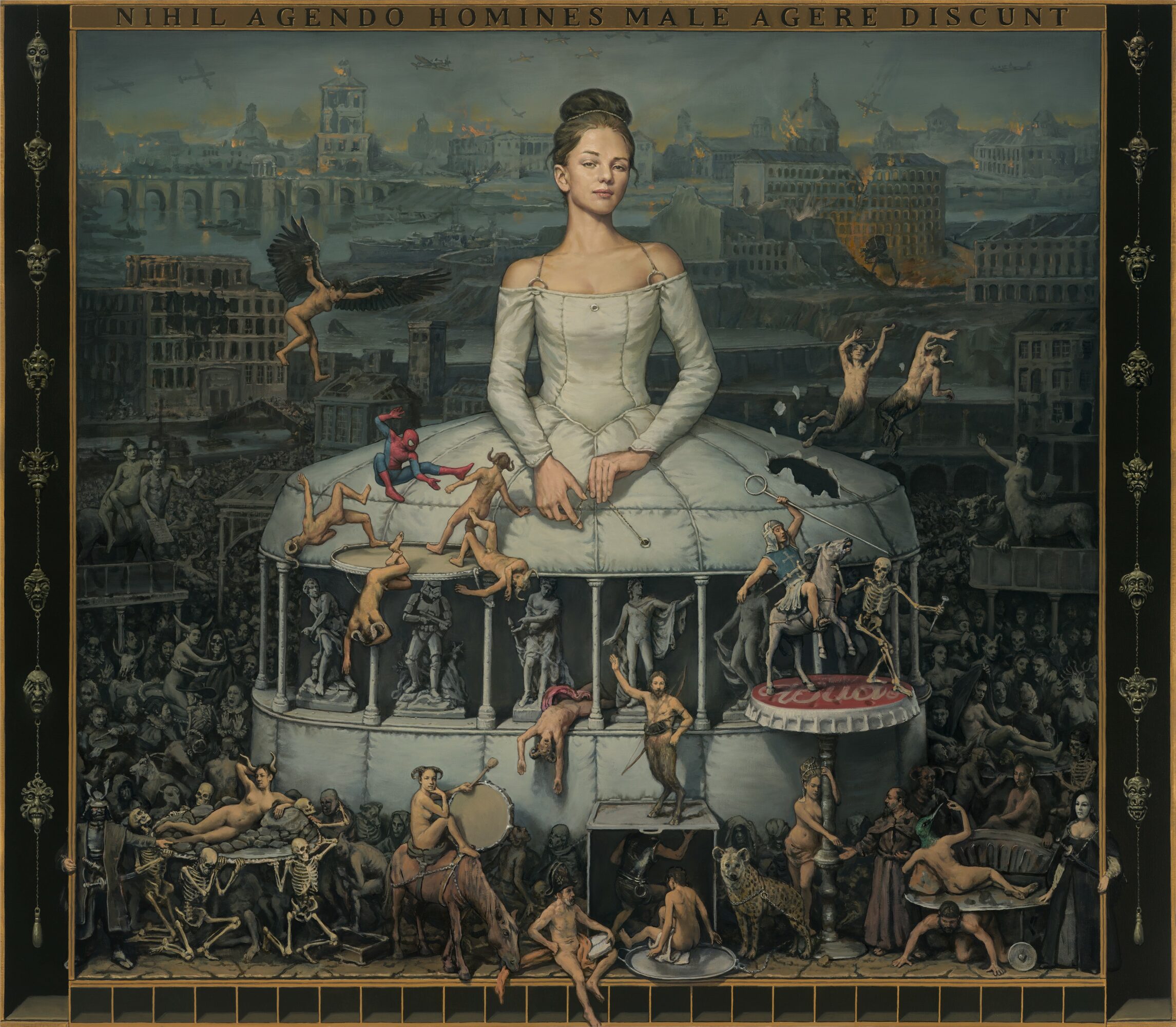
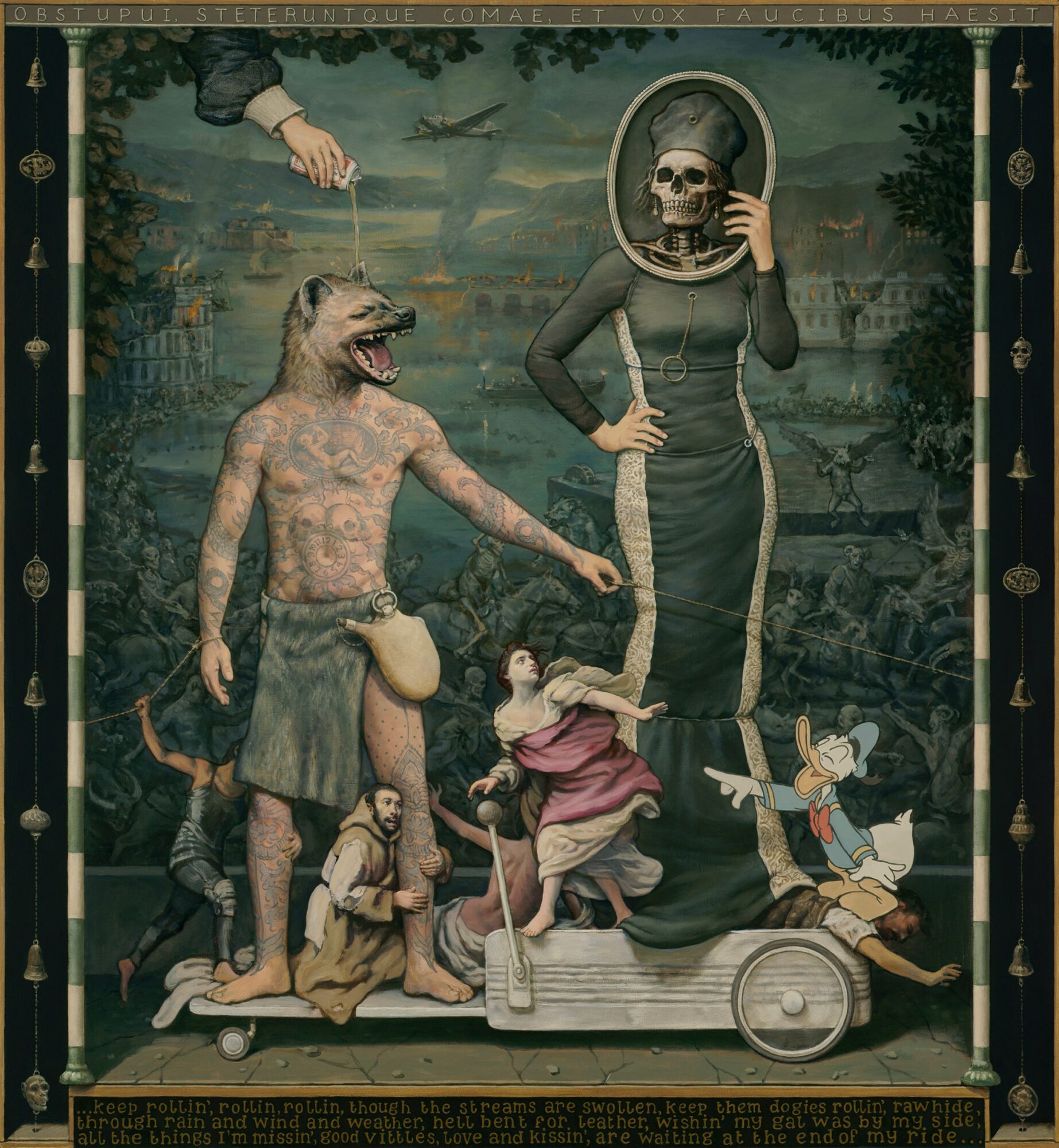
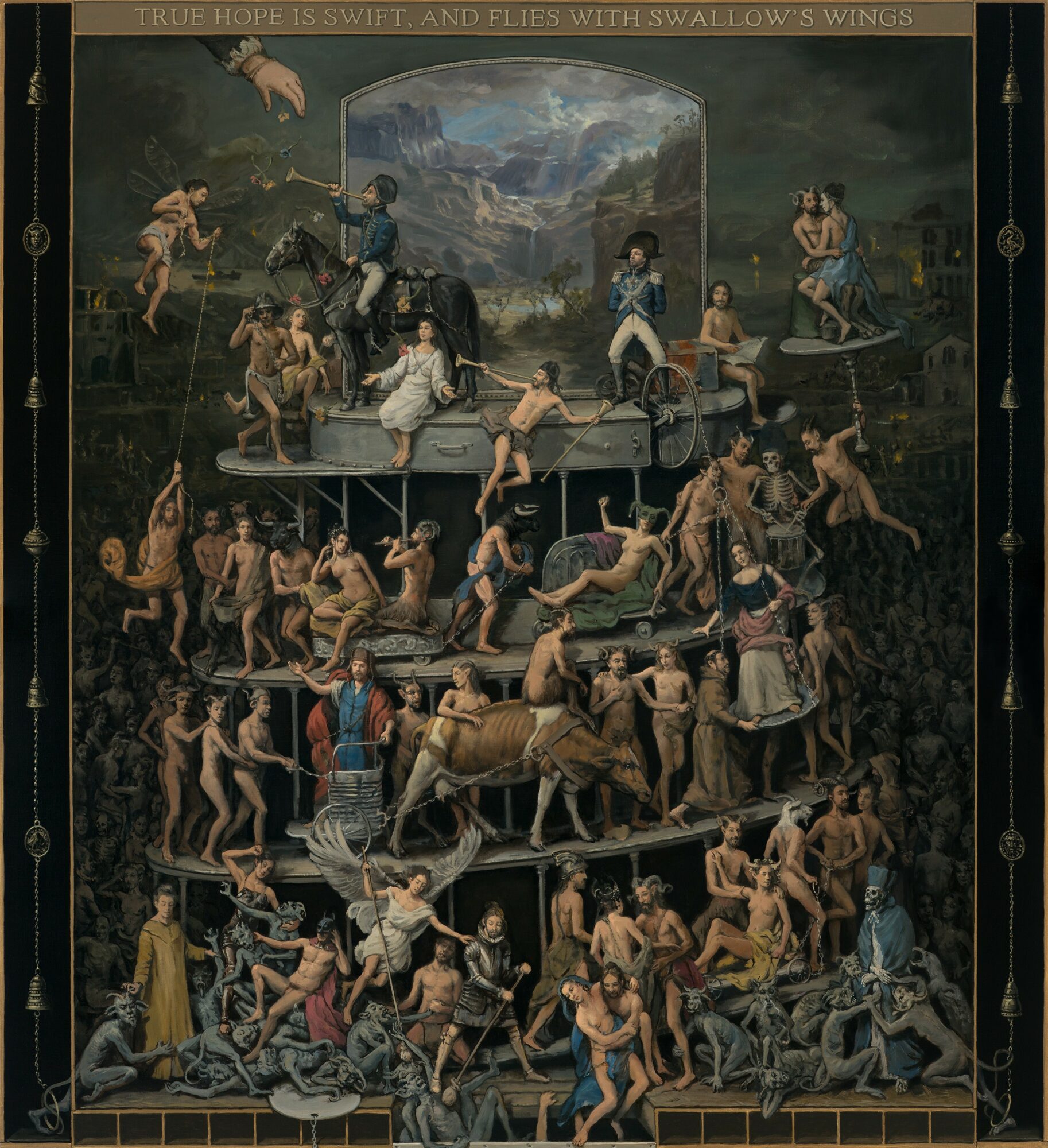
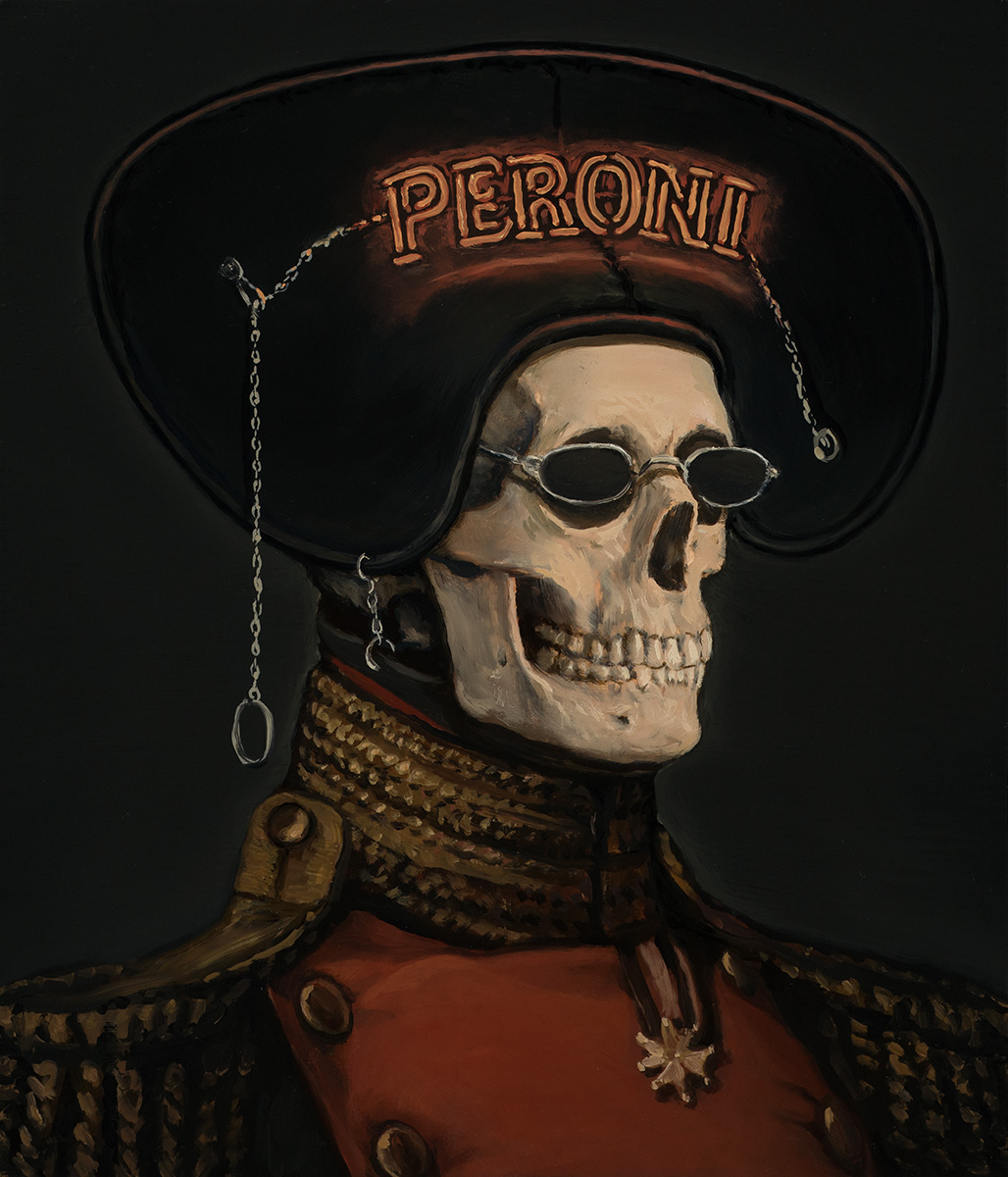
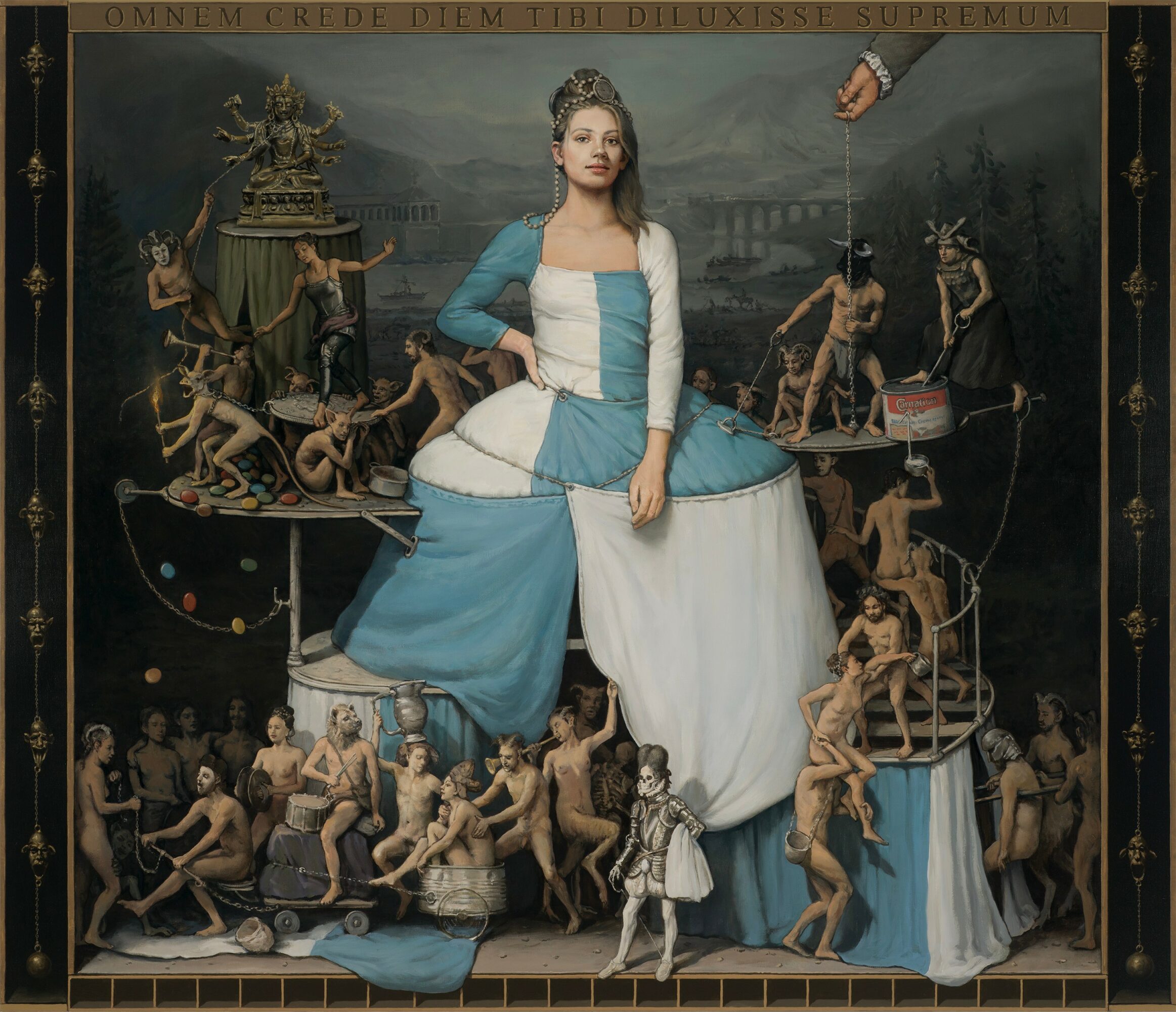
When I left Art College, I was so terribly serious about what I was doing that everything I turned my hand to seemed to fall flat. It was with the rediscovery of a childlike love of play and a tendency to get lost in dreamy thought, that I began to put things right. Recently, it has been discovered that a human brain is far more active when daydreaming than when trying to solve a complex mental problem. That was a relief for me to hear and it would explain why some of my most interesting and original ideas have emerged from that swirling mental mist.
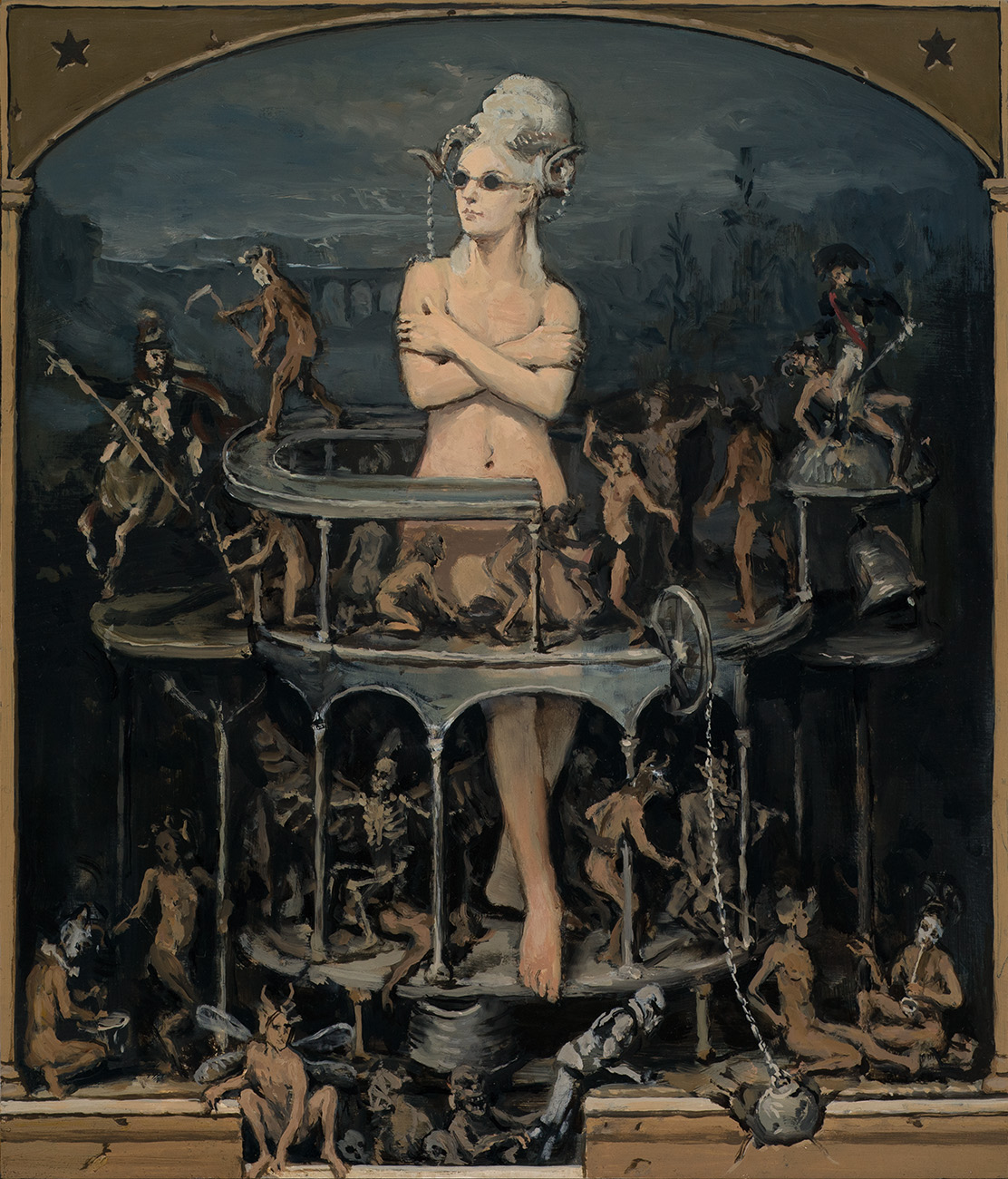
Being faced with a clean white canvas can be an alarming experience and initially your mind scrambles around desperately looking for something to paint. However, the trick is to let go and allow that something to emerge from within you. I learnt this after briefly dipping my toe into abstract painting, having been encouraged to do so by the wonderful abstract painter, Mali Morris. It took a bit of getting used to, because you have to trust your feelings and follow your subconscious. What you seek is like an elusive thread, difficult to put your finger on and constantly flicking just out of reach. Every now and then, if you are persistent, you will get a hold of it briefly and feel the little tug of energy, like a fish on the other end.
When I applied this abstract thought to figurative painting, the results for me were exhilarating. I placed figures and objects onto that white canvas with no preconceived plan or design. Everything poured out until I stopped, a little confused and mentally drained. This reminded me of a story about an expedition on Everest, when one of the slightly irritated climbers confronted the hired Sherpas, who kept stopping. “Are you tired?” he scoffed. “No,” came the reply, “we’re just waiting for our souls to catch up.” That’s how it feels after you have spilled it all out onto a canvas.
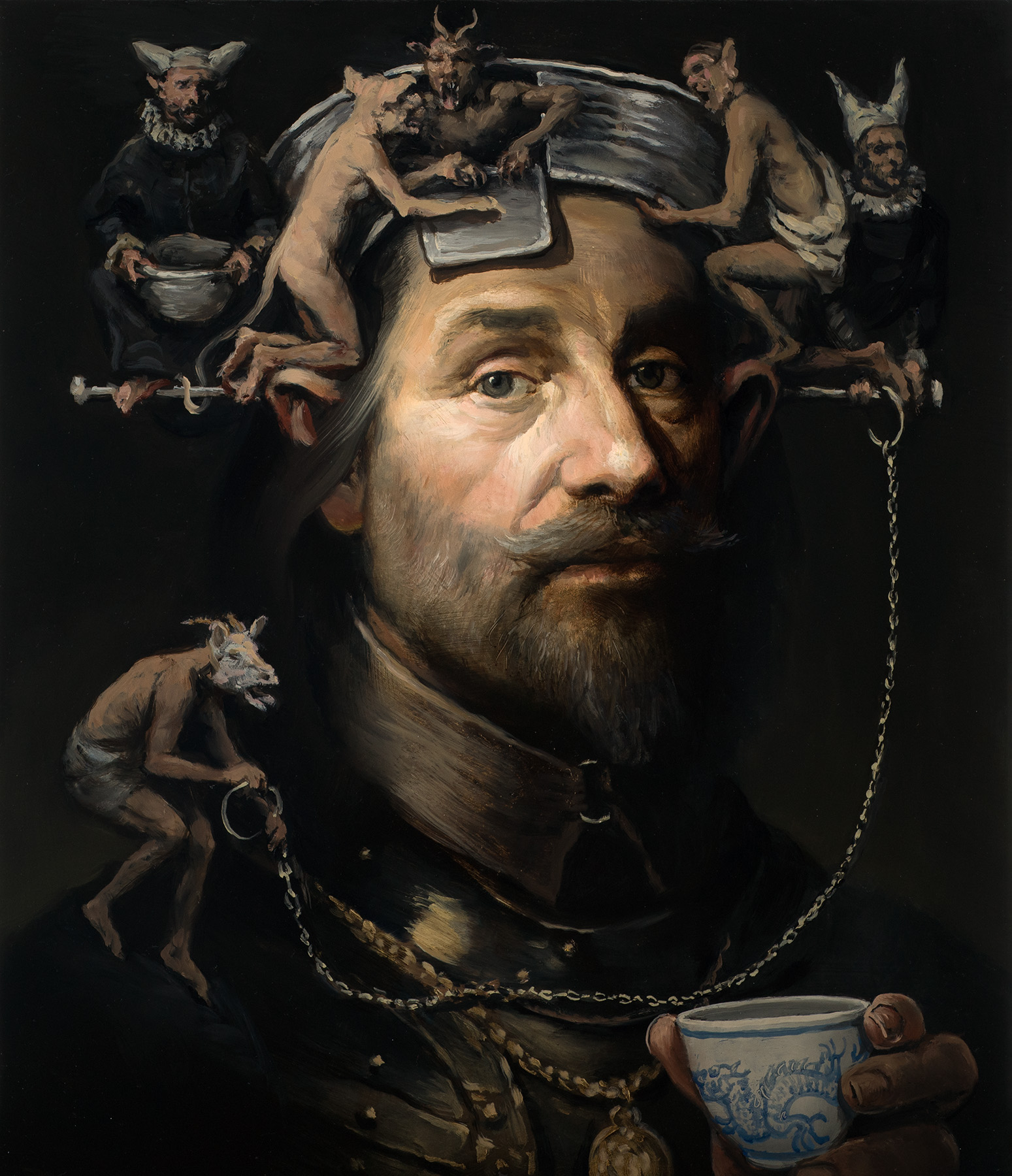
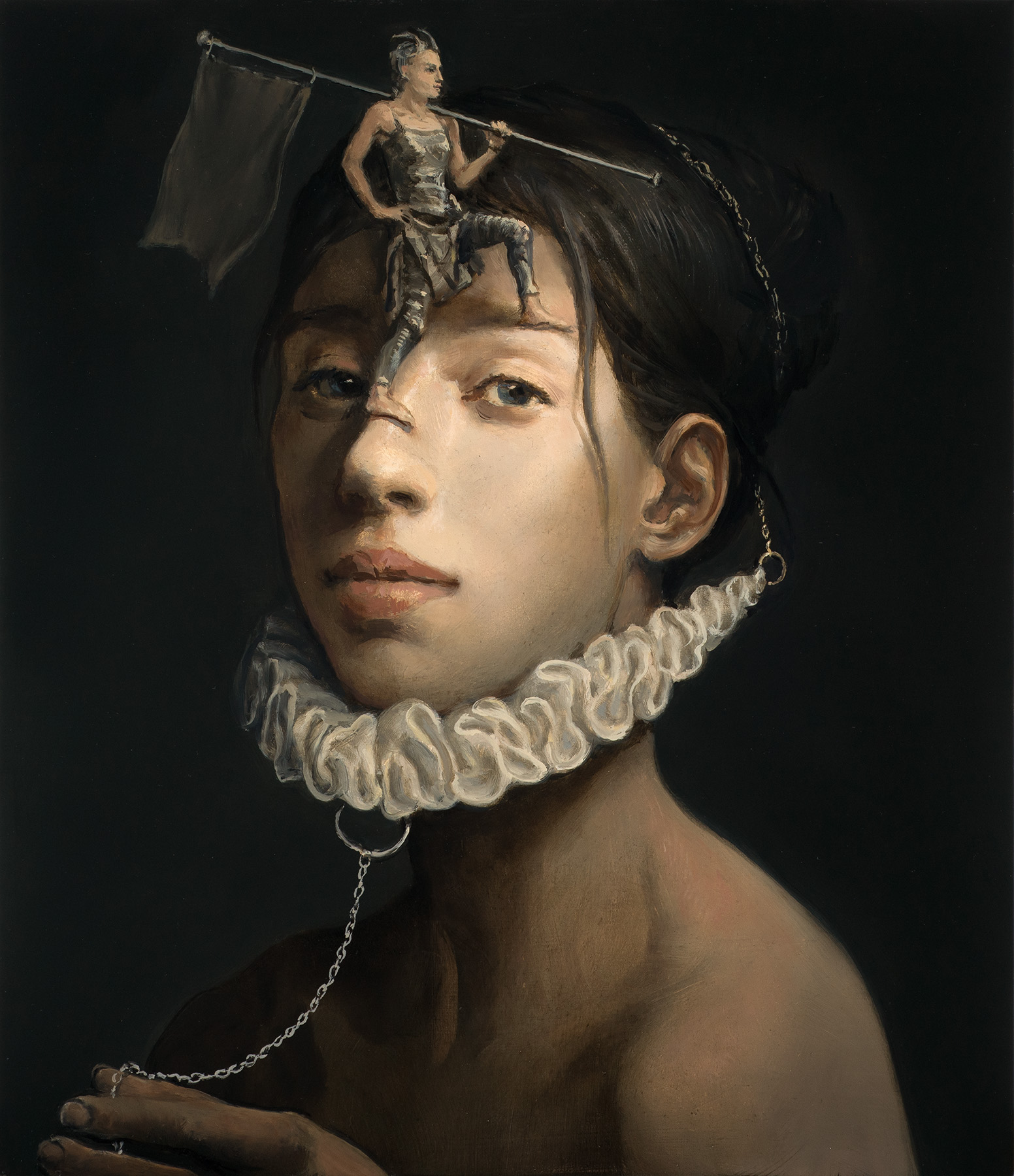
But what does it all mean? Well, you soon learn that your subconscious communicates in riddles and plays poetic games that are fascinating and intellectually stimulating. You also cannot avoid what is troubling or rumbling inside… it’s all there in oil on canvas; your loves, your hates, your fears and your dreams. The conscious mind eventually works its way through that twisted maze of imagery, necessarily clarifying and simplifying, without losing the raw energy created by the painting’s violent birth.
Why do I do all this? Because it’s like being taken on a thrilling journey, one in which I have little or no idea of the ultimate destination. The sense of adventure and excitement at the outset is addictive and once experienced, compensates for all the inevitable doubts along the way. When it eventually comes right, you arrive somewhere that is strangely familiar, but which you have never seen before. It’s a distant coast of you.
What were you like growing up?
As I mentioned before, I grew up in Malawi and I was a very happy child with lots of friends, playing endlessly and learning about life. I became interested in making art seriously when I was 12, spending hours drawing, sometimes from imagination and sometimes copying from art books.
Pricing:
- Don’t overprice your work.
- If you have success, only raise prices by 10% each time… building on a solid base.
- Try to keep a level playing field with prices in different galleries.
- Don’t sell too cheaply from your studio.
Contact Info:
- Website: https://www.alanmacdonald.net
- Instagram: @alanmacdonaldart
- Facebook: @alanmacdonaldart