


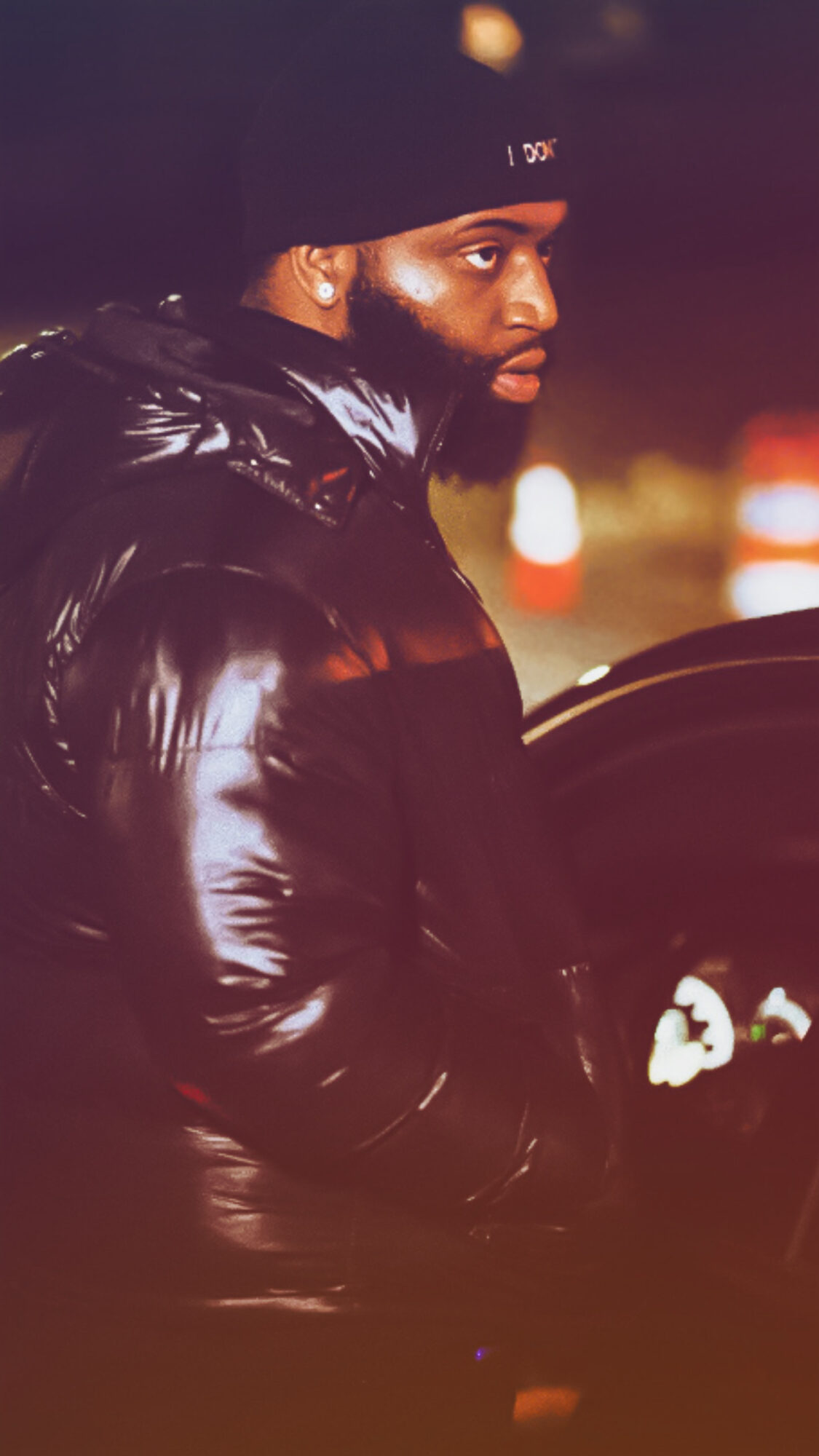
Today we’d like to introduce you to Eric Ivan.
Hi Eric, so excited to have you on the platform. So before we get into questions about your work-life, maybe you can bring our readers up to speed on your story and how you got to where you are today?
It all started with me filming my best friend, JayJay Fields, on an iPhone. We became friends in 2018 and would travel to local community basketball parks to play competitive games together.
We reconnected in the summer of 2022 when he was home from college. He told me he had never had the opportunity to get quality footage of himself playing for his college basketball team. That summer, we made it our mission to travel to different parks and record every game. After each game, I would create a highlight tape compiling his best moments of the day. He would post the videos on Instagram, and they began to garner attention. Soon enough, more people became interested and wanted to join him.
At the time, it was a hobby I enjoyed, so I started filming him alongside a few other players. One of them, Troy, would always encourage me to invest in a camera whenever I recorded their pickup games. I would casually agree, but I never considered it a real possibility. I was still investing in my songwriting and music career, so I didn’t have the money for a camera.
As I spent more time filming, I eventually decided to step away from music and focus on documenting sports. In the summer of 2023, I began covering the Baltimore Ravens from a freelance journalist’s perspective, and my work was featured in their “Late for Work” segments. I also began writing for ClutchSports, where I published more than eight articles covering the Washington Wizards.
When Christmas came around, my family asked what I wanted. I immediately replied, “A camera.” I told myself that if they bought me one, I would take this seriously. My sister bought it for me, and her support gave me the confidence to pursue this as a career.
I began reaching out to colleges, sending countless emails asking for opportunities to film their teams. I used those opportunities to strengthen my portfolio, then used that portfolio to gain access to more high-profile games and events. That is the same blueprint I follow today: You’re only as good as your portfolio.
Today, I’ve covered the BIG3, NBA, WNBA, NBA G League, and Puma Hoops, along with numerous high-level collegiate programs, including UConn Women’s Basketball, Duke Women’s Basketball, South Carolina Women’s Basketball, Michigan State Men’s Basketball, Michigan Men’s Basketball, and Syracuse Women’s Basketball.
My work has also been recognized and used by the Naismith Trophy Association. I’ve contributed coverage to events such as the Big East Softball Tournament, CAA and CIAA tournaments, Jab Classic, Lethal Shooter Showcase, RUMPH Classic, Brunson League, and more.
Today, the mission remains the same: Always look for the next big project.
Alright, so let’s dig a little deeper into the story – has it been an easy path overall and if not, what were the challenges you’ve had to overcome?
It definitely hasn’t been a smooth road. One of the biggest challenges, has been learning how difficult it can be to gain access in sports media when you’re not already connected to a major organization.
Early on, I sent countless emails to colleges, teams, and events asking for opportunities to cover games. A lot of them went unanswered, and some were direct rejections. At first, that could be discouraging, especially when I knew I was capable of producing strong work if I could just get in the building. Over time, I learned not to take every “no” personally. Sometimes it simply meant the timing wasn’t right, the space was limited, or I needed a stronger portfolio.
Another challenge has been balancing this career while having worked a traditional job. There was plenty of early mornings, long drives, late nights editing, and situations where I had to go straight from work into an assignment or wake up a few hours later for my regular job. A lot of people only see the finished photos or videos, but they don’t always see the travel, planning, emails, research, expenses, and sacrifices that happen behind the scenes.
Financially, building a career in sports media can also be difficult. Cameras, lenses, travel, gas, parking, software, and other equipment add up quickly. In the beginning, I had to be very intentional about what I invested in and which opportunities were truly worth pursuing.
I’ve also had to teach myself a lot along the way. I didn’t come into this with a large production team or a built-in network. I learned through repetition, studying other creatives, making mistakes, asking questions, and constantly improving my process.
One of the biggest lessons I’ve learned is that talent alone isn’t enough. Relationships, professionalism, preparation, consistency, and how you treat people are just as important as the work itself.
Every challenge has forced me to become more strategic and more selective. Instead of chasing every opportunity, I’ve learned to focus on the organizations and people that value the work, communicate well, and want to build something meaningful.
The obstacles have actually helped shape the way I approach my career today. They taught me patience, persistence, and how to create my own opportunities instead of waiting for someone else to give me one.
Can you tell our readers more about what you do and what you think sets you apart from others?
My work centers around sports photography, videography, and visual storytelling. I specialize in creating content that helps athletes, teams, and organizations tell a more complete story around the game — not just the action itself.
A lot of my work includes game coverage, pregame and warmup content, athlete-focused storytelling, coaching moments, bench interactions, behind-the-scenes visuals, and short-form social content. I also enjoy creating specialized content around coaches and staff because I think some of the most meaningful moments in sports happen outside of the obvious highlight plays.
Over the past few years, I’ve built a diverse portfolio covering professional and collegiate sports, along with prominent tournaments and showcases.
One thing I’m especially proud of is how much of this I’ve built independently. I’ve spent a lot of time researching the right people, building relationships directly with communications staffs, coaches, and organizations, and learning how to turn one opportunity into another through the quality of the work and the way I conduct myself professionally.
I think what sets me apart is that I don’t approach an assignment as simply “show up and shoot.” I study the players, understand the storylines, think about what the team may actually need, plan around the environment, and try to create content that has purpose beyond just looking good.
I’m also very intentional about relationships. I value consistency, communication, trust, and being someone an organization can rely on. To me, great creative work is a combination of preparation, access, timing, storytelling, and professionalism.
What I’m most proud of is seeing something that started with filming pickup basketball on an iPhone grow into opportunities with professional organizations, major college programs, and national-level events. I’m still building, but every year the work becomes more focused, more strategic, and more aligned with the kind of creative career I want long term.
Are there any important lessons you’ve learned that you can share with us?
The most important lesson I’ve learned is to take the opportunity in front of me seriously, even when it looks smaller than the one I ultimately want. When I started filming pickup basketball, I had no idea where it would lead. I was focused on helping my friend capture his game. Looking back, that experience taught me to find purpose in each assignment and give it my best effort.
It’s easy to become so focused on the next level that you overlook what your current experiences can teach you. Every shoot has given me a chance to sharpen my eye, improve my judgment, and better understand the kind of creative I want to become. I’ve learned that progress often happens before anyone else notices it.
That lesson keeps me grounded. I still have ambitious goals, but I want to earn each next step by making the most of where I am today. I can’t control when an opportunity will come, but I can control how prepared I am when it does.
Contact Info:
- Website: https://www.instagram.com/ivanmakefilmz
- Instagram: https://www.instagram.com/ericivanofficial
- Twitter: https://x.com/IvanMakeFilmz
- TikTok: https://www.tiktok.com/@1ericivan