





Today we’d like to introduce you to Jissa George.
Hi Jissa, thanks for joining us today. We’d love for you to start by introducing yourself.
My name is Jissa George, and I am a Houston-area high school student. For the past three years, I have volunteered with ENGin, an international nonprofit that connects English-speaking volunteers with Ukrainians for weekly one-on-one conversations to improve English skills. I first became involved with ENGin after a friend referred me to the program. At the time, I had been hearing about the atrocities taking place in Ukraine and felt that I wanted to do something to help, even if I could not directly be there. As someone who immigrated to the United States from Dubai, I have always felt a strong connection to the idea of meeting people from different countries. Moving across cultures myself made me appreciate how valuable it can be to have someone take the time to understand you, and I felt drawn to ENGin for that reason.
I have worked individually with 4 Ukrainian students in the main program, contributing more than 80 volunteer hours. Hours that have given me the platform to form friendships I would have never discovered if it weren’t for ENGin and hours that have helped those who needed aid and friendship during a tough time. One of the reasons I eventually wanted to further my impact was because of my experience with the first student I taught. She was being bullied at school, and through our conversations, I saw how much confidence she gradually gained as her English improved. She eventually graduated from the ENGin program after thorough improvement and later became a semifinalist for the FLEX (Future Leaders Exchange) Program, a U.S. government-sponsored exchange program that allows eligible European students to study in the United States for an academic year. Seeing her growth made me realize how much these relationships I made were beyond simply improving someone’s English.
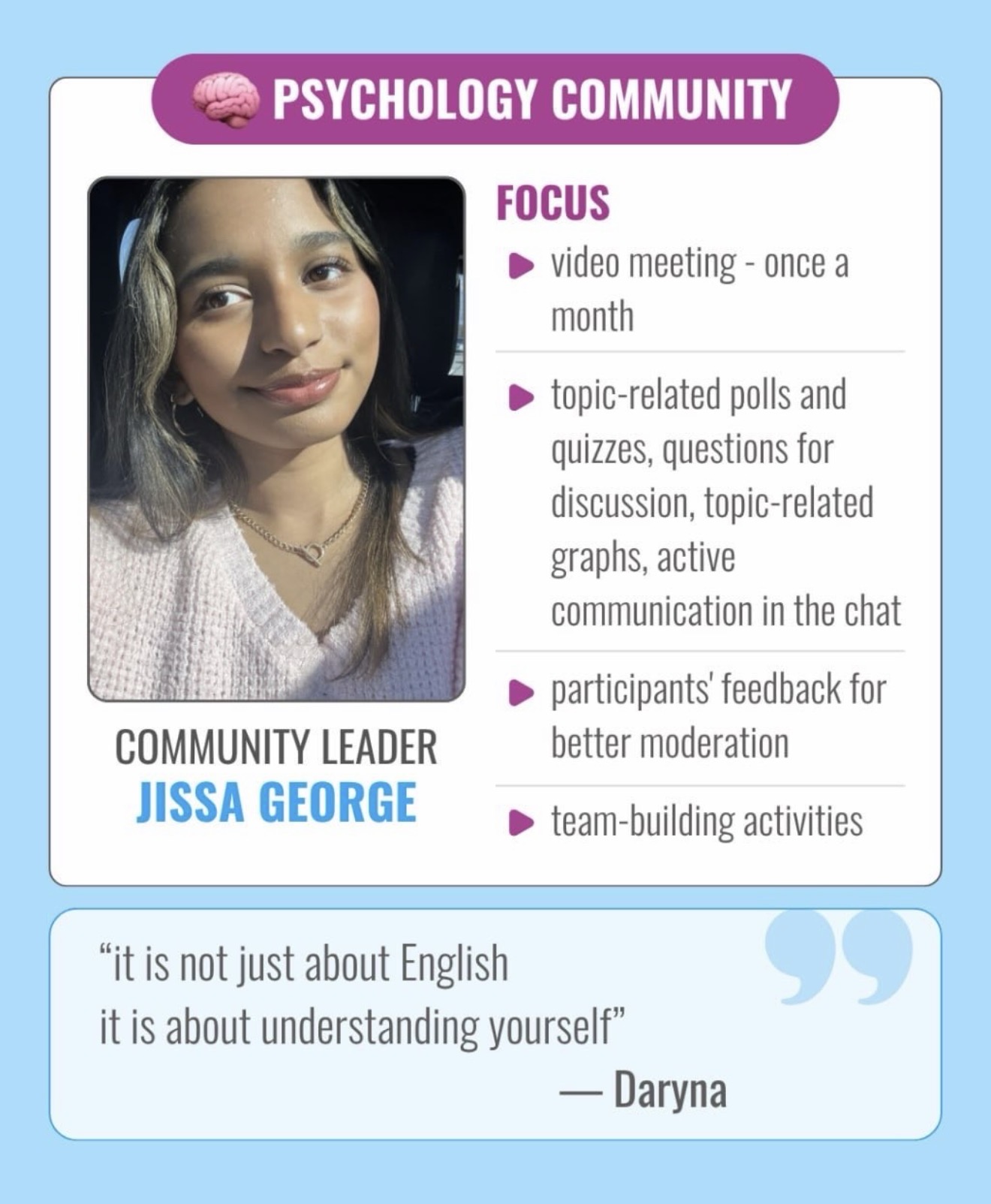
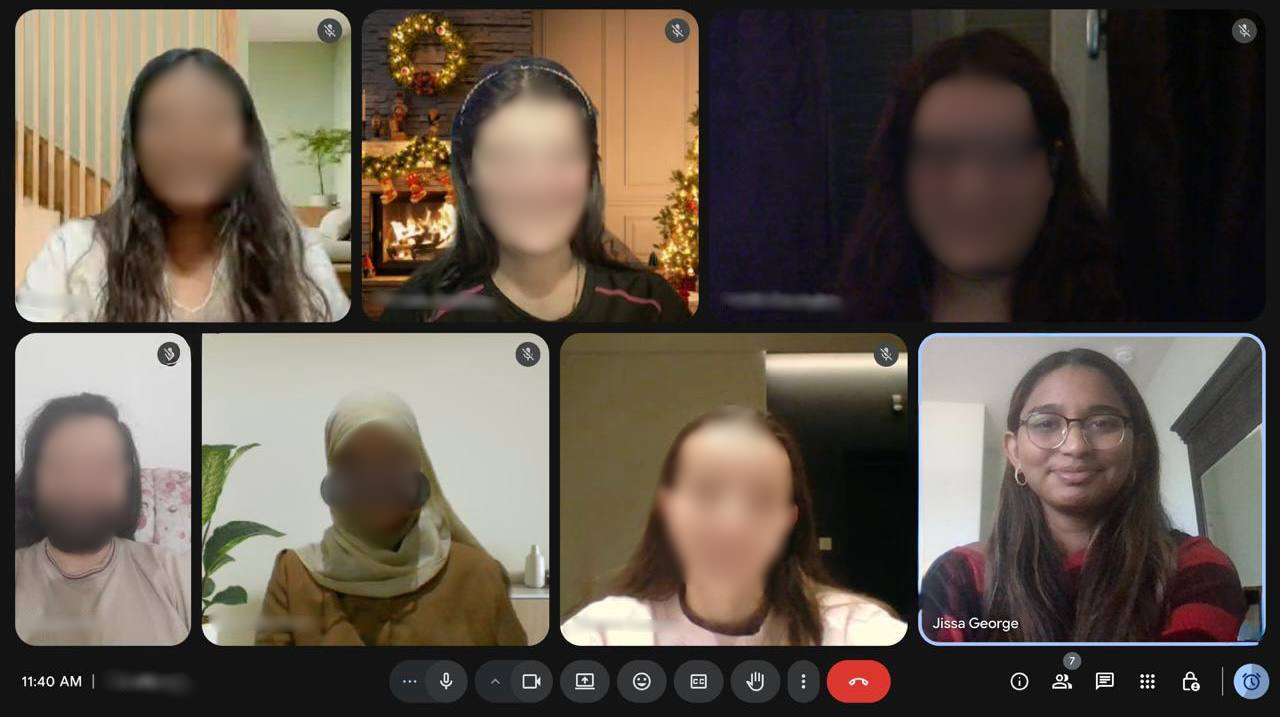
Thus, I wanted to create opportunities for even more students to practice English and get to know more people. I began leading ENGin’s Psychology Community, which is an international discussion group where Ukrainian learners and ENGin volunteers can explore psychology and improve their English skills. I design and post multiple interactive activities each week. These include psychology tests, psychology media recommendations, general discussion prompts, and games. I typically host one video meeting per month but will often organize additional meetings to help my community, including mini meetings and collaborations with other ENGin communities.
Alright, so let’s dig a little deeper into the story – has it been an easy path overall and if not, what were the challenges you’ve had to overcome?
It has definitely not been a completely smooth road. One of the biggest challenges has been creating activities that make everyone feel included and comfortable participating. Since everyone in the community has different personalities and levels of confidence, I have had to think carefully about how to encourage people to participate without making anyone feel shy or left out. Part of that has been learning how to support members when they are dealing with something personal. Sometimes, someone may be quieter than usual or have something going on in their life, and I have had to learn how to be there for them while also respecting their space.
Personally, I have also had to learn how to balance this responsibility with being a student and managing my own schoolwork and personal life. There have been times when it was difficult to keep up with everything, but those experiences have taught me how to manage my time and adapt when things do not go as planned.
Appreciate you sharing that. What else should we know about what you do?
I lead ENGin’s Psychology Community, an international discussion group where Ukrainian learners and ENGin volunteers can explore psychology while improving their English skills. A large part of my work is creating ways for people to actively participate. I design and post multiple interactive activities each week, including and not limited to psychology tests, psychology media recommendations, discussion prompts, games, and other activities that encourage members to share their perspectives. I also organize monthly video meetings where we discuss psychology topics in depth but will often organize additional mini meetings and collaborations with other ENGin communities as well. I was the first to organize a collaboration between the Psychology Community and the former NeuroLab community, and I now frequently organize collaborations with the Book Club community. For example, we recently held a collaboration where both communities read the book Surrounded by Idiots.
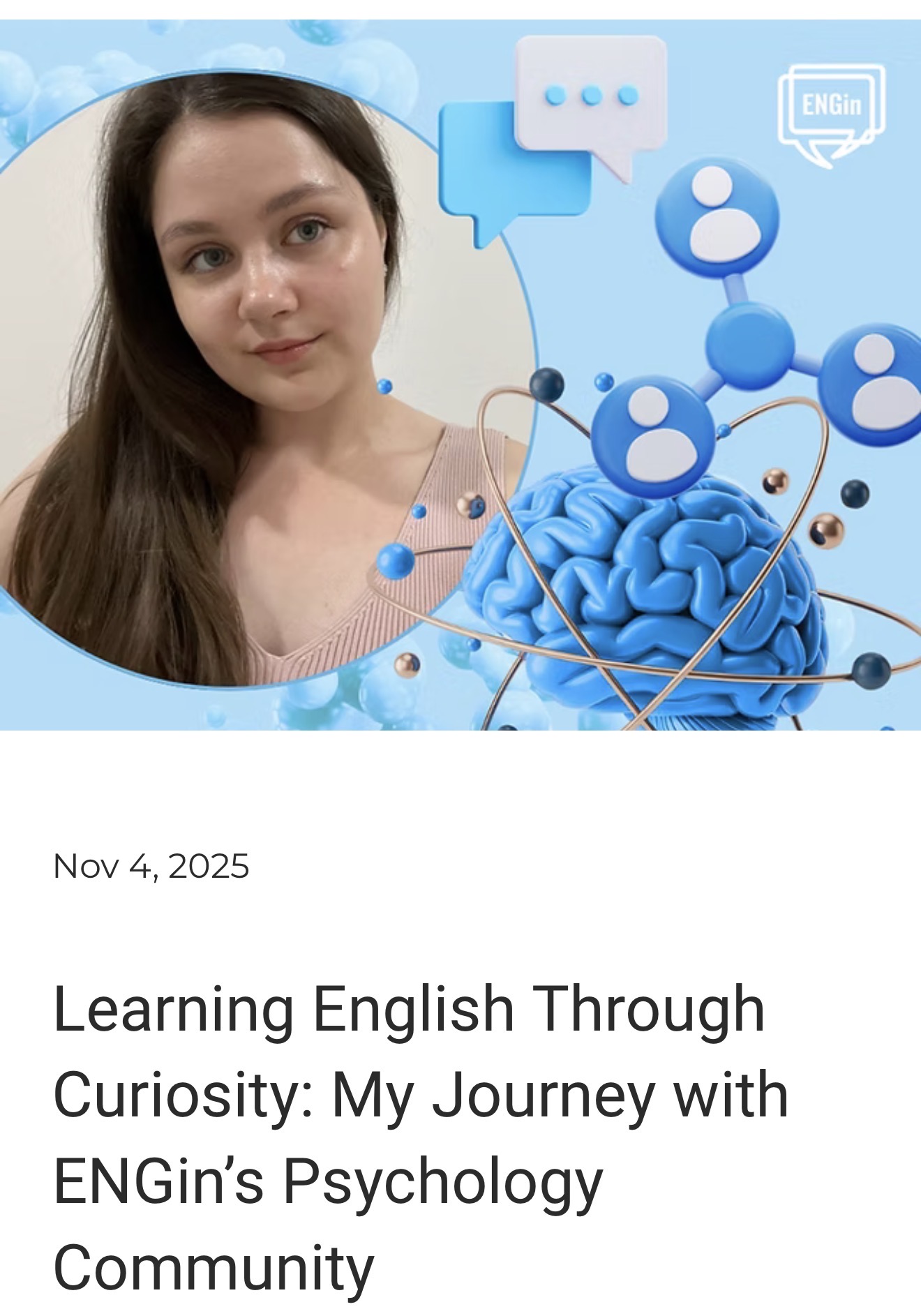
I am most proud when my members begin to independently create English opportunities for themselves. Two of my members, Daryna and Victoria, wrote blog posts published on ENGin’s blog about their experiences in the community. Another member, Nora, proposed and presented her own meeting on positive psychology. Seeing members improve so greatly in their confidence and skills is one of the biggest measures of success for me. What sets my work apart is that I care about making people feel included, not just keeping a community active. I try to pay attention to different interests, and comfort levels so that people who may initially be shy still feel like they have a place to participate.
What makes you happy?
I love learning about the people I meet and discovering more about Ukraine and its culture. I have enjoyed learning about Ukrainian holidays and traditions. For example, Ukraine’s Independence Day is celebrated on August 24, and I have learned about Kupala Night which is a traditional summer celebration that takes place around the summer solstice. During the celebration, people gather near water, make pretty flower wreaths, light bonfires, and participate in other customs connected to nature and love which I think is a beautiful custom. I also love learning about Ukrainian food because there is often so much history behind it. One example is pies with viburnum. Virburnum is a plant with bright red berries and I learned that viburnum was traditionally collected after the first frost, when the cold would reduce the berry’s natural bitterness, and it was used both for its perceived health benefits and as a filling for pies. Learning little details like this makes the culture feel much more alive to me.
I have also enjoyed learning about Kyiv cake, one of Ukraine’s most famous desserts and a symbol of the country’s capital. I found its history especially interesting because the recipe dates back to the 1950s and the cake eventually became a popular delicacy and souvenir. During the Soviet era, it was so sought after that people in Kyiv could reportedly line up as early as 4 a.m. to buy one.
Every conversation gives me another opportunity to understand more about Ukraine, and what makes the culture so special. I think that has been one of the most unexpected and fulfilling parts of my experience with ENGin.
Pricing:
- Free to join the program
- 150 UAH to join the community
Contact Info:
- Website: https://www.enginprogram.org/