






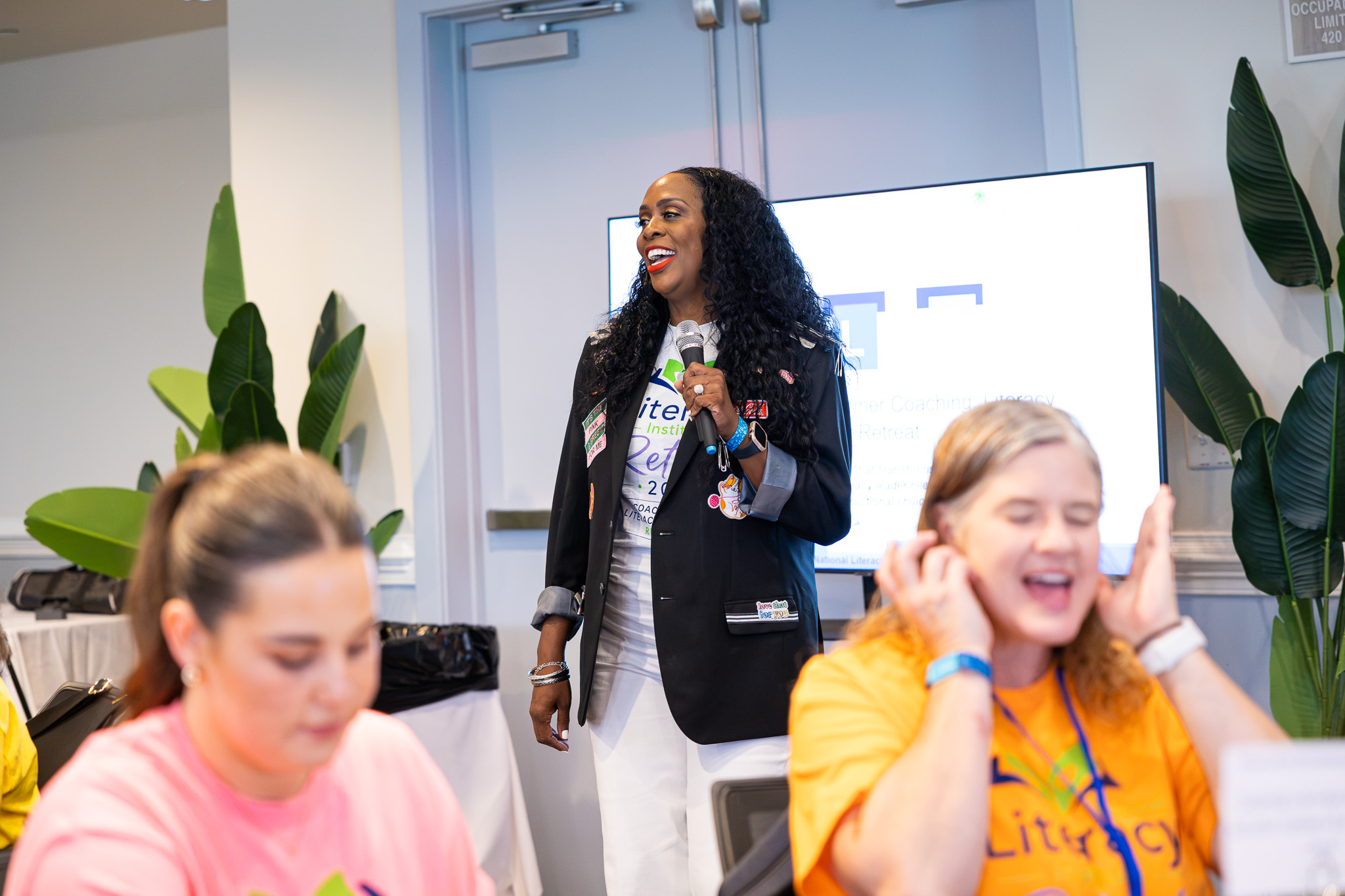
Today we’d like to introduce you to Ingrid Haynes.
Hi Ingrid, we’re thrilled to have a chance to learn your story today. So, before we get into specifics, maybe you can briefly walk us through how you got to where you are today?
My journey in education has always been driven by one belief: Literacy is not just about learning to read; it is about creating opportunities, transforming lives, and opening doors to a brighter future.
I began my career in education with a passion for helping students succeed, particularly those who struggled with reading and learning. Over the years, that passion grew into a mission to ensure that teachers and school leaders had the knowledge, strategies, and resources necessary to make a meaningful difference in children’s lives.
In 2003, I founded the National Literacy Institute (NLI) with a vision of transforming professional learning for educators. I recognized that teachers needed more than traditional professional development. They needed practical, research-based strategies they could take directly into their classrooms and use to improve student achievement. What began as a vision has grown into an organization that supports educators, schools, and districts across the country through conferences, professional development, instructional coaching, leadership training, and literacy certification programs.
Throughout my career, I have been fortunate to serve in many roles, including teacher, educational leader, university professor, and Associate Dean in higher education. I earned my Ph.D. in Linguistics and a master’s degree in Reading, which strengthened my understanding of how language, literacy, and learning intersect. My work has also given me opportunities to appear on national television, including multiple appearances on Dr. Phil, where I advocated for literacy and educational issues affecting children and families.
But my journey has not been without challenges. Building a business while balancing leadership responsibilities, navigating change, and creating opportunities in spaces where women and minority entrepreneurs are often underrepresented has required resilience, faith in my vision, and an unwavering commitment to my purpose.
Today, the National Literacy Institute continues to expand its reach through innovative initiatives such as our Science of Reading Train-the-Trainer Academy, national literacy conferences, leadership retreats, and professional learning experiences that connect literacy, mathematics, special education, and artificial intelligence. We have also expanded our mission through the NLI Center for Dyslexia & Literacy, providing direct support to children, families, and individuals who need specialized literacy instruction.
One of the most rewarding parts of my journey is seeing the ripple effect of our work. When we equip one teacher with effective literacy strategies, that teacher can impact hundreds of students throughout their career. When we strengthen one school leader, we can influence an entire campus. That is the power of education.
I am proud of what we have built, but I believe we are just getting started. My goal is not simply to grow a successful organization. I want to build a lasting legacy that empowers educators, creates opportunities for future leaders, and ensures that more children have access to the literacy instruction they deserve.
If there is one thing my journey has taught me, it is this: Your beginning does not determine your destination. With vision, perseverance, and a willingness to keep learning, you can turn your passion into a purpose that changes lives.
Can you talk to us a bit about the challenges and lessons you’ve learned along the way. Looking back would you say it’s been easy or smooth in retrospect?
Absolutely not. The road has been anything but smooth.
I built the National Literacy Institute while working in higher education, as a minority woman owner in an industry where few women like me lead consulting firms. In the early years I had to earn credibility and show that NLI could deliver the same quality as much larger organizations.
My biggest changes came with growth. When we began receiving grants, we also began operating on reimbursements. That means paying for the work first, then waiting to be repaid. It takes careful cash-flow planning, strong systems, and the discipline to keep delivering while you wait. Being a literacy expert did not prepare me for that. I had to learn budgets, contracts, and compliance as well.
Then we grew to more than one location, and I could no longer be in every room. I had to find trainers who are true experts in literacy, who know the research, can coach teachers, and represent NLI’s standards when I am not there. Finding and developing them is one of the hardest and most important parts of the work.
I have also learned that not everyone will understand your vision, and not everyone who starts the journey with you will finish it. I have had to rebuild, and those moments taught me resilience.
I would not change any of it. Success is not the absence of struggle. It is having the courage to keep going when the road looks different from what you imagined.
What reminds me why I started is watching educators gain confidence, school leaders transform their campuses, and children get the literacy support they deserve. If my story encourages another woman to start her business or step into leadership, then every challenge was worth it.
Appreciate you sharing that. What should we know about The National Literacy Institute?
The National Literacy Institute (NLI) is more than an educational professional development organization. It is a mission-driven business committed to transforming literacy instruction, empowering educators, strengthening school leadership, and creating opportunities for children and families to succeed.
I founded the National Literacy Institute in 2003 with a vision of closing the gap between educational research and what actually happens in classrooms. Over the years, we have grown into a national professional learning organization serving teachers, instructional coaches, principals, district leaders, and educational institutions across the United States.
What makes NLI different is that we don’t simply train educators—we equip them to transform instruction.
We specialize in the Science of Reading, dyslexia, structured literacy, mathematics instruction, special education, bilingual education, instructional coaching, school leadership, Multi-Tiered Systems of Support (MTSS), and artificial intelligence in education. Our services include professional development, comprehensive literacy audits, instructional coaching, leadership retreats, national conferences, and certification programs.
One of our signature programs is the Science of Reading Train-the-Trainer Academy, which prepares educators and instructional leaders to become literacy leaders within their own schools and districts. Rather than depending on outside consultants indefinitely, we help schools build their own internal expertise and capacity to sustain effective literacy practices.
We are also known for creating engaging, high-energy professional learning experiences. I have always believed that professional development should be both rigorous and enjoyable. Teachers should leave our sessions with more than a certificate of attendance. They should leave with practical strategies, instructional resources, renewed confidence, and tools they can begin using immediately.
Our national conferences, including the Literacy Lit Education Explosion Conference, bring together educators and nationally recognized speakers to explore literacy, leadership, mathematics, innovation, and classroom application. We intentionally connect research with practice because our ultimate goal is not simply to increase teachers’ knowledge but to improve student outcomes.
Expanding Our Mission: The NLI Center for Dyslexia & Literacy
One of the developments I am most proud of is the opening of the NLI Center for Dyslexia & Literacy in Houston, Texas.
After spending years training educators and working with schools, I recognized another critical need: families were searching for specialized, individualized literacy support for their children, and many did not know where to turn.
I wanted to create a place where children who struggle with reading could receive the attention, encouragement, and evidence-based instruction they deserve.
The NLI Center for Dyslexia & Literacy was created to bridge that gap.
Our center provides specialized literacy tutoring, academic therapy, literacy assessments and screenings, and structured literacy support for learners experiencing difficulties with reading, spelling, decoding, fluency, and comprehension, including students with dyslexia.
We serve students from public schools, private schools, charter schools, and homeschool environments, while also recognizing that literacy challenges do not end with childhood. Adults who need literacy support are also part of our broader mission.
What makes our center unique is our commitment to combining research-based literacy instruction with individualized attention, family engagement, and innovative learning experiences.
We are creating an environment where literacy is not associated with frustration or failure but with discovery, confidence, and possibility. Our vision includes interactive technology, listening centers, literacy resources, and innovative learning tools that make reading development both purposeful and engaging.
I want families to know that a child who struggles to read is not a child who cannot learn. Sometimes, that child simply needs a different instructional approach, additional time, and someone who understands how to identify and address their learning needs.
Our goal is to help students become stronger readers while rebuilding their confidence and love of learning.
What Sets Our Brand Apart?
I believe the National Literacy Institute stands apart because we understand literacy improvement from multiple perspectives.
We work with district leaders who are responsible for schoolwide achievement. We support principals who must lead instructional change. We train teachers who are responsible for daily classroom instruction. And through our literacy center, we work directly with the children and families who experience the impact of those instructional decisions.
We see the entire literacy picture—from the district office to the classroom to the family.
That perspective allows us to design professional learning and literacy services that are practical, relevant, and responsive to real educational challenges.
We also believe that literacy improvement requires more than purchasing a curriculum or attending a workshop. It requires knowledgeable educators, strong leadership, consistent implementation, targeted intervention, and a shared commitment to student success.
What Am I Most Proud Of?
What makes me most proud is that the National Literacy Institute has grown from an idea into a brand that represents expertise, innovation, quality, and opportunity.
As a minority woman-owned business, I take tremendous pride in building an organization that creates opportunities for other educators, consultants, and aspiring leaders. I want NLI to be recognized not only for the quality of our services but also for the doors we open for others.
I am especially proud that we are expanding beyond professional development into direct literacy services for children and families. The NLI Center for Dyslexia & Literacy represents the next chapter of our mission and allows us to make an impact at an even more personal level.
When someone hears the name National Literacy Institute, I want them to think of an organization that delivers excellence, values relationships, embraces innovation, and genuinely cares about the success of educators and students.
Our mission is simple: Equip educators. Empower families. Transform literacy.
At the end of the day, I don’t want our legacy to be measured only by the number of conferences we host or educators we train. I want it measured by the number of teachers who become more effective, the number of school leaders who gain confidence, the number of families who find hope, and, most importantly, the number of children whose lives are changed because they learned to read.
That is the heart of the National Literacy Institute, and that is the legacy I am building.
In terms of your work and the industry, what are some of the changes you are expecting to see over the next five to ten years?
I believe the next five to ten years will bring one of the most significant transformations we have ever experienced in education. We are entering a time when literacy, artificial intelligence, personalized learning, and instructional leadership will intersect in ways that will fundamentally change how we teach and how students learn.
As someone who has spent more than two decades working in literacy education, I believe we are moving beyond simply asking whether students can read. We must begin asking whether students can comprehend, think critically, apply knowledge, solve problems, and successfully navigate a rapidly changing world.
One of the biggest shifts will be the movement from literacy awareness to literacy accountability. For years, educators have discussed the importance of the Science of Reading. Over the next decade, I believe schools will be expected to demonstrate how that research translates into daily instruction and measurable student growth. It will no longer be enough to purchase a new reading curriculum or send teachers to a one-day workshop. Schools will need sustainable literacy systems, knowledgeable teachers, effective intervention, and strong instructional leadership.
I also believe we will see a greater emphasis on literacy across every grade level and subject area. Literacy cannot remain the responsibility of elementary reading teachers alone. Middle and high school teachers, including mathematics, science, and social studies educators, must understand how vocabulary, language, comprehension, and disciplinary literacy influence student achievement. Every teacher has a role in developing stronger readers and thinkers.
Another major transformation will be the integration of artificial intelligence into education. I believe AI has the potential to become one of the most powerful tools available to educators when used responsibly. It can support instructional planning, differentiation, formative assessment, and the development of individualized learning resources. However, technology will never replace the importance of knowledgeable, caring, and highly skilled teachers. The future belongs to educators who know how to combine human expertise with technological innovation.
Dyslexia identification and intervention will also become increasingly important. Too many children continue to struggle with reading without receiving timely, appropriate support. I anticipate greater demand for early screening, structured literacy instruction, individualized intervention, and specialized literacy services. This is one of the reasons we expanded our work through the NLI Center for Dyslexia & Literacy. I believe families will increasingly seek specialized support that complements what their children receive in school.
I also see a major shift in how we approach professional development. The traditional model of attending a workshop, receiving a certificate, and returning to school without continued support is no longer sufficient. The future of professional learning will focus on implementation, coaching, measurable outcomes, and building expertise within schools. Educators will need ongoing opportunities to practice, reflect, collaborate, and refine their instruction.
At the National Literacy Institute, we are already preparing for these changes through our Science of Reading Train-the-Trainer Academy, leadership development, literacy coaching, AI professional learning, and specialized dyslexia services. Our goal is to help schools move from depending on occasional outside training to developing knowledgeable educators and sustainable instructional systems.
Perhaps the greatest shift I anticipate is a growing recognition that literacy is not just an educational issue; it is an economic, workforce, and community issue. When individuals cannot read proficiently, their opportunities for employment, higher education, financial independence, and full participation in society can be limited. Improving literacy is therefore not just about raising test scores. It is about strengthening families, communities, and future generations.
As I look toward the next decade, I see tremendous opportunity, but I also see tremendous responsibility. We must ensure that innovation does not leave our most vulnerable students behind. Access to effective literacy instruction, specialized intervention, and emerging technologies should not depend on a family’s income or ZIP code.
My vision is for the National Literacy Institute to remain at the forefront of this transformation—not simply responding to changes in education, but helping lead them.
I want us to continue preparing teachers, empowering school leaders, supporting families, and creating innovative solutions that make high-quality literacy instruction accessible to more learners.
The future of education will not be defined by how much technology we introduce or how many new programs we purchase. It will be defined by how effectively we use our knowledge, resources, and innovation to change the lives of students.
And I believe literacy will remain at the center of that transformation.
Pricing:
- National Literacy Institute (NLI) – Programs & Services Professional Development for Educators: Pricing varies based on the workshop, delivery format, and school or district needs. Science of Reading Train-the-Trainer Academy: Starting at $1,956 per participant. Includes specialized literacy training, instructional resources, and implementation support. National Literacy Conferences: Individual and group registration options are available. Schoolwide Professional Development: Customized pricing for schools and districts, including literacy, dyslexia, mathematics, instructional leadership, and artificial intelligence training. Comprehensive Literacy Audits & Instructional Coaching: Customized pricing based on the scope of services. NLI Center for Dyslexia & Literacy – Houston, Texas Individualized Literacy Tutoring & Academic Therapy: $1,000 per month, including two 90-minute sessions per week. Initial Consultation: $75. Literacy Screenings & Assessments: Contact the center for current pricing and availability. Services Available: Specialized literacy support for children, homeschool students, and adults experiencing reading difficulties. For additional information, registration, or customized service quotes: National Literacy Institute www.thenationalliteracyinstitute.com NLI Center for Dyslexia & Literacy www.nlidyslexiaandliteracy.com Pricing is subject to change based on program dates, services, and availability.
Contact Info:
- Website: https://www.thenationalliteracyinstitute.com/
- Instagram: https://www.instagram.com/thenationalliteracyinstitute/
- LinkedIn: https://www.linkedin.com/in/ingrid-haynes-ph-d-973a67122