




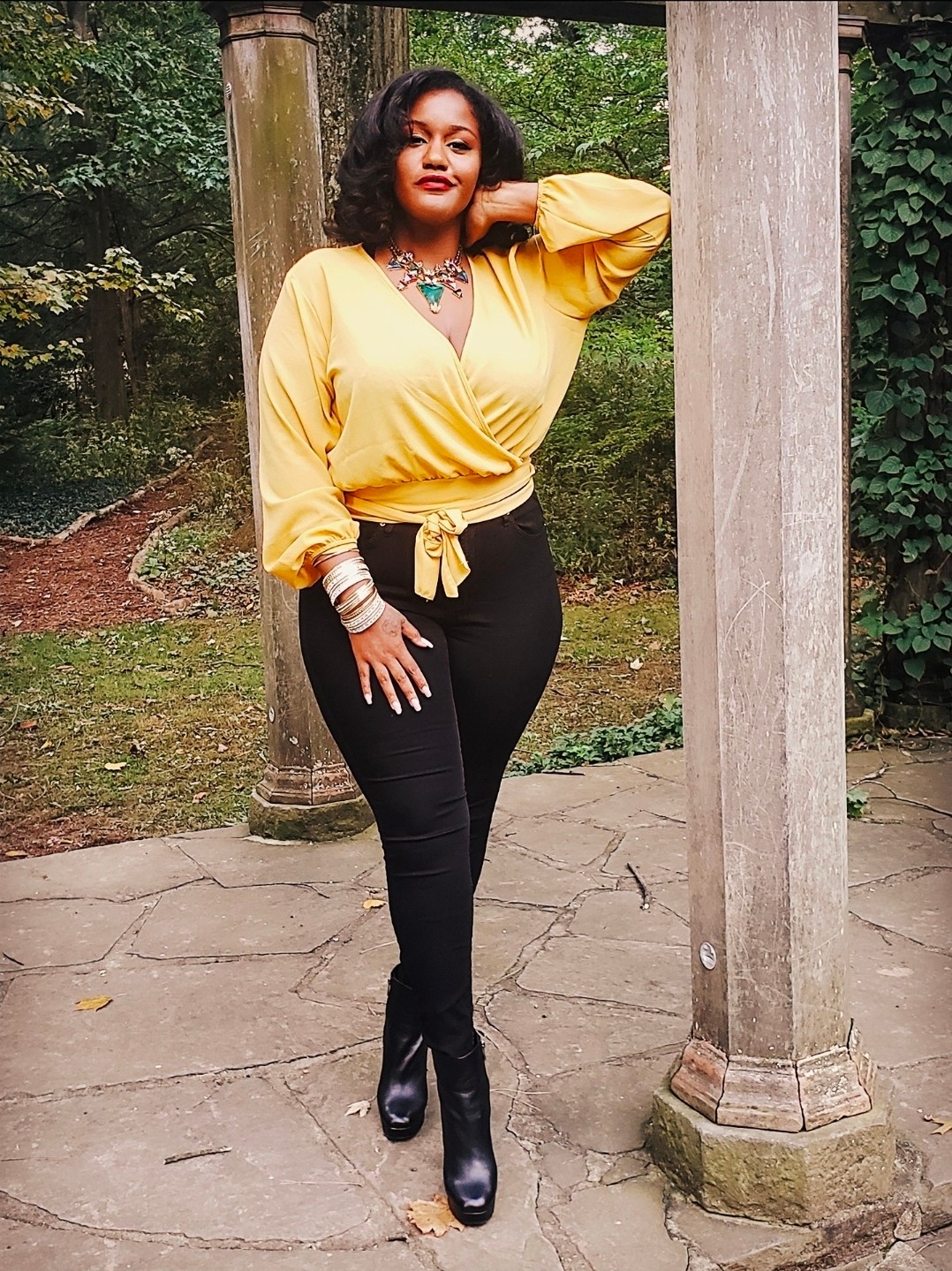
Today we’d like to introduce you to Nidja Fisher.
Hi Nidja, we’re thrilled to have a chance to learn your story today. So, before we get into specifics, maybe you can briefly walk us through how you got to where you are today?
My name is Nidja Fisher, and I am the founder and owner of Maverick Handmade Goods LLC, an independently owned beauty and personal care company rooted in East Orange, New Jersey. My journey into entrepreneurship did not begin with a business degree, financial backing, or a perfectly executed business plan. It began with frustration, curiosity, and the realization that sometimes the solution you’re searching for is something you have to create yourself.
For years, I struggled with dry scalp, dandruff, and maintaining the health of my hair. After a particularly unfortunate hair experience left me having to cut a significant amount of it off, I found myself questioning not only the products I was using but the beauty industry’s approach to women with hair like mine. Black women spend considerable amounts of time, energy, and money caring for our hair, yet our concerns have historically been misunderstood, overlooked, or reduced to marketing opportunities. I wanted something different. I wanted to understand the ingredients, their purpose, and what it meant to nourish my hair rather than simply make it appear healthy.
That curiosity led me into researching botanical ingredients, traditional herbal practices, and oils used across different cultures. I began experimenting with formulations, learning about the properties of individual ingredients, and developing what would eventually become Goddess Mane Hair Food Oil, the flagship product of Maverick Handmade Goods.
What started as a personal pursuit gradually became something much more meaningful. Friends began expressing similar frustrations with their scalps, hairlines, and overall hair care experiences. I shared my formulation with them, listened to their feedback, and realized that the problem I was addressing extended well beyond my own bathroom mirror. There was a community of women looking for products developed with intention, transparency, and an understanding of their needs.
I began introducing Goddess Mane to customers in my East Orange community. Eventually, I secured retail placement at Olive May Health Foods, a local establishment that gave my product an opportunity to exist beyond direct sales. That milestone meant a great deal to me. It was tangible evidence that something I had created independently could earn space on a retail shelf. I later expanded into Newark through a trial placement with Corona Health Foods.
Meanwhile, I was learning the less glamorous but equally important side of entrepreneurship: product sourcing, packaging, pricing, wholesale relationships, barcode registration, regulatory responsibilities, e-commerce, and brand development. I obtained an official GS1 barcode, invested in professionally printed labels, explored wholesale distribution, and transitioned from a third-party storefront to my company’s own e-commerce website, www.maverickhandmadegoods.com.
None of this happened without sacrifice. I have had to balance employment, motherhood, financial responsibilities, and the considerable expense of building a product-based business. There is a particular kind of discipline required when you are financing your ambitions with money you cannot afford to waste. Every bottle, every ingredient, every label, and every business decision has required me to think beyond immediate gratification.
One lesson entrepreneurship has taught me is that passion may inspire a business, but discipline is what gives it the opportunity to survive.
The name Maverick was intentional. To me, it represents independence, unconventional thinking, and the courage to challenge expectations. I did not establish this company to become another name in an already crowded beauty market. I established it because I believe there is room for businesses that approach beauty with greater cultural understanding, thoughtful formulation, and respect for the customer.
I am especially passionate about creating products that speak to Black women and women of color, while recognizing that the desire for healthier hair, quality ingredients, and intentional self-care transcends race. I refuse to believe those two objectives are mutually exclusive. A brand can honor the community that inspired its creation without limiting who it welcomes.
Today, Maverick Handmade Goods is still a growing company, and I am proud to say that. I have no interest in manufacturing an illusion of overnight success. My accomplishments may appear modest compared with established corporations, but each represents a foundation I have built through persistence, research, financial sacrifice, and personal conviction.
My vision extends beyond Goddess Mane. I intend to develop Maverick into a broader beauty and personal care company offering thoughtfully formulated products, strengthening relationships with independent retailers, and eventually expanding into larger distribution opportunities.
I want Maverick Handmade Goods to represent more than an entrepreneurial success story. I want it to demonstrate what happens when a woman takes ownership of her experiences, recognizes an opportunity, and refuses to let limited resources determine the limits of her ambition.
I did not begin this journey with everything I needed. I began with what I had, learned what I didn’t know, and built from there. And I am nowhere near finished.
Alright, so let’s dig a little deeper into the story – has it been an easy path overall and if not, what were the challenges you’ve had to overcome?
Smooth? Absolutely not. And I would be doing aspiring entrepreneurs a disservice if I pretended otherwise.
One of the most misleading narratives surrounding entrepreneurship is the idea that determination alone guarantees success. We celebrate the entrepreneur who starts with nothing and builds an empire, but we rarely examine what that person had to sacrifice, what opportunities were unavailable to them, or how many promising businesses never survived simply because their founders lacked financial resources.
As a Black woman, a mother, and an independent business owner, I have learned that having a vision and having the resources to execute that vision are two entirely different things.
My greatest obstacle has been access to capital. Maverick Handmade Goods is largely self-funded, which means that virtually every stage of development competes with the financial responsibilities of everyday life. Sourcing quality ingredients, purchasing packaging, developing professional branding, maintaining a website, and preparing products for retail distribution all require money long before they generate meaningful revenue.
There have been moments when I knew exactly what my business needed next but lacked the immediate financial flexibility to make it happen. That is an incredibly frustrating position for an entrepreneur because the obstacle is not necessarily a lack of knowledge, effort, or ambition. Sometimes, it is simply a lack of access.
And that raises a larger question: How many potentially extraordinary businesses are we overlooking because their founders cannot afford the cost of being discovered?
Another challenge has been navigating an industry where knowledge is often treated as a commodity. Understanding regulatory requirements, wholesale pricing, manufacturing standards, supplier relationships, and retail expectations requires substantial research. When you cannot afford to hire consultants for every aspect of your business, you become the researcher, purchasing department, marketing director, accountant, customer service representative, and chief executive officer simultaneously.
That level of responsibility can be empowering, but it can also be exhausting.
There is also an emotional challenge that receives far too little attention. Building a business requires believing in something that other people cannot yet see. You have to make decisions without guarantees, invest money without knowing exactly when it will return, and continue showing up even when the results do not reflect the effort you have invested.
I have also had to confront the difference between receiving encouragement and receiving tangible support. People may admire entrepreneurship in theory, but admiration does not purchase inventory, establish distribution channels, or sustain a company through a difficult financial period. I have learned to appreciate genuine encouragement while understanding that the responsibility for developing a sustainable business ultimately rests with me.
Perhaps the most difficult lesson has been learning that I cannot approach every opportunity from a place of urgency. When resources are limited, there is a temptation to rush, accept unfavorable arrangements, or compromise simply to move forward. But I have become increasingly protective of the integrity of my business. Growth means very little if achieving it requires abandoning the standards that motivated you to begin.
I am still learning. I am still navigating challenges. And there are certainly areas where I need greater resources, stronger professional relationships, and additional business education.
However, I refuse to romanticize struggle. I do not believe suffering is a prerequisite for deserving success, nor do I believe that entrepreneurs should be expected to exhaust themselves to prove their commitment.
What these challenges have given me is perspective. I have become more deliberate about financial decisions, more selective about opportunities, and more conscious of the importance of building a business that can eventually operate beyond my individual labor.
My ambition is not simply to become successful despite these obstacles. It is to build a company substantial enough that I can eventually create opportunities for others who possess the talent and determination but lack the access.
Resilience may have helped me start Maverick Handmade Goods, but I have no intention of building a business whose survival depends on my ability to struggle indefinitely. My objective is sustainability, ownership, and generational opportunity.
We’ve been impressed with Maverick Handmade Goods, but for folks who might not be as familiar, what can you share with them about what you do and what sets you apart from others?
Maverick Handmade Goods LLC is an independently owned beauty and personal care company based in East Orange, New Jersey. We specialize in botanical-inspired hair care, with a particular emphasis on scalp nourishment, thoughtful ingredient selection, and the unique experiences of consumers whose needs are not always adequately represented within the mainstream beauty industry.
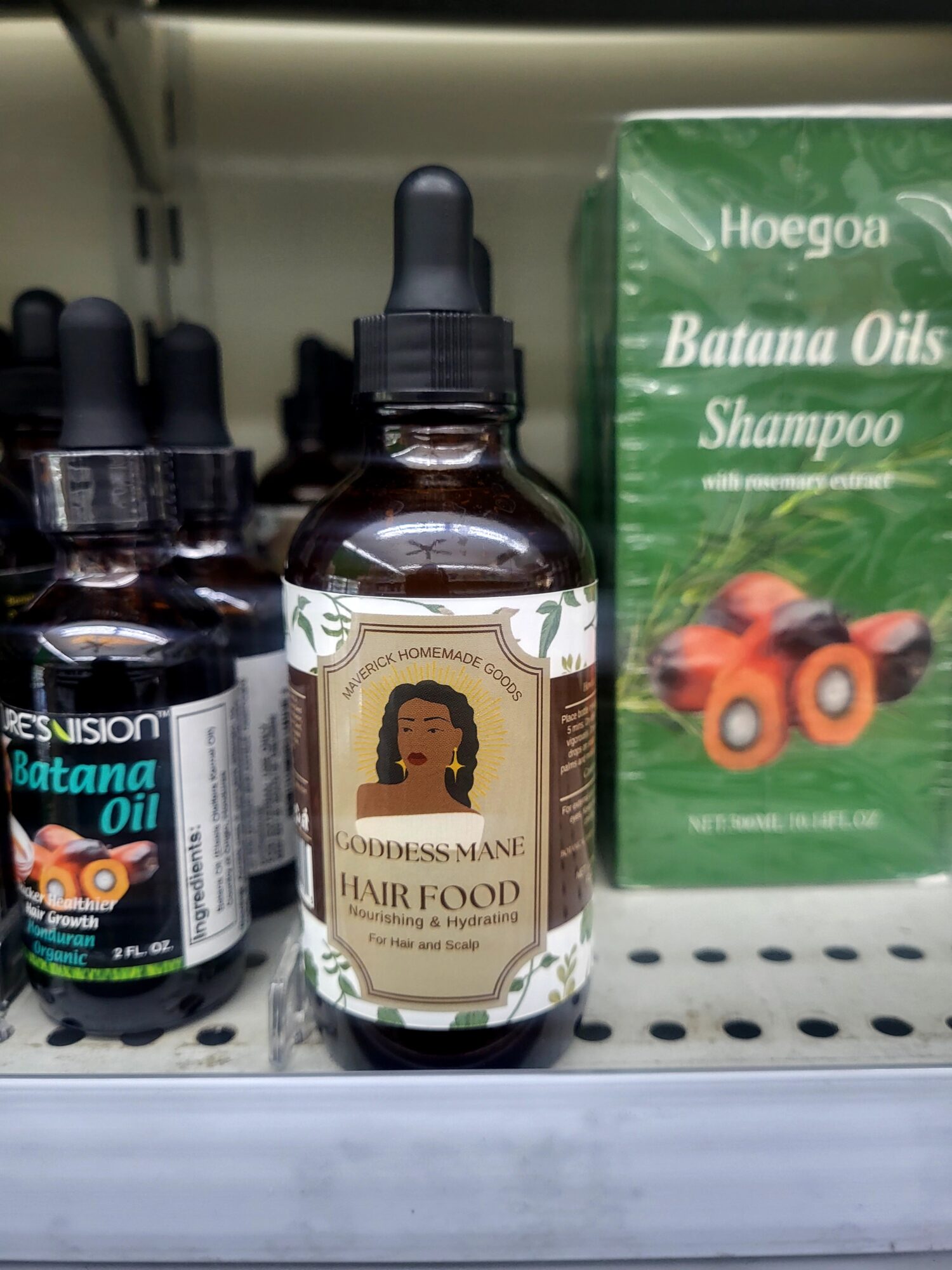
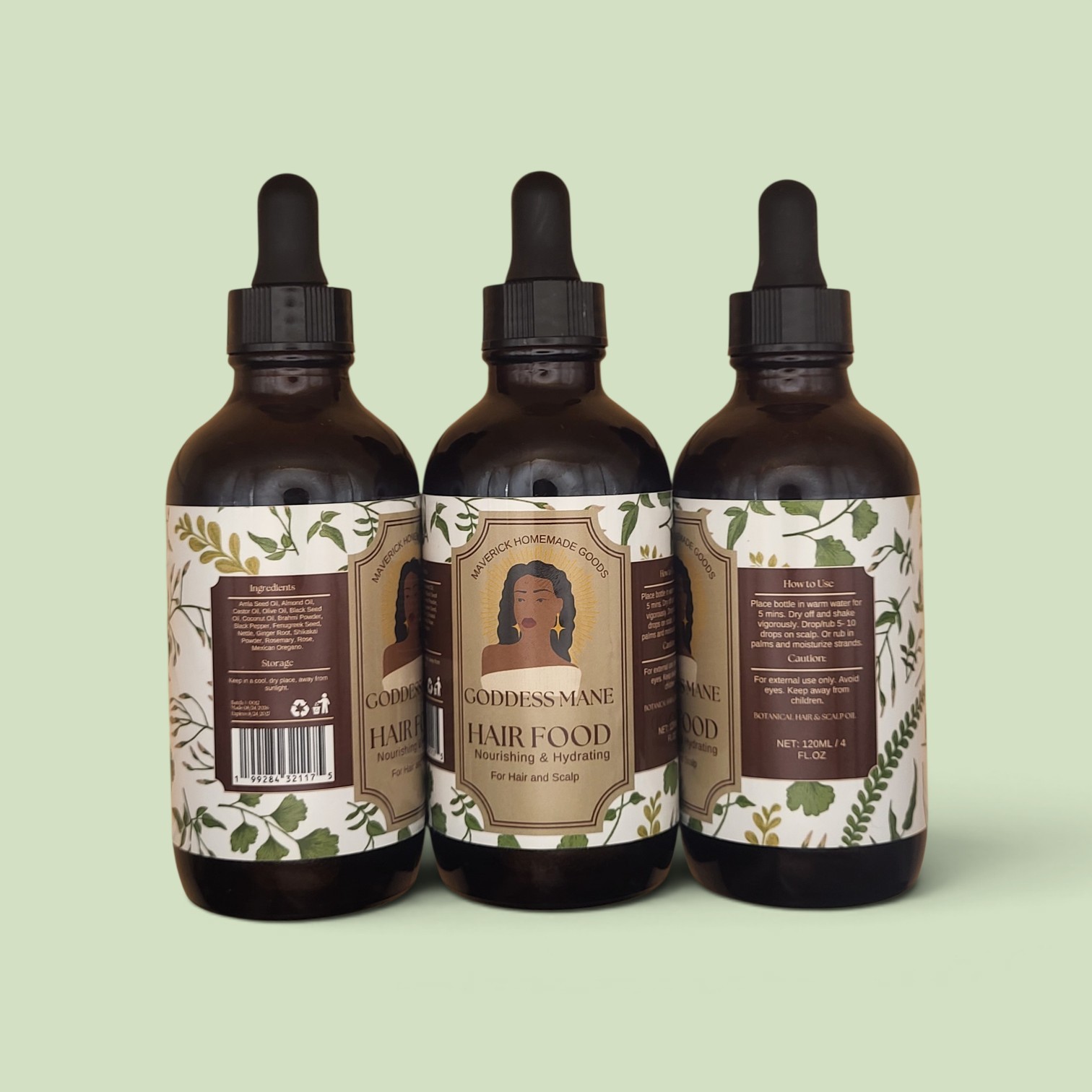
Our flagship product, Goddess Mane Hair Food Oil, is a carefully developed botanical oil blend created to nourish the scalp, condition the hair, improve softness and manageability, and support healthier hair care routines. Although our brand has a strong connection to Black women and women of color, our products are intended to be inclusive. Healthy hair care should not be treated as a privilege reserved for a particular demographic.
What distinguishes Maverick Handmade Goods is our philosophy surrounding formulation, patience, and intentionality. We do not believe that creating a quality product should be reduced to combining fashionable ingredients and attaching an attractive label.
Our approach begins with researching botanical ingredients and understanding how they complement one another. Goddess Mane incorporates oils such as amla, almond, coconut, olive, Jamaican black castor, black currant, and tea tree, alongside our broader botanical formulation. These ingredients are selected with consideration for their conditioning properties and their roles within a comprehensive hair care routine.
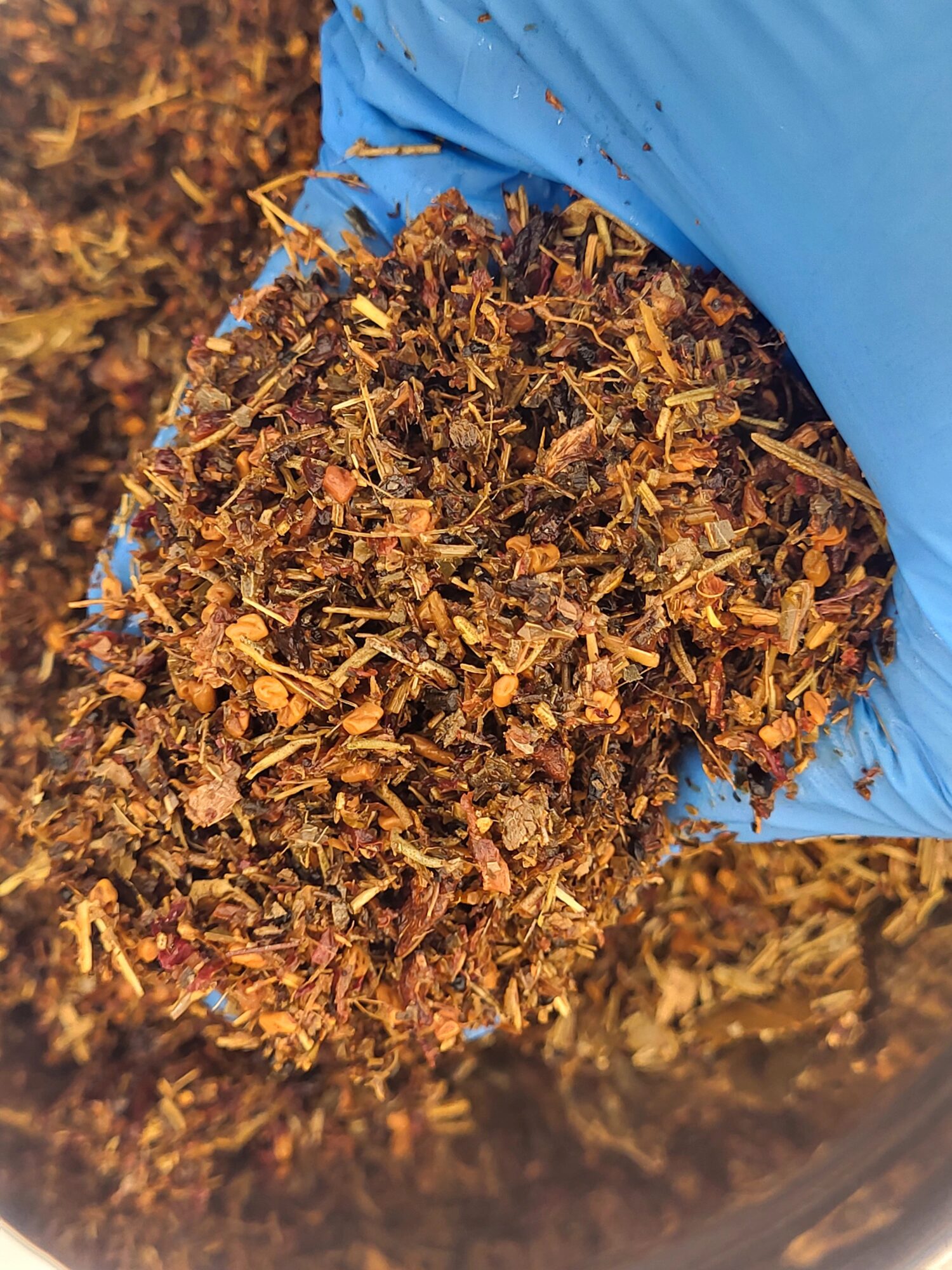
One of the most distinctive elements of our production process is our extended herbal infusion period. After a carefully controlled, low-temperature infusion process, our botanical blends are allowed to rest for approximately three months before bottling. This is a deliberate part of our formulation practice, reflecting our preference for a measured, patient approach rather than rushing products into inventory simply to meet commercial demand.
In a marketplace increasingly driven by instant gratification, I believe there is value in respecting the process behind what we create. Efficiency matters in business, but it should never become an excuse to abandon intentionality.
Another defining characteristic of Maverick is our commitment to treating hair care as an experience of personal investment rather than merely a cosmetic obligation. For many Black women, hair carries cultural, historical, and emotional significance. It can represent identity, self-expression, family traditions, and personal confidence. I believe companies operating within this space should understand that relationship instead of viewing textured hair exclusively as a profitable market segment.
At the same time, I am careful not to confuse cultural relevance with commercial limitation. Maverick Handmade Goods is a business with ambitions that extend beyond a single community, retail location, or product category. Our identity is rooted in a specific experience, but our commitment to quality, inclusivity, and thoughtful self-care has a much broader appeal.
I am especially proud of our progress in independent retail. Goddess Mane has earned shelf space at Olive May Health Foods in East Orange, and we have expanded our retail efforts through a trial placement at Corona Health Foods in Newark. These relationships matter because independent neighborhood retailers are an important part of local economic ecosystems. They offer emerging businesses opportunities to establish credibility and build genuine relationships with customers.
We have also invested in the professional infrastructure necessary for future growth, including GS1 barcode registration, updated product labeling, wholesale development, and our independent e-commerce platform at www.maverickhandmadegoods.com. Customers can purchase directly through our website, where we offer payment options including PayPal and Klarna.
What makes me most proud, however, is the identity we are establishing. Maverick is not a brand built around the idea that consumers must feel inadequate before they can appreciate our products. I am not interested in convincing women that their natural hair is a problem requiring correction. I am interested in creating products that help them care for what they already possess.
That distinction matters to me.
The beauty industry has spent decades profiting from insecurity, unrealistic expectations, and constantly changing standards of attractiveness. I believe there is an opportunity for a different kind of relationship between beauty brands and consumers: one grounded in education, transparency, informed choices, and respect.
As we grow, our vision includes expanding into additional hair, beauty, and personal care offerings, developing stronger wholesale partnerships, and establishing a greater presence in independent and eventually larger retail environments. I want customers to recognize Maverick Handmade Goods not simply for one successful product but for a consistent philosophy that carries across everything we create.
We remain a developing company, and I consider that an advantage in certain respects. It allows us to listen closely to customers, refine our approach, remain connected to our community, and make decisions without losing sight of the principles that define us.
Ultimately, I want readers to understand that Maverick Handmade Goods represents both craftsmanship and commercial ambition. We take pride in the care behind our formulations, but we are equally serious about building a sustainable, competitive company.
Being handmade speaks to how we create. It does not define the limits of how far we intend to go.
That is the distinction I want Maverick Handmade Goods to embody.
Do you have any advice for those just starting out?
My first piece of advice is to understand that entrepreneurship is not an escape from responsibility. It is an invitation to take on responsibilities you may not even know exist yet.
I think social media has created a dangerously romanticized perception of business ownership. We see the beautiful packaging, impressive sales announcements, luxury lifestyles, and celebratory milestones, but rarely the financial statements, rejected proposals, regulatory complications, or countless hours spent figuring out things nobody taught us.
If I could tell someone just starting out anything, it would be this: **Do not fall in love with the image of being an entrepreneur more than you fall in love with the responsibility of building a business.**
One thing I wish I had understood earlier is how essential financial literacy is to entrepreneurship. Revenue is not profit. Being busy does not necessarily mean being productive, and having customers does not automatically mean your business is financially healthy. You must understand your expenses, margins, pricing structure, taxes, and cash flow. Otherwise, you can find yourself operating a business that appears successful publicly while struggling privately.
I would also encourage new entrepreneurs to become comfortable with asking questions, particularly questions they may feel embarrassed not knowing the answers to. There is no shame in being unfamiliar with wholesale distribution, business financing, intellectual property, or regulatory compliance. The shame would be allowing pride to prevent you from learning.
I am still educating myself in many of these areas. Entrepreneurship has forced me to develop a level of resourcefulness and intellectual curiosity that I might never have cultivated otherwise.
Another lesson is to be extremely intentional about the people you allow to influence your decisions. Not everyone offering advice has experience building what you are attempting to create. Some people will project their limitations onto your ambitions, while others will encourage you without understanding the practical work involved. Learn to distinguish constructive criticism from discouragement and genuine expertise from confident opinions.
I also believe new entrepreneurs need to stop measuring their progress against businesses operating with entirely different resources. A founder financing operations independently should not expect to move at the same pace as a company with investors, employees, established distribution networks, and substantial marketing budgets. Comparison without context is one of the quickest ways to undermine your confidence and make poor decisions.
However, I would caution against using limited resources as a permanent justification for remaining stagnant. Work with what you have, but constantly educate yourself about what you will need to reach the next level. There is a difference between accepting your current circumstances and allowing those circumstances to define your future.
I also wish more people discussed the importance of protecting your work. Learn about trademarks, contracts, product liability, business registration, and the legal responsibilities associated with your industry. A good product or brilliant idea is not a substitute for a properly structured business. Building something valuable without understanding how to protect it can leave you unnecessarily vulnerable.
Perhaps my most important advice is to develop a healthy relationship with failure. Not every opportunity will materialize, not every investment will produce the expected return, and not everyone will recognize your vision. Sometimes you will make decisions that cost you money. Sometimes you will have to admit that your original strategy was wrong.
Your ability to evaluate those experiences without allowing them to destroy your confidence is essential.
And please, do not confuse exhaustion with achievement. I believe in working hard, but I reject the idea that entrepreneurs must sacrifice their health, relationships, and personal well-being to prove that they deserve success. A business should eventually create greater possibilities for your life, not permanently consume every aspect of it.
Finally, I would tell anyone starting out to take themselves seriously before expecting the world to do so. Conduct your research. Document your progress. Honor your commitments. Treat customers with respect. Be accountable when you make mistakes. Learn how to negotiate, how to say no, and how to recognize opportunities that do not align with your long-term interests.
You do not need to have everything figured out before you begin. But you do need to be willing to evolve beyond the person who initially had the idea.
I am not speaking from the perspective of someone who has mastered entrepreneurship. I am speaking as someone actively experiencing its demands, learning from its challenges, and becoming a more disciplined businesswoman because of them.
My advice is simple: Be ambitious enough to begin, humble enough to learn, disciplined enough to continue, and intelligent enough to know that passion alone will never replace preparation.
A business is not built on how badly you want to succeed. It is built on what you are willing to learn, improve, and consistently execute to make success possible.
Pricing:
- Goddess Mane Hair Food Oil — 4 oz bottle: $25.99
- Wholesale inquiries: Available to qualifying retail partners upon request.
Contact Info:
- Website: https://Www.maverickhandmadegoods.com
- Instagram: https://www.instagram.com/themaverickhandmade?vrfl=MXU4MWR5eTI1anRtZA==
- Facebook: https://www.facebook.com/share/19odRZakmt/