



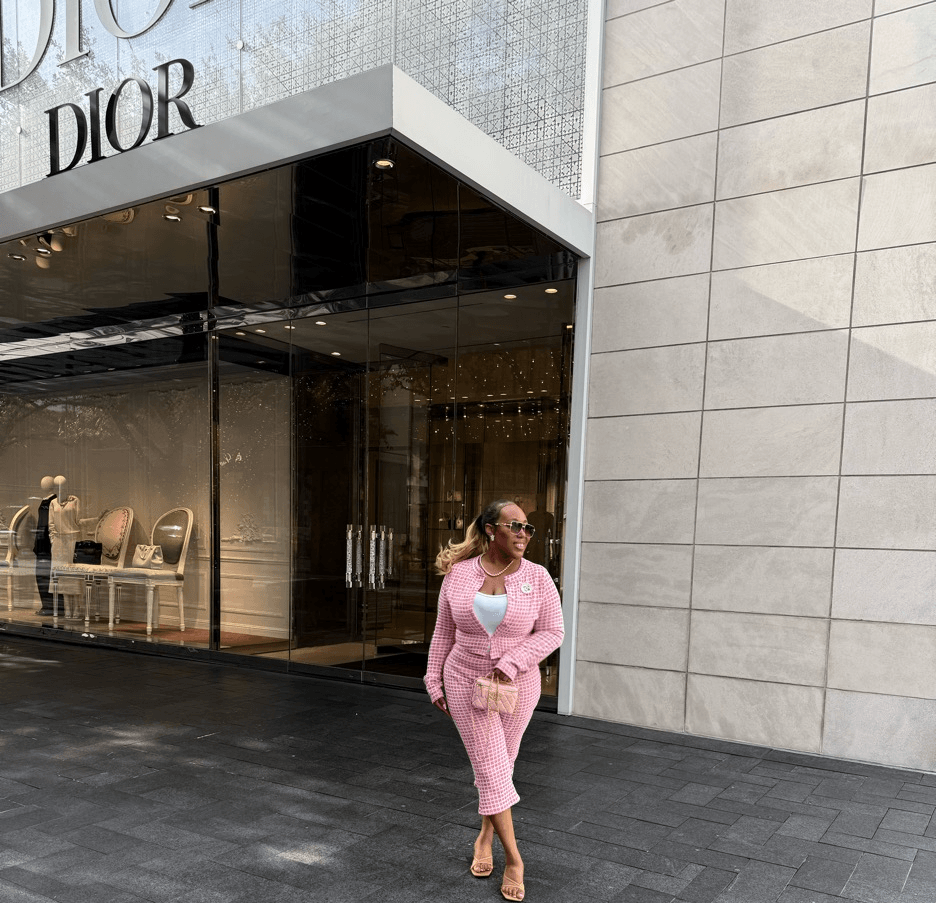
Today we’d like to introduce you to Jazzilyn Simmons.
Hi Jazzilyn, thanks for sharing your story with us. To start, maybe you can tell our readers some of your backstory.
I have a habit of seeing a gap and deciding it has personally offended.
That is probably the simplest way to explain my career.
In 2017, during my final year as an undergraduate at Prairie View A&M University, God placed a dream on my heart — and, interestingly enough, it started with a problem I could practically map.
Food deserts are a very real issue throughout Waller County and surrounding communities. But as a student at Prairie View and a resident of Cypress, Texas, I began noticing another kind of access gap.
There were women like me with textured hair — 3C, 4C and everything beautifully unique in between — yet there was no nearby beauty-supply destination where we could easily access quality products for healthy hair and scalp care.
I remember thinking:
How are there this many women here… and nowhere intentionally serving us?
Within roughly a 30-mile radius, I couldn’t find what I believed our community deserved.
And once I saw the problem, I couldn’t unsee it.
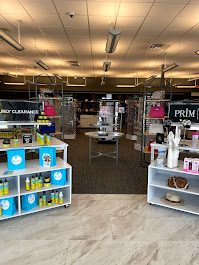
That became the inception of PRIM Beauty Supply, which would later evolve into PRIM Beauty USA.
At the time, I didn’t have sophisticated language for what I was doing.
I wasn’t walking around campus saying, “I’m identifying a market-access deficiency within an underserved consumer ecosystem.”
I was a college student saying:
“This makes absolutely no sense. Somebody needs to fix this.”
Apparently, “somebody” was me.
That experience would become the blueprint for almost everything I have built since.
Long before I knew terms like economic development, ecosystem building, economic mobility or inclusive innovation, I was learning to recognize what happens when talented people, viable consumers and growing communities exist — but the infrastructure around them does not.
I started building.
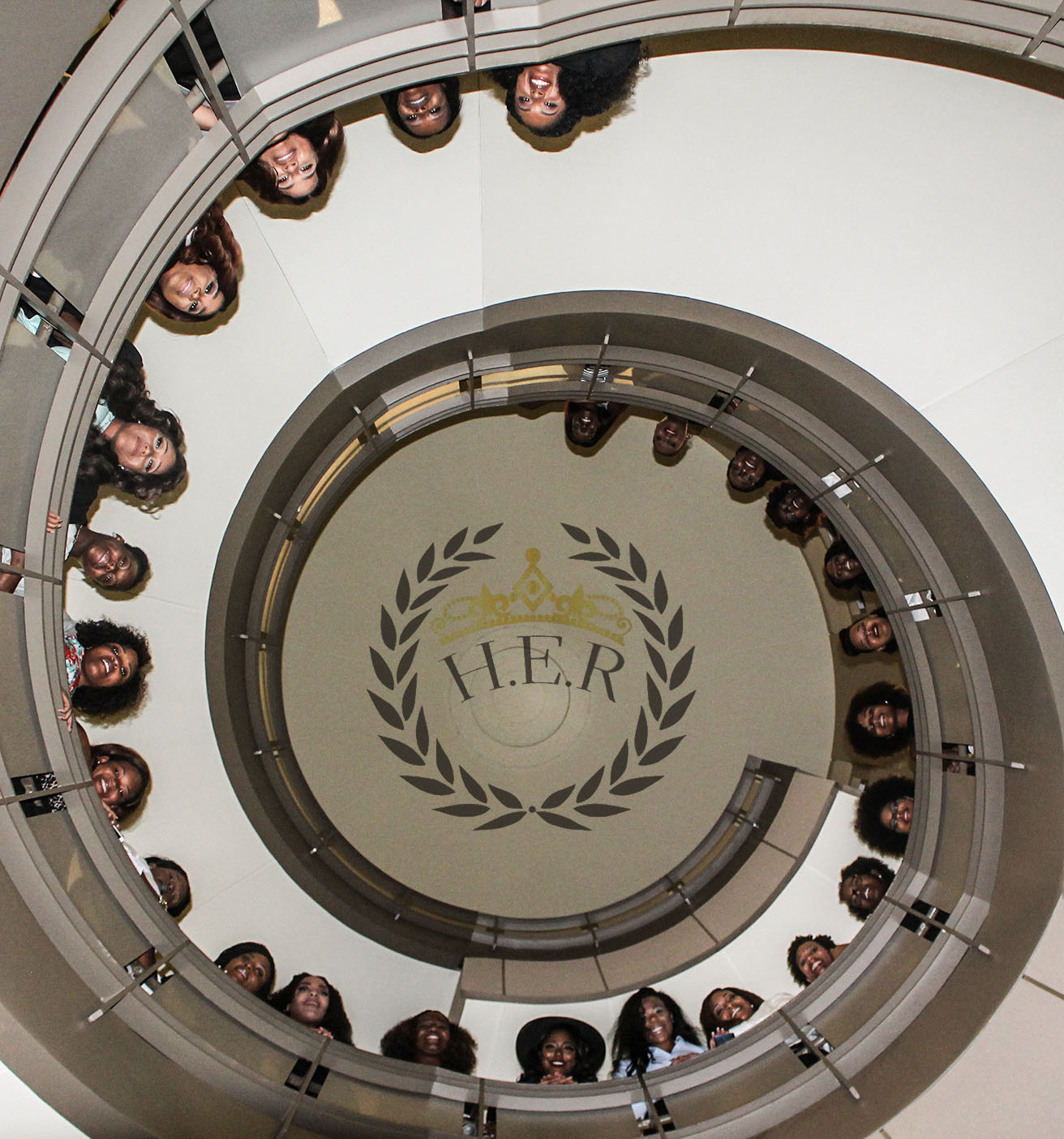
Around that same period, what began as a student-led initiative at Prairie View would eventually develop into H.E.R. Community, Inc., an organization centered around women, opportunity and impact.
I was young.
I didn’t have a giant foundation behind me.
There was no magical grant fairy waiting somewhere with a check because I had a good heart, a cute PowerPoint and a dream.
I learned by doing.
I learned how to ask.
I learned how to hear “no.”
I learned how to come back with a better proposal.
And eventually, I learned how to bring businesses, community leaders, institutions and decision-makers into the same room and give them a reason to move together.
Then PRIM became real.
What started as an idea about access grew into a full-scale retail operation.
I founded PRIM Beauty USA around a belief that still guides me today:
Beauty is not a monolith.
Neither are women.
Neither are communities.
Our needs, our textures, our cultures, our purchasing habits and our definitions of beauty are different — and the businesses serving us should understand that.
“I don’t want women to become less feminine to become more formidable.”
PRIM grew into a substantial retail operation with thousands of products, employees, vendors, customers and all of the glamorous things nobody puts on the founder mood board:
Payroll.
Leases.
Inventory.
Supply-chain problems.
Vendor negotiations.
Operating costs.
And the occasional business crisis before breakfast.
I also experienced something that completely changed the way I think about entrepreneurship.
PRIM received support through the City of Houston’s Houston Equity Fund, allowing me to expand the business.
It was a major win.
Then came the plot twist.
After expanding, one of Houston’s largest beauty-supply retailers opened a multimillion-dollar flagship directly across the street.
Literally.
Across.
The.
Street.
You cannot motivational-quote your way out of purchasing power.
I learned that lesson the expensive way.
That experience taught me one of the most important lessons of my career:
Visibility without infrastructure can become vulnerability.
A founder can have the product.
She can have the customers.
She can have the vision.
She can even have the viral marketing moment.
But if she does not have adequate capital, purchasing power, market intelligence, sound financial strategy, institutional relationships and the right people around her, talent alone may not be enough to scale.
I experienced those pain points personally.
And instead of making me less ambitious, failure made my vision considerably bigger.
I stopped asking only:
“How do I build my next business?”
And started asking:
“How do we build better pathways for the next entrepreneur?”
That question has become the through-line of my work.
Today, I am deeply interested in economic ecosystems — particularly those affecting women, young people, creatives and entrepreneurs from communities where talent is abundant but access is not.
Because I have met incredibly capable people who don’t need another motivational speech.
They need the introduction.
They need the contract.
They need the capital.
They need the internship.
They need the procurement opportunity.
They need someone to explain which door to knock on — and sometimes, they need somebody willing to build the door.
I want to be that connector.
Women are earning degrees, starting businesses, raising families and leading organizations at extraordinary rates, yet too many remain underpaid, underemployed, undercapitalized or disconnected from the networks that create meaningful economic mobility.
And for some women, economic mobility represents something even more personal.
Through my community work, I have encountered women rebuilding after abusive relationships, economic instability and major life transitions.
When a woman is rebuilding her life, money is not simply money.
Sometimes money means choices.
Sometimes employment means independence.
Sometimes a business means freedom.
That is why my work intentionally moves between community impact and economic development.
Recently, through H.E.R. Community, Inc., I developed a restorative experience for women at the Fort Bend Women’s Center in collaboration with STEMS Custom Floral, a female-owned floral company based in River Oaks.
The experience wasn’t designed simply around what these women had survived.
Femininity without apology.
Intelligence without performance.
Ambition without permission.
And impact without abandoning who you are.
I wanted to ask another question:
Who are you becoming now?
We centered identity, restoration, confidence, dreams and what it means to begin imagining a next chapter.
Because helping a woman rebuild her confidence matters.
Helping her build the economic foundation to support that next chapter matters too.
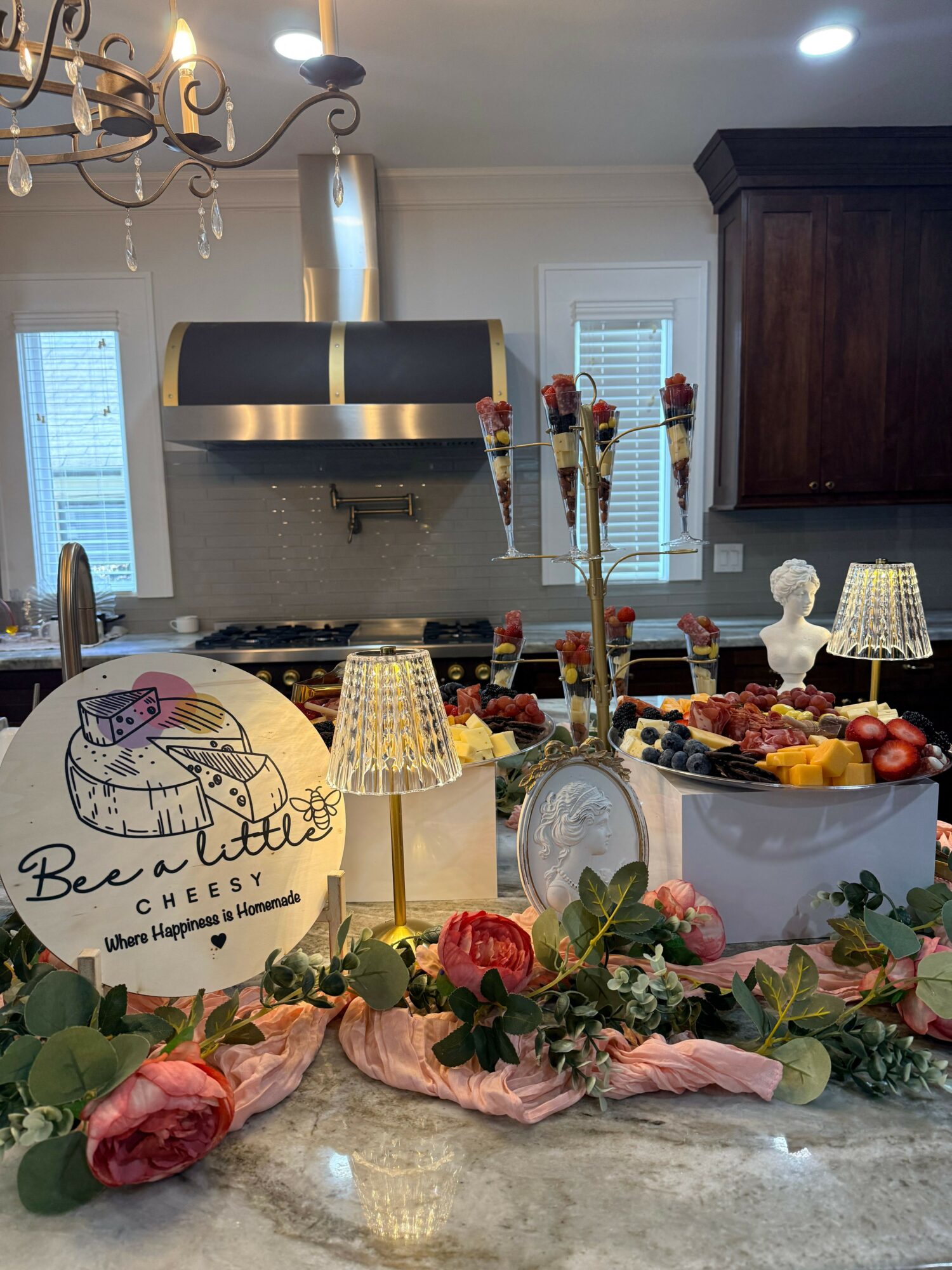
That same philosophy showed up through The PINK Brief, where I intentionally partnered with women-owned businesses and female founders, including Bee A Little Cheesy, a female-founded charcuterie brand.
If I’m creating an initiative designed to empower women, I don’t want women-owned businesses standing outside of the economic opportunity created by it.
Hire her.
Feature her.
Contract her.
Refer her.
Put her in the room.
That is what economic ecosystem building looks like to me.
I am also working closely with community and civic leaders to develop the Heads of State Breakfast, designed to convene decision-makers, entrepreneurs, institutions and partners who can help mobilize resources toward underrepresented businesses and create stronger pathways for female founders.
And I’m thinking even bigger.
My long-term vision is ASCEND TX.
I envision ASCEND TX as an innovative economic-development ecosystem connecting entrepreneurship, workforce development, institutional partnerships and economic mobility.
The goal is not another business program where an entrepreneur walks away inspired with a tote bag, three new Instagram followers and absolutely no idea where the money is.
I want outcomes.
Over the next one to three years, my vision includes building an incubator model for emerging businesses, creating career and workforce pathways, increasing procurement readiness, connecting entrepreneurs to technical assistance and decision-makers, and ultimately working alongside government and community leaders to develop grant opportunities that expand the capacity of underrepresented businesses.
Because access to capital matters.
Access to contracts matters.
Access to information matters.
Access to relationships matters.
And access to pathways matters.
But there is another part of this story that feels almost full-circle.
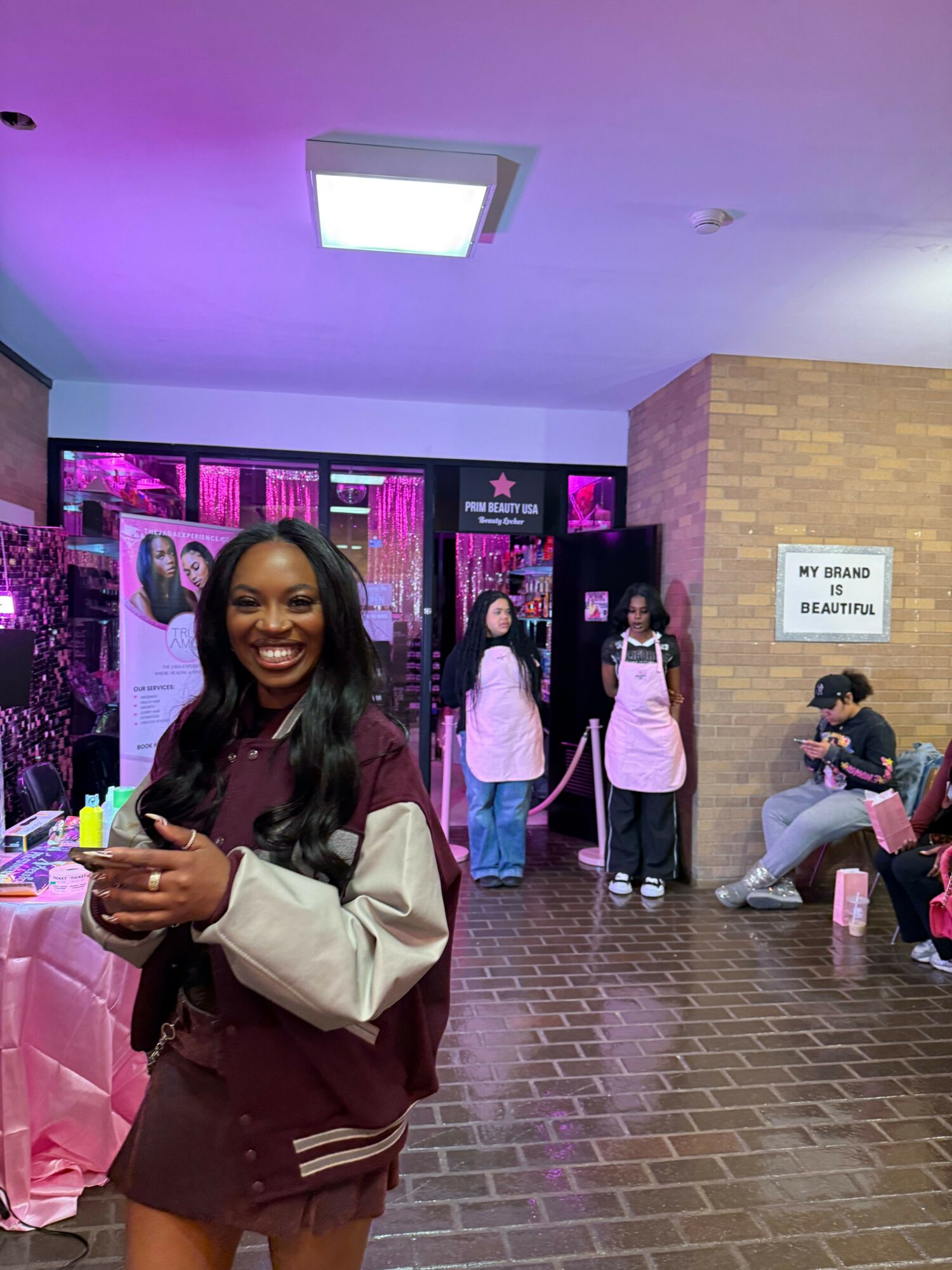
In late 2026, I am preparing to collaborate with MAVYN PR Incorporated on the next evolution of PRIM: PRIM Beauty Locker™ and PRIM Beauty Club™.
The concepts are being developed for creatives, professionals and women on the go — taking what I learned from PRIM’s original retail model and reimagining how beauty, convenience, culture, entrepreneurship and community can coexist.
For me, that is innovation.
It isn’t abandoning what didn’t work perfectly the first time.
It’s taking everything the experience taught you and building the next version smarter.
The girl who noticed an access gap in 2017 is still here.
She’s just asking bigger questions now.
Instead of only wondering where women can buy the products they need, I’m thinking about where women work.
Where they build.
Where they access capital.
Where young people discover careers.
Where founders find contracts.
Where creatives meet collaborators.
Where businesses become employers.
Where an overlooked entrepreneur finally meets the person who can say yes.
And where entire communities can begin participating more fully in economic opportunity.
I’ve been the girl with the idea.
I’ve been the founder trying to fund it.
I’ve been the business owner staring at a problem I wasn’t completely prepared for.
I’ve had the ribbon-cutting photos.
I’ve also lived through what happens after everybody leaves the ribbon cutting.
Both versions of the story built me.
That is one of the reasons I recently returned to my alma mater, Prairie View A&M University, where I am now pursuing a competitive Executive MBA.
I’m not going back to school because I need permission to lead.
I’m going because where I am headed requires another level of leadership.
I want deeper command of finance, strategy, analytics, operations and executive decision-making because vision can start a movement —
but infrastructure is what allows that movement to survive its founder.
I am building toward something much larger than myself.
I want the young girl with an idea who doesn’t yet know what to call it.
The student who has never seen someone with her background sitting in the executive chair.
The small-business owner who has never received a major contract.
The founder who is brilliant but undercapitalized.
The creative whose talent hasn’t reached the right room yet.
The woman rebuilding her life and realizing that she gets to dream again.
I want them to encounter fewer locked doors than I did.
And if the pathway doesn’t exist yet?
Well…
I’ve never had much trouble building things.
Making women feel seen started the mission. Building systems that make them impossible to overlook is the next chapter.
I’m confident.
I’m here.
I’m H.E.R.
I’m sure it wasn’t obstacle-free, but would you say the journey has been fairly smooth so far?
One of the biggest struggles was learning that vision and visibility are not the same thing as infrastructure. When I launched PRIM Beauty USA, the demand came quickly. Our marketing worked, our audience grew, and customers were excited — but behind the scenes, I was learning in real time how difficult it is to manage inventory, supply-chain delays, cash flow, staffing, vendors and customer expectations all at once. There were moments when our marketing success actually moved faster than our operational capacity.
Then came one of the biggest lessons of my entrepreneurial life.
PRIM received support through the City of Houston’s Houston Equity Fund, which allowed me to expand into a larger location. It felt like the breakthrough moment every founder dreams about. Then, shortly after opening, one of the largest beauty-supply retailers in the Houston market opened a multimillion-dollar flagship directly across the street.
You cannot motivational-quote your way out of purchasing power.
I had built something people wanted, but I was suddenly competing against an organization with substantially greater capital, inventory leverage, marketing resources and economies of scale. I had to confront the fact that passion does not replace market analysis, financial strategy or operational preparedness. Ultimately, I made the difficult decision to restructure rather than allow the business to deteriorate.
That experience humbled me, but it also changed the direction of my life.
I stopped looking at business challenges as isolated founder problems and started seeing the larger ecosystem around them. How many talented entrepreneurs have incredible products but inadequate capital? How many young people have ambition but no pathway into the right career? How many women are building businesses without access to procurement opportunities, strategic relationships or the information that could help them scale?
I realized that sometimes the difference between a brilliant entrepreneur who survives and one who closes is not talent.
**It is access.**
And I know what it feels like to need that access.
Some of my greatest lessons came from getting things wrong, hearing no, having to regroup, and discovering that the ribbon-cutting photograph is often the easiest part of entrepreneurship. My own journey taught me that the real work happens afterward — when the cameras leave and you still have to make payroll, solve problems, compete, make difficult decisions and keep going.
That is why my failures are just as important to my story as my wins.
They are part of what inspired me to think beyond building another successful company and toward building systems that help other people succeed — particularly women, young people and underrepresented entrepreneurs.
**Visibility without infrastructure can become vulnerability.**
I learned that personally.
Now, I want to help build the infrastructure.
And if there is one thing entrepreneurship has taught me, it is this: **sometimes the road that nearly breaks you becomes the road map you use to help someone else.**
Appreciate you sharing that. What should we know about PRIM Beauty USA?
I build businesses and initiatives around one question:
**Who is being overlooked — and what would it take to move them from seen, to supported, to positioned to scale?**
That question connects almost everything I do.
My work currently lives at the intersection of **entrepreneurship, women’s economic mobility, inclusive innovation and community impact**.
Through **PRIM Beauty USA**, I entered entrepreneurship by addressing an access gap I experienced personally. PRIM was built around the belief that beauty is not a monolith. Women have different textures, cultures, routines and needs, and I wanted to create a retail experience that reflected that reality.
PRIM grew into a substantial beauty retail operation, managing more than 144,000 products, employees, vendors, operations and more than $300,000 in annual revenue. The company also received more than $50,000 in growth capital through the City of Houston’s Houston Equity Fund.
What I am most proud of, however, is not simply what PRIM sold.
**PRIM taught me how to build.**
It taught me consumer behavior, branding, operations, supply chain, staffing, public funding, expansion — and, perhaps most importantly, what founders need when vision alone is no longer enough.
Today, I am preparing for the next evolution of that brand through **PRIM Beauty Locker™** and **PRIM Beauty Club™**, concepts being developed for creatives, professionals and women on the go. The goal is to take everything I learned from traditional retail and rethink convenience, inclusion, beauty and community for the next generation of consumers.
Then there is **H.E.R. Community, Inc.**
H.E.R. began as a student initiative and evolved into a nonprofit focused on creating meaningful opportunities and resources for women. Our work has included women’s health, educational advancement, social impact, equity initiatives and strategic partnerships. Over the years, H.E.R. has secured more than $1.2 million in corporate cash and in-kind support for community projects.
But H.E.R. has also evolved with me.
Today, I am increasingly interested in what happens when women’s empowerment becomes **economic empowerment**.
I don’t only want a woman to leave a program feeling inspired.
I want her connected.
I want her hired.
I want her business contracted.
I want her introduced to someone who can change the trajectory of her company.
I want her equipped to create income, ownership and choices for herself.
That philosophy is why I intentionally collaborate with other women-owned businesses whenever possible.
Through **The PINK Brief**, for example, I partnered with female founders, including **Bee A Little Cheesy**, a female-founded charcuterie brand. Through a recent restorative experience with the **Fort Bend Women’s Center**, I collaborated with **STEMS Custom Floral**, a woman-owned River Oaks floral company.
To me, women’s empowerment should have an economic footprint.
If we say we support women entrepreneurs, then women entrepreneurs should be getting the contract, receiving the exposure, entering the vendor pipeline and benefiting financially from the spaces we create.
**Hire her. Feature her. Contract her. Refer her. Put her in the room.**
That is a philosophy I want associated with my brand.
And it is also leading me toward the next major chapter of my work: **ASCEND TX**.
ASCEND TX is the economic-development ecosystem I am building toward — one designed to create stronger pathways for entrepreneurs, young people, women and underrepresented communities.
My vision is to eventually connect business incubation, workforce and career pathways, procurement readiness, technical assistance, institutional partnerships and access to capital. Over the next one to three years, one of my biggest goals is to work alongside government, corporate and community leaders to develop funding opportunities that help promising businesses move from survival to capacity and ultimately to scale.
Because I have learned something important:
**Talent is everywhere. Access is not.**
What sets my work apart is that I have experienced these systems from multiple sides.
I’ve been the nonprofit founder trying to secure resources.
I’ve been the entrepreneur applying for funding.
I’ve been the retailer managing payroll and inventory.
I’ve been the woman learning painful business lessons after the ribbon cutting.
And now I’m becoming the person who can connect those experiences to institutions, resources and opportunities for someone else.
I don’t want to build programs simply because they photograph well.
**I want to build pathways that perform well.**
That is also why I returned to Prairie View A&M University to pursue my Executive MBA. My next chapter requires more than creativity and passion. I am intentionally strengthening my knowledge of strategy, finance, operations, analytics and executive leadership so I can build organizations that are not only exciting, but sustainable and scalable. My long-term goal is to create organizations that generate both economic opportunity and social impact.
Brand-wise, I think what I am most proud of is the thread connecting everything.
**PRIM makes women feel considered.**
**H.E.R. makes women feel seen.**
**ASCEND is being built to help people move.**
Move into ownership.
Move into better careers.
Move into rooms they have historically been excluded from.
Move from having an idea to having infrastructure.
Move from surviving to building.
I want readers to know that my brands may look feminine, colorful and optimistic — because I am all of those things — but there is serious strategy underneath the pink.
**Making people feel seen is where my work began. Creating access is what I do. Building pathways is where I’m going.**
And I’m just getting started.
Networking and finding a mentor can have such a positive impact on one’s life and career. Any advice?
I have been incredibly blessed when it comes to mentorship.
Some of my greatest mentors were never people I formally approached and asked, *“Will you be my mentor?”* They were women who watched me grow, corrected me, prayed for me, opened doors for me and loved me enough to tell me the truth.
I have women from church who still pray for me and check on me. I have women from the **NAACP Houston Branch** who became one of the most beautiful and unexpected blessings in my life. I have women from **Prairie View A&M University** whom I have known for nearly a decade and who have watched me grow through different seasons of leadership, business and womanhood. And throughout my journey with **PRIM Beauty USA**, I have been fortunate to lean on women who understood the beauty industry and were willing to teach me the game.
There are honestly too many to name, but I love them dearly and I am deeply grateful for every woman who has poured into me.
And then, of course, there is my mother, **Lauree Nunn**.
My mother is my biggest fan, my supporter and one of the greatest inspirations behind **H.E.R. Community**. We are extremely close, and so much of the way I love and advocate for women comes from the women in my own family.
They taught me what it looks like to love women fiercely.
To celebrate them without competition.
To pray for them.
To tell them the truth.
To show up.
And to pull another woman forward when you have the ability to do so.
That has shaped the way I approach networking too.
My advice is: **stop networking only when you need something.**
The strongest relationships in my life were built long before there was an ask attached to them.
Show up.
Volunteer.
Support someone’s event.
Send the congratulatory text.
Make the introduction when there is nothing in it for you.
Remember what people care about.
And when you enter a room, don’t immediately ask yourself, *“What can this person do for me?”*
Ask:
**“How can I add value here?”**
People remember how you make them feel, but they also remember whether you were useful, genuine and consistent.
I also believe your network should not look exactly like you.
Some of my most valuable relationships cross industries, generations and experiences. A businesswoman may teach you strategy. A civic leader may teach you how systems work. A church mother may teach you discernment. Another entrepreneur may save you from making a very expensive mistake.
Wisdom does not always arrive wearing the title you expected.
And when you do find great mentors, honor the relationship.
Listen.
Apply what they teach you.
Circle back and tell them what happened.
And eventually, become that person for someone else.
I have never wanted to be the woman who walks through a door and closes it behind her.
**If another woman helped me find the room, I want to leave the light on for the woman coming next.**
That is mentorship to me.
Contact Info:
- Website: https://www.her-community.org
- Instagram: https://www.instagram.com/iamjazzilyn