





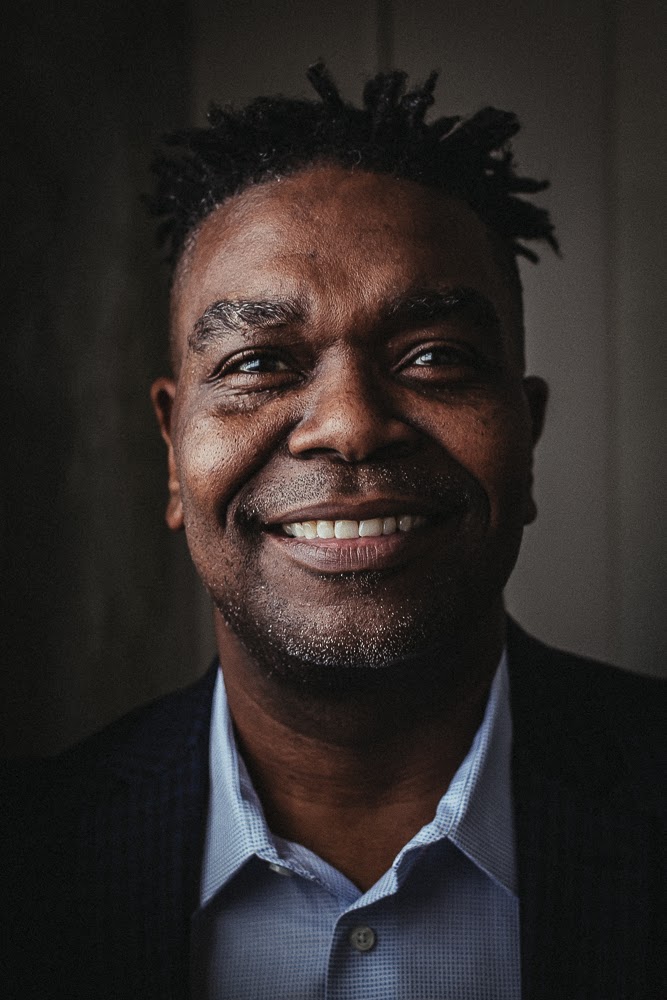
Today we’d like to introduce you to Sean Palmer.
Sean, we appreciate you taking the time to share your story with us today. Where does your story begin?
I graduated from Abilene Christian University in 1996 and went straight into ministry. Four years later I went back to school for an MDiv, and my theological education has been spread across three schools since: Abilene Christian, Fuller Seminary, and Austin Presbyterian. Three traditions, three sets of assumptions, three very different rooms. I did not plan it that way, but it turned out to be the best training I could have gotten for the work I do now, which is almost entirely about helping people speak across a difference.
Most of that ministry has happened in smaller, more intimate rooms. Churches under two hundred people, where you know every name, every casserole dish, and every grief. I spent about a decade as a teaching pastor at a large, local church here in Houston, and today I serve as Teaching Minister-in-Residence at Bammel Church of Christ. Throughout the time, I’ve coached writers, speakers, executives, and leaders how to lean into their creativity and God-given design.
Now I spend my time working with pastors, coaching and consulting, writing, working and writing as film critic and Enneagram coach, and as the Founding Director of The Center for Prophetic Formation.
We all face challenges, but looking back would you describe it as a relatively smooth road?
No, and I would be suspicious of anybody in my line of work who said otherwise.
Ministry is one of the few vocations where your convictions can cost you your paycheck and your friendships in the same season. I have preached sermons I knew would be expensive before I ever stood up. I have also stayed quiet a few times when I should not have, and those are the ones that still sit on me at night.
The harder obstacle was slower. For years I measured myself by rooms. Bigger platform, bigger church, bigger name. That is a hungry way to live and it never fills, because there is always another room. Most of my ministry has been spent with congregations under two hundred people, and for a long stretch I treated that as something to apologize for. I was wrong. Faithfulness is not a smaller version of success. It is a different category altogether.
The obstacle I did not expect is the one I now build around. After thirty years in this world, and after coaching a lot of people at close range, I can tell you that some of the most gifted people in ministry are among the least spiritually formed. Enormous talent. Real charisma. A gift for a room. And very little interior life holding any of it up. It is not hypocrisy in most cases. It is that nobody ever taught them the two things belong together, and the industry rewards the gift long before it asks about the soul.
That gap is where people get hurt, and it is usually the congregation that pays for it.
Add to that the ups and downs of normal life – children, setbacks, sickness, heartache. Nothing worth happening comes easily.
Thanks for sharing that. So, maybe next you can tell us a bit more about your business?
**Please tell us more about your business or organization.**
I am a pastoral public theologian, which is a fancy way of saying I preach, write, speak, and coach. I speak to more than ten thousand people a year. I have written three books and I am at work on my fourth, *Agreeing with Time*. I have written for Christianity Today, I write a film column for Good Faith Media, I publish essays at The Twists, and I host the Sacred Frames podcast and co-host Called Together with Kelly Edmiston. The center of gravity underneath all of it is The Center for Prophetic Formation, which I founded, and the coaching I do through Pepperdine’s Compelling Preaching Initiative and the Formation Writers Guild at the Apprentice Institute.
What I specialize in is helping people say the true thing without setting fire to the room, or themselves. That means pastors, preachers, but it also means writers, nonprofit leaders, and anybody whose job is to stand up and tell a group of people something they may not want to hear. I work on the sermon and the soul.
Here is what sets the Center apart, most coaching will sharpen your delivery and never ask what your inner life looks like or what’s shaping your soul. Most spiritual direction will never touch your sermon or writing. The Center weds the two, because I do not believe you can responsibly do one without the other.
The other thing I am known for is difference. Cross-generational, cross-political, and cross-cultural communication is the hardest problem in American congregations right now, and almost nobody is coached for it. A black pastor in a white pulpit. A congregation carrying three languages and four decades in the same pews. That is a skill, not a personality trait, and it can be taught. So we teach it, through one-on-one coaching, cohorts, courses like *The First Five Years* for new preachers, and field guides for the texts most of us would rather skip.
I am proudest of is what we refuse. There are two easy options available to anybody who talks for a living. One is to be safe, which is really just chaplaincy for the way things already are. The other is to be sharp, which is mostly the preachers ego, anger, and wounds papered over with the Bible. Neither one forms anyone. We are after conviction without contempt. People should leave this work feeling told the truth and cared for at the same time, and that combination is rarer than it ought to be.
What I want your readers to know is that the measure of this is not a book or a stage. It is the preachers I can name who were three months from quitting when we started and who are still in it. Books go out of print. Sermons get forgotten. Formed people keep going.
Let’s talk about our city – what do you love? What do you not love?
**What do you like best about our city? What do you like least?**
What I love most about Houston is that it is the most American city in America, and most of the country has not caught up to that yet. You can eat Vietnamese, Nigerian, Salvadoran, and Gulf Coast Cajun inside a three-mile radius, and none of it is a novelty here. It is just dinner. That is not a food scene; that is a portrait of who actually lives here. Houston does not require anybody to shave the edges off themselves to belong.
Which is exactly why my work looks the way it does. Coaching preachers and writers to communicate across generational and cultural lines is not theory for me. I live in the city where that is the daily condition. My neighbors are my curriculum.
I also love that Houston is a long-relationship town. People stay. We have been here long enough that the friendships have layers, and layered friendships are the only kind that will tell you the truth about yourself. And then there is the practical grace of a major international airport, which means I can serve clients and congregations all over the country and still sleep in my own bed more nights than not.
What I like least is the sprawl, and not for the reason people usually give. Traffic is my daily dread. The real cost is that Houston is so spread out you can live here for twenty years inside a single demographic pocket and never actually meet the city. The diversity is a gift, but it is not automatic. You have to drive toward it on purpose. Most of us do not, and then we mistake our corner for the whole thing.
Pricing:
- Variable
Contact Info:
- Website: https://www.seanisaacpalmer.com
- Instagram: @seanisaacpalmer
- Facebook: https://www.facebook.com/seanisaacpalmer
- Other: https://seanpalmer.substack.com