




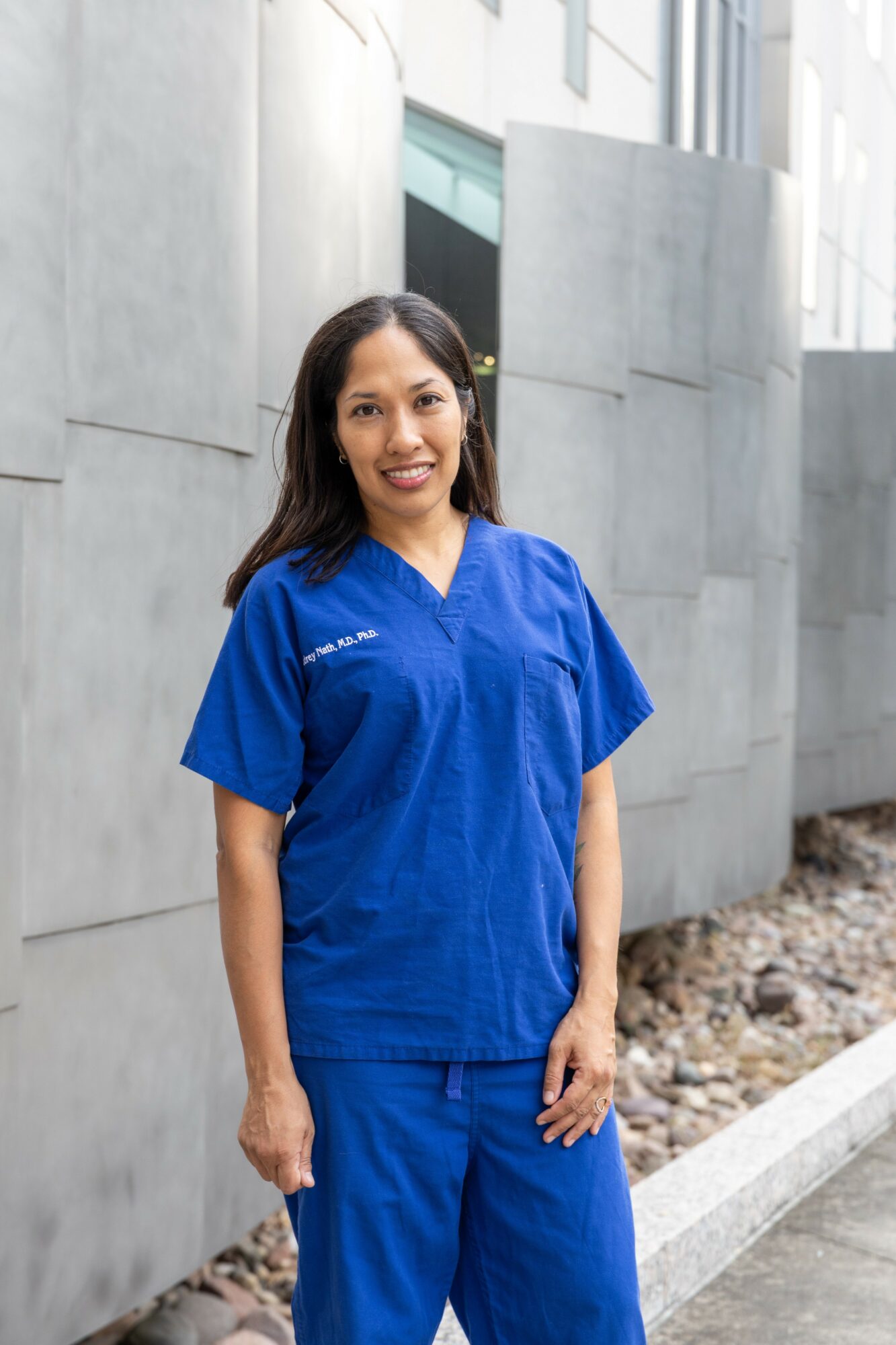
Today we’d like to introduce you to Audrey.
Hi Audrey, so excited to have you with us today. What can you tell us about your story?
I grew up in Houston, with my early life focused on piano performance and composition. I went to Rice University and then the MD/PhD program at UT-Houston. I was drawn to the MD/PhD program, with a PhD in Neuroscience, with the idea that I could help develop new treatments and technologies to treat diseases.
My perspective shifted during the clinical rotations in 3rd year of med school, particularly in the county hospital system. It was seeing failure after failure of our broken system. Exacerbations of chronic diseases due to rationing costly medications. Patients who couldn’t be discharged from the hospital due to being unhoused, and not having anywhere to go. Inability to pay for insulin for diabetes, resulting in more leg amputations than I could count.
These completely preventable illnesses and amputations and deaths came as a shock to me, as I was naive and had grown up with everything that I needed. I had never needed to skip a medication or a doctor’s appointment. I was never unhoused. My family never had to choose between groceries or a light bill, and I was seeing the deadly intersection of poverty and an unjust healthcare system for the first time.
These thoughts of the inequities of it all stayed in my mind, even as I continued on a very academic path. I completed residency in pediatric neurology in the Harvard Medical School system (Boston Children’s Hospital), then 2 subspecialty fellowships back in Houston. I won a research grant and started up as a full-time pediatric epileptologist after 7 years of the MD/PhD program and another 7 years of residency and fellowship.
But the call for addressing the inequities only grew louder. I had difficulties reconciling spending my career researching fancy new treatments while so many went without.
So, just 2 years after starting the full time faculty position, I left the carefully constructed academic career that I had spent 15+ years curating. I left for the flexibility of telemedicine, giving me time for advocacy. I started out doing volunteer work in medicolegal advocacy, writing up affidavits and testifying for incarcerated and detained people who were experiencing medical neglect. I spoke out for policies to expand healthcare access at a local and state level. I had written an impassioned letter to Senator Bernie Sanders about the dire consequences to rural healthcare that will come from massive cuts to Medicaid in the HR1 budget reconciliation bill, and my comments were read on the Senate floor.
My efforts have expanded beyond healthcare access, since I recognize that greater issues of poverty and systemic harms to minority communities are interwoven into the healthcare fight. I now serve on the boards and leadership of Healthcare for All Texas, The Village Connect (a local non-profit for people experiencing episodic homelessness), Momentum Education, and the Houston Progressive Caucus.
My career in medicine looks different than I thought it would when I was 22 years old and starting out in medical school. But I’ve created the flexibility to speak out at a government hearing or protest and work towards the bigger solutions for healthcare that my patients have taught me we need.
Alright, so let’s dig a little deeper into the story – has it been an easy path overall and if not, what were the challenges you’ve had to overcome?
I think there is a mindset in an academic medicine career that any career direction that does not stay within the system qualifies as “falling backwards,” which can limit how we think about our careers. This sort of thinking limited my view of what was “success” for a long time, and thinking more “outside the box” let me think of other more creative ways to have a fulfilling career.
Thanks – so what else should our readers know about your work and what you’re currently focused on?
In my day job, I primarily perform remote interpretions of EEGs in adults, children and neonates in inpatient and outpatient settings. There is a very small component of performing procedures at the hospital, and teaching residents and fellows, in my part-time faculty appointment.
I am most proud of everything that doesn’t fall under the umbrella of “day job.” The cases where I have provided expert witness testimony for some of the most marginalized people in society. Fighting for public education, including currently being one of three Houston-area public school moms now suing the state of Texas to oppose the laws requiring posters of the Ten Commandments up in every classroom. Writing Op-Eds and amplifying voices on KPFT 90.1FM’s “Progressive Forum” show. Raising my kids to be people who speak out on behalf of other children, whether at school board meetings or on the playground.
Is there anyone you’d like to thank or give credit to?
I think that life in general takes a village, particularly with children. On so many evenings when I’ve been at events, my husband has quietly taken care of dinner and the kids. My dad has pitched in to help with the kids and come to events with me as well.
Contact Info: