





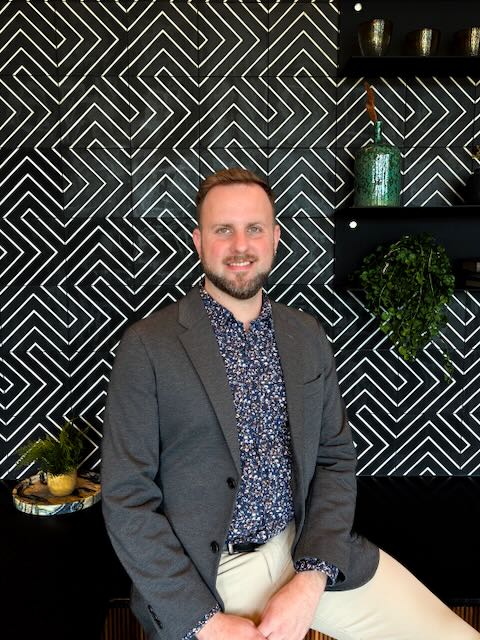
Today we’d like to introduce you to Dawson White.
Hi Dawson, we’re thrilled to have a chance to learn your story today. So, before we get into specifics, maybe you can briefly walk us through how you got to where you are today?
I came to the music industry like a lot of musicians do. I went to college to earn a degree in music performance and then built a career as a professional violist. I spent more than 10 years performing with the Houston Grand Opera and Houston Ballet orchestras while also teaching at Sam Houston State University, the University of St. Thomas, and at festivals around the U.S. and Europe. I eventually began performing with the Houston Symphony, and I’ve had the opportunity to perform in places including Carnegie Hall and Walt Disney Concert Hall.
But over time, I became interested in much more than performing. I started teaching, founded three nonprofit organizations, and became increasingly fascinated by the business and organizational side of the arts. I began to see that a career in music required me to operate in several different roles—not just as an Artist, but also as a Career Designer and Entrepreneur.
That realization became the foundation for my work.
In 2021, I founded Aspire Music Company to help musicians think more intentionally about the careers they were building. Through coaching and consulting, I’ve since worked with more than 100 musicians and organizations on career design, entrepreneurship, self-management, business development, and professional development.
The more people I worked with, the more I noticed that many of the same challenges kept appearing. A musician could be artistically successful but financially unstable. They could make good money but have no time or energy left for themselves. Or they could have a career that looked impressive on paper but didn’t actually create the life they wanted.
That led me to a simple but powerful idea: design the career around you rather than the other way around.
Eventually, I realized that the same principle applied to organizations. An arts organization can have extraordinary artists and an important mission, but without the right systems, resources, relationships, and leadership capacity, it can be difficult to turn that potential into meaningful impact.
In 2025, I became Executive Director of Musiqa, a Houston-based contemporary music organization. Now I get to bring together the different perspectives I’ve developed throughout my career—artist, career designer, entrepreneur, and executive. My work spans fundraising, revenue development, partnerships, programming, marketing, operations, governance, staffing, financial systems, and strategy.
My doctoral research focuses on systems thinking for music careers and organizations, which has given me another way to connect those experiences.
I don’t really see performance, teaching, entrepreneurship, coaching, and executive leadership as separate chapters. They’re different perspectives on the same question:
How do we design better careers, organizations, and systems so talented people have the capacity to do their best work and build lives that actually work for them?
Alright, so let’s dig a little deeper into the story – has it been an easy path overall and if not, what were the challenges you’ve had to overcome?
It definitely hasn’t been a smooth road. In fact, one of the biggest challenges of my career was realizing that I had actually achieved many of the things I thought were supposed to make me successful—and I still wasn’t sure the career was working for me.
For years, my career looked pretty good on paper. I had spent more than a decade performing with the Houston Grand Opera and Houston Ballet orchestras, was teaching at the university level, was performing with the Houston Symphony, and had opportunities to perform in some of the world’s great concert halls. I had worked incredibly hard to build that career, and I was proud of it.
But behind that success, I was often struggling to make the pieces fit together.
There were periods when I was juggling teaching, performing, commuting, and multiple other jobs just to make everything work. I remember teaching for eight hours at Sam Houston State, driving 90 minutes back to Houston, changing clothes in the Wortham Theater parking garage, playing a four-hour opera, and then driving home. Then I would do it again.
That kind of schedule was normal for me for a long time.
Then Hurricane Harvey hit Houston. The theaters where I worked flooded, contracts were canceled, and I suddenly lost roughly $10,000 in income. It was one of those moments when the fragility of the career I’d built became impossible to ignore.
I had done what musicians are told to do: earn the degree, practice, win the audition, get the job, teach, and keep working. But I began to realize that being a great musician and building a sustainable life as a musician were two completely different skill sets.
Eventually, I had to confront a much harder question: What if the career I had worked so hard to build wasn’t actually the career I wanted?
The answer wasn’t that I wanted to leave music. I loved being a musician. I needed to learn how to manage my relationship with my career differently.
That realization changed everything.
Instead of asking, “How can I become successful within the career that’s available to me?” I started asking, “What would a successful career actually look like for me, and how can I design it?”
That question became the foundation for Aspire and ultimately for the work I do today.
Looking back, I’m grateful that my career became difficult enough to force me to ask those questions. The struggles that once felt like evidence that I had failed at building a career became the research that shaped the work I now do with musicians and arts organizations.
Thanks – so what else should our readers know about your work and what you’re currently focused on?
Today, I work at the intersection of artists, organizations, business, and systems.
I’m still a professional violist, and the artistic side of my career remains incredibly important to me. I’ve performed in orchestras, opera and ballet companies, chamber ensembles, and contemporary music settings, and I’ve held principal and leadership positions. I’m also a teacher, and one of the things I’m most proud of as a musician is developing an incredibly distinctive, captivating sound on the viola.
But I’ve also become deeply interested in what happens around the art.
I’m a relationship builder by nature. I love understanding what people are trying to accomplish, figuring out what’s getting in their way, and connecting people, ideas, and resources to move something forward. Through Aspire, I’ve worked with more than 100 musicians and organizations on career design, entrepreneurship, self-management, business development, and professional development.
I’ve also founded three nonprofit organizations, which taught me how different it feels to be responsible not just for the artistic vision, but for the entire ecosystem that has to support it.
Now, as Executive Director of Musiqa, I’m implementing what I’ve learned at the organizational level – and what that means for Musiqa right now is deliberate capacity and infrastructure building while expanding our artistic profile and educational reach.
What sets me apart is that I’ve deliberately developed both sides of the equation. I’ve experienced the arts from inside the artistic world, but I’ve also spent years learning how organizations, businesses, and careers actually work.
I understand what it means to stand on stage and care deeply about the quality of the work. I also understand what it means to build the systems, relationships, and resources that make that work possible.
Ultimately, that’s what I’m most proud of: being able to translate between worlds that don’t always understand each other—artists and administrators, creativity and business, individual careers and organizational systems.
What makes you happy?
What makes me happiest is transformation—seeing something or someone become more capable, more fulfilled, or more aligned with what they actually want.
I didn’t always know that was my “why.” For a long time, I was focused on the traditional markers of success: the next performance, the prestigious job, the degree, the audition, the title. I eventually realized that I could achieve those things and still feel like something was missing.
Reading Simon Sinek’s Start With Why gave me language for something I was already beginning to understand. I started asking not just, “What do I do?” or “How do I do it?” but, “Why does this matter to me?”
The answer was transformation.
I want the people I work with to leave an interaction with me different from how they arrived—more confident, more capable, clearer about what they want, and better equipped to act on it.
That might mean a student discovering their voice on the viola. It might mean a musician realizing they can build a career that actually fits their life. Or it might mean an arts organization developing the systems and capacity to pursue an idea it previously couldn’t.
Interestingly, that realization also changed how I think about my own career. I had to be willing to transform my own life before I could authentically help other people transform theirs.
That’s ultimately what makes me happy: knowing that something is better because I was there.
I don’t need to be the person who gets all the credit for the transformation. I just want to help create the conditions for it to happen.
Contact Info:
- Website: https://aspiremusic.co
- Instagram: https://www.instagram.com/dw.viola/
- Facebook: https://www.facebook.com/Dwhite6250/
- LinkedIn: https://www.linkedin.com/in/dwviola
- Other: https://musiqa.org