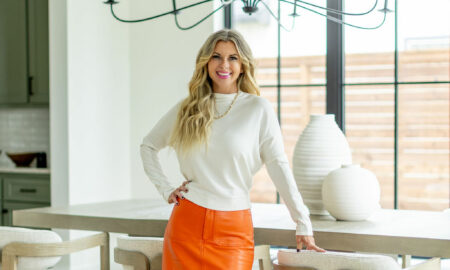






Today we’d like to introduce you to Cath Conlon.
Thanks for sharing your story with us Cath. So, let’s start at the beginning and we can move on from there.
Blackwood started as a safe place for children to be children. Being a child means getting dirty, running with total abandonment, knowing where their food comes from, loving nature so they would all want to protect it. Today Blackwood Educational Land Institute is a teaching farm on a quest to model the indispensable role of sustainable food systems in all our lives. Together we can co-create better ways to grow and source food, eat and live—restoring natural systems, public health and animal welfare, and celebrating all it means to be human!
As a non-profit, we seek to:
* Explore and practice restorative agricultural techniques to inspire and prepare the next wave of farmers and ecologists.
* Teach a strong work ethic to youth, as they learn where their food comes from and how important Healthy food systems are to their lives.
* Provide programming, special events and tours of our model farm to cultivate awareness about How restorative food systems are a critical tool to help solve our environmental crisis.
* Demonstrate how essential it is to balance food production and land preservation.
Daily, we recommit to life-long-learning, diversity and gathering with our family, friends, and community.
“No one has yet charted a roadmap to a bright ecological future. If there were one, we would be solving our problems. Only innovative thinkers – those who are willing to venture away from the obvious, who are creative, clever and brave enough to try what seems to be wrong or impossible – will solve our future issues. It is my burning desire to offer young people the encouragement to experiment with what some might consider wrong or impossible, a safe place where they can try, fall, get up, and give it another try.” – Cath Conlon, founder, and CEO, Blackwood Educational Land Institute
Has it been a smooth road?
No, it has not been a smooth road nor has it been lonely. I did not start out with a plan, Blackwood grew organically so there was no roadmap. At the time there was no role model for us today there are a few other thought leaders that have joined us and that we have joined. Finding Patience, money, and people that would listen were a challenge. Once we got started, it became increasingly important that we pull back to create a strong foundation from which to work.
Having the courage to speak up knowing that we were swimming upstream. Finding the right words then Crafting the story that would make the best sense. Finding the right people to work with knowing that they cared just as much as I do. Being humble enough to acknowledge that our own education is imperative. The world we have chosen to work in changes Daily if not minute to minute. If we are not wise enough to admit we don’t have all the answers, if we stop learning and are not ahead of the learning curve, we will have nothing to teach.
So let’s switch gears a bit and go into the Blackwood Educational Land Institute story. Tell us more about the business.
We teach. We provide cutting-edge ideas and model what it looks like to implement and execute them. The best part is that it all produces food! We provide many opportunities for gatherings for folks of all ages. We have an excellent nature camp. We provide a stunning advanced wilderness first-aid class.
Our training for camp counselors really prepares young people for the next phase of their lives in a way that they learn to be responsible for themselves and can begin to pay for themselves. It has become evident to us all that when we teach, it has to come from 50% mental intelligence and 50% physical intelligence in order to reach the whole person.
The industrial revolution did a really great job of forcing families out of the countryside and off of the farm, creating a situation where people didn’t want to raise their families there anymore. One of this generations responsibilities is the embrace the idea of encouraging the repopulation of the countryside and to bring up young farmers.
We are soil farmers if the nutrients are not in the soil they cannot be in the food.
How do you think the industry will change over the next decade?
We have embraced the search for the difference between the 20th and the 21st-century farm. How are they different? They have to be hugely different from each other. I don’t know all the ways they are different and what all can be put into best practices today but we are learning every day.
Monocropping has been a big practice on farms for years. One piece of this big puzzle is to become a polyculture farm. This process will take many years to build but we are on our way.
Contact Info:
- Website: www.blackwoodland.org
- Phone: 832.721.4711
- Email: [email protected]


Getting in touch: VoyageHouston is built on recommendations from the community; it’s how we uncover hidden gems, so if you know someone who deserves recognition please let us know here.